Skip to content

Judah Lawson
@americanerrant
*“I see it as my duty to stimulate reflection on what is essentially human and eternal in each individual soul, and which all too often a person will pass by, even though his fate lies in his hands. He is too busy chasing after phantoms and bowing down to idols. In the end, everything can be reduced to the one simple element which is all a person can count upon in his existence: the capacity to love. That element can grow within the soul to become the supreme factor which determines the meaning of a person's life. My function is to make whoever sees my films aware of his need to love and to give his love, and aware that beauty is summoning him.”* **-Andrei Tarkovsky** My top 4 are not necessarily the best or even favorite films I’ve seen, just some that have recently stuck in my mind as particularly well-made or meaningful. It’s more like saying these are 4 great films that have been on my mind lately. I pretty much never give 10/10 (five stars) on a first viewing. That’s reserved for something which not only holds up, but gets better on repeat viewings.
Recent activity
Almost Famous7.0July 23
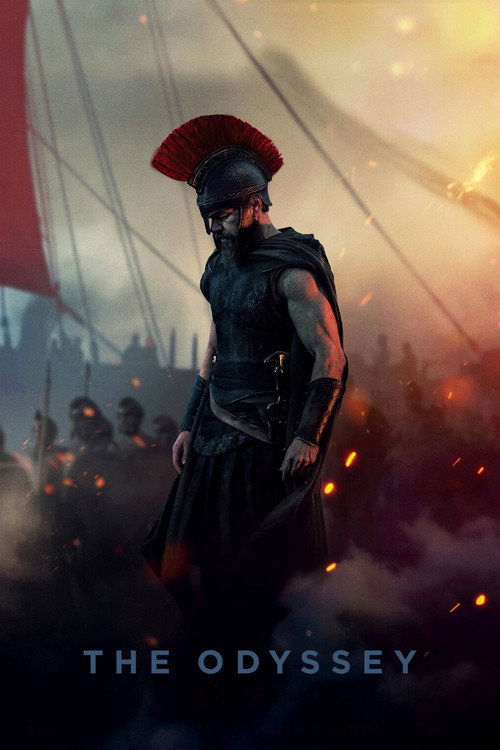
The Odyssey8.0July 17
***Teleharmonic…*** **ALL TO MAKE A SONG FOR THOSE TO COME** Nolan’s the odyssey comments incredibly intelligently on everything from gender dynamics, to immigration, to the post war consensus, and does it all in a voice true to Homer. Nolan skillfully invites the muse to *sing for our time too*. I’m not even talking about some secret 4th dimensional chess political reading of the film. The explicit theme is more than enough to be shockingly insightful in our time. The tragedy is that this will be lost on most who simply cannot take off their 2016 goggles. “Slaves have no choice but to be loyal to the future” Why might Nolan have declined to make this film look “historically accurate”? Consider for a moment that he is not just incompetent. Perhaps it was because he didn’t want audiences to think of this story as happening in the archeological period we call the Bronze Age. He didn’t want an air of antiquity to it, he wanted it to feel like this story is happening right now, to us. If the film were really grounded in the aesthetic of the historical Bronze Age (the poem isnt either btw, but that’s another pedantic tirade) then it would allow us to put it into a box that is alien to us, even delight in its foreigness, like a Robert Eggers film. If you want that experience the poem has existed for three thousand years waiting for you to read it, but you may be disappointed if that is all you are looking for. The past is simultaneously more alien and more familiar than we think. The aesthetic the film fell on (Reminiscent of Villeneuve’s Dune) can’t be pinned down to a specific time or place in history by design. Odysseus’ crew is multiracial (and even encounters the “real Greeks” that will succeed his civilization) because our society is multiracial. They even speak like us. His civilization is not meant to reflect Mycenae but modernity. The collapse of Odysseus world is the collapse of ours. “Songs are all they will have to remember those of us who could read and write” The discourse around this film leading up to its release has been one of the most vapid in the history of the artform. Every aspect of this film has been scrutinized from the very moment it was announced, all that effort only to leave almost everyone (including those familiar with the poem) blind to the not particularly subtle things Nolan is doing with it. We are already not a literate society, we have lost the language of storytelling. Sure we can *read letters *and conceive of them as words, we are familiar with the mechanics of how things work, but we don’t know what anything *means* anymore. We define things according to their use and not to their purpose. We should lament that the term “media literacy” was so quickly abused by self-righteous narcissists and banished from common parlance, because it was pointing to something deeply true. We do not understand the stories we are telling anymore. The law of Xenia has been violated, and the narratives that make it possible for any story (and thus any society) to exist are breaking down. “These structures are nothing if we do not respect their meaning” Nolan is less interested in the morality or psychology of Homeric Odysseus and such debates are completely pointless with reference to the film. Rather the story being told on screen is concerned with Odysseus as the mythic prototype of the king in exile, and how it relates to our own time. Let us not forget that Nolan’s last film was Oppenheimer. The founding myth of the modern world is WWII, it could be said that the founding murder (in the girardian sense) of this new world is the bombing of Hiroshima, the type of every atrocity committed in every “justified” war before or since. This film challenges the eternal myth of the righteous atrocity, it forces us to reckon with the sins of our fathers, but it doesn’t leave us in the ruins. It proclaims that even when these myths we have been living break down and lose their meaning we cannot just dwell in the broken images. Ruins are not a household. The past can be forgiven if not redeemed, and the world can be resurrected. There must be a point at which, despite his shame, the guilty king returns to put his house in order and founds the next world. “To burn Troy was to burn the world entire” In order for a world to be resurrected it must first die, but if we do not choose to be resurrected then we can only remain dead, we will have no identity and stay *nobody*. The solution is not presented as a revolutionary overturning of the world, we cannot simply feast on the pleasant amnesia of the lotus flower and stand alone as men bereft of history. Rather it requires us to remember who we are, for the king to remember his kingdom, for the son to remember his father, for the wife to remember her husband. Penelope is waiting on Ithaca, fending off all of the competing narratives that would seek to take the throne and define the next world. Only the true king can take the opposite poles of the bow and bend them toward one another, reconcile all the extremes and contradictions and turn it into the power to judge and establish order. The exile must return. Ithaca’s king is coming home, are we Penelope or Clytemnestra? are we Eumaeus or Melanthius? Are we among the suitors, or are we Telemachus? Are we *Nobody* or do we choose to be Odysseus again? **8/10**
The Odyssey8.0July 16
***Echoes…*** “Sing for our time too” Christopher Nolan apology forms now being accepted.
Henry V9.0July 13
Laurence Olivier is a genius and all your film professors are too lodged in the middle of the bell curve to see it.