Skip to content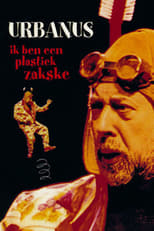




7 films
Urbanus: Ik Ben Een Plastiek Zakske
2001
<i>Black</i> is a south korean show that blends thriller, supernatural fantasy, police mystery, romance and psychological drama. It is known for its compelling plot, full of plot twists. The story follows two protagonists. The first is <i>Han Moo-gang</i>, a seemingly cold and pragmatic detective, who ends up being possessed by a Grim Reaper known as <i>Black</i>. This supernatural disobeyed the rules of the afterlife and, as punishment, is forced to live in a human body while investigating crimes linked to predestined deaths. Meanwhile, we have <i>Kang Ha-ram</i>, a woman who possesses the ability to see shadows of death around people — signs that they will die soon. Because of that, she faces many hardships in life, such as prejudice and loneliness. When their paths cross, the two become involved in a series of cases that connect murders, corruption, past events, and the very system that governs death.
Hideaways
2011
<i>Flower of Evil</i> is a south korean show that blends psychological thriller, crime, melodrama, and romance. It is widely praised for its morally complex characters. At the center of the story is <i>Baek Hee-sung</i>, a devoted husband and loving father who appears to live a flawless domestic life. His wife, <i>Cha Ji-won</i>, is a skilled homicide detective. What she doesn’t know is that her husband is hiding a dark and dangerous past, possibly connected to a series of violent crimes. As <i>Ji-won</i> begins investigating cold cases tied to a serial killer, clues start pointing uncomfortably close to home.
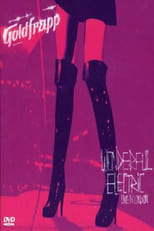
Goldfrapp: Wonderful Electric - Live in London
2004
<i>My Mister</i> is a south korean show that blends slice of life, psychological drama, and social realism. It finds its power in quiet moments, deep conversations, and complex relationships between characters. The story follows <i>Park Dong-hoon</i>, a middle-aged engineer trapped in a stagnant life filled with professional pressure, family obligations, and emotional exhaustion. Crossing his path is <i>Lee Ji-an</i>, a young woman burdened by poverty, debt, and trauma, surviving through emotional detachment and silence. Their relationship is built on mutual recognition of pain. As their lives intersect, they become quiet witnesses to each other’s suffering, offering understanding and support in a world that has been unkind to both of them.
Redemption Street
2012
<i>My Name</i> is a south korean show that blends action, crime, noir thriller, and revenge drama. It stands out for its raw violence, morally gray characters, and a memorable female lead. The story follows <i>Yoon Ji-woo</i>, a young woman whose life is shattered after witnessing her father’s murder. Consumed by grief and anger, she turns to <i>Choi Mu-jin</i>, a powerful drug lord and her father’s former associate, who promises to help her uncover the truth behind the killing. Under his command, <i>Ji-woo</i> undergoes brutal training and assumes a new identity to infiltrate the police force as an undercover agent. Caught between the criminal underworld and law enforcement, she is forced to live a double life, where every relationship is built on lies and every choice pushes her further away from who she once was.
CAN: The Documentary
1999
<i>Hi Bye, Mama!</i> is a south korean show that blends fantasy and melodrama. Its popularity is due to a devastating yet tender approach about motherhood and grief. The story follows <i>Cha Yu-ri</i>, a devoted mother who dies in a tragic accident shortly after giving birth. Unable to move on, her spirit remains near her daughter, watching her grow up from afar. Five years later, <i>Yu-ri</i> is unexpectedly given a 49-day chance to return to life as a human. Her return creates a painful emotional triangle involving her husband, <i>Jo Kang-hwa</i>, who has rebuilt his life and remarried, and her young daughter, who has grown up without knowing her biological mother. As <i>Yu-ri</i> navigates her second chance, she is forced to confront the reality that love sometimes means letting go, not staying.
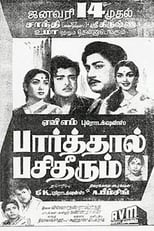
Parthal Pasi Theerum
1962
<i>Scarlet Heart: Ryeo</i> is a south korean show that blends historical drama, romance, fantasy, and melodrama. Known for its intense tone shift, it starts almost lighthearted and gradually descends into tragedy. The story follows <i>Go Ha-jin</i>, a modern woman who is transported back in time to the Goryeo Dynasty during a solar eclipse. She wakes up in the body of <i>Hae Soo</i>, a young noblewoman living among the royal family. Surrounded by rival princes, <i>Hae Soo</i> becomes entangled in court politics, power struggles, and dangerous alliances. Among them is <i>Wang So</i>, the feared and misunderstood Fourth Prince, whose cold exterior hides deep trauma. As the fight for the throne intensifies, personal relationships are tested, and love becomes inseparable from betrayal and survival.
Rusty Romeos
1957
<i>Mouse</i> is a south korean show that combines crime thriller, psychological drama, and philosophical horror. What begins as a tense serial killer investigation gradually transforms into a disturbing exploration of morality, identity, and the question of whether evil is something one is born with or something that is created. The story follows <i>Jung Ba-reum</i>, a seemingly kind, idealistic rookie police officer, and <i>Go</i> <i>Moo-chi</i>, a hot-tempered detective driven by personal trauma after a serial killer destroyed his family. Their lives become intertwined when a brutal murderer known as the “Headhunter” terrorizes the nation, pushing the police and the public into fear and paranoia. As the investigation progresses, there are shocking twists that completely reframe everything the viewer thought they understood. The drama delves into the concept of psychopathy, genetic predisposition to violence, and the ethics of trying to eliminate evil before it manifests. With each revelation, the line between victim and perpetrator grows more unstable.
Comments