Skip to content 7.0Flick
 8.9Flick
 8.4Flick
 6.8Flick
 8.7Flick
 7.7Flick
 7.3Flick
47 films
Beau Is Afraid
2023
This movie is quite possibly my favourite of all time. It's a shame that true provocateur or 'weird' directors give films like this a bad rep; to anyone who doesn't understand the context or Aster's influences, this may appear to be a giant prank that Aster is playing on the audience. It's also a shame that Aster's previous two films were relatively accessible and therefore a lot of the audience for this film expected more of the same. Although Aster's 'style' is fairly obvious, I think what makes his films really special is his process. His research is so deep and detailed I have no clue how he manages to get through a film every two years. Beau is Afraid is the clearest example of this. Oh my god the amount of little details and references and homages to other films, novels and plays. Most other directors have to try their best to fill all their compositions but Aster can't help it. There's so much stuff he wants to fit in his movie that the task is instead, cramming it all in. I wish there was a single other director out there that CARED as much as Aster does about his movies. You really feel his love for what he's writing and it makes you care too. Yes, this film is hella weird and I have no idea how he got so much funding for it. It's not for everyone... or much of anyone at all, but there really is nothing else like it.
Neon Genesis Evangelion: The End of Evangelion
1997
The final 45 minutes of this film are easily the best 45 minutes of any film I've ever seen so far. Nothing else really even comes close. It's just as bleak as a story can possibly get. It's not just an apocalypse - which is kinda the highest stakes possible - but it's an apocalypse started by humanity itself, fully consciously and intentionally. Not only that, but once they get a chance to return and to live again, everyone on earth apart for two people cant bring themselves to return. It's awful. And the worst part is that it's hard to argue against humanity's choice. Anno doesn't even give us a genuine reason why they're wrong, it's all just wishy-washy 'life is worth living because of course it is' stuff. It's obvious in the end Anno is feeling suicidal and this faux-hopeful ending is just him trying to lessen the bleakness. I don't think I would feel so positive about this ending or this film as a whole if it wasn't for Shiki Jitsu which Anno directed a few years later in 2000. The rebuilds have been talked about as the true, matured, hopeful ending to evangelion but I really feel as though that came in Shiki Jitsu. Also, although it's been talked about to exhaustion, the visuals and music in the third impact sequence are so impactful and brutally depressing. I can't quite explain what it is about the imagery in this sequence that makes it so special

Love Exposure
2008
The way Love Exposure is structured is absolutely baffling but also I think it might be perfect. The first hour kinda functions like a regular first hour in a 2 hour film but then after we reach what feels like the midpoint, we get 30 damn minutes of extra exposition then another 15 mins of setup for the real midpoint. It sounds like an absolute mess, and it is, but it genuinely works. Maybe this is aided by the fact I didn't really get invested in the characters and therefore just being in the world that Sono creates is enough to keep me engaged. Either way, somehow these 30-45 mins that go absolutely nowhere and don't reveal any groundbreaking information other than some backstories are some of the most electric minutes in the whole film. Of course the final act is the best. That shot of Koike's face as she stabs herself is incredible and the use of Beethoven's 7th, both main times it appears, is one of my favourite needle drops ever.




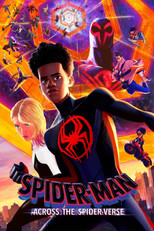


Eddington
2025
I think this has cemented Ari Aster as my favourite filmmaker. Such a funny and intelligent depiction of society that ends up pretty universal despite being so specific to the US. His only film with no supernatural elements is somehow almost as insane as Beau is Afraid. I don't feel like this film is political or apolitical, it's just anti-stupid. All characters to varying degrees, regardless of their political standpoint, clearly don't believe anything they say. It's pointless conflict for the sake of feeling like you matter. This is another great continuation of Aster's tendency to let the characters write the film. The whole second half feels as though it was written by Joe Cross, descending into heroic delusion.



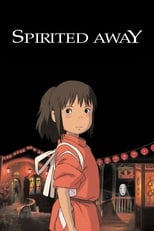
Spirited Away
2001
If I had to pick a 'greatest film of all time' it would probably be this one. It's one of those films that's about everything. Our place in the world. It's the film that we should show to aliens to explain who we are. Also, no fantasy world even comes close to the magic and life that spirited away's world has. The only one that kinda comes close is the boy and the heron. It would be my all time favourite film if it wasn't for the giant gaping hole which is its ending. It's so anticlimactic and not in an ambiguous artsy way, in a thrown together, rushed way. I would've preferred for them to just end it after she helps Haiku remember his name, even if that leaves a bunch of unresolved questions. The way it's resolved with the silly test that chihiro clocks immediately and then goes home is so pointless. What was the point in the test if it doesn't provide any kind of obstacle. Maybe at least they could have shifted the tone to make me think she might get it wrong, but no, it's over before it even starts and none of the characters even show any fear or doubt. Anyway a long rant of complaining about a film that, despite its flaws, I adore.

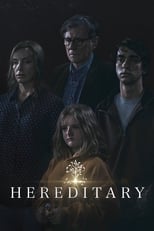


Happiness
1998
This is 100 times more upsetting/disturbing than any 'extreme' film could hope to be. Not as funny as it may be on rewatch because the shock from the Dylan Baker scenes ruined my mood so much I couldn't laugh. Also I realised Billy and Johnny look exactly like young versions of Phillip Seymour-Hoffman and Dylan Baker. Possibly hinting at a repeating generational thing..?




Force Majeure
2014
This is such a weird redemption story in which the character never really does anything right but instead his partner finds herself doing exactly what he did, proving they're the same. It's kind of what people actually do: we only resent people if we feel morally superior. When we inevitably stoop to their level, we have no other option but to accept that we're all only human. This film is a little slower than Ostlund's other films but is probably more controlled than the admittedly indulgent later films.
Comments