Skip to content


Recent activity
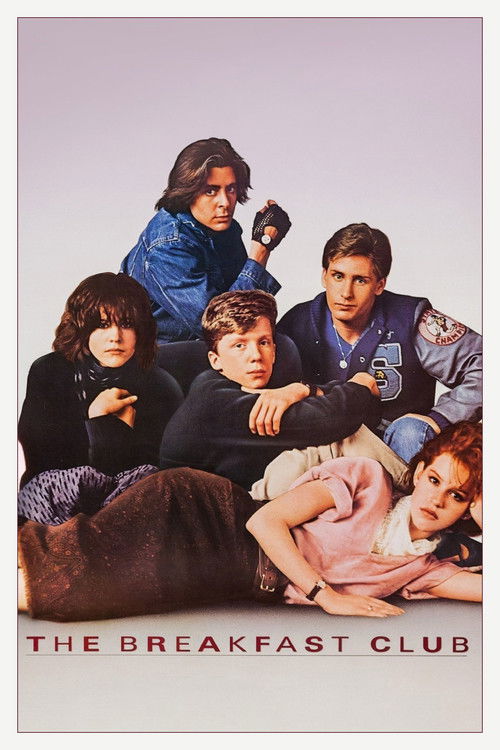
The Breakfast Club10.0August 6
I came into this movie just looking for another fun, teenage angst movie to obsess over and relate to. The Breakfast Club ended up being so much more than just a teenage angst movie. I think a big reason why this movie made me feel so strongly is because it tapped into a topic I’ve wanted to talk about for years: the fact that labels will never truly work for humans. Of course, labels can be useful. We can use words like black, white, gay, straight, and countless others to describe parts of ourselves, but they will never fully encapsulate who a person is. A person is always going to be more complicated than a single word. That’s exactly what The Breakfast Club represents. The brain, the jock, the criminal, the basket case, and the princess are the labels placed onto these kids, but those labels are never the full truth. Take Brian, the “brain.” He is supposed to be the perfect student. The kid who always does everything right. But underneath that image is someone who is struggling deeply. He had thoughts of suicide and brought a gun to school. That is not something people expect from the “brain” stereotype because people often view perfectionists as people who don’t struggle, don’t have emotions, and don’t break. But Brian proves that intelligence and perfection do not make someone immune to pain. Then there’s Andrew, the athlete. He isn’t just a jock. He is someone who is constantly pressured by his father to win, to succeed, and to be the best. He didn’t even want to do the thing that got him detention, but he felt trapped by the expectations put onto him. He is someone who has been pushed to his limit and is trying to figure out who he is outside of what other people want him to be. Allison, the “basket case,” is another example. She is labeled as strange because nobody truly sees her. She does unusual things, she lies, and she acts in ways that people might consider weird or crazy. But by the end of the movie, when she changes her appearance and shows a different side of herself, everyone realizes that she was never just “the weird girl.” She was always a person with feelings, thoughts, and a desire to be noticed. She was never the label people gave her. That is true for every character. None of them are just their stereotypes. I also really loved the scenes with the principal, especially his conversation with Carl. It connects to another idea I think about a lot: adults often forget something that teenagers have. Teenagers have a certain kind of freedom. Not the freedom to do whatever they want, but the freedom of having their whole future ahead of them. They have so much time, so many possibilities, and so many things they can still become. There is something special about that stage of life. I know it might seem hypocritical for me to say labels don’t define people when I personally enjoy using labels, but I don’t think those ideas contradict each other. Labels can help describe parts of someone, but they should never become the entire person. If people labeled me, they might call me the diabetic kid, the weird kid, the music kid, or the science kid. But I am so much more than those things. Everyone is so much more than the labels placed onto them. That is why this movie means so much to me. It’s not just about teenagers in detention. It’s about realizing that every person has an entire world inside of them that other people may never see. The scene where they all sit together, talk, argue, and cry is what stuck with me the most. The letter Brian writes at the end is such a perfect summary of the movie’s message. Why should they write a letter explaining who they are when the person reading it already thinks they know? Anything they say might just be filtered through the labels already placed onto them. But they are more than those labels. I would honestly love to see something like this happen in real life: putting a jock, a weird kid, a princess, a criminal, and a brain in the same room and letting them actually talk. I think it would change the way people see each other. I think Claire realizes that she doesn’t have to pretend to be someone else just to fit in. I think Andrew realizes that he doesn’t have to win all the time or live according to everyone else’s expectations. I think Brian realizes he doesn’t have to be perfect. I think Bender realizes that not everyone is against him, and that he isn’t the only person who has experienced pain. He thinks he is alone, but there are so many people who understand him. And I think Allison realizes that she doesn’t have to fit into the “basket case” label for people to notice her. Overall, The Breakfast Club is a 10/10 for me. I would rewatch it constantly if I could, and it is absolutely going into my Letterboxd top four. It captured a feeling I’ve had for years and put it into words in a way I never could. Everyone is so much more than a label.
Backrooms9.0June 2
i don’t think explaining a dog to someone who’s never seen one and asking them to draw it is that hard
Project Hail Mary10.0June 2
i think i wanna go to space now
Harry Potter and the Order of the Phoenix6.0May 22