Skip to content


Chizzy Ndukwe N
@chizzyndukwen
The only opinion that matters over a piece of art is the one you form. The sages can serve you the meal, but only your tongue can taste it.
Recent activity
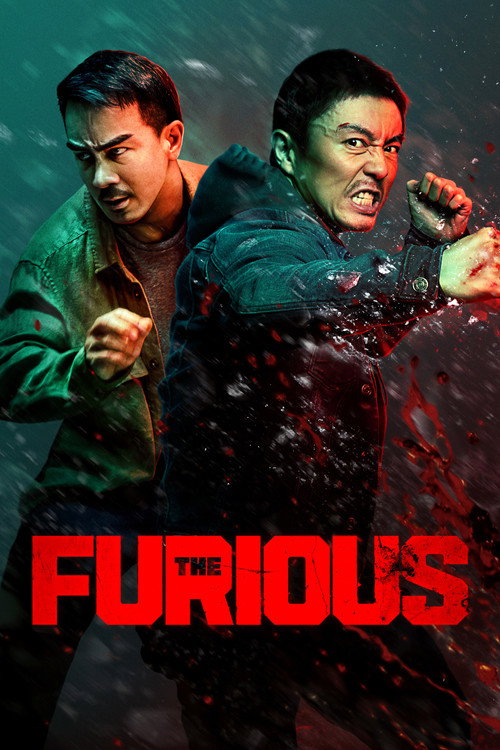
The Furious8.0August 22
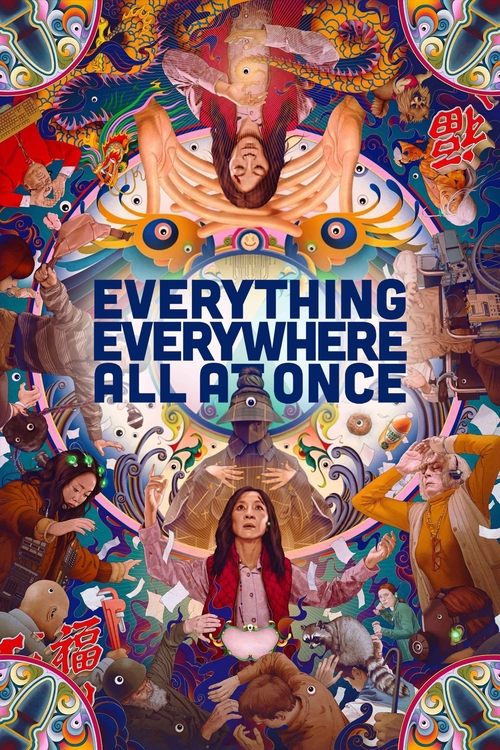
When the reviews called this the spiritual successor to ***The Raid***, they were not kidding. At a point, I wondered if these guys practice one sequence *ad inifitum*, as a group, until every single nail that falls and square inch of the what the camera sees is accounted for! It’s pristine! The only drawbacks to the fighting is the overuse of sound effects, and the fact that human biology is completely disregarded to service the story. That last point though is a staple of kung-fu close-contact action movies, so I can’t use it to criticize the movie too much. It’s a necessary level of ridiculousness the way you find over dramatization as necessary to theatre romance. The sound effects thing too can be argued to be a kind of homage to chopsocky 1970s Hong Kong Kung Fu cinema! Brian Le in any close-contact action movie will always bang! His head doesn’t disappoint. I thought he was amazing in ***Everything Everywhere All At Once***; he upped the ante in more ways than one here! The acting (except the two leads) left much to be desired, but again, this is a movie that wants bodies and combat do all it’s important talking for it, so, it can be forgiven. Xie Miao, what an introduction to your prowess! He is an excellent martial artist, but even more than his ability to employ his body to drive such somatic storytelling is his face! The face acting was on point! You could hear him without hearing him! I had to google if he’s actually mute in real life. That’s how much I was sold! Obviously, Joe Taslim is a modern martial arts legend, and seasoned thespian! I knew he’d knock it out of the park. Why is Yayan Ruihan always so deadly in every movie? He’s like an Indonesian boogeyman! You just know bodies are dropping! The little girl, played by Yang Enyou, held her own! She was inspiring! For the many things this movie did right, and for honouring southeast Asian martial arts in the way it did, employing as many disciplines as it could in the fighting styles, and showing, through high octane action, what it would look like when practitionaers of these disciplines danced with each other (albeit, violently, to serve the tone of this story), this movie makes its case for being one of the greatest martial arts movie ever made. The keen eye would notice a lot of western influences in this movie, especially with the aesthetic of the police and the criminals. Said keen eye would also notice how no country was named as the location where this was taking place. Tense. That’s all I’mma say.
The Mandalorian and Grogu5.0August 20
> "The Old protect the Young; The Young protect the Old; This is the Way" **A trainwreck brought to you by Low Effort International and Wrong Format Limited!** I sat through this because I imagined I was watching a three-parter or four-parter set of episodes for The Clone Wars, only, this time, set after the defeat of the Galactic Empire, and the in the reign of the New Republic. If Jon Favreau and Dave Filoni released this as a TV movie, or even, as two or three special presentations, it wouldn’t have felt so much like I was being scammed. And I don’t mean my money, because the trailer told me all I needed to know to stop me from seeing this when it released in theatres. By scammed, I mean, my time and affection, most especially. I love the Star Wars universe to death! I’m one of the strongest defenders for The Acolyte and Skeleton Crew. I feel those shows did not get a chance to be great, and they were not bad by any stretch of the word. If you take away the reasoning behind bringing back Sheev Palpatine in The Rise of Skywalker, that movie is top tier Star Wars to me! That’s how much I love this world. But, boy, was it hard defending this movie. And it’s not even about the story. The story is solid. But it’s not cinema-worthy. Sure, Mando almost died, and we got to allow Grogu lead a bit of a campaign, and we (even though no one asked) got to see what happened to Rotta the Hutt after his kidnapping as a child, and that entire adventure from the Clone Wars. These are good stories to tell, but just like the stories where Rotta, and Embo (the Kyuzo bounty hunter), come from, this story should have been presented as an episode of the adventures of Mando and Grogu. It’s a snapshot of the many adventures of the pair. It leads from non-consequence to non-consequence. That is why it is not meant for the big screen. Perhaps Filoni and Favreau half-hoped that the die hard fans would at least show up in their numbers for this movie, but there’s a limit to how much one can call in a chit before people begin to pull away from being willingly bamboozled. Movie bombed so hard, it’s cinema-only exclusivity ended in 77 days…shortest ever for a Star Wars movie. And then, there’s the erratic aspect ratio changes. Dynamic aspect ratios in storytelling is best applied between differing scenes and takes, and emphasizes a unique artful point or theme. This is not something I should be saying in a review of a movie directed by the same guy who directed Iron Man 1 and 2! What happened? Is it neglect? Is it spite? What is going on in the Mouse House? Kathleen Kennedy issues? What? Because it felt like I was being hated on. Like the makers of the movie wanted to keep pulling me out of the thing they made. As though it was the goal! Sheesh! Middle of a single shot, aspect ratio changes 4 times. And don’t give me that IMAX spiel. I watched a digital version! It should be consistent enough! And sparingly used! Or at the least, intentionally used! The CGI for Zeb was atrocious! Again, signals lack of effort. Jeremy Allen White voicing Rotta felt out of place. Love the guy, but, because Rotta is a good Hutt does not mean he should sound like the voice doesn’t belong to that body! Anzellans really are the new Ewoks, aren’t they? Martin Scorcese jumpscare! The New York-accented Hugo Durant, relative of Rio Durant who ran jobs with young Han Solo, was one of the few delights of this movie! My best section of this movie was actually Grogu taking care of Mando. That sequence was warm, and connecting, and most of all – as is what every Star Wars property should aim for – inspired hope in me. One thing I’ll give this movie is that some of the fight sequences were actually badass! Mando was moving!!!!! Pedro’s stunt coordinator needs more paychecks! Overall, it’s a day in the office for Mando and Grogu, and I had a slightly above average time witnessing it! I was about to say they can now stop milking these characters, but I just remembered the LEGO Mando movie they announced at D23. Herh! Disney!
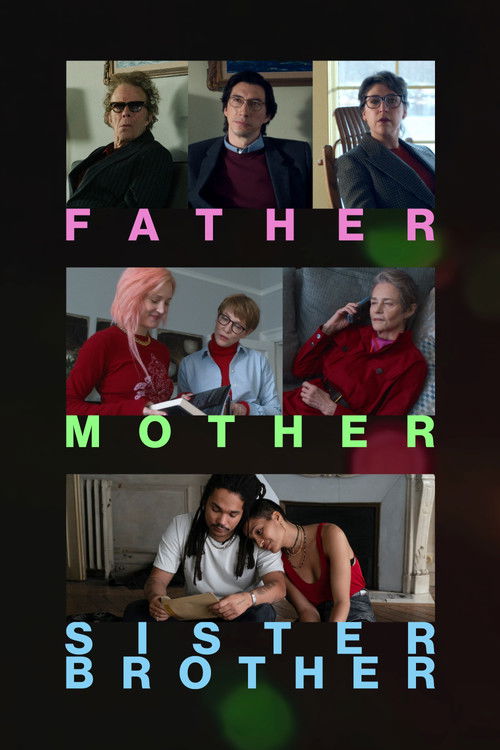
Father Mother Sister Brother9.0August 19
I could write a textbook worth of observations and praise for the skill Jim Jarmusch has conjured to use, dare I say, plebian characters to tell a story full of meaning and so potent to drive one to all sorts of ponderings. You could watch this movie 200 times and have 200 new themes to draw from it. I am a total sucker for cleverly-executed literary parallelisms, even when they are intentionally crafted to be obvious, so you can believe me when I say I pumped my fist when Luka Sabbat’s character said, *“Bob’s your uncle”*. > *“And your uncle’s name is Robert”* Jarmusch trusts that anyone who sits through the title card, and the opening sequence with the overlays of the chapter titles, is only going to be someone interested in seeing this story through, and would welcome the leisurely pace with which it is rendered. One may say he stretches this trust by equally emphasizing the theme of emotional callousness in the first two stories using endless minutes of awkward silences, inane questioning, empty status updates, and painfully dispirited family traditions. The redemption comes in the third story where the unfairness of life is painted through Luka Sabbat’s Billy *(Luka really was the best pick for this character, vibe, and all: it’s weed, wisdom, and words with him, both here and in Grown-ish, where I saw him last)* and Indya Moore’s Skye – twins who are alive, full of spirit, full of love for one another, and full of love for their parents, whom they rediscover post-mortem, but you quickly realize they are the ones who deserve parents who are alive, than the first two families this story presents. It feels like – just like the obscure circumstances of their death – that the tragedy of their parents is random and premature, and fueled by their expression of freedom: the very qualities FATHER and his children, and MOTHER and her children were vehemently antithetic to. And so, when Billy says “Bob’s your uncle” (and that’s that about that), it is not about some summarily presented nothing deed like the first two times you hear it in this movie. And so, I pump my first. > *“Nowheresville”* The children of FATHER and MOTHER crave this freedom of expression however. You hear it in Mayim Bialik’s Emily’s eagerness to get more out of FATHER and in Vicky Kriep’s Lilith’s rebellious nonchalance. You see it when both sets of children see the skateboarders – this movie’s blatant synecdoche for freedom – and are entranced by their ability to self-express at will. It is a quiet longing, suppressed by years after years of FATHER’S mysticism about his affairs, and MOTHER’S impassivity about hers. He hides by hiding and she hides by stifling. Set in their ways. And so, encountering both is like entering nowheresville: the place for conformity, propriety, being the good child. For Billy and Skye, nowheresville takes up the form of an insult to being ordinary and conforming. They say it to spite how mainstream the streets of Paris was becoming. A testament to their character-deep inoculation to standards. Their sense of fashion is not standard. Their approach to “the virus” (COVID-19, I’m guessing) isn’t standard. Their decision to let the process of going through their parents’ stuff in the storage unit take as long as it needed to, was not standard. Heck, even the way they are introduced “sister, brother”, as against “brother, sister”, is not standard. They are free. And water is medicine! *** A thing I wished Jarmusch didn’t do in this movie is lore dump with dialogue between people (even though all are introduced as being different levels of estranged with each other) who should know all the things they are saying. I know he did it intentionally for artistic effect because Billy did say, “haven’t we talked about this already?”, but I do wish this was not the deployment. I felt the theatre-type narration he wanted, but I was still watching a movie, and it doesn’t work for a movie. Kept pulling me away from the backstories. I couldn’t tell if Adam Driver and Mayim Bialik’s car drive was greenscreen or real. It looked greenscreen from the inside, but tangible on the outside. That was odd. *** I sipped my coffee, and enjoyed this one. ...without a Rolex though, real or fake.
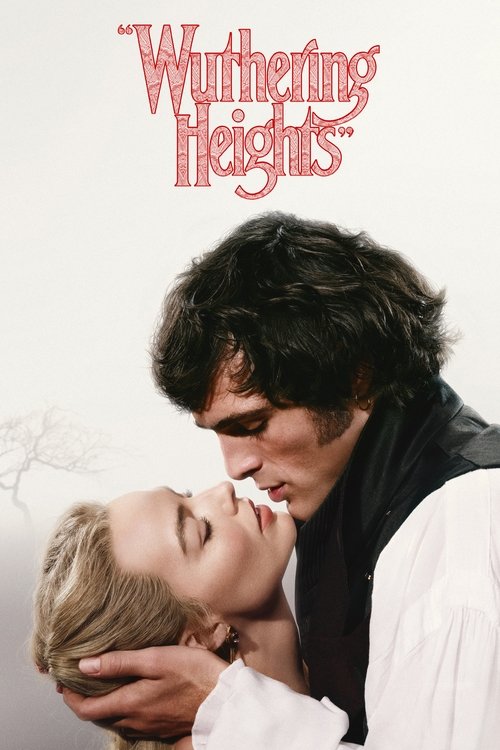
“Wuthering Heights”6.0August 18
What Emerald Fennel nailed in this movie is atmosphere, in the words, in the costumes, in the lighting, in the line up of shots, in the performances. What she wants you to feel in every frame is unequivocally communicated. The lines Emerald – probably – did not realize was there for a reason and she manipulated (crossed, wobbled around, erased, et cetera), were the marriage of the actions of these characters with their ages (probably why Emily Bronte kept them as teens throughout instead), the length of the many narrative emphases, and the extent to which she portrays *degradation*…yes, a key theme of the story, in what it means, and how it is inane in the face of such a soul tie between individuals, and yet, how it could be easily be wielded to hurt the same individuals with the soul tie…I get that it should have focus. But focus is different from gratuitous exaggeration. It’s like she forgot she wasn’t making **Saltburn**. I guess with Jacob Elordi in her arsenal, seeing his dedication in Saltburn, it is easier to give in to the temptation of letting him run wild. Margot isn’t foreign to the concept of running wild either. And so you get a story set in almost-Gothic Georgian England, with words written with the sensibilities of Victorian parlance, interpreted through an intentionally crafted macabre lens of modern literature, and delivered in scenes that seem not to trust that it has made its point when the point is made, and so it has to make it again and again and again. Another detractor for me in this interpretation is the sheer lack of people. Where are the people? You start with a hanging, and we only allude to it when Isabella is fascinated by a woman being hung. We don’t see it. Catharine’s fear that it may be Heathcliffe is only communicated with a held breath and sigh of relief, and so, we don’t get any visual *(which would have well replaced the many repeated “longing” visuals we instead got)* that would have definitely pulled audiences in alongside Catharine, making Catharine’s relief the viewer’s relief too. This way, we have people, the town feels lived in, and the entire movie is less claustrophobic than it ended up being. If you would tell a story with few characters only, if the action won’t be non-repetitive, at least make the dialogue non-repetitive, so that the story elevates from feeling like a retelling to satisfy a gratuitous need to check off some list, and becomes something more; something that births metaphors and double entendres and allusions, (through its dialogue at least)…something important. Hong Chau plays stuck-up inferiority-complex-driven servant too well!