Skip to content



Recent activity
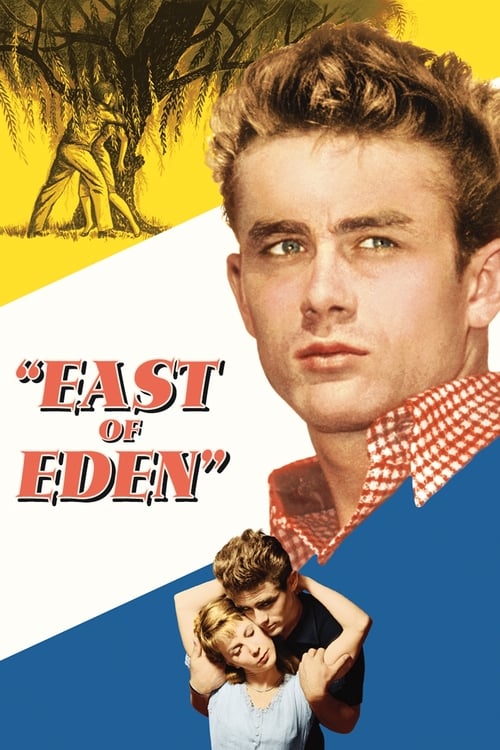
East of Eden7.0September 27
“War seems to be city people's business.” FILM #400 IN MY CINEMATIC JOURNEY I try to commemorate the big milestones with stuff I think I’ll feel good about in the future. I’m 26 years old but I’ve found over this journey movies from the 50’s-80’s tend to do more for me than films from any other timeframe. Given that fact, I can’t think of a better way to commemorate 400 logged movies on this site than to watch my first Elia Kazan and my first James Dean all at once. The Grapes of Wrath is my all-time favorite book as well, so Steinbeck's work is always something I’m down to learn more about. This never streams anywhere so I’m excited as hell, thank you TCM. I’ve neither read the book East of Eden or the passages of the Bible that refer to Cain and Abel, so the entire story was fresh to me. I’m not going to waste your or my time by explaining one of the most famous biblical stories ever so I’ll just give my thoughts on how it presents itself in this movie. It’s a harrowingly sad tale when you understand the family dynamics that have bred this specific father-son relationship. Abra is the only person who’s willing to interject herself into what would otherwise have been a constant loop of the same hurtful, destructive patterns and for that I give her all the love in the world. Of course, even if the healing that needed to happen years ago only starts to take place at the end of this story, it’s not all sunshine and rainbows. Both brothers are forever changed, one is likely to die in war, one is responsible for it partly, and their father is permanently disabled as a result of the bigger picture. That’s not to imply that East of Eden doesn’t have its beautiful moments that make you smile. This is still a quaint town where people rally behind one another, and there are still good people all around. Love exists, it’s just harder to find in some places than others. I really liked East of Eden. I’d heard so much about Kazan and his influence on the cinema I’ve watched over these couple years, so I was eager to watch his work to see what his style of directing was. I’ll need to see more to feel comfortable giving a real opinion on his tendencies but so far, so good. Absolutely beautiful cinematography and framing pretty much every second of East of Eden. Steinbeck’s books do wonders at making you imagine these gorgeous expansive California scapes and Kazan captures it perfectly with the lettuce field stuff. The shots on top of the train are obviously iconic too and I wish there were more of them. The scale of this movie is never really in question. Scale in general seems to be something that comes naturally to Kazan. It only makes me more excited to see On the Waterfront and A Streetcar Named Desire. As I said at the beginning of the review, East of Eden is not only my first Kazan film, but my first James Dean movie as well. There are only three to pick from because of his sad untimely passing but I really wanted East of Eden to be the one I saw first. I wasn’t in love with his performance for most of the movie but as it went on it grew on me. He’s sort of an awkward little fella and his movements reminded me of the way a small child runs around or pouts, but I understand he’s playing a teenager here. He did have moments of brilliance, like his meeting with Jo Van Fleet (who was arguably the best in the film) in which he was really good. At the end of the day, I do get it. I can see why he’d be a hot commodity in the early 50’s and it’s such a shame he didn’t get the time to develop his craft. Julie Harris was perfect for Abra, I liked her performance a lot. Raymond Massey played a very solid Adam Trask too. I wanted to briefly talk about the score, because while it had touches of all the same sounds scores from this era usually have, it also knew when to turn it down. In fact, more than once the music was soft enough that it could be used to accent the silence in a conversation the way Wes Anderson likes. Anyway, I have no complaints about East of Eden as a film. I’m not sure what to rate East of Eden. I liked it a bunch but it’s definitely more of a slow burn. It’s probably a better movie than what I’m going to end up rating it, but I think if I was able to get a rewatch on 4k sometime it would be big for me. I’m looking forward to watching the rest of Kazan and Dean’s work now. Happy 400. Also, you’re right kid, those Germans can’t fight.
Backrooms8.0September 26
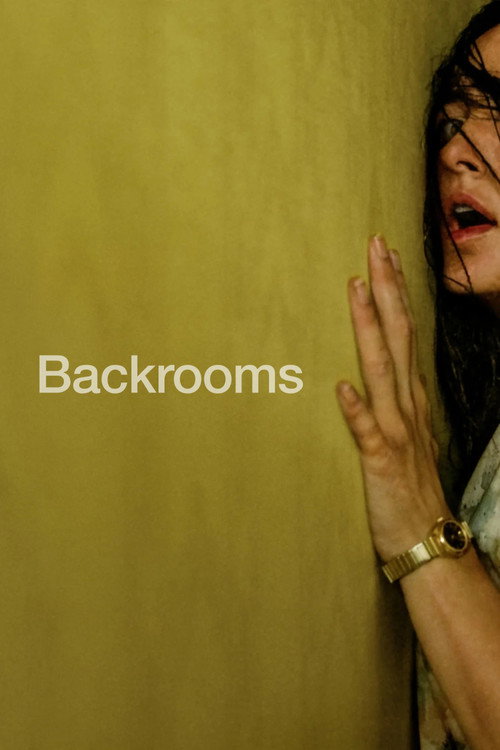
“Imagine describing a dog to someone who’s never seen one and then asking them to draw it.” I remember stumbling across the Backrooms thing on YouTube around the time it was blowing up. I thought the original video on Kane Parsons channel was fantastic but I’d be lying if I said I kept up with it much after that. When the movie got announced and eventually came out I was really looking forward to seeing it. I love Chiwetel Ejiafor and Renate Reinsve, and the idea of the movie sounds great. It’s out on Max now and thank god, let’s go. I’m going to start from the end, because I’m not sure if the post credit scene was shown in theaters but I loved it. Whatever A-Sync gets from learning about the backrooms is irrelevant but watching them get excited about the signs and report on it was super cool. Moving on to the actual movie now, I think there’s room for this to grow and expand. Not that the backrooms need more space but as a concept and as a story, it lends itself well to the prospect of further exploration on screen. Clark’s story is probably over but I don’t get the feeling that Mary’s has to be. What we see at the end is not her demise in my opinion, but rather how she’s remembered by the backrooms. Speaking of the titular space, it’s so well done. I’m not going to overly talk about it but it’s the biggest asset the film has, and it’s essential. There are themes of trauma and the despair of falling into your own destructive cycle that keep you thinking for hours after you watch it. Do you make your own relationship with the backrooms? Why does it exist in the first place? Perhaps that’s A-Sync’s ultimate question as well, but it’s the question that’s done nothing but put the film in more favorable terms with me since it concluded. I have such admiration for Chiwetel Ejiafor and Renate Reinsve. They’re two of my favorite actors from modern times, and they make Backrooms as good as it could be given all the other things it has going for/against it. I wanted to lead with them because I think their performances are that valuable, in fact they’re indispensable. I can’t see other people in their roles. Kane Parsons had to have felt like he hit the lottery. Kane didn’t exactly shit the bed himself either, and I can’t tell you how much praise I have for that. It would be so easy to let this whole thing overwhelm you to the point that it shows in the product. It doesn’t. Is it a case of ignorance being bliss? Who knows, but what I do know is that aside from one really bad sequence when Bobby is pulled back down into the lower level of the backrooms, there’s really no sign that a kid directed this thing. It’d be dumb to not point out the help he had in the process though. Whoever wrote the dialogue did a phenomenal job. The lighting and sound teams worked their ass off to accomplish making this movie feel like it should. The score is really damn good. Honestly, I love seeing a bunch of professionals rally around a kid and his idea. I’m sure he’s as appreciative as I am. Shoutout Robert Bobroczkyi as well, he made Pirate Clark work. In a year where horror has seen a resurgence and a new youth movement it’s awesome to genuinely like the things that people prop up. I’m happy to report that as I’ve sat with this movie it’s getting better and better in my mind. I’m into it, and I’m excited to see what all the young creatives like Kane Parsons have coming in the future. Also, really bad time for an ACL tear.
Neon Genesis Evangelion9.0September 24
Pretty incredible. The ending isn't my favorite but I can understand why such an existential series would want to conclude in that fashion. Episode 19 & 20 are some of my favorite TV I've ever seen. Can't wait to get to the film now.
Breaker Morant8.0September 22
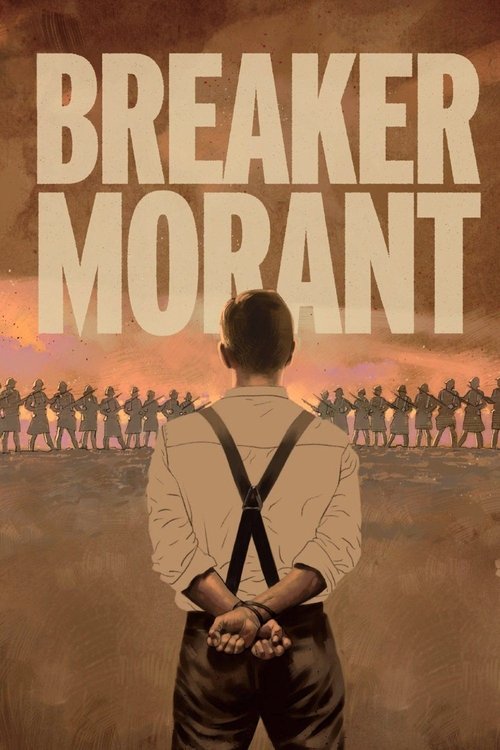
“The tragedy of war is that these horrors are committed by normal men, in abnormal situations.” Once in a blue moon I like to go to the very beginning of my 2700+ film watchlist and pick out one that’s been hanging around forever. Breaker Morant has been there for three years and I figured this random Monday night was as good as any to knock it out. Well, I didn’t expect that to be such a solemn experience. If I’m telling the truth I was pretty sure I was going to have to snooze my way through the movie after the first 15 minutes. Once we got into the court sequences and the seriousness of the trial became less trivial while the fairness of the trial became more trivial, I was into it completely. I love a good court movie, and while they’re two different classes of movie there’s a touch of what I love so much about 12 Angry Men in Breaker Morant. That tension, the reasonable doubt, and the stakes are all very similar. What Breaker Morant adds into the equation is the distrust of government. Spoiler: that’s a topic I’m always down to discuss. There’s a disgust you have to feel when you see certain shit, and the outcome of this movie (which to my horror I discovered is based in reality) qualifies as certain shit. What struck me the most was the resignation and acceptance, and therefore the unbelievable maturity, that Harry Morant and Peter Handcock met their fate with. I’d like to think I’d find a way to have their resolute understanding, but until you’ve been there you’d never know. It’s funny, it occurred to me that the point of the movie is not whether they’re guilty of what they’re accused of. They are. That’s pointless information. It’s simply whether they deserve to be the two to be made an example of. What a strange world we live in. Bruce Beresford made quite the first impression with Breaker Morant. I had no clue his filmography was so varied or so extensive and it makes sense after seeing this movie. It immediately goes up there with some of the better period pieces I’ve seen. It’s not Barry Lyndon or anything but it’s a convincing 1900’s South Africa. Of course, Breaker Morant was shot in Australia but the idea remains. It’s a stunning movie with the perfect shooting locations, and some of the best costumes I can remember. Lots to be said for the performances of a few actors as well. Ed Woodward, Jack Thompson, and Bryan Brown all played their respective roles incredibly well. Whether they were fully faithful to their characters namesakes is another thing but I feel like their portrayals were respectful at the least. I wish I could give Breaker Morant a 4.25 stars. I’m stuck between 4 and 4.5, but it’s closer to 4 just with the beginning's slowness. With the amount of information and law talk thrown at you I can say pretty confidently that more than one watch is needed to really get it all. I’ll have to get on that, and hopefully with the Criterion release sometime. Also, Handcock being named that just to also do that is pretty cool.