Skip to content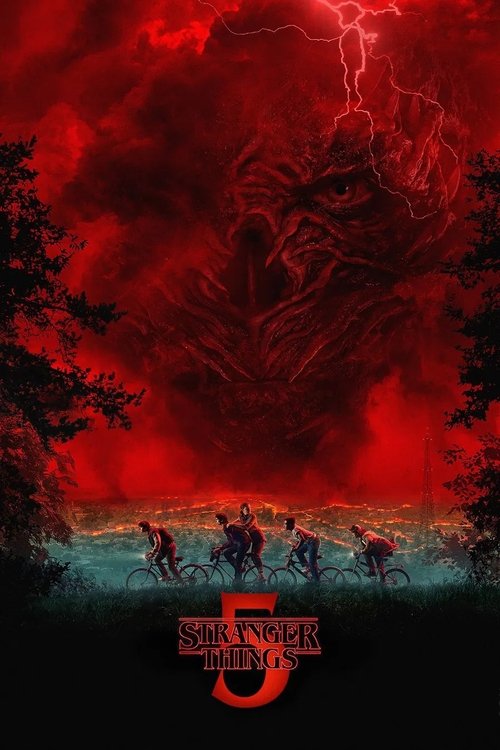

Recent activity
Stranger Things 5: The Finale2.0December 31, 2025
Remember how the first two seasons of Stranger Things were targeted towards mature audiences, had good writing and dialogue that focused on the characters’ relationships feat. a compelling sci-fi mystery, and were well-acted? Probably not because that was almost ten years ago. Then season three came and it started to become a parody of itself, made most obvious with season five: juvenile, cringe-inducing, and nothing more than an overly action-packed, bloated cgi slop fest, with shoddy camerawork just made for scenes to be cropped and reposted on TikTok under the tag “stranger things aura farming and hype moments.” Never let the Duffer Brothers try to cook again 😭🙏 I can’t believe Netflix shoved hundreds of millions of dollars up their ass for nine years but refused to fund David Lynch’s and David Cronenberg’s projects for ONE TENTH of the cost. Fuck you Ted Sarandos.
The Shrouds8.0December 31, 2025
“You made a career out of bodies.” I can see why this one was so divisive, but I don’t understand the people who said they couldn’t get anything out of this one. I do have to agree that it is DRY. We’re talking bone-dry martini and bitter lemon extreme sour warheads candy that sucks all the salvia out of your mouth and makes your lips pucker. The rejection response is going to be STRONG for most people. I probably would never recommend this movie to someone, not even most cinephiles, and not even to casual Cronenberg-watchers because you REALLY have to be all in with him to tolerate this one. He’s gotta be your autistic special interest or else it’ll fall flat and leave you cold. Nevertheless, there’s a LOT in here and I can always pull something profound out of the most seemingly-lackluster Cronenberg films. The Western world (and increasingly, the world at large) is so afraid of death and facing both personal and collective grief that they turn to unfeeling technology to dictate how they should react and the choices they should make in the aftermath of a tragedy. From self-driving teslas to AI assistants/girlfriends, we are becoming more and more removed from our own humanity. There’s also a lot in here about the disconnect from one’s cultural heritage, the isolation from/lack of community, and the inability to form real connections with people outside of a fetishistic and sexual context. All our interactions are based on superficial notions, reinforced by media and technology, rather than empathy and shared interests (“he thought our teeth were a good match”). It also speaks to how people are so unable to accept death in its natural form, whether that be from the result of the violence of humans or an illness, that they will go so far as to create elaborate conspiracy theories to justify their grief. These conspiracy theories, in turn, become a source of excitement and entertainment for people. Death is no longer seen as an intrinsic and personal part of existence, but one made for mass amusement. It can be capitalized on, shared on our phones, over and over again until the state of death becomes a sort of fictionalized version of itself. Just look at the true crime genre and how it dehumanizes real victims (who are mainly women), and feeds into our collective paranoia and fear of our fellow citizens.In ‘The Shrouds,’ Karsh sees himself as an innovator, but really he is no different than the rest of the modern world in the voyeuristic pleasure he gets from death, specifically his wife’s death, and his obsession with her diseased and decaying body. He loves her, but she also ultimately serves as little more than an object to be owned and fetishized in his life, and a means of profit for his company. This is made obvious by his and other characters’ continuous mention of her body, not her personhood. Cronenberg has long been fascinated by the human body in all shapes and forms, and in its various stages of transformation, which leads me to my next point: A lot of reviewers said they were mad or offended at him for making this film in the wake of his wife’s death, calling it uninspired and even disrespectful, and assumed that his love for his wife and the grief he felt after she died must’ve been similar to Karsh’s relationship with Becca and his need to “own” her physical body. However, to me it seems obvious that ‘The Shrouds’ is less a straightforward autobiographical narrative than it is an experimental one about a man who’s “made a career out of bodies” struggling to express his grief within the controversial body horror genre. In a way, I find it similar to Scorsese’s ‘The Irishman’; two directors who are close in age and reflecting on their legacy of filmmaking. For Scorsese, behind the film’s plot inspired by real-life events there was a deeper conflict about his impact as a man whose movies mainly focused on the mafia and male violence. Did he glamorize the lifestyle too much? Did ‘Taxi Driver’ read too much like an endorsement of narcissistic white men becoming vigilantes? With ‘The Irishman,’ he shows the realistic consequences of male violence and the mob, and questions whether it was all worth it, if profiting off of a long career of violent gangster films was the “right” thing to do. For Cronenberg, ‘The Shrouds’ might’ve served as a way for him to reflect on the ethics of his past work. He was always lambasted by critics and audiences alike for making movies described as “immoral” or “perverse,” and the character of Becca here feels like an indirect commentary of that. Were some of Cronenberg’s female characters depicted in a misogynistic way? Is it wrong to eroticize disability and death? Where is the line drawn between art and exploitation? There are also, of course, themes on the worrying increase in distrust of medical science, anti-Asian racism, particularly Sinophobia and the fetishization of Japanese cultural practices and Asian women among white men. ‘The Shrouds’ was initially conceived as a multi-episode series in which Cronenberg would’ve explored various cultural and religious practices around death, and it’s unfortunate that he had to cut down on a lot of that to make a single film. The film also brings up the topic of old age, disability, and sexual attraction in the face of losing someone you loved so much for so many years, and questions whether any subsequent interactions with people can be meaningful. Cronenberg also draws on his relationship with Judaism, and the “strangeness” of physical loss he felt when his wife died. Love it or hate it, at the very least it’s extremely self reflective. Cronenberg spoke a lot about how complex grief is, maybe not just the grief of his wife’s death, but also the grief of his first marriage and divorce, and the grief of getting older and having so many ideas that may very well go unrealized. He said he searched through many books on death and grief for answers but never found them, so maybe it’s not such a bad thing for this movie to leave audiences with more questions than answers too.
Transfer2.0December 30, 2025
his little “cut” at the end aww 😭 I was mildly amused. It’s obviously not good but it’s very inspirational to see how far he went after his very first (short) film.
Die Hard 25.0December 29, 2025