Skip to content


Danny Sheahan
@dannysheahan
"You will see, the beauty and the horror." - Dune Part 2 My ratings are entirely subjective. They are not claims of how good a movie is. Just how much I personally enjoyed it.
Recent activity
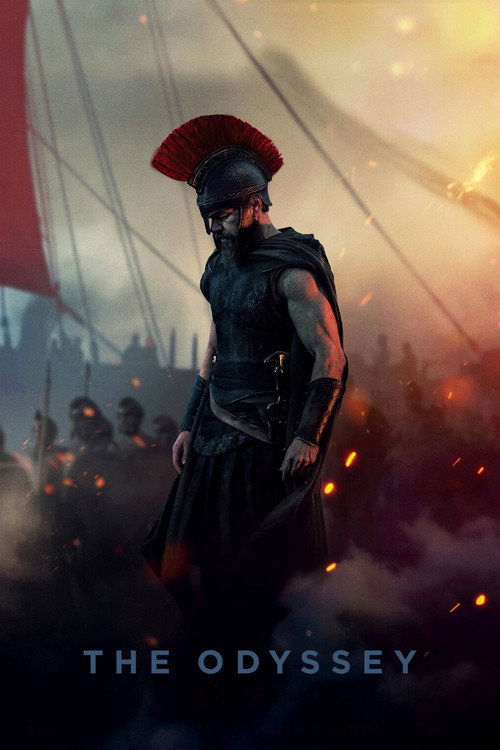
The Odyssey8.0July 20
I really liked The Odyssey, more so than any Nolan film for a while. Christopher Nolan always makes great action and intense cinematic experiences, so that's here again. But this is the first Nolan film that I've felt actually earned its serious themes. I particularly like the third act, both with the final battle with the suitors, and especially with how the film reshapes the fall of Troy into an event that is shameful and traitorous. Not every scene worked for me, but there's a lot of great moments. The gates of Troy being opened and Agamemnon walking in with ultimate swagger was pretty awesome. The third act had me fully hooked, and some of the horror moments like Circe and the pigs was pretty intense. Anne Hathaway as Penelope was excellent, and the barrage of A-listers was mostly interesting. I wasn't entirely sold on Matt Damon in the first 2 acts since he seemed pretty flat. I get that you're grizzled by violence, but seeing a cyclops eat your boys should still elicit a bigger reaction. I didn't mind Tom Holland as Telemachus, but I was always aware that these people I was watching were Americans and Brits. It didn't pull me out as much as I was expecting, since it creates the impression of watching a mythical version of a superhero film. And much like any superhero film, the dialogue is occasionally pretty weird and cheesy, but I mostly accept that to enjoy the adventure. Some of the scenes underwhelmed me. The cyclops didn't look particularly good or scary to me, and the design of Scilla was nowhere near as scary as an old cartoon I watched a long time ago. The sirens scene didn't make any sense. Why exactly is this version of Odysseus listening to them? The original version knew they would sing him his true desire, which was how to get home. But in Nolan's version, that is no longer his desire, so why exactly does he need to listen to them? But I was never bored, and there was always a new adventure coming up to keep my interest. It was the third act where I really started to connect with this film, because of how it reframed the story into one about how awful Odysseus' actions at Troy had actually been. That approach is a change from the source material, and I think it's an improvement. Homer had gone to great pains to make Odysseus a flawed protagonist, particularly through his hubris and willingness to tempt fate. That's still here in Nolan's version, (like Odysseus shooting an arrow at the cyclops) but Homer treated Odysseus as a conquering hero whose arrogance prevents him from obtaining what he desires. Nolan instead, makes Odysseus a grizzled veteran haunted by his past misdeeds, who is arrogant, but only in flashes. I rewatched Troy to prepare for this, and it really reminded me just how shameless the Trojan Horse really was. The Trojans successfully repelled the Greeks for 10 years, and based on all norms of warfare, there was no reason to expect that the Greeks would offer them a gift of resignation just to then use it to get inside the city. The Greeks didn't win in battle they only defeated Troy through treachery. And when I couple that with the reality of what a castle sack entails. Murdering every man and boy in the city, raping every woman and girl they can find... it's pretty horrifying. So it makes a ton of sense to me that Nolan has Odysseus grapple with this reality, to the point where he feels unworthy of returning home at all. Nolan does sterilize the reality of that violence, creating a metaphorical vision of Athena where his men cut the head off a statue, while we hear the screams of the city in the background. Rather than showing the slaughters and rapes, we get a version that implies it while still remaining safe for mass market appeal. I do think this cheapens the impact a bit, because Odysseus isn't really remembering the slaughter of innocents as much as he's haunted by his violation of the gods and the loss of his own men. But it still mostly gets the point across. This third act is similar to what Nolan showed in Oppenheimer, where a brilliant mind uses his intellect to create something potent that radically violates the established goodness of the earth. But in Oppenheimer, the 3rd act was a complete waste of time. All the politicking about whether Oppy would have his reputation hurt was such a silly way to let him be punished. The Odyssey is different. Odysseus has watched an entire city be slaughtered and abused. He has since watched all his men be picked off by monstrous entities in various horrifying manners. Odysseus has been away from his wife, son, and home for so long, and it has clearly weighed on him. The man has been sufficiently punished, and it's very easy to get behind him on his attempt to return home. Also by not revealing the cause of Odysseus' wanderings for that long, it makes the 3rd act feel like a reveal even though the film was pretty clearly suggesting that point the whole way through. The opening scene is Travis Scott lamenting the fall of Troy, and Odysseus keeps seeing that vision of Athena and the head of the statue falling, so I was pretty aware this was where the film was going. But the actual reveal scene when he explains how he's no longer the same man, and we see the fall of Troy, that was a special scene, beautifully filmed and deeply traumatic. I understood Nolan's version of Odysseus in that moment, and it was a better exploration of character than I've seen in any other Nolan film. So on the whole, I think this was yet another in a long history of exciting cinematic events created by Christopher Nolan. Not every element works, and it is a bit of a superhero approach, but that's also paired with stunning visuals and a surprisingly potent character study. Well worth the watch.
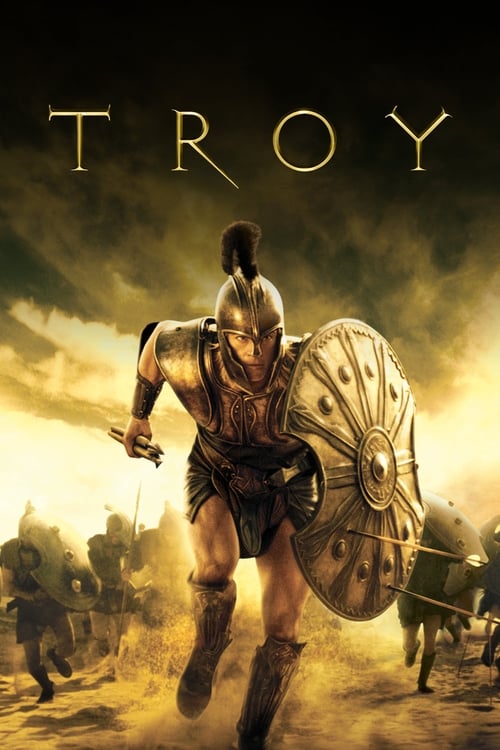
Troy6.0July 17
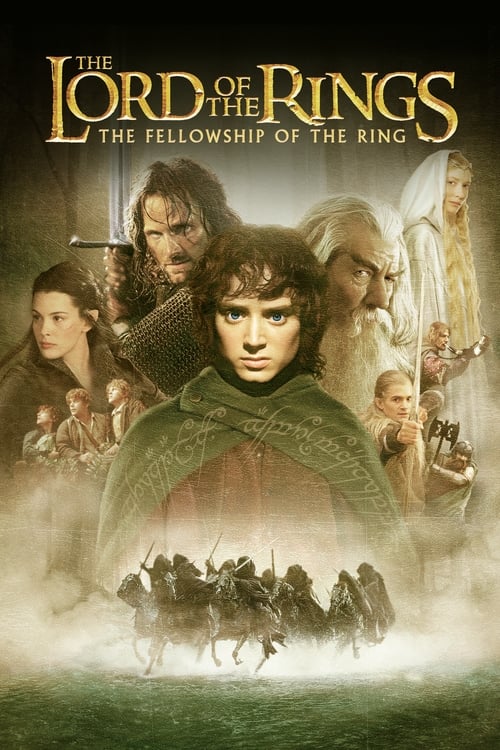
This Achilles guy looks pretty gay, but Patroclus that pretty boy he hangs out with is his cousin apparently, and he’s banging Rose Byrne so he must be straight I guess… Troy is a generally enjoyable overload of masculinity. It’s quite a silly machismo heterosexual fantasy, but it more or less tells the story of the Iliad and has some fun sword and sandal action. It’s clearly inspired by the Lord of the Rings, with many shots functioning as almost exact copies, and using several of the same actors. Also why is Diane Kruger Helen of Troy? She’s beautiful, but I don’t see any personality in her she just looks like a bland example of physical form without individuality. Rose Byrne would have made way more sense to me.
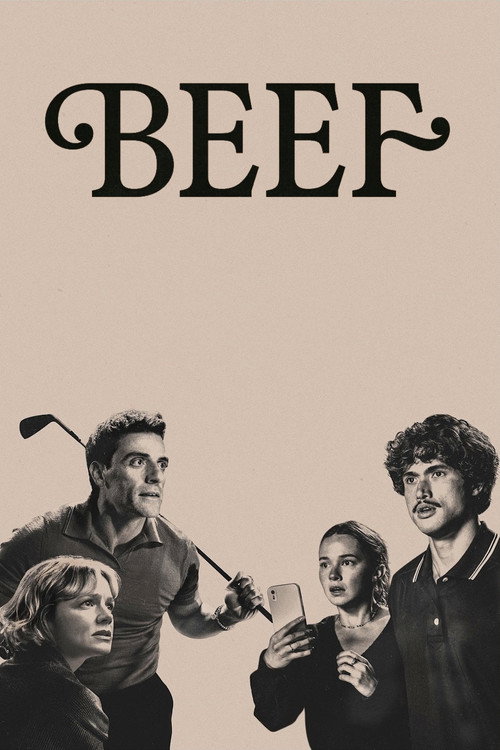
BEEF9.0July 13
Season 1 - 4.5 Season 2 - 3.0 I was quite underwhelmed by season 2. Cailee Spaeny was great as she always is (deserved more attention for Priscilla). She’s quite the cutie, and I think she’s the only one of the 4 new leads who was selling the comic elements. Her silly little bow to the Chairwoman when they first meet was hilarious, as was her pretending to read the certification on the wall so she could spy without being found out. I normally like Oscar Isaac, Carey Mulligan, and Charles Melton, and they do fine here, but they’re all very dramatic performers. The comedy from season 1 is almost non-existent in season 2, and I’m not sure if the writing changed or the performances. Either way, it felt like a huge loss. Ali Wong and Steven Yeun made season 1 a hilarious dark comedy blast, whereas season 2 became some weird pretentious drama about capitalism. It’s trying to be Parasite or No Other Choice, but I didn’t find it anywhere near as good. I get the points its trying to make. Cailee Spaeny and Charles Melton start out innocent but then once money gets in the way it corrupts them into being like Oscar Isaac and Carrie Mulligan. Despite multiple murders, fraud, embezzlement, and theft, the powerful get off scot free, and the characters only option is to embrace the evils of the system. So I do see what the show is doing… But that’s not actually accurate. Nobody actually does have to make choices to this degree. And if you want to say that the universe is heightened for satire/absurdity, that’s fine, but you have to actually be funny! And this season just took itself so seriously as to not be humorous any more, which spoiled most of the fun. This just felt mean spirited. Interesting enough to watch all the way through, but disappointing in comparison to its first season.
Black Bird8.0July 8
A fantastic, layered, chilling performance from Paul Walter Hauser, humanizing a despicable monster to the point where for a moment, I’d almost empathize with him. Taron Egerton felt a bit stiff in the first two episodes playing a former drug dealer serving a 10 year sentence, but once the show put him in the same place as Hauser’s Larry Hall, this thing was firing on all cylinders. I was wholly engrossed in watching the attempts to get inside the mind of a serial killing, serial lying soft spoken mentally handicapped creepazoid with fetishes for civil war reenactments and murdering teenage girls. Sometimes the show felt like it was trying too hard to add drama rather than letting the drama tell itself. I didn’t need so much crosscutting timelines. And while I understand what they were trying to do with some of the interludes of the victims in slow motion dramatic framing, at the beach or narrating their diary, it felt a bit cheesy and would sometimes take me out of the moment. But then I’d see Paul Walter Hauser and be drawn right back in. What an incredible horrifying yet humanizing performance. This one was worth the watch.