Skip to content



dippy29
@dippy29
Of course there are spoilers in my reviews, why are you reading reviews for a movie you haven’t watched?
Recent activity
My Dinner with Andre7.0July 7
Kind of crazy that it's been 45 years since this movie came out and we're all still sitting here agonizing over the same stuff lol Was between a 3.5 and a 4 for this, while I do think for what it is (two guys eating dinner for an hour and 40 minutes) it's actually a remarkably captivating movie. The actors are so natural in their deliveries and the way the camera moves to capture the stories that are being told, bringing us in close for moments of discomfort or tension and a bit further away to illustrate the relaxed nature of that portion of the conversation. Andre and Wallace rarely share the frame, each of them take their time in letting the other explore their thoughts. At least Wallace is a little better at it. The conversation these two men are having is not dissimilar to a debate I've often had in my own head. Modernity breeds a certain degree of complacency and boredom in people, which I've felt in myself. Part of me feels a guilt in how simple my life is. I hardly have to struggle for anything except for my own sanity. It's almost as though the simplicity of life in the developed world breeds a contempt for itself. I've developed a kind of Roussaeauan "noble savage" view of certain parts of the world that aren't as developed as the one I live in. Perhaps that's wrong, since they're not living that way for the most part out of intention, it's circumstance. Andre and I are attributing an outsized moral victory to these people who have harder lives than us, even though they'd likely switch with us in a heartbeat. Living life as we live it has turned into a curse without purpose. On the other side of the table is a rational version of the same man. Who am I to believe the life I lead isn't difficult or valuable simply because of where I'm living it? Sure, having creature comforts is something many people around the world can't necessarily say, but I struggle and fight in different ways. The system that I live inside is antagonistic to me on a human level. At the risk of sounding like the cringiest person on planet earth, the true lies somewhere in the middle. It's probably not necessary to go and live in India to ground yourself, but you probably do need to actively think about the world you live in, how it affects you and how you affect it. Also, Wallace Shaun is known primarily for this movie and *The Princess Bride* and he says "inconceivable" in both movies. Isn't that insane?
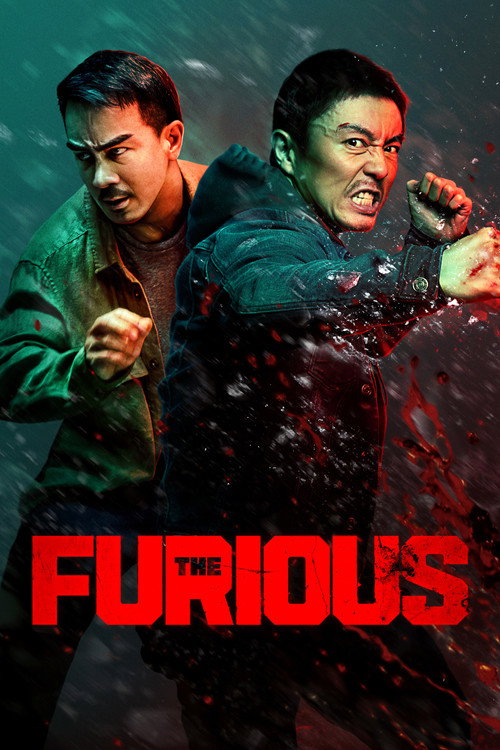
The Furious8.0June 24
I'm rating this a touch high because even though it has parts that I consider underdeveloped which actually do kind of bother me, it was such an enjoyable watch that I can put those to the side for a time. *The Furious *is probably the most visceral, creative and hype martial arts movie since *The Raid.* And personally, I found the action to be even more interesting than that found in *The Raid*. Much of that film's fight choreography is based in what I think is muy thai? And while that was super cool and flashy, I found *The Furious *offering even more complex and unique approaches to fight choreography. There's a surprising degree of verticality to group fights in this movie, including more than once protagonists climbing up or down hordes of enemies and issuing takedowns in the process. This movie focuses a great deal on feet and legs in ways I haven't seen before, incorporating scorpion kicks, kick feints (which are unbelievably cool), and a new technique for me, a character rolling while pinned down by another to prevent his captor from getting back on his feet. Balance and momentum are two elements of battle that I thought were immensely cool. It seemed like half of a fighter's intention was to destabilize their opponent just as much as it was to deal direct damage. Different fighters have different techniques, like the large bald man who is basically Juggernaut. That's awesome. So many moments in my theater elicited audible "oh shit"s or "DAMN" out of everyone in there. And there was a surprising amount of people who bought tickets. I only had a couple qualms, but they're still qualms. Firstly, this is a very simple story with contrived plot elements and really overused archetypes. It's not egregious, but I found the portion of the movie involving a corrupt cop to be pretty played out. Secondly, although one of the main characters is a little girl, there simply wasn't enough women in this. Matia, introduced FIRST in the movie, had a super cool fight scene that made me laugh it was so inventive and then she's never heard from again. I think this was a severe disservice to what would've been an awesome prestige by that character. Third and finally, is the weird dubbing. I can't quite put my finger on whether they used the deepfake dubbing, as I noticed quite a few scenes where the mouths did not match the words at all and certain characters just didn't look right with their voices. I think some actors were able to speak convincing English, but some were deepfaked. It's hard to know, I can't find any information about it. But it was distracting, admittedly. What a great ride. It felt like every time the movie would end, some new energy was introduced and the action just kept going. Really fun stuff here, I hope this team makes another film, although I hope that time the story is a touch more complex.
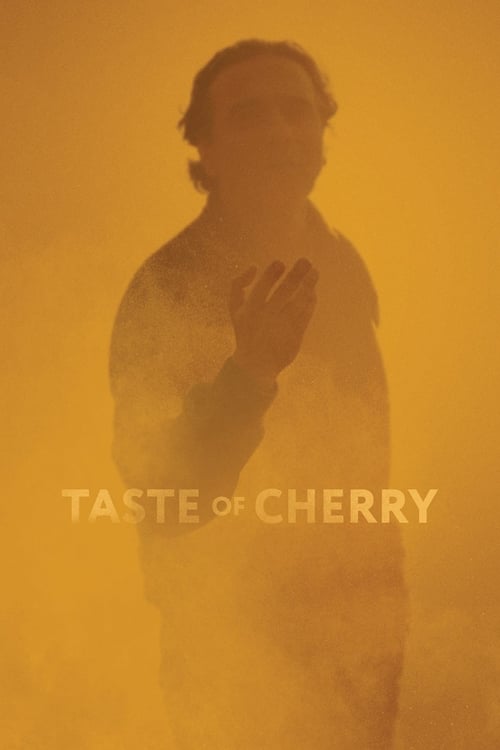
Taste of Cherry8.0June 22
This is a work that feels remarkably personal and surprisingly transcendent. It's hard to find words to talk about a movie that has had the degree of cultural impact this movie has, especially in the place where the film was made. Nearly every person that Badii tries to involve in his plan has some degree of reservation about it, but the one that felt most salient to me was the clergyman who Badii attempts to convince past his belief system. Discussing suicide in a deeply religious country is essentially the most taboo subject imaginable, and Badii knows this fact. His eyes, when scanning each person he is thinking of approaching, are hooded but clearly desperate. This is a tired man on a timer. Somehow this movie manages to capture deeply complex geopolitical circumstances occurring at the time of this movie's filming. The west's impact on this movie is quite tangible, as Badii finds himself talking to men from three different cultural backgrounds, all having different reservations for why either they won't help him or that he shouldn't be doing it at all. These three cultures may not have even found themselves in Iran in the 90s if not for western imperialism, as Iran was one of the only somewhat stable countries at the time. Religious allegiances are intensified and militarization is ratcheted up, both proving to be stumbling blocks for Badii to safely pull off his plan. There's honestly so much thematically going on that it feels difficult to try and talk about it in this format. There are two scenes that really paint the image for me of what Badii is actually dealing with. The first is one that most people probably don't even talk about very much, the scene where Badii is observing the quarry in operation. Upon observing the destruction of something so powerful and resolute as stone, he sees his own fragility mirrored and the thin veil of personhood he's managed to drape over himself through the movie's events to this point has been stripped off. A worker attempts to rouse him from a slump he's fallen into so that he might move his car, but when Badii eventually laboriously lifts his head and opens his eyes, the visage is nearly inhuman. At this point I wonder myself, should Badii stay alive? Is it unjust to force a man to live in this state? His eyes reflect nothing like I would expect to see in a conscious person, and this is only ever seen one more time in the film. The last frame. It's left up to us whether Badii survives or dies in his grave, but I've seen that look on his face before. To me, he is gone. He doesn't look remarkably at peace either, and since he is gone he can no longer mask the dread he naturally bears on his countenance. A thunderclap illuminates him for one last time in this world, but I suppose his pain is now gone. Whatever it was. I wish I could've been there to love him past his pain. But this was not a perfect viewing experience. It feels hard to criticize a movie of this degree of cultural import, but certain things definitely bothered me while watching. First was the quality of the footage. This is not the only time I've been bothered by the equipment used in a picture from around this time period, as *28 Days Later *was another that made the viewing experience more difficult. I don't know whether it was the frame rate or the film that this was shot on, but there was so much warping and distortion that I found it genuinely distracting at times. Secondly, and this feels like the more incendiary take, is just that this movie is in many respects very boring. Basically the whole movie is Badii driving around while either he talks or another guy talks. I wouldn't even say there's a great degree of dialogue between parties in this movie, and it contributes to a very difficult viewing experience, bordering on a slog at times especially when taking into consideration the natural form of dialogue being somewhat repetitive or contrived from the people talking, namely the seminary student and Dr Bagheri. Definitely feels like something people need to watch if only to see Arab filmmaking, but is something that needs to be watched actively and only so long as the viewer can manage to retain their attention.
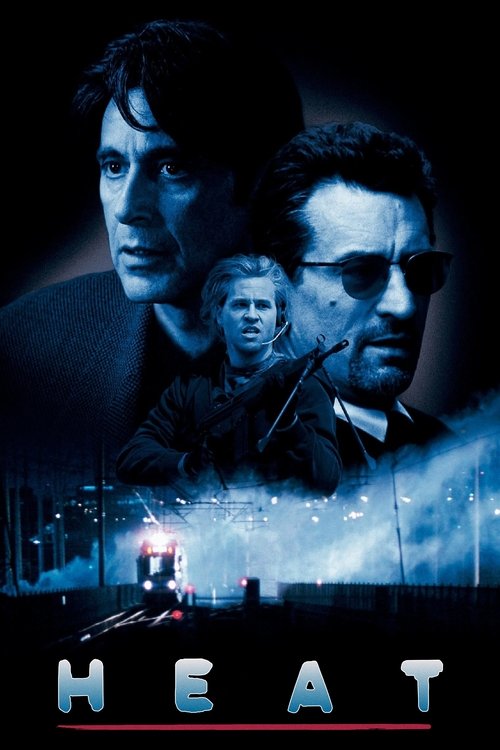
Heat8.0June 15
If I may say something controversial? If you want to watch *Heat *but don't have three hours to watch a movie, just watch *The Dark Knight*. Upon now seeing both I think both movies are nearly identical with almost the same weaknesses. Because of that I don't really have much to say about it tbh which is somewhat disappointing for me. The DeNiro love interest is a straight up fucking moron