Skip to content



fguyretftgu7
Gold@fguyretftgu7
incoherent ramblings disguised as reviews me like asian movies
Recent activity
Twin PeaksJuly 29
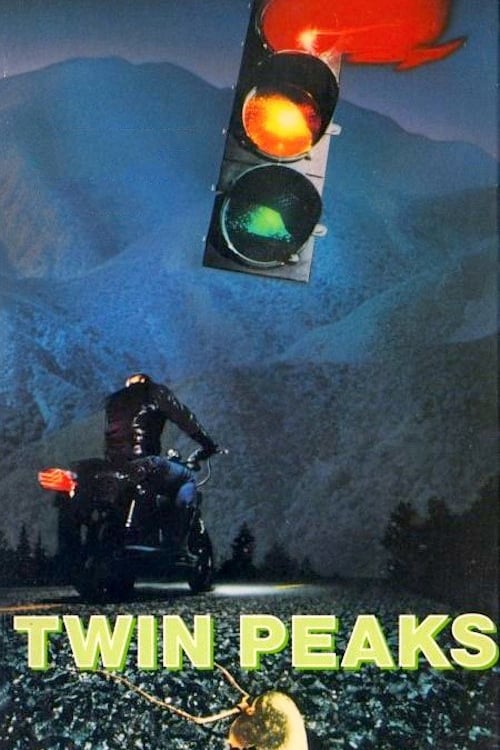
*Watched Season 1 + Season 2 Episodes 1 to 9* *Twin Peaks *was my second David Lynch project after *Dune*, but it might as well be my first encounter with Lynch. I'd watched the first season roughly six months ago, didn't think much about it, and just kinda stopped. It wasn't even that it was too confusing or psychedelic for my taste...I just didn't get what Lynch was going for. The bizarrely mundane subplots littered throughout the series were almost entirely uninteresting to me, despite *Twin Peaks *having some truly enjoyable characters. Namely, out of the main characters I loved Dale Cooper, Lucy; I liked Bobby, Audrey and Ben Horne too to a certain extent, but everyone else just kinda meandered around. Donna and James especially were *tough* to get through. I didn't understand why Lynch didn't fully lean into camp since most of the melodrama just felt really generic and unmoving. Every episode had a plethora of scenes I enjoyed, but for the episode as a package I was often left mildly entertained but ultimately thinking of better things to do with my time. I first watched *Blue Velvet *around this time. That movie felt like what Lynch was trying to say about Americana in *Twin Peaks*, except without the filler and spotting a lean runtime. I didn't have to watch a bunch of uninteresting subplots just to get to the characters I loved. And so, I decided that Lynch's movies were more up my alley, and I just gave up on *Twin Peaks.* I've grown to love Lynch quite a bit since then. But there was always a nagging sense of betrayal in my heart, that I preposterously called myself a Lynch fan without finishing the thing he is most well known and arguably beloved for. Additionally, *Fire Walk With Me *had been the top of my watchlist for months right now, but I never felt ready to watch it without at least reaching the reveal of Laura's killer. And finally, I had to watch *The Return.* I had no choice but to continue *Twin Peaks.* And so I continued the series yesterday, binged to episode 9 where the killer is revealed, and wow. I don't know if it's because I've become more in tune with Lynch's direction, but it was shocking how much these episodes resonated with me. Maybe it's because season 2 got rid of a lot of the uninteresting subplots and kept them at arm's length from taking up the main plot, because every episode was genuinely really engaging almost throughout. I love how psychedelic Season 2 is compared to 1, it clears up what Lynch was trying to say about Mankind's evil and the forces that lie beneath our reality in such a breathtakingly surreal fashion. And even the other subplots are actually quite fun in this season! I could watch a whole show about Bobby and Shelly taking care of Leo. Tojamura is unironically one of the funniest twists of all time. Nadine completely goes apeshit. The James, Maddy and Donna love triangle is actually so delightfully cringe (I'll remember "Just You...And I..." till the day I die). Andy and Lucy are so stupidly entertaining. It definitely goes into pure stupid comedy unlike Season 1, which might ruffle some fans' feathers, but to me I just had way more fun. But let's talk about Season 2 Episode 9. The abrupt "conclusion" to *Twin Peaks *mystery. It's simultaneously satisfying yet a little disappointing to watch this episode. I just wished we'd gotten more, plus I'm not a big a fan of the characters just theorising about everything. It feels jarring from Lynch's open ended and interpretive vision, as though the studio insisted everything to be explained in the end. I still loved the episode, but it definitely could have been better.
Twin Peaks: Fire Walk with Me8.0July 29
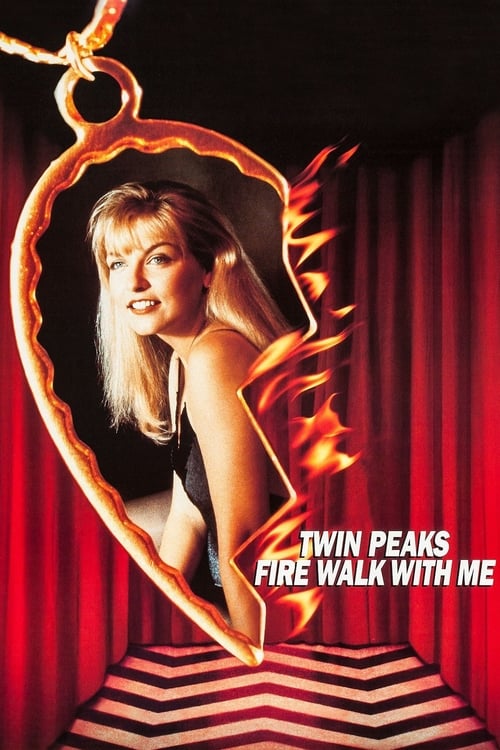
The truth of Laura Palmer exposed for the world to see in all of its ugliness. Gone is the mundane whimsy of daily life, instead replaced by a suffocating and oppressive air. There is a powerful sadness in *Fire Walks With Me *that none of other Lynch movies have felt like, probably due to how much we as a viewer are exposed to Laura Palmer's life without having actually met the girl. Sheryl Lee gives what might be the greatest Lynch performance alongside Naomi Watts, a haunting and tragic portrayal of the final days of a girl completely lost to normalcy. The villain too is one of the most despicable characters ever put to screen. Lynch's villains are truly something else entirely. I knew I would love this movie even before knowing much about *Twin Peaks*. There is an evil aura about the much debated prequel that pulled me to the series, in all of its psychological horror and mindfuckery. And in that, Lynch delivers in spades. Some of the greatest psychedelic sequences he would film are in this, as always everything with the Red Room is hauntingly sublime. The horror too is genuinely unnerving in this one, with many long takes of nothingness before a character intrudes upon that nothingness. But interestingly, it's in its somber moments that *Fire Walks With Me *hits the hardest. The sequence of "Questions in a World of Blue" juxtaposed with the Pink Room might be one of the most tragic Lynch sequences every put to screen. My heart breaks a little every time Laura tells Donna not to wear her things. And my god, the final scene... absolute cinema. Rest in Peace Laura Palmer, you always had an angel by your side, and his name is Dale Cooper. While I'd love to call this movie a masterpiece, it suffers from being a prequel. Some stuff are generally less interesting due to the audience already knowing what is about to go down, and you just kinda want to get to the new parts. The prologue too is a little out of place, feeling more like bonus *Twin Peaks *material smacked onto the Laura Palmer movie.
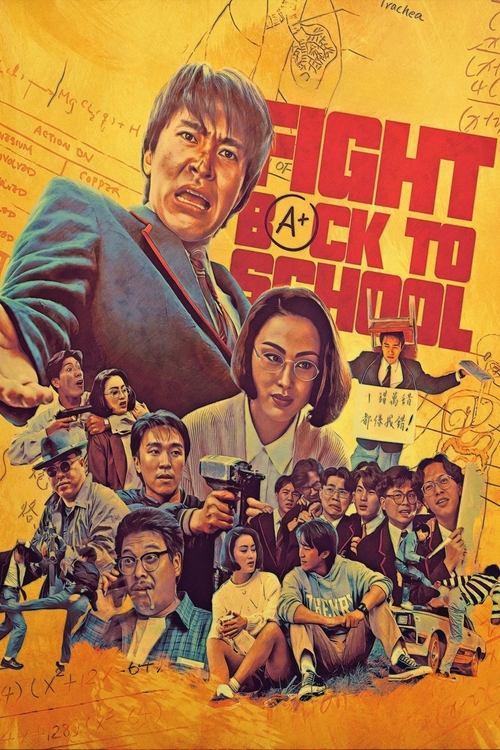
Fight Back to School5.0July 28
Surprisingly low energy for a Stephen Chow film and a premise as comical as this. Some good gags here and there especially with the condom, but I can't be arsed about most of what was going on, especially when it's just a far less interesting spoof on Ringo Lam's On Fire films.
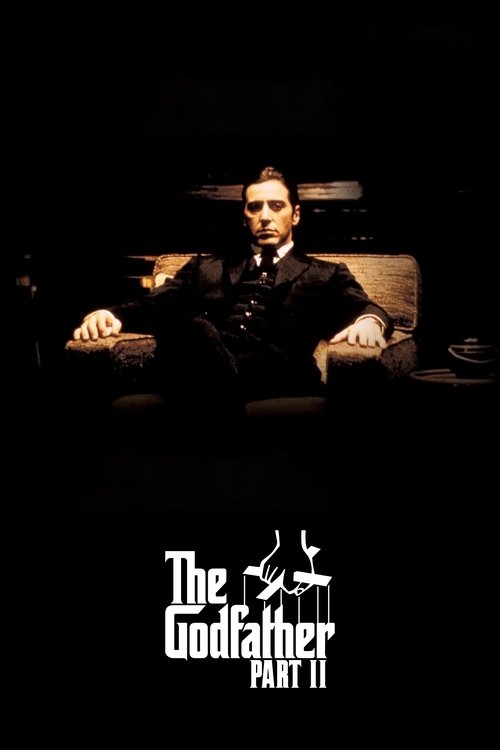
The Godfather Part II10.0July 27
I've always wondered about *The Godfather *movies' infatuation with culture. Most of these movies most important (and grisly) events use cultural festivals as a backdrop after all. People will say that it's simply a worldbuilding technique, to give these movies that signature *Godfather *romanticism these movies would becomes so well known for. I won't deny that that's likely the only intention in mind, to give these events an extra "oomph". But the literature student likes to theorise. These movies present such an interesting relationship between culture and modernity. The past and the present. Vito and Michael. A statue of Jesus dressed in American dollars. A New Years party interrupted by the cries of revolution. A traditional Mafia system, replaced by the cold, callous minds of capitalistic greed. A war between a dying old man and a man at the prime of his life. Both are shrewd businessmen, yet there is a stark difference between the two other than age. It might have something to do with Moe Greene. Michael is different from Vito and Hyman. Both will devote themselves utterly to protect their family and brethren: for the former it means starting a whole mafia hierarchy, for the latter it means dedicating your final days to avenge the brother you lost. Michael is not like them. If you betray him, if you *leave* him, you are nothing. And yet, are they so different? To understand the end, one must trace the ending. And that is why *The Godfather Part Two *is a film of two tales. Because are Vito and Michael truly so different? Many will say that Michael was the reason it all fell apart, and that he failed Vito's vision. I say that Michael is merely the endpoint of a misguided system. He is the endpoint of an country that started out as a refuge for immigrants to start a new life, before transforming into a hypercapitalistic, soulless husk that turned its back on those that built it. If only Vito had Michael aborted. This is not a comfort movie. The first time I watched this, I admit I was knocked out by the punishing runtime and failed to keep up with the plot. There are so many double entendres and *subtext *in this damn movie. Michael will say one thing to someone, then say the utter opposite to another. But how do we know what he truly means? We stare at Al Pacino. Ah, Al Pacino in *The Godfather Part Two*. This is the most magnetic performance of all time. I don't think there's a single performance in cinema that comanded my eyes the way Al Pacino has in this one. It's in the eyes, it's in his voice, it's in his posture, it's in *everything*. Robert De Niro too somehow takes Marlon Brando's all timer performance and turns it into something wholly original, yet very much in line with the first *Godfather*. De Niro has always been fantastic playing slimy, shit-eating antiheroes, so seeing him play an honourable, *respectable *man this well is another reason why he is perhaps the greatest actor of his generation. John Cazale does not get enough credit; he goes toe-to-toe in Pacino's most brilliant scenes and somehow emerges as being on the same level as him. His fear, his resentment, his despair is just so palpable. People will say, this is not as good as the original because it is worse paced. I was one of them. I don't agree with that opinion anymore. Yes, this movie is longer than the original by quite a bit, but it is clearly doing a whole lot more. Sometimes, pacing stops becoming a thing when you're so immersed in what's going on. This is one of those movies. Is this a perfect film? There's too many named characters in these movies. I wished we could have sat with Michael on that bench a lot longer. Some, very few but some, scenes are kinda abruptly cut. That's about it.