Skip to content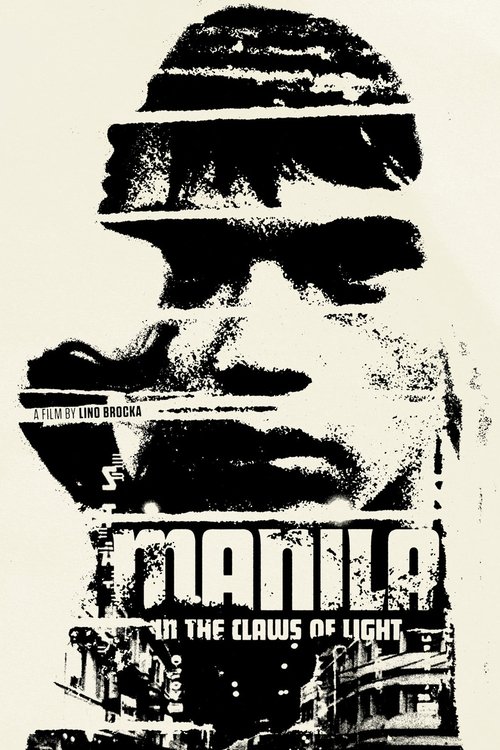



Recent activity
Manila in the Claws of Light10.0July 1, 2025
This film is a masterclass of how poverty and wealth disparity erodes the human spirit, where desperate people can only envision better lives, where the corrupt and oppressed reality of a Marcos-era dictatorship eventually weaves itself into the very fibres of our being. What seemingly is the hero's journey of a young man trying to find his love, Ligaya Paraiso (a perfect and very intentional name meaning 'joyful paradise), slowly becomes a scathing critique of Marcos-era poverty and how social perceptions of injustice and corruption become us if we lose our resolve. Brocka never lets us dwell on the past of their love, he gives us only short frames into the past before we are brutally panned back to the cold reality of urban life. To him, and as we see, no amount of envisioning of a better life can ever soothe the human soul if your society is corrupted. Deprivation makes us less human, there is no community, no honour, between people passing in the street. In spite of this, Brocka allows us to see how community and solidarity can form in the worst of circumstances, as Julio finds companionship and help from a network of friends. However, we see how a community exists within oppressive structures set on destroying it. His friends are slowly consumed by the unfairness of their circumstances, some die of their exploitative and dangerous work conditions, others decide to become the perpetuators of this exploitation. Within the first half of the film, Brocka does not give us any respite, any suggestion, that there will be a fair outcome for people in this society, as the first sight of optimism we see through Benny leads to his brutal and un-mourned death. As the slum community tries to salvage whatever is left in the aftermath of a fire, we see that for people living in poverty during the Marcos-era, life comes at them no matter what. To Brocka, when faced with a dog-eat-dog world, sex and violence is the same. The film uses sex and violence simply to placate, even for a few moments, the isolation and abuse of everyday living. When Julio goes to punch a man that attempts to steal a woman's purse, he realises that the degradation of urban living is weighing on him. Brocka's take on male prostitution is very compelling, within his own perspective as a queer man, we see how it can create community but also grate on the soul as an act of desperation. Whilst male prostitution and female prostitution is represented much differently, Brocka sees how there can be no true autonomy to prostitution when it is necessitated out of poverty and desperation. It is simply another tool, like violence, to suppress our humanity and survive under impossible circumstances. The conclusion is the same, that the pleasures of violence or sex (whether it be acts of desperation or not), can not free a person from a helpless situation, both are equally as degrading to the human spirit. When Jojo tells Julio how much more comfortable he can live through being a callboy compared to a labourer, we see that same desperation and emptiness that comes from sacrificing one's humanity. In an unequal society, one much be willing to sacrifice more than another in the pursuit of capital. Towards the end of the film, Pol asks in an almost probing fashion, if Julio could 'walk on hot coal' like the Fakirs, to feel no pain no matter what life throws at you. In this context, it is to continue to find meaning and strength when he truly loses it all (his Ligaya). This ultimately leads us to final moments of the film, where Julio both finds out Ligaya is dead and then kills her murderer and captor. When Julio decides to take his revenge, we see that there is no more hope. He perpetuates the cycle of violence, when Pol asks him to not do anything rash at her burial, he has already made his choice. I found it interesting how Brocka (as a Director's nod or a deliberate choice by Bembol Roco himself) decides to portray Julio's final moments before he is (presumably) beaten and killed by thugs. One would think he would find relief in death, having lost the love of his life and no reason to continue living. And yet, he is afraid, we see his tear-struck face and the desperation in his eyes to live, which suggests that despite feeding into the violent inhibitions that characterise urban life in Manila, he has the same humanity he carries throughout the film. On other notes, the cinematography of this movie was brilliant and complemented the film's overarching themes perfectly. As Julio stares out to that second-floor window, there is a flicker of light, of hope, that he reunites with his love. All of this interwoven with the dirty urban landscape with clusters and blurs of people with indistinguishable faces. Brocka plays with the lighting and colouring of the film in such interesting ways, whether that be the neon street signs that flicker and illuminate Julio's path or beckon him towards temptation, to that second-floor window that brings Julio closer and closer to finding his love. How the film starts out in black and white, isolating, and moves into colour as we learn about Julio and his quest to find Ligaya, his noble and pure intentions. The visuals of the film reminded me heavily of Scorsese's Taxi Driver (1976), released the following year. The colourful lettering of neon lights, taunting onlookers, remind us that in the impoverished slums of Manila, there is only temporary pleasures from the struggle of survival.
Eddington7.5June 20, 2025
Materialists7.7June 13, 2025
Loved this movie. The moment I saw a bunch of white people screaming to Sweet Caroline in the wedding scene I knew this was MY director.
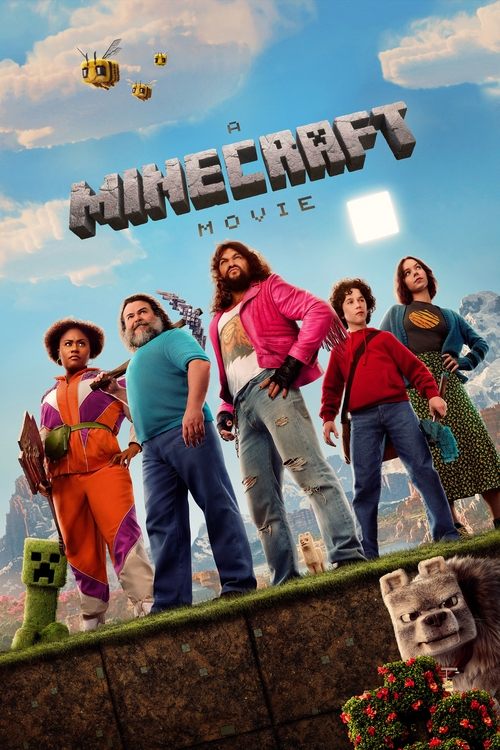
A Minecraft Movie5.4April 9, 2025
Slightly too mature to be a genuine kids movie. It is 100% for doomer 20 somethings who bought the game in 2012.