Skip to content

Recent activity
Wicker6.0October 23
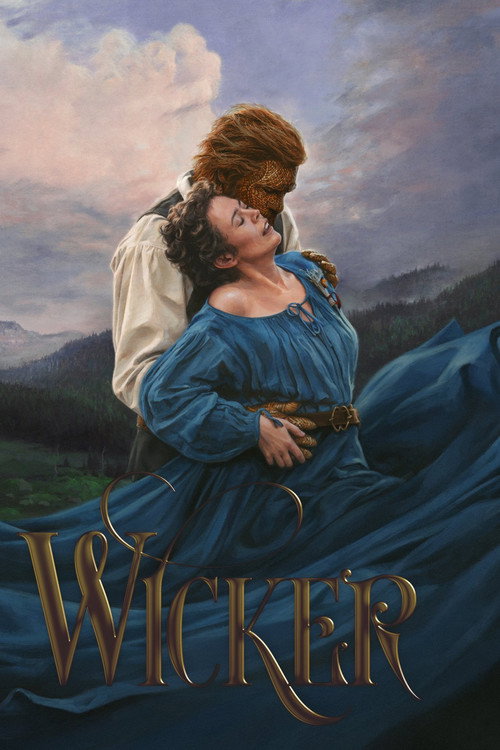
I really don’t understand the high praise this is receiving. A lot of the writing feels like something ripped straight out of an outdated British comedy series, which is especially disappointing considering how much potential this story has. There are some genuinely humorous and heartwarming moments scattered throughout, but they’re buried beneath such an inconsistent tone and uneven pacing that I found it increasingly difficult to care about any of these characters. Half the film seems to be devoted to jokes about lusting after someone who isn’t your partner, or fucking a wicker man, and there’s very little else going on beneath the surface. No meaningful character development, no particularly compelling conflict beyond petty jealousy, and very little to suggest that any of these people have learned anything by the time the credits roll. Without getting into spoilers, the motivation behind the climactic action makes absolutely no sense to me. It immediately makes one of the characters almost impossible to forgive, and yet the remainder of the film proceeds as though nothing particularly egregious has happened. The complete lack of consequences is infuriating. The one supposed consequence we do get in the finale falls on a single man, which feels like a laughably inadequate resolution to everything that came before it. I can’t help but feel that much of this stems from the decision to stretch a 14-page short story into a feature-length film. At 1 hour and 45 minutes, there simply isn’t enough material here to sustain the runtime, and it really feels as though the filmmakers wrote an entirely separate film’s worth of filler and wedged it between the remnants of the original story. Whenever the film returns to the source material, there’s a sense of purpose and momentum, only for it to veer off into another stretch of largely inconsequential comedy or bland drama. Back and forth, back and forth. It’s distracting, disjointed, and makes the whole thing feel inconsistent. Olivia Colman, Alexander Skarsgård, and Marli Siu are the only performers who consistently impressed me. The rest of the cast often feel as though they’re performing in an entirely different production, with a theatricality that rarely translates well to the screen. And I really, really despised Peter Dinklage in this. I’ve never found him particularly convincing as an actor, and this performance does absolutely nothing to change my mind. The same accent, the same cadence, the same insufferably pompous delivery. And why is he talking to himself so much? By the end, I was practically begging for his scenes to be over. Visually, the film is undeniably beautiful. There are some lovely compositions throughout, but pretty cinematography can only do so much when it feels entirely disconnected from the story being told. The camera never seems particularly interested in revealing anything about these characters or drawing us deeper into their world. The shots look nice, certainly, but I struggled to find any real motivation behind them beyond their looks. What frustrates me most is how little the film does with its own premise. There’s so much potential here to explore misogyny, the absurdity of historical cultural norms, and the ways in which people justify their own selfishness, but the film seems content to make a few shallow comedic observations about these things before moving on to the next joke. Nothing is truly developed with much real conviction, and whatever interesting ideas might be lurking beneath the surface are ultimately sacrificed for the sake of a fairly standard romantic comedy. Ultimately, I found this to be a remarkably shallow film with a handful of redeeming qualities. It has an intriguing premise, some genuinely fun moments, and a few performances worth appreciating, but very little else to offer. For a story with this much potential, it’s frustrating to watch it settle for so little. A pretty film with some good jokes, I suppose, but not nearly as clever or insightful as I was hoping for.
No Jail Time: The Movie4.0October 21
As of 21/10/2026, there is no evidence that Oppenheim obtained or used this footage illegally. However, the circumstances surrounding how it was acquired remains an ethical gray area. Oppenheim attended Pine Crest School, a private preparatory school, before graduating from Harvard. His educational background suggests he comes from a privileged environment, also suggesting he may have had a more entitled outlook on how he could obtain the footage. Having access to the footage doesn’t mean he should have used it, especially when it adds little value to an already underwhelming documentary. He could have recreated the footage or simply shown what appeared on screen during the training session. Instead, he used actual footage of convicted criminals and their families to sell a one-sided opinion piece disguised as a documentary. I don’t believe he should have used it, though I think there’s a strong fair use argument. More importantly, the documentary does little to illuminate the subject of sentencing mitigation videos. It introduces the concept, then spends the rest of its runtime demonizing the very filmmaking practice Oppenheim himself employs, framing these videos as tools for deception and manipulation intended to manipulate judges into reducing sentences. The film never meaningfully explores how mitigation videos are made, offers relevant statistics, or presents a balanced perspective. Judges are making decisions that affect human lives; surely, understanding the person they’re sentencing has to have some value. If a judge can’t watch a mitigation video without compromising their impartiality, should they be trusted to uphold the law in the first place? Ultimately, I see this as an opportunistic project Oppenheim knew he could sell to the New York Times. Given *You Can See Everything *offers a far more nuanced perspective on its subject, I’m left drawing one conclusion: Oppenheim knew exactly what he was doing and prioritized his career over ethical filmmaking.
Anything That Moves5.0October 17
It’s strange. There are sequences with clear intent and beautiful artistry but as a whole this is a wildly flawed project. Without going into the somewhat unintelligible plot, the writing here is frighteningly bad for such an interesting concept. There are a lot of plot points working in favor of this film but they’re mangled together with little to no methodology. The acting is what you’d expect to see from a cult film but nowhere near entertaining enough to hold its own. This was especially an issue when arriving at the climax of the film between the two main characters. Despite the general artistry behind the cinematography, it’s wildly inconsistent. One shot will feel as if it was developed with forethought and intent while the next is a sloppily lit hand-cam close-up. It’s difficult to become entranced with a film if every scene has variance in quality. There’s so much potential here with the 1970’s slasher and porno aesthetics but it relies so heavily on these tropes and visual style that it lacks detailed substance. A lot of people will view this film in a kinder light simply for its exploration of modern, albeit extreme, sexual interactions. However few of these moments had much of an impact on the story at all. I don’t see myself returning to this one in the near future.
Norm: The Tale of Norm Macdonald8.0October 17
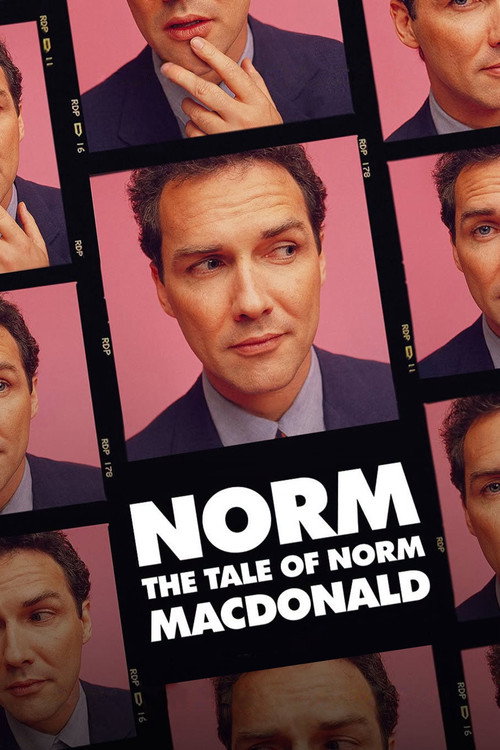
Apatow takes a pretty unique approach to documenting Norm’s life by exploring his career through the YouTube rabbit hole of archival television and internet clips that so many of us discovered him through. I’ve seen people criticize this project for being more of a compilation/bets hits rather than an actual documentary, which feels like a pretty shallow way of looking at it. Isn’t that what a documentary is at its core - A collection of moments put together to tell the story of a life. And in Norm’s case, his life was better documented than most. More than anything, this documentary acts as a reminder of just how much Norm had to offer. Not only his genius comedy but his loving humanity. Behind all the jokes and absurdity was one of the most genuine souls to ever do it.