Skip to content

Recent activity
Watching the Detectives4.0June 21
lock me up with cillian in a video store
Nocturnal Animals6.0June 21
my favourite genre: emotionally devastating literature as a weapon
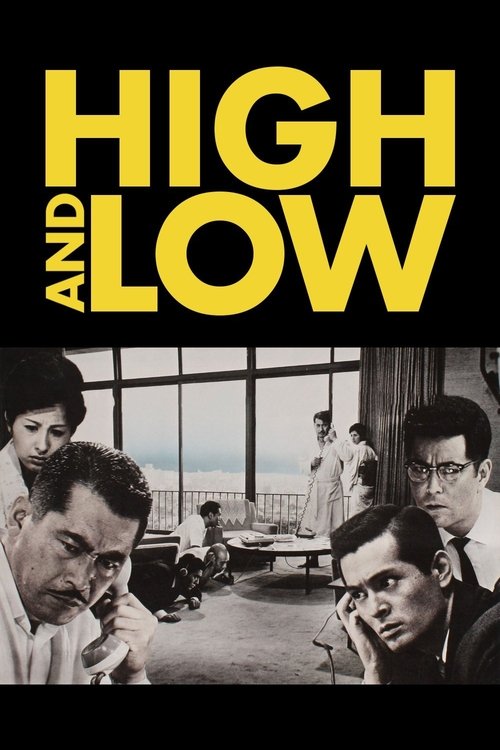
High and Low9.0June 21
High and Low was a really strong watch for me: what begins as a seemingly simple kidnapping thriller becomes a layered study of class division, moral responsibility, corporate greed, and postwar Japanese inequality. I loved how Kurosawa turns Gondo’s dilemma into something bigger than suspense: should a man sacrifice everything for a child who is not his own, especially when his wealth and social position already separate him from the world below? The first half is incredibly gripping, almost chamber-like in its tension, with the blocking, widescreen compositions, and performances keeping every shift in power and fear alive inside Gondo’s house. The second half, while still fascinating in its detailed police procedural structure, felt slightly stretched to me, though I appreciated how methodically it shows law enforcement working as a collective system rather than through one heroic detective. Technically, the film is masterful: Kurosawa uses vertical space, the hilltop house versus the city below, to visually express “high” and “low,” while the stark black-and-white photography and precise editing make the social themes feel built into the form itself. It is a tense, thoughtful, and very well-acted film whose kidnapping plot opens into a much richer reflection on conscience, inequality, justice, and the cost of doing the right thing.
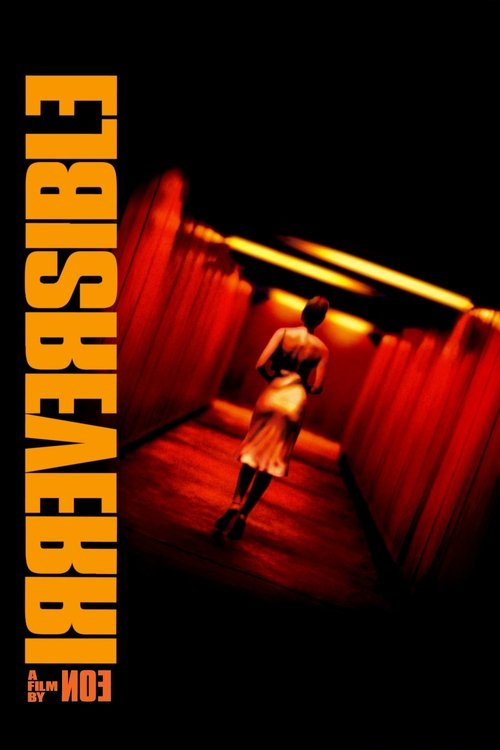
Irreversible5.0June 20
*Irréversible* is grim, nauseating, and almost aggressively difficult to sit through, but that difficulty also feels like the point. Noé does not simply show violence or tragedy; he makes the entire form of the film feel corrupted by it. There are moments where I wanted to reject the film completely. Its brutality is not easy to defend, and at times it risks feeling trapped inside its own extremity. The score, too, did not leave a strong impression on me; for a film so dependent on sensory disturbance, the music could have carried more emotional or atmospheric weight. Noé’s cinematography mirrors the psychic disintegration of the characters and the monstrous disorder of the world they are thrown into. When the film eventually moves toward calmer, more peaceful times, the contrast becomes devastating. The normalcy of life is shown almost too late, as if peace itself has already been contaminated by what we know is coming. That formal choice makes the tragedy feel *irreversible* in the deepest sense: not just as an event, but as a rupture in time, memory, and innocence. I cannot say I admired every choice, and I understand why many would find the film too harsh, too exploitative, or simply unbearable. But its ugliness is not empty. It drags the viewer close to the terrifying fact that ordinary life can be violated in an instant, and that cinema, when pushed to its most abrasive extremes, can make us feel that violation rather than merely observe it. A difficult, deeply flawed, but undeniably powerful film.