Skip to content




Recent activity
Obsession4.0July 2
Obsession4.0June 28
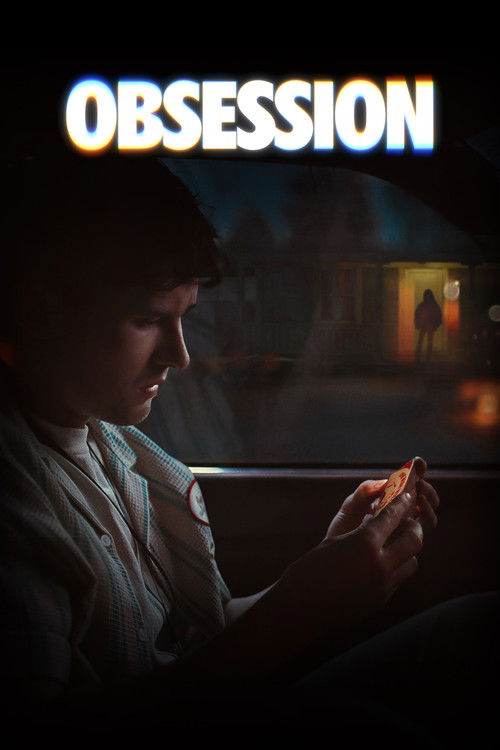
*This review may contain spoilers.* Obsession (2025): A Review *Obsession* has a genuinely strong premise: Bear makes an impulsive wish for his friend Nikki to love him, and the wish goes wrong in a more interesting way than expected. The horror isn't that he gets what he wants and it backfires — it's that the wish doesn't seem to touch Nikki's actual feelings at all. Instead it leaves her possessed by an entity that turns a possible relationship into something artificial, coercive, and grotesque. That's the film's best idea. Unfortunately, it never develops it with enough precision, and the movie that surrounds it undercuts the very tension it sets up. It's a film better suited to conversation than to actually watching. The wish, and what it actually costs Before the wish, Bear and Nikki are more than casual friends — they've known each other for seven years. Nikki calls him her only safe space; he reciprocates that trust. When she muses that if she had a crush on someone they wouldn't know, she immediately asks whether he likes her — not a confession, but not a clear rejection either. Their relationship reads as a genuine, uncertain maybe. That ambiguity is what makes Bear's wish morally troubling in a specific way. He isn't overturning an explicit no, and he isn't acting out of resentment after rejection. He's simply too afraid to risk an honest answer. Rather than confess and sit with uncertainty, he erases the uncertainty altogether. His sin is cowardice: he wants the certainty of being loved without the vulnerability of finding out whether Nikki could have loved him on her own. That cowardice isn't confined to the wish itself — it's the thread running through the entire film. It's there in his silence with Nikki after seven years of friendship, in his refusal to just tell the truth as things spiral, and in his inability to make the hard call when the story finally demands one from him. It's worth saying plainly that this wish is not some monstrous, alien impulse. Wanting someone specific to love you back is about as universal a wish as exists — almost everyone has wanted it at some point, whether or not they'd ever admit to wishing it into being. The film is less an indictment of Bear as a uniquely bad person than a thought experiment about what nearly anyone might idly wish for, given the same opportunity and the same disbelief that it could ever come true. The film handles this fairly well at first. Bear doesn't know the wish worked. When Nikki starts acting strangely, she offers him several apparent openings, and he doesn't take them — he checks on her repeatedly and sleeps on the floor rather than treat the situation as an opportunity. The next morning she makes a memorial out of Bear's dead cat, then gradually seems to normalize, explaining her behavior as drug-induced, then they have their first sexual encounter, before the two begin a relationship. This is where the film makes its first real structural mistake. After Nikki has built a memorial from a dead animal's remains, the story cuts to a montage of a normal, functioning relationship. That montage manufactures false stability right after establishing something is deeply wrong with her. The film needed to pick a lane — visible instability from the start, or a slower, tracked deterioration — instead of this unearned in-between. The consent question The date-night sequence is where the film's consent discourse gets loudest. Bear confronts Nikki about lying to him, she reacts disproportionately, and they later have their second and final sexual encounter — the scene most viewers point to when calling Bear a rapist. The scene is disturbing in hindsight, especially with Nikki's hollow-eyed framing, but Bear does not know she's possessed at this point. Watching as an audience member, I didn't know she was possessed yet either, neither did anyone I asked, despite already knowing the wish had caused something supernatural. Expecting Bear, inside the situation, to intuit what the audience itself hasn't been shown yet is an unreasonable standard. None of that means Nikki wasn't violated by the wish. Her autonomy is compromised, and the relationship is built on artificial circumstances. But there's a real difference between *Nikki was raped by the situation* and *Bear is a rapist*. The latter requires the film to establish that he knew she didn't genuinely want him, or that he knowingly ignored her incapacity to consent. It never does. He's guilty of making the wish. He isn't shown knowingly exploiting someone he knew was possessed — in fact, he recognizes something is wrong and calls the wish hotline to try to modify and then undo it before much of the audience catches on (his instinct to modify it rather than undo it outright is reprehensible). Where the logic breaks down The party sequence is where the film's internal logic starts to fray. Nikki smashes her own face again; Ian and Sarah clearly notice something is wrong but never actually try to speak to *her* — they confront Bear instead, as if Nikki is absent from her own crisis. Their concern exists for plot function, not as believable behavior. It gets worse after the party. Bear tells Nikki he's leaving; she threatens suicide, and he stays. This is one of the clearer signs that he genuinely cares about her — he had an exit that would have left him nearly faultless to the public, and he didn't take it, because leaving her in that state wasn't something he could bring himself to do. Later, when the lucid Nikki begs him to kill her, the audience questions his refusal. But he can't even let the *possessed* Nikki harm herself — expecting him to kill the real Nikki, in his first lucid encounter with her, isn't psychologically convincing. His refusal isn't noble, but it isn't hidden sadism either. Tellingly, killing her is never something he actually considers, even when she's the one asking — arguably one of the more admirable things about him. The story has boxed him into two impossible options — kill her or kill himself — and needs him not to choose the first, so it manufactures a scene of him talking to Sarah instead of Nikki that plays more like screenplay mechanics than character revelation. From there Bear's agency collapses fast: Nikki kills Sarah, Ian is no help in trying to reverse the curse, and Bear eventually attempts suicide, believing his death is the only way to end it — then can't go through with it and tries to save himself after overdosing. It isn't a dignified ending. It's a panicked, tragic collapse after the film has left him with nothing else to try. The idea the film keeps almost finding The strongest material in *Obsession* is the conflict between the real Nikki and the possessed Nikki. Inde Navarrette is genuinely excellent — she shifts between affection, manipulation, terror, and despair with more control than the script gives her credit for — and the glimpses of Nikki's real consciousness breaking through are the film's most emotionally effective moments. But that conflict is barely explored, and this is really the film's central missed opportunity. The screenplay never decides what "wish Nikki" actually *is*, and the title concept itself gets muddled in the process. Real obsession implies wanting to spend every waking and sleeping moment with someone — a totalizing fixation on their presence. That's not quite what either side of "wish Nikki" is doing. The demon's behavior, chasing Bear's approval and validation, actually tracks with the wish itself — Bear wished to be loved, so an entity oriented entirely around earning and confirming that love makes internal sense. But there's another layer to her that has little to do with obsession at all. The need to control him, the fear of abandonment, the disproportionate rage whenever she doesn't feel sufficiently loved in the moment, the splitting between idealizing him one scene and lashing out at him the next — these read as a caricature of borderline personality disorder, not obsession. The film never seems to notice it's writing two different afflictions as if they were one. Instead the film never commits to picking a lane, and the character's motives shift to whatever the scene needs — a scare, an outburst, a moment of pathos — instead of a coherent embodiment of the title concept. The real Nikki also surfaces at seemingly random points with no established rules for what weakens the entity or lets her break through, which flattens what should be the emotional core of the film into something arbitrary. And we're never given enough time with her before the possession begins, so the audience is asked to mourn someone it barely got to know. Everything around the core idea The supporting cast doesn't fare better. Ian and Sarah are meant to be close, long-term friends but never feel like it. Sarah's college-acceptance scene is clearly built to make her death land, but arrives before the film has earned it — and her choice to demand a 3 a.m. meeting with Bear just to show him this letter, after an earlier one that same day she'd chosen to open alone even though Bear was right there, feels like a device for reaching the next plot beat rather than a real decision. The curse mechanics undercut the dread further. A crystal shop sells seven-dollar wish sticks off the shelf as if that won't cause disaster; a customer-service hotline for the curse drains the premise's mystery, and a curse is a lot less frightening once it has customer support. Ian's sarcastic billion-dollar wish causing cash to rain from the ceiling tips the film toward absurdity. The horror craft itself leans hard on genre shorthand — creepy smiles, shadow figures, backwards walking, spider-crawling, jump scares — none of it inherently bad, but often unmotivated by anything specific to *this* story rather than horror in general. On Bear, and how he's been read The discourse around Bear is almost as revealing as the film. There's a reflex to read any socially awkward man pursuing the popular cool girl as automatically creepy, incel-coded loser. But Bear isn't shown stalking Nikki, resenting her, or believing she owes him anything — he has friends, a job, other relationships, and isn't interested in Sarah, who's interested in him. What he wants is *Nikki*, specifically, not just to be loved by someone. That's a meaningful distinction, and it isn't rooted in hostility toward women — he's confused by what he initially reads as an unstable girlfriend, then horrified to realize he's dealing with something far worse. What's striking is just how quickly people are willing to loathe someone this relatively harmless. Strip away the wish and its consequences, and Bear is an awkward guy who liked his friend and was too scared to tell her. That's the entire starting point being punished with this level of contempt — it says less about anything Bear actually does and more about how little goodwill a certain kind of person gets before they have done anything at all. Some of the audience reaction goes further than the relationship itself. Bear has also been heavily criticized over his cat's death, after the animal gets into his dead grandmother's sealed pills — treated online as if it were a character flaw rather than the accident it's written as. Do you also blame parents whose children died in freak accidents like this — medication that was sealed and put away properly, and got into anyway? Holding Bear responsible for a freak accident functions less as legitimate criticism than as another excuse to pile onto a character the audience had already decided to hate. The contrast with a character like Patrick Bateman is hard to ignore here: society tends to grant polished, attractive, socially fluent men enormous latitude even when they're cruel or violent, while awkward, less conventionally attractive people are treated as suspect before they've done anything beyond express interest. Bear isn't innocent, but the rush to cast him as a monster says as much about audience assumptions as it does about the film. On the other side, some viewers have praised Nikki's violence and control as expressions of female desire or romance. Before seeing the film, I ran into a fair amount of this online — women describing Nikki's behavior as recognizable, as just an ordinary day in their own relationships with boyfriends or husbands. Watching the film puts that reaction in a strange light: Nikki is not a woman being herself. She's possessed by a violent, controlling demon. That's the behavior being held up as relatable and worth connecting with. Sympathizing with her underlying loss of autonomy is reasonable; celebrating the entity's cruelty because it's wearing a woman's body is not. The more honest reading is that both characters are victims of the same wish in different ways: Nikki stripped of agency, Bear left responsible for a horror he never understood and couldn't undo. Verdict *Obsession* works better as a discussion than as a finished film. It raises real questions about agency, consent, obsession, and guilt, but never examines any of them with enough depth to match its premise. Its best idea isn't that Bear is secretly evil or that Nikki is "just a crazy girlfriend" — it's the war between the real Nikki and the entity wearing her life, and the tragedy of a man realizing too late that he tried to bypass the very uncertainty that made love meaningful in the first place. That idea deserved a more precise, more emotionally grounded film built around it.
The Thin Red Line7.0June 26
War, war never changes
Rise of the Guardians8.0June 24
Russian Santa is canon to me