Skip to content

Recent activity
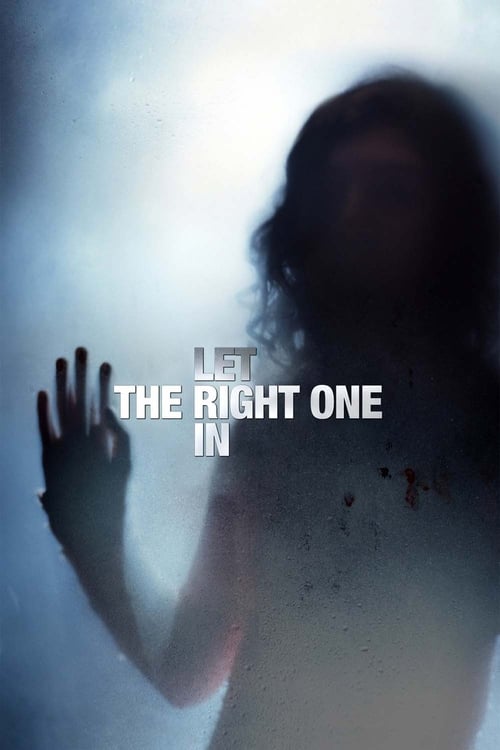
Let the Right One In8.0July 29
I like it when the male character is the one falling in love with the "monster", rather than the much more widespread opposite, so this made me like Let the Right One In a bit more. I really liked how this dealt with the themes of bullying and loneliness; using the vampire is an excellent allegory, as it may be one of the most recluse figures of folklore; the nocturnal encounters between Oskar and Eli offer them both a bond that they never had felt before and, despite their nature being so opposite, they find a way to uphold it through sheer love (that's why the scene in which Eli flees after seeing his blood is so significant, it shows how willpower can overcome nature, and is ultimately a very good testament of the sacrifices we make for love); in the original novel, Eli is an androgynous boy and, while the gender of movie Eli is never stated, it's implied that they are "not a girl", so this makes me think that, at least on subtext, Let The Right One In is actually a queer coming of age movie. It's also a horror, despite it not being the intention of the director and him being adamant about making it as least as possible about vampires (why in the hell? whatever...) with some really good scenes, namely the hospital blinds one and, of course, the pool one. Special mention to the scene that's kinda titular, in which we see the reaction of Eli to coming inside uninvited. I was always curious about that because, in the vampire-related media I've seen yet, the question was never really posed. The ending is a call to all the very wholesome moments between Eli and Oskar. Maybe he'll just turn into something akin to Eli's adult "helper" we see at the start of the movie, or maybe future will be a bit more rosy for the pair of runaways. And, still, I don't think that outcome would be that bad, either. After all, acts of service are fundamental in love.
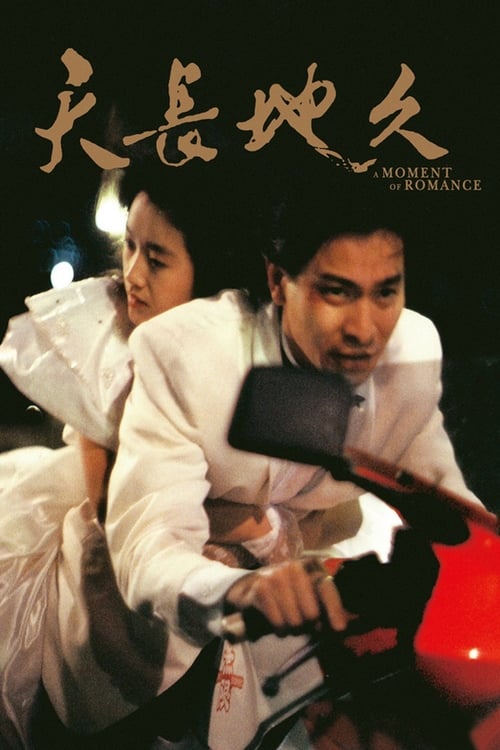
A Moment of Romance8.0July 29
It utilizes literally every minute of its runtime, i thought this was longer (in a good way) because it manages to flesh an arc in the most satisfying manner: as for the plot, some may say that's a bit too trope-y, but If a story is told well, it doesn't really matter how many times you've previously heard it. Our protagonist is Wah Dee, a low ranking triad that decides that's torn between the life and his new found love for JoJo... A hostage he took. But it doesn't take the "Stockholm Syndrome Route". It's just a romantic relationship that happened to be spurred by a bank robbery. The relationship starts off with a rocky start, with Wah Dee forcing her to take part in some sort of dangerous race (how cheap were cars in HK? These guys trashed them and blew them up every other day!), but after that, it develops through a series of really wholesome moments. The character of Wah Dee kinda follows the trope of the "sentimental bandit", as we see that he develops quickly the will to protect JoJo at all costs, but at the same time, his internal struggles are shone upon and we see that his will to leave crime behind always falters in favor of the concept of "brotherhood". Brother Seven, his mentor, is also portrayed as some sort of romanticized gangster that thinks that violence is never the solution, opposed to Trumpet (the guy that plays him really was unhinged). Another important figure in the movie is Rambo, Wah Dee's surrogate uncle. He's played as the comical relief of the movie (and his scenes really were funny), but then his arc turns more serious and, ultimately, tragic. Tragedy... The whole epilogue is drenched in it; but it was written from the start, in a sense. The movie can skirt in the melodramatic, but it's not really a issue, as, as I previously sad, it has a great narration. As for the technical department, the cinematography is enchanting in a lot of the scenes (the one that really hooked me was the montage at around 12-15 minutes in, but I challenge you to find a movie from that era of HongKong that wasn't gorgeous); there's also a lot of scenes you could call "aesthetic". And it doesn't let you forget that it was: written by Ringo Lam, produced by Johnnie To, with spectacular and coreographed action sequences, that added a kick to the whole film.
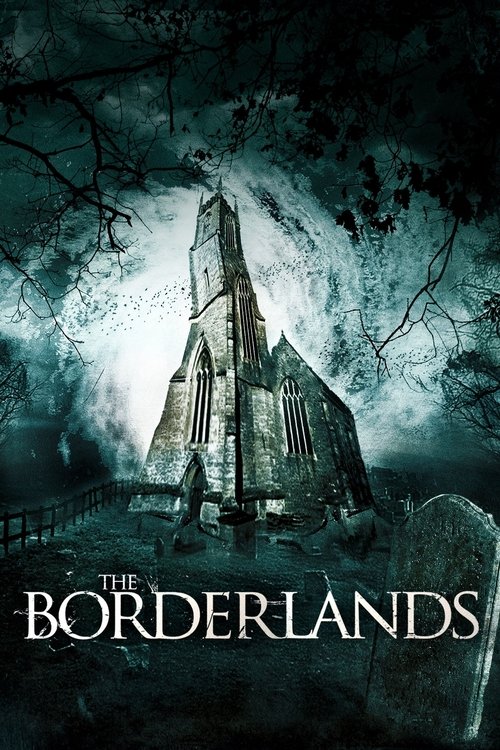
The Borderlands6.0July 26
I think this could've been much more without being over-reliant with the genre gimmick of "camera crashing/glitching": of course, when faced with a small budget and/or finite resources, you gotta get smart about it, and that's why I really liked the "lamb" scene, because everything just works: the dark only lit up by the fire, the boys running away in the light of the flashlight, etc... It only shows glimpses, but succeeds in building a perturbating scene over it. While, if we take the ritual by the end, the camera glitches really feel like a cop-out, although there was some timid setup that the eldritch presence that's behind the events of this film can also distort technical equipment. I think that, while this is a textbook eldritch horror movie, I also liked the narrative thread concerning faith, and how every character positions himself within it. It's a very pessimist outlook, as the belief in God quickly falters, even in the priests, as soon they stumble into something something much more incomprehensible but terribly tangible. I really, really liked the ending, it took a direction I didn't expect, it was a much better example of "seen-not-seen" than the scene that leads up to it, and the two titular actors made such a great job in showing the utter and raw desperation they had in those moments. Class acting, I must say. It's rare to see someone portray primal fear this good, expecially in an unknown movie.
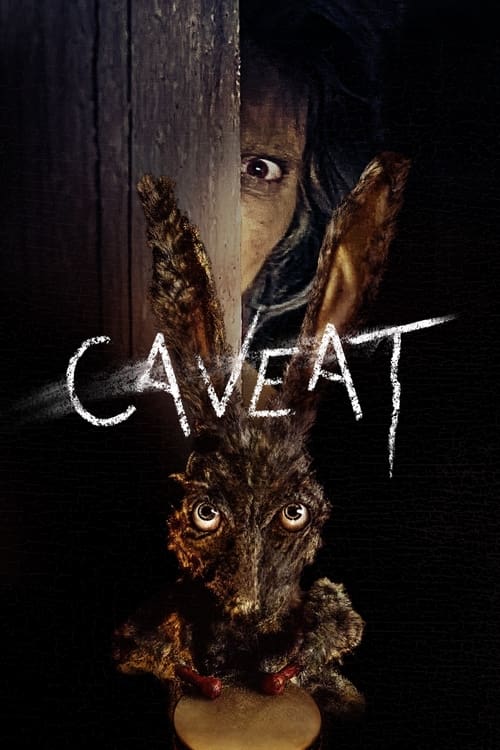
Caveat5.0July 21