Skip to content


Recent activity
Call Me by Your Name9.0February 12
*‘Call Me by Your Name’* understands that first love isn’t dramatic because it’s loud, it’s devastating because it’s quiet- it lingers in the spaces between glances, in the pauses before someone says what they mean, in the unbearable awareness of being seen for the first time. What makes the film work is its patience, it doesn’t *rush* desire, it lets it stretch, simmer, misfire- Elio isn’t written as a symbol of youth or innocence, he’s curious, intellectual, a little arrogant, deeply vulnerable, and his longing feels physical *and* philosophical at the same time, it’s not just attraction; it’s recognition. The summer setting matters because it feels temporary from the beginning, the film moves like a memory; warm, sun-drenched, slightly unreal- even at its happiest, there’s an undercurrent of inevitability, and you can feel time passing in every frame. What devastates me most is how gently the film treats emotional awakening, it doesn’t *punish* Elio for feeling deeply, it doesn’t *mock* his intensity, it simply allows his heartbreak to be dignified- not melodramatic, not trivialized, just real. Dude, and that final stretch- it doesn’t explode, it settles, it understands that grief *and* gratitude *can* coexist; that loving something fleeting doesn’t make it less meaningful. I gave it 4 1/2 stars because it captures something rare; the way first love reorganizes you internally, even if it doesn’t last externally, it’s tender without being naïve- romantic without being grandiose, and intimate without being loud.
Palo Alto9.0February 12
*‘Palo Alto’* isn’t flashy, and it doesn’t “pretend” to be profound, and that’s precisely why it works; it captures adolescence *not* as transformation or spectacle, *but* as a state of suspended disorientation, where feelings are big, consequences are confusing, and the world never quite delivers the clarity it seems to promise. The film isn’t interested in *“tidy arcs”* instead, it observes young people who are impulsive, bruised, and looking for connection in the spaces where they feel most unseen- there’s no *“grand narrative”*, either, just a series of moments that feel too familiar because they’re lived rather than explained. What makes Palo Alto resonate is its restraint, nothing is shouted, no emotional beat is telegraphed, and sadness is quiet; a lingering look, a pause too long, a decision made for reasons the characters themselves can’t fully name- watching it feels less like witnessing dramatic change and more like inhabiting a slowly accumulating ache, the performances are unpolished in the best possible way, like real people who haven’t yet learned how to translate *their* interior lives into language. In the film there’s a rawness that doesn’t ask for sympathy, only attention, the camera doesn’t judge them or redeem them; it simply watches, and in that watching there’s a kind of compassion. The film’s sadness isn’t about loss as much as misalignment; wanting love, wanting safety, wanting understanding, and constantly being *one* step away from it- there’s a loneliness in the film that doesn’t explode, it persists. I gave it 4 1/3 because it’s one of those films that doesn’t offer resolution, *but* it does offer recognition, it understands what it feels like to be alive in a body that doesn’t yet have the language for the feelings inside it; feels rare, honest, and almost *unbearably* human.
Blue Velvet10.0January 29
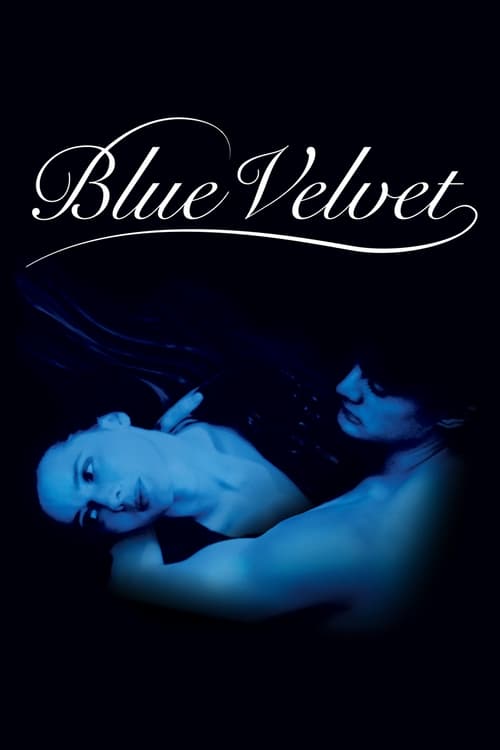
I rewatched it today, everything still stands ⬇️! *‘Blue Velvet’* is a film about curiosity curdling into complicity; it begins with the fantasy of suburban innocence, manicured lawns, white fences, polite smiles- then, it deliberately peels that fantasy *back* until what’s underneath is no longer shocking, just disturbingly intimate. The horror isn’t that evil exists; it’s that it’s been living next door the *whole* time, waiting to be noticed. Jeffrey’s descent isn’t framed as heroism, his investigation is driven *less* by *justice* *than* by *fascination*- more by the thrill of proximity to something forbidden. The film is painfully honest about that impulse, it understands how easily moral certainty dissolves when desire, fear, and power become entangled- watching Jeffrey is uncomfortable because the film *never* lets us pretend we’re above him; our curiosity *mirrors* his. I see Dorothy as the emotional center; though the film knows how often she’s misread, her pain is not spectacle, and her desire is not pathology- it’s survival twisted by trauma. Lynch refuses to sanitize her or redeem her in ways that would make her easier to digest, she exists in a space where victimhood *and* agency coexist, *and* the film sits with that tension instead of resolving it. Frank Booth is monstrous, but what makes him terrifying isn’t excess, it’s entitlement; he embodies violence that feels personal and ritualized, fueled by control rather than chaos, and the film doesn’t *aestheticize* him so much as expose the mechanisms of domination that make him possible. What lingers about *‘Blue Velvet’* is how little comfort it offers, even when order appears restored, it feels performative- a surface reassembled over damage that hasn’t disappeared. The film suggests that innocence *isn’t* something you lose once and grieve; it’s something you *continually* negotiate, especially once you’ve learned how desire and violence can coexist. *‘Blue Velvet’* endures because it doesn’t just show the darkness beneath the surface, it asks why we’re tempted to look, what we expect to find there, *and* what it costs to pretend we didn’t enjoy the knowing.
A Girl Walks Home Alone at Night9.0January 26
*‘A Girl Walks Home Alone at Night’* feels like a dream slowly bleeding into reality- quiet, dark, and charged with longing. On the surface it plays with genre conventions; a vampire film, a noir, a midnight fable but, underneath its stylish monochrome and eerie stillness is a story about survival, desire, and the margins that the world prefers to overlook. The film subverts expectation by making the *“monster”* the most attentive listener in the room- *The Girl* isn’t a threat because she hungers- she’: chilling in her integrity, choosing *when* to take and *when* to spare. There’s an ethics to her violence that feels oddly empathetic? Mainly because, she preys on predation itself and, in doing so, the film reorients the gaze back onto the world’s cruelties instead of amplifying her own. What stays with you most isn’t the blood or the spectacle, but the moments of silence- the small gestures that reveal how hard it is to remain tender in a place made for hard edges, the soundtrack doesn’t fill the space; it echoes in it, like memory or unspoken desire. *Ana Lily Amirpour* trusts atmosphere over exposition, and that restraint gives the film its gravity- Arash and Hossein aren’t cartoonish threats (most people misinterpret that) they’re products of a world that rewards entitlement *and* punishment *without* accountability. *The Girl* (in a way) becomes a mirror- *not* of what violence is, *but* of what it feels like when it’s aimed at those who inflict it rather than those who endure it. In the way I see it, the film’s most radical act is its stillness, it asks you to sit in every frame, to receive its world *not* with expectation, *but* with attention. There are no tidy answers, only resonance- the emptiness of the night isn’t absence, *but* space to be witnessed. *‘A Girl Walks Home Alone at Night’* lingers because it doesn’t resolve tension into closure; it carries tension as honesty- love isn’t loud, instead it’s steady- a quiet rebellion against a world that insists on isolation and cruelty. Now, as to why I gave it 4 1/2 starts *instead* of the full 5- I’m drawn to films that use genre to *reveal* human interiority rather than *exploit* it, the ones that frame *“outsider-hood”* with dignity, *not* voyeurism, ones that let the mood *carry* emotional truth instead of *explaining* it, and the ones that understand that tenderness *can* exist *without* redemption arcs- this film doesn’t pretend innocence where there is none, it doesn’t make its protagonist lovable- it makes her self-possessed. I appreciate how it refuses to sentimentalize pain, *and* how it renders quiet agency with so little fanfare, it’s precise where many films would be loud; deliberate where many would be flashy. The half star is because of the films restraint- while it’s beautiful, it keeps me outside of its resolution, it invites me in, *but* it never let me settle there and, that’s exactly the kind of film I can admire; one that changes me without consoling me.