Skip to content



Recent activity
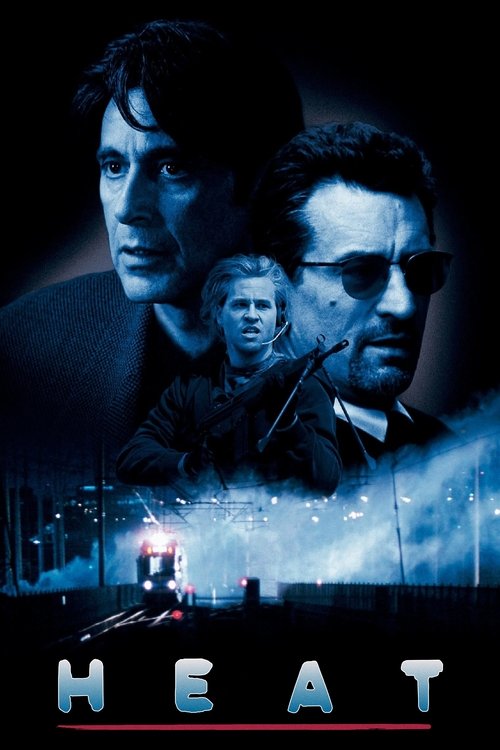
Heat10.0May 22
An old friend
Chef10.0May 21
I miss the old Favreau
The Mandalorian and Grogu3.0May 21
I may not always give this impression, but I am a huge Star Wars fan. I don’t mean “I like Darth Vader.” I don’t mean “I like Darth Sidious.” I don’t even mean “I know who Darth Plagueis is.” I mean Darth Tenebrous, the guy who trained the guy who trained the guy who trained Darth Vader. Fun fact: Darth Tenebrous is a Bith, the same species as the cantina band in A New Hope. That is the depth of brain damage we’re dealing with here. People may not know this about me because, unlike most Star Wars fans and apparently Dave Filoni, I have watched and loved movies that are not Star Wars. I don’t even think A New Hope or The Empire Strikes Back, my two favorite Star Wars movies, crack my personal top five. I’m not even sure they’re the best science fiction films ever made. At the very least, Alien and Metropolis clear both. So, to be blunt, my expectations for The Mandalorian and Grogu were low. Filoni’s storytelling style is often described as him smashing his action figures together, and this movie feels like the feature-length version of that exact impulse. A few of his toys get pulled off the shelf for a quick round of playtime: Embo from The Clone Wars, Rotta the Hutt from the animated Clone Wars movie, Zeb from Rebels. They wander in, get their little showcase moments, and are then carefully placed back in the display case with the reverence of holy relics. I don’t know why, but one of the most infuriating experiences I’ve had in a theater recently was watching Embo escape the dragonsnake’s lair with his dumb fucking hat back on, apparently free to live and fight another day. Great. Wonderful. I am thrilled for Embo: A Star Wars Story, where a hat with legs kicks everyone’s ass for two hours while the movie politely refuses to let anything bad happen to him. Why doesn’t Embo die? Why is Embo treated like some untouchable Mary Sue who gets to dominate the scene and skip away unscathed? I understand Jon Favreau directed this movie, a fact that annoyed me so much I came home and put on Chef just to remind myself that he does, in fact, know better than this. Watching him return to this mode feels like seeing him go back to Dustin Hoffman and work for him for another twelve years, except now the menu consists of The Jungle Book remake, The Lion King remake, and this piece of shit. The Mandalorian and Grogu is not really a movie so much as four episodes of television loosely stitched together with dental floss. There’s the Rotta the Hutt episode, where he does gladiator fights against some asshole with a trident. There’s the first confrontation with the Twin Hutts, who cannot simply be random Hutts because everything in this franchise now needs to be related to something else. Of course they have to be Jabba’s siblings. God forbid the galaxy contain more than fourteen people and three families. That confrontation leads into one of the ugliest underwater sequences I’ve seen in a major studio film, where Din Djarin tries to save himself from the dragonsnake. James Cameron would take one look at it and shoot Jon Favreau in the back of the head. And then the third “episode” is the one where the dragonsnake venom leaves the Mandalorian unconscious, forcing Grogu to wander off in search of some mysterious dragon-looking hermit voiced by Stephen McKinley Henderson who apparently possesses the cure. Finally, the movie ends with the big showdown between the New Republic and the Twin Hutts’ droid army, which the New Republic wins with such ease that it retroactively drains tension from everything leading up to it. The climactic battle feels less like a hard-fought victory than a contractual obligation. What makes this frustrating is that Star Wars is not just another franchise. There is a reason half of Hollywood spent the late seventies and eighties desperately trying to recreate the feeling of watching the original trilogy for the first time. A few of those attempts were genuinely successful. Tron, Ghostbusters, The Last Starfighter, and Flash Gordon all managed to capture pieces of that same spirit while still feeling like their own things. Ridley Scott kept returning to that well himself with Alien, which I’ve already argued is less a knockoff than an outright improvement, then Blade Runner, then Legend, before finally swerving as far away from space fantasy as possible with Someone to Watch Over Me. David Lynch and Peter Yates each delivered their own dense, lore-heavy entries with Dune and Krull. Joe Dante and John Badham were out there trying to move action figures with Explorers and Short Circuit. Roger Corman, naturally, was lurking around this boom too, producing cheaper, grimier Star Wars cash-ins like Battle Beyond the Stars, Galaxy of Terror, Forbidden World, and Space Raiders, movies that understood the assignment less as mythmaking and more as “get some spaceships on screen before the public stops caring.” Then you get the truly deranged stuff like The Ice Pirates, Lifeforce, and Heavy Metal, movies that feel like someone took the success of Star Wars as permission to start freebasing imagination with a side of some hallucinogens. Hell, Disney’s The Black Hole got two Oscar nominations. It lost Best Visual Effects to Alien, obviously, and cinematography to Apocalypse Now, also obviously, but still. People were trying. Even the failures from that era have personality. They have texture. You can feel filmmakers wrestling with the influence of Star Wars and trying to mutate it into something stranger. The Mandalorian and Grogu, bizarrely, feels less like actual Star Wars than one of those second-rate Roger Corman space-fantasy cash-ins made in the shadow of Star Wars. It has the iconography, the familiar species, the props, the lore names, and the reassuring shape of the thing, but almost none of the mythic propulsion that made the franchise matter in the first place. The original films felt enormous because they suggested a universe extending far beyond the frame. Every cantina patron, bounty hunter, and offhand reference seemed to imply a whole life happening elsewhere. This movie has the opposite effect. It makes the galaxy feel tiny, airless, and overcatalogued, less like a living world than a storage unit full of labeled action figures. Every character seems to exist because Dave Filoni remembers them from another show. Every emotional beat feels reverse-engineered from prior audience affection, as if recognition itself is supposed to do the work of drama. The movie keeps presenting familiar faces and obscure callbacks with the confidence of someone sliding a Funko Pop across a table and waiting for applause. The problem is that a reference is not a story, and continuity is not mythology. At a certain point, the franchise has become less interested in telling stories than in maintaining a wiki.
Love Affair6.0May 20
Wuv Affurah