Skip to content




Recent activity
The Girl Chewing Gum8.0July 2
The Girl chewing Gum is an experimental British film that was directed by John Smith while he was a student at Royale College of Art and released in 1976. The film captures an ordinary day on Stanford Road in Eastern London where we can observe the behaviour of people, birds and cars. What stands out however is an imposing voice that seems to govern over not only the inhabitants of Stamford Road, but also to the viewers. At first he gives simple instructions and remarks to the passersby and to the camera, which is supposed to be the viewers, but the longer the film goes on, the more outlandish he starts to sound. We go from basic observations, like a child to raise his hand, or a man to pass the street, into more creative and detailed remarks, such as a building have 8 large doors on each wall that open throughout the day, or how a suspicious man has robbed the post office and holds a revolver in his hand. What the movie is trying to tell us is that this “voice” takes the role of the actual director, in a meta way. A movie director always gives directions to the camera crew and actors on how the scene should play out, and in this film, we see in a way the raw footage of a director giving orders on how the scene should play out and how the more he is invested, the more “crazy” he starts to become. The movie is shot as a long take, where there are no cuts in order to create an immersion of the director’s vision. There is, however, one cut-away at the end of the movie, where we are transported to the place this voice is located, about 15 miles from the place where the movie was shot. This disconnect is supposed to represent the literal distance between the scene and the director, in a way, the distance between reality and fiction. We are no longer show what the director is wanting us to see, but rather, what he actually sees himself, as the camera does a 360 degree span to capture the outskirts of the city.
Obsession10.0June 28
Firstly I want to applaud Inde Navarrette's performance. She was stellar in the movie and if she doesn't win an Oscar I'd be shocked. Also the whole atmosphere and soundtrack of the movie were perfect, capturing the dark and disturbing themes of the movie masterfully. Now let's talk about Bear and how he is the perfect representation of the modern "nice guy". At first he seems like a nice but awkward guy, but that is just a mask he wears. He is so messed up in the head, just the fact that he didn't show any remorse because he indirectly killed his cat, and them he went and stalked the girl he loved on social media should raise some red flags. What normal person does something like that? But then he wishes for Nikki to love him, basically brainwashing her and stripping her of her autonomy to fuel his selfish desires. The worst part is that he didn't even love Nikki. No, he only loved the twisted image of Nikki that he had in his mind. If he truly loved her, firstly he wouldn't even make that wish, secondly, at the first sign of something being off, he would have acted. But no, he just wanted to enjoy his time with "freaky Nikki". He had opportunities to end this nightmare, firstly by being sincere with the One Wish Willow guys, then when he could have actually put Nikki out of her misery when she asked, but all he heard was that she didn't want to be with him anymore. Bear fails to show accountability for his actions throughout the movie, and because of that, he and everyone he knew suffered. Nikki wasn't the one obsessed, but Bear was the obsessed one.
F17.0June 19
A high octane racing movie thst surpringly forgoes the classic calm mentor and hotheaded student dynamic by making the mentor hotheaded and reckless, maybe even more than the student.
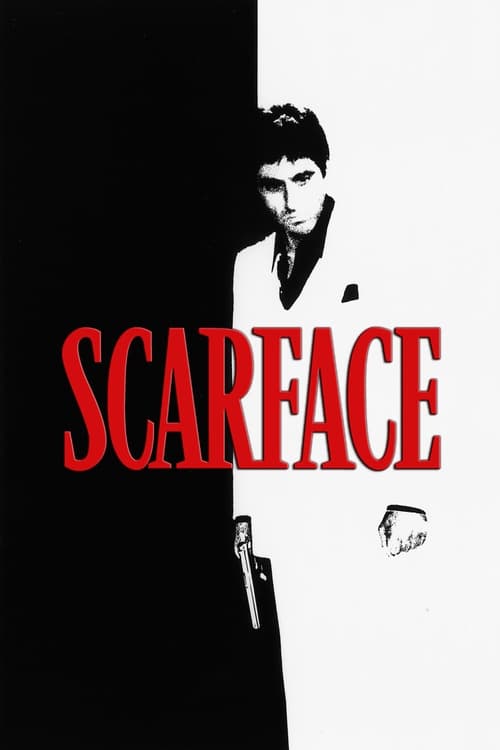
Scarface8.0June 18
I feel that Tony Montana's story strongly mimics the story of Icarus. Icarus was imprisoned, eventually escaped but wanted to reach heights that wre unimaginable, until he eventually flew too close to the sun and fell into the ocean. Tony too was imprisoned in Cuba, eventually escaped, and instead of keepong a low profile and changing for the better, he sought more and more power. He was burning with passion, but that passion of his eventually burned down all the bridges in his life, and all that was left were the ashes of man's chaos and fury