Skip to content



Recent activity
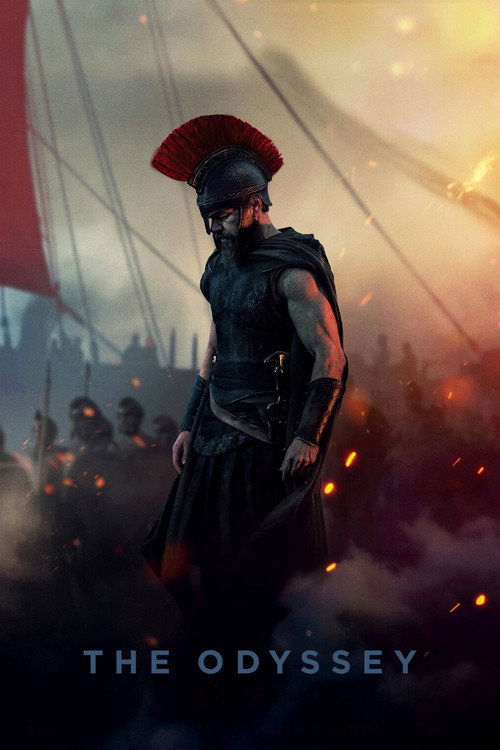
The Odyssey4.0July 27
Overall, I’m disappointed. Nolan is a great director; he has the resources, the budget, the reputation, and access to incredible people willing to work with him, yet he chose to throw it all away with this movie. It felt like he didn’t care about the information available or the research required to create a film capable of telling Homer’s poem and showing audiences something that actually reflected those times. I genuinely believe he could have done so much better if he had stayed closer to the source material and collaborated with people who truly understood it. I completely understand the need for creative liberty, and there were definitely choices he made that I appreciated, but overall, the movie just didn’t work for me. The lack of colour, which I know is very much a Nolan trademark, combined with the overall setting, made me feel like I was watching a film set in medieval times rather than the Mycenaean age. Some of the acting was great; Robert was fantastic, and I also really enjoyed Tom’s performance. However, my favourite part of the entire film was undoubtedly the soundtrack. It was beautifully achieved, fantastic job Ludwig. > **Liked:** **The Sirens scene:** I fucking loved it. The fact that we never hear their song and can barely see them was such a brilliant choice. Just like the crew, we are left wondering what they sounded like. It creates this sense of mystery and uncertainty that perfectly fits the story. VERY COOL. **Cinematography/Photography: **I really liked it, but at the same time, it’s Nolan, he has always had a strong visual sense, so I wasn’t expecting anything less. I especially loved the visual callback to *Saturn Devouring His Son *when Polyphemus was eating the soldier. **Antinous: **Antinous was one of the best parts of the movie. Not only because of how he was written, but because of Robert’s performance. He was exactly how I imagined him: a master manipulator, constantly lying, scheming, and presenting himself as someone powerful, while underneath it all he is just a weak, insecure, and frightened little boy. What I appreciated even more was that he was charming. That made him even worse. It reminded me of the way people often describe serial killers: they can appear charismatic and likeable, which makes their actions even more disturbing. **Zeus’ punishment: **I liked that we couldn’t see everything. The chaos, the water, the rain, the lightning, the fact that we couldn’t fully understand what was happening made it feel overwhelming. **The fall of Troy: **I loved how brutal it was. It felt violent, chaotic, and cruel in a way that reflected the reality of war. There was blood, suffering, and absolutely no attempt to romanticise what happened. **Humanity’s cruelty:** I liked that the movie focused on this. The main theme felt like the cruelty of mortal men: how easily people become monsters when given the opportunity. They raped, killed, and pillaged because they could, and I appreciated how blunt the film was about it. **The soundtrack:** The soundtrack was GREAT. It was incredibly well done, set the tone beautifully in every scene, and I genuinely think it has the potential to become one of the most memorable aspects of the movie. > **Didn’t like:** **THE GODS: **Where are they? I understand that Nolan wanted a more humanised story, but I don’t think that approach works for The Odyssey. The gods are not just background elements; they are active forces within the story. By removing them and reducing their presence to symbolism and nature, something essential was lost. Athena, especially, has such an important role in Odysseus’ journey, yet here she was almost completely absent. She was reduced to a manifestation of a man’s guilt rather than the powerful goddess she is. This is especially frustrating considering the slogan was “Defy the Gods”, yet the gods barely existed. **Polyphemus and Nobody:** It was honestly one of the biggest disappointments. The story was stripped apart. The entire Nobody scene, including the wine and the clever deception, was removed despite being one of the most important moments in establishing Odysseus as intelligent, strategic, and incredibly cunning. It also removes the later consequences of his pride when he reveals his true name. The crew didn’t even kill any of the Cyclops’ sheep, so the reason behind Polyphemus’ anger felt confusing and, honestly, hollow. **The Laestrygonians/Giants:** Another strange choice. Why were they wearing armour? Who was that child? Why were the trees moving? Why did they simply destroy the ships? The whole sequence felt completely disconnected and out of place. **The wind bag: **Where was it? It felt like Nolan kept cutting important moments from the source material one after another. The wind bag was not just a random magical object; it served an important purpose in showing the crew’s distrust, their greed, and their inability to follow Odysseus’ orders even when their lives depended on it. **Aeaea:** Why was Circe just a common witch? I actually liked some of her dialogue, especially the *“back to your disguise”* line, but her entire portrayal felt strange. And her palace? What was that? Where were the beautiful polished stones, the grand halls, the wild forests? Where was Hermes and his help to Odysseus? Where was the moly? Apparently, Odysseus can just talk his way out of it. **Scylla:** Why did she look like a poop monster? **The Sun God:** HELIOS IS THE SUN GOD, NOT APOLLO!!! Apollo is associated with the sun, hence why he is the god of the Sun but Helios is literally the personification of the Sun, THE SUN GOD. How did they get such a fundamental detail wrong? **Calypso:** I genuinely don’t understand why she was given such an active role. She was turned into this supportive, guiding figure, almost like a therapist, and that makes no sense considering the original story. Odysseus was miserable. He wanted to return home to his wife, and Calypso was the one preventing him from leaving. She held him captive and forced him into a relationship he did not want. She is not meant to be portrayed as a nurturing figure who heals him. **Menelaus: **I might have misunderstood this part, but was it implied that Menelaus gave Helen her scars? Why would he do that? This is the man who caused all of Greece to go to war to bring his wife back. Yes, he raised his sword against her and considered killing her, but he never actually struck her. **The bed: **Why did he cut this? It is one of the most emotional and meaningful moments in the entire story. Why replace it with the Athena pin? The olive tree was so much more powerful. It represented their entire relationship: how Odysseus built their room around it, how their marriage bed was created from it, and how destroying it would mean destroying something sacred between them. The fact that Penelope’s request makes him angry because he knows the bed cannot be moved is such a powerful moment. WTF NOLAN??!!! **Zeus’ Law / Xenia: **First of all, it is called *xenia*, so please stop calling it “Zeus’ law”. Secondly, they absolutely drained the concept dry. I have never heard those two words repeated so many times. The point of xenia was not simply that a guest could secretly be a god in disguise. It was a sacred social obligation. You respected your guests because hospitality was morally right, not just because you were afraid of divine punishment. It is like saying: “You shouldn’t set a tree on fire because you might get arrested.” NO. You shouldn’t set a tree on fire because it is wrong. (I hope I’m explaining myself properly.) And xenia goes both ways. Guests also have responsibilities. Penelope could have expelled the suitors if she had the power to do so. Telemachus was young and inexperienced, and Penelope had no real authority without Odysseus. It was not because xenia prevented her from removing them. That is not how it works. **The boats, the horse, and the wardrobe:** Did he even try? The boat looked Viking-inspired. The Trojan horse was completely absurd, how did they build something like that from ship scraps? And the wardrobe was something else entirely. I won’t even go into detail because there are plenty of great videos explaining it. I’m just disappointed that we continue getting the same generic armour and bland costumes when there is so much incredible historical inspiration available. **The exile:** Why was he exiled? This genuinely confused me. Odysseus had every reason to punish the suitors. They violated xenia, dishonoured his household, consumed his wealth, attempted to force a marriage with his wife, and plotted against his son. Their deaths are not portrayed as a simple act of revenge, but as a restoration of order after years of disrespect and abuse. More importantly, Athena herself intervenes and prevents the families of the suitors from continuing the cycle of revenge. Odysseus not being punished is a significant part of the story because it shows that the gods do not view his actions as deserving of further punishment. Athena’s intervention is not just about protecting Odysseus, it represents the ending of a destructive cycle of blood vengeance, something deeply connected to Greek society and mythology. A perfect example of this cycle is the story of Agamemnon: he sacrifices his daughter Iphigenia; Clytemnestra kills him in revenge; then their son Orestes kills his own mother to avenge his father. The violence continues endlessly until some higher authority intervenes. That is exactly why I don’t love Nolan’s take on it. I understand that, by taking a more human approach, he wanted to explore the idea of *“I will have to pay for my actions*” and make Odysseus confront the consequences of what he has done. However, it felt hollow because it goes against one of the most important aspects of the original ending. **Women:** Every woman felt underwritten. At this point, I genuinely wonder what Nolan has against writing female characters, because what was this? The dialogue given to them lacked depth and personality. Anne did an amazing job with what she had, but overall, I just felt sorry for the actresses because they deserved so much more. Especially because women have such an active role in the source material. I would even argue that they are some of the main driving forces behind the story. Athena, Penelope, and Anticleia are fundamental figures in Odysseus’ journey, yet they were underused, if not completely discarded, in favour of Nolan’s own choices. What makes this even more frustrating is that The Odyssey is not simply a story about a man trying to return home; it is also a story shaped by the women waiting for him, guiding him, protecting him, and influencing the path he takes. Athena’s intelligence and guidance, Penelope’s resilience and cunning, and Anticleia’s emotional importance are not secondary elements, they are essential to understanding Odysseus himself. **P.S:** I felt like they were trying to make me feel pity for Agamemnon…fuck that guy. He deserved what he got.
Treasure Planet10.0July 22
Barbie as The Princess & the Pauper10.0July 22
The Road to El Dorado9.0July 22