Skip to content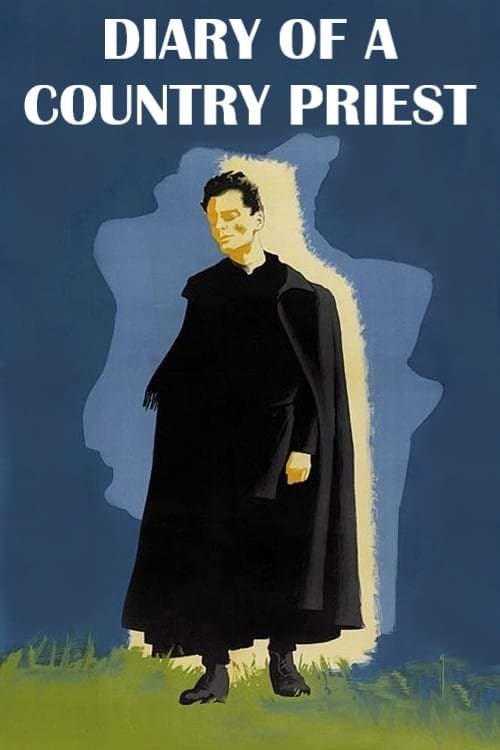

Recent activity
Diary of a Country Priest9.7July 4, 2025
I’d place this film alongside The Passion of Joan of Arc and Winter Light as one of the greatest ever made about faith. Unlike so many works that try to move or impress through big gestures, here everything is stripped down, restrained, almost austere. There seems to be no intention whatsoever to seduce the audience — and perhaps that’s precisely why it resonates so deeply. It’s a film that bears the weight of the sacred without ever pointing to it directly, allowing faith, doubt, and suffering to emerge gradually — in silence, in the spaces between words. It offers not just a portrait of a man but the intimate agony of a tradition that, surrounded by growing skepticism and a crumbling moral landscape, seems unsure of its own vocation. The clergy, once the undisputed backbone of small rural communities, now finds itself sidelined, watching with blank eyes the growing indifference of a people who no longer find comfort in ritual nor authority in the pulpit. The rigid structures of the church — so concerned with order, discipline, and decorum — end up feeling sterile in the face of real and visceral human suffering. One of the most brutal lines in the film, spoken by the priest from Torcy, seems to say that order matters more than love, that the Church doesn’t care if a priest is loved. In that quiet reversal of Gospel values lies the heart of the spiritual crisis that runs through the film, when the institution cares more about preserving itself than practicing compassion, the suffering Christ fades into shadow. But there’s another layer, the most present and devastating one: solitude. Not just physical solitude — the empty parish, closed-off faces, half-open doors — but a deeper kind of solitude, of the soul, that makes it unbearable to be with others or even with oneself. The protagonist, a priest of frail health and faltering faith, walks a path where every step feels like exile. There’s something both mystical and deeply human in his inability to give in to cynicism or convenience. His sincerity — not the kind that comes from pious speeches, but from a torn soul still searching for meaning — is unsettling. He doesn’t know how to be inauthentic. And that, in itself, is frightening. This character, defenseless both psychologically and socially, becomes a kind of modern martyr — not for dying at the hands of tyrants, but for living among the indifferent. In an age that clings to logic (at least for some) and resists the demands of grace, his surrender is met not with welcome, but with contempt. His ministry is a spiritual desert, where every sacrifice paradoxically brings him closer to the sacred. He doesn’t win hearts or convert souls. But through the very limits of his being, he reveals with almost scandalous clarity what it means to live under the shadow of the cross. I’m especially grateful to Bresson for giving us a portrait of priesthood that has nothing to do with the usual sexual conflicts — so overused. There’s no carnal scandal here, no melodramatic temptation, but rather a much deeper, quieter inner battle — between doubt and hope, the will to keep going and total exhaustion. What a relief, what a breath of fresh air, to find a film that trusts so deeply in the spiritual complexity of its character that it doesn’t need to burden him with the typical clichés of clerical crisis. The drama here is theological, existential, human — and therefore universal. It’s a film that doesn’t try to console or evangelize. It aims to bear witness. To bear witness to the journey through the desert, to the failure of language before mystery, to the need for grace even when it can’t be seen. In the end, all that remains is the echo of a line: “Does it matter? All is grace.” A line that doesn’t seek a resolution, but a recognition — not an escape from suffering, but a way to endure it with dignity. That, perhaps, is enough.
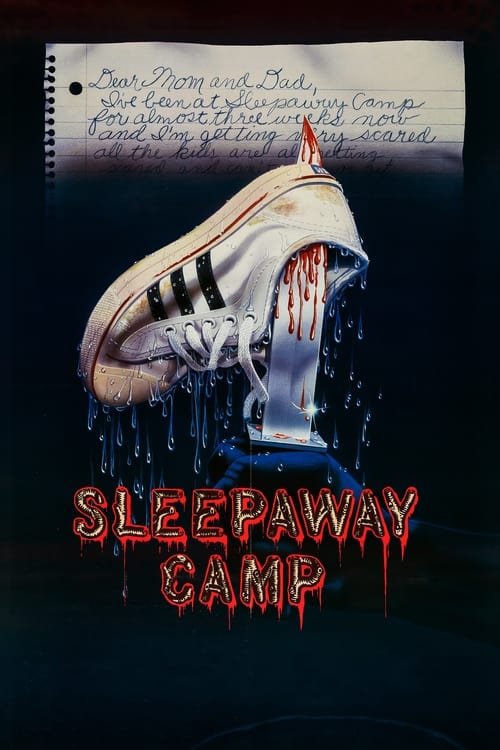
Sleepaway Camp2.6July 2, 2025
Feels like the entire budget went into the SFX and nothing else.
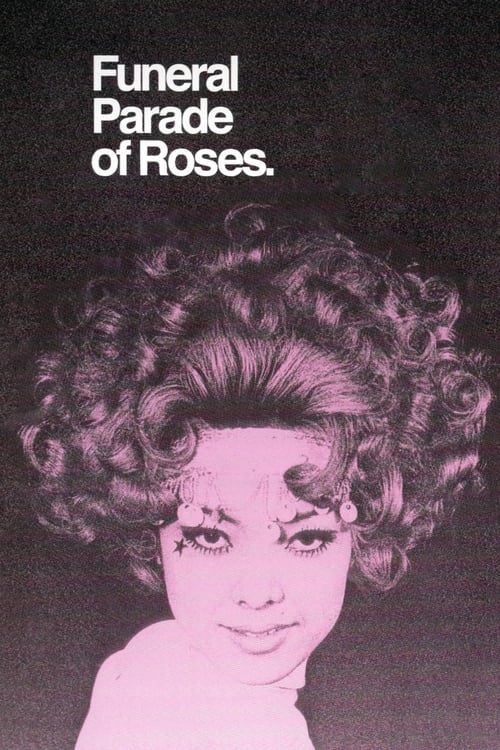
Funeral Parade of Roses9.8June 30, 2025
Some works emerge not only as artistic expressions but as living acts of transgression — fractures in the very time that gave birth to them. This film, born at the end of the 60s, bursts forth as a scandalous and lyrical outcry of subjectivities until then relegated to the margins. It’s not just an aesthetic exercise but a political gesture, an existential scream and, above all, a formal audacity without precedent in its historical context. It’s as if it were the feverish product of a collective and dissident dream, a dream that insists on persisting, even when surrounded by the brutality of the norm. What struck me immediately was its hybrid nature, how it blurs and dissolves the boundaries between fiction and documentary. By giving direct voice to its own actors — figures who are not only characters but living subjects of flesh, desire, and memory — the film creates an unprecedented space for listening yet never becomes aggressive or judgmental. When the bodies on screen break the pact of representation to speak of themselves, of the pain of existing as they are, of loneliness and joy, cinema stops being a window and becomes a cracked mirror, reflecting multiple truths that defy normative discourse. At a time deeply immersed in the repression and denial of queer identities, the work presents itself as an intertwined portrait of traumas and dreams. There is no idealization or victimization, only the raw complexity of what it means to exist. Queer identity here is not just a symbol but something alive and complex — full of layers, contradictions, and feelings. It is, therefore, a film about the void between being and seeming, about the violence of inhabiting a body that does not fit the expectations of the world in which it was born, about the poetics — and the politics — of embracing this misfitting as language and resistance. Formally, the film is even more compelling. The editing, disjointed and fragmentary, rejects linearity in favor of a dreamlike, almost schizophrenic structure that mirrors the internal state of the portrayed figures. The cuts — sometimes abrupt, sometimes rhythmic — weave a texture where time seems to fold in on itself. There is an almost hallucinatory mix of genres: from burlesque to grotesque, from silent-era comedy to unsettling body horror, and the film masterfully experiments with all these elements. And there is also beauty in the film — a radical, untamed beauty. It’s not the polished, sterile beauty of advertising but a trembling, unstable one, made up of scars and sudden flashes of light. The framing is often expressionistic, angular, and high-contrast, suggesting a world perpetually on the edge of collapse. And perhaps it truly is. Beyond all this, the film’s courage in portraying grief is impossible to ignore. Beneath the parties, the constant agitation, and the collective use of drugs as an escape mechanism, there is a profound sadness — not only for lost loves or bodies (something Eddie carries constantly), but also for the loss of a place where one can simply exist without fear, without hiding or conforming. It’s a farewell, yes — but staged as a spectacle, with dance, music, and exaggeration. The characters perform their identities constantly — in bars, on the streets, before the cameras. This theatricality, far from being superficial, is a form of survival and affirmation in response to being silenced. Pain is masked, danced, acted — but never denied. What is born from all this is a work that not only anticipates debates that would only gain visibility decades later but that also proposes, with violence and tenderness, a new language for cinema. A dirty, hybrid language, made of collages and erasures, but precisely for that reason capable of expressing the inexpressible, naming what for so long was condemned to silence. In a world that still insists on normalizing bodies and affections, this film is not only beautiful but urgently necessary. I highly recommend it.
M3GAN 2.00.7June 28, 2025
Boring, terrible, pure torture, and dull beyond belief. It’s a hollow sequel that exists only to milk money and attention from the brainrot masses, with no personality or critical thinking.