Skip to content


Recent activity
Macabre4.0May 26
It fell somewhat short of my expectations. 😅 I anticipated something extraordinary, with scenes that were more extreme yet fundamentally grounded in logic. Instead, the narrative turned out to be straight-up murder, psychopathy, and sadism stripped of any real depth. The film missed several minor details along the way, making the plot armor and progression feel forced and rushed at times. The foundational lore simply wasn't strong enough; as a result, despite the abundance of gruesome scenes, the sadism felt like it existed purely for cheap entertainment rather than actually driving the narrative forward. The way the characters attempt to fight back and survive feels incredibly contrived and unrealistic. It’s as if they are constantly being forced back into Dara's house just to serve up fresh torture for the screen, making the entire sequence feel frustratingly cliché. It would have been far more compelling and coherent if the film had delved deeper into the genesis of Dara and her family's sadism. Had the audience been given a clearer understanding of how Dara built her cult-like status and maintained her eternal youth—beyond the implicit hints of cannibalism—the movie would have possessed a much more gripping psychological layer. Instead, all we are left with is a surface-level record of how Adam and Maya were brainwashed by Dara since childhood
Jennifer's Body2.0May 23
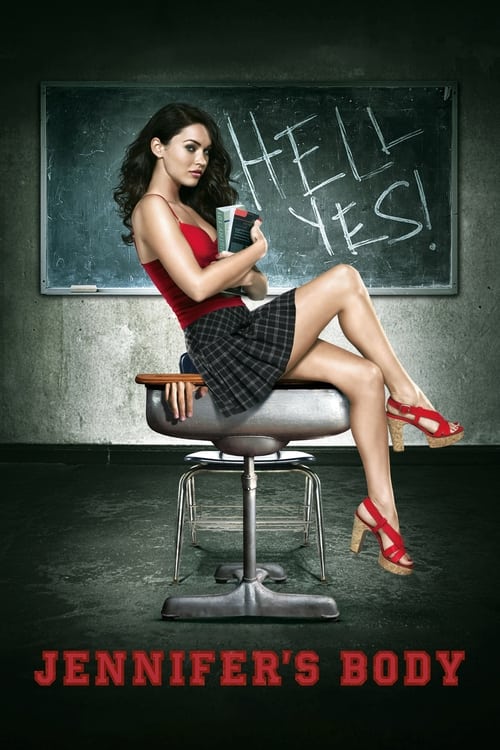
This is awful, overrated as hell. I genuinely don’t understand what the intention was. The execution is incredibly poor, overly forced, and completely incoherent. What is this film even trying to be? Is it trying to be a terrifying horror? A satirical teen comedy? Both attempts fall completely flat. I wanna criticism the chemistry between Needy and Jennifer so bad. The friendship between Jennifer and Needy should have been the film's emotional anchor. However, it fails to show why Needy is so fiercely loyal and submissive to Jennifer, aside from the mere fact that they’ve been friends since childhood. Because there are no flashbacks or intimate moments establishing a genuine bond before the tragedy hits, Needy’s passivity after Jennifer’s transformation doesn’t look like devotion or emotional trauma, it just feels like a lazy plot device driven entirely by the script. As a nerd, Needy should have been the victim of exhausting emotional gaslighting as she watched her best friend turn into a monster. The film had a massive opportunity to explore her fear, denial, and the internal conflict of being torn between saving her best friend or saving herself. Sadly, the execution is remarkably flat. Needy’s emotional transition from being confused and passive to suddenly switching into a hero ready to kill Jennifer feels entirely disjointed. There is no organic internal struggle. Furthermore, the heavy homoerotic nuances and queer coding embedded in Jennifer and Needy's relationship could have been an incredible exploration of the blurred lines between teenage friendship, obsession, and romantic attraction if executed with maturity. Instead, those moments feel cheap, thrown in purely for shock value and as a visual gimmick to cater to the audience (falling trap to the male gaze once again). Because the emotional weight behind that attraction is never properly developed, the scene just feels awkward and contributes absolutely nothing to their character arcs. The director also segregates them into extreme, rigid boxes, Jennifer is the hyper-vocal, ultimate bitch, while Needy is the ultra-passive nerd. This creates such a massive chasm between them that they fail to create a gray area where they can organically exchange emotional energy on equal ground. On top of that, every character outside of Jennifer and Needy is a flat, two-dimensional cardboard cutout. The boys in this film—including Chip—are written with absolutely no substantial personality, serving merely as plot devices or literal bait. (Not to mention that the romantic dynamic between Needy and Chip was so bland as well.) Also, as a film about a man-eating demon, the horror elements are painfully generic. The visual choices during Jennifer’s transformations or the cannibalistic scenes rely heavily on cheap shock value and unpolished effects, rather than building a creeping, atmospheric dread. There is no lingering terror, it all just flashes by without leaving any lasting impression. This film is frequently praised for its themes of female empowerment and its critique of the male gaze. But looking closely at the execution, the message becomes entirely contradictory. The visual exploitation of Jennifer often ends up catering directly to the male gaze rather than deconstructing it. Consequently, the metaphor for sexual assault trauma that Jennifer undergoes dissolves into nothing more than a shallow teenage horror visual, causing the social weight the film tried to carry to completely evaporate.
The Drama6.0May 14
The execution felt somewhat bland to me, yet it remains enjoyable due to its compelling premise, a sharp emotional exploration into the complexities of human relationships under the weight of expectation. The core tragedy of this film lies in our inability to mold someone into the ideal image we’ve constructed in our minds. The Drama reveals that, more often than not, we don’t actually love the person standing in front of us; instead, we are in love with the idealized version of them we’ve created. When reality hits and exposes their traumas, their pasts, and the fears we cannot control, that facade of expectation begins to crumble. This act of acceptance, which seems so simple on the surface, is actually an incredibly draining psychological process. The film honestly portrays that honoring what someone has endured—all the wounds and burdens they carry—is not a passive act. It is an active struggle to silence our own egos. Human relationships are not renovation projects where we can fix the parts we dislike. A relationship is an agreement to stand by someone, even when we realize they will never become the perfect figure we imagined.
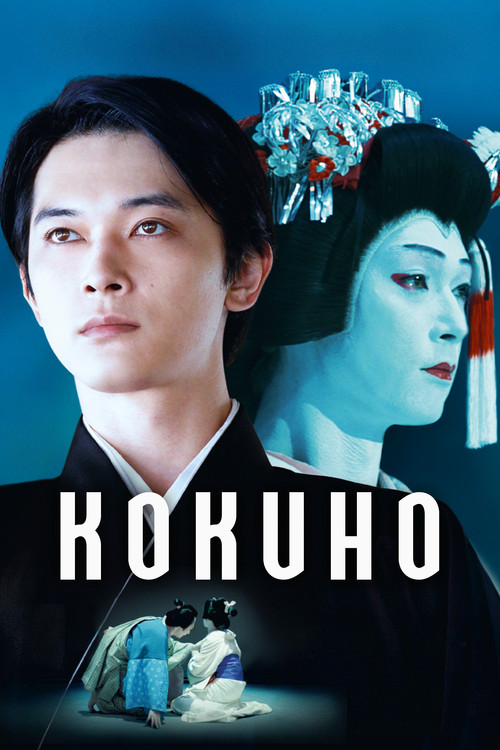
Kokuho8.0May 13
This film managed to captivate me through its sheer ambition, artistry, and breathtaking grandeur, even if it must be admitted that the narrative occasionally feels overextended in its attempt to appear complex. Instead of maintaining a steady focus on the primary arc, the story frequently branches into various subplots that don't always contribute meaningfully to the narrative's evolution, resulting in a runtime that feels bloated without a clear sense of urgency. Despite these pacing issues, the film’s artistic and technical facets are a stunning achievement, with both visuals and audio delivering consistent beauty in every frame. The most impressive centerpiece is the Kabuki performances, presented as the pinnacle of artistic beauty within the film. Regrettably, the immense power of these stage performances is not always matched by the depth of the relationships between characters, particularly the two leads. There was a latent potential for emotional tension and more intimate personal dynamics—perhaps even more complex relational nuances—that were instead allowed to evaporate in pursuit of convoluted subplots, which ultimately proved difficult to weave back together seamlessly by the end. While the film succeeds as a grand artistic celebration of Kokuho, it still leaves behind a lingering sense of disappointment as a human drama, failing to courageously explore the more personal and profound emotional layers hidden behind those Kabuki masks.