Skip to content




NothingRevealed
@nothingrevealed
The thrill of narrative warfare. ◯◯◯ [★★★★★](https://boxd.it/HE9cy/detail) **[A longer favourites list](https://boxd.it/8BEYC)** **[Recommend me something](http://boxd.it/8QM9i)**
Recent activity
Michael3.0July 11
hate to be hating this, but all this was, was a disappointment as an mj fan. sick of the default for a music biopic being a desecration and a disservice in comparison to the art associated with their subject. doesn’t work as a character study, doesn’t even fully attempt to be revisionist history like *bohemian rhapsody *was and idek what’s more insulting, there’s no story here, major aspects of mj’s life are omitted altogether, or instead reduced to mere footnotes. a highlight reel of concert performances and playback of songs that are mechanical imitations of his discography. I have no interest in seeing that *elvis *film which quite frankly might be more insufferable than this, I can only hope they don’t do this to prince. only mildly inquisitive over how they will address the post-80s michael in the potential sequel, but not sure how much more lip-synced (and despite the best efforts of the skilled cast, soulless) recreations of the original records I can sit through. what is universal and the jackson estate trying to do here (besides being a cash grab ofc), constructing a hologram of the past if only for the sake of it. for the record, I didn’t see this out of my own volition, and I really, really tried to get on its wavelength.
Backrooms6.0July 4
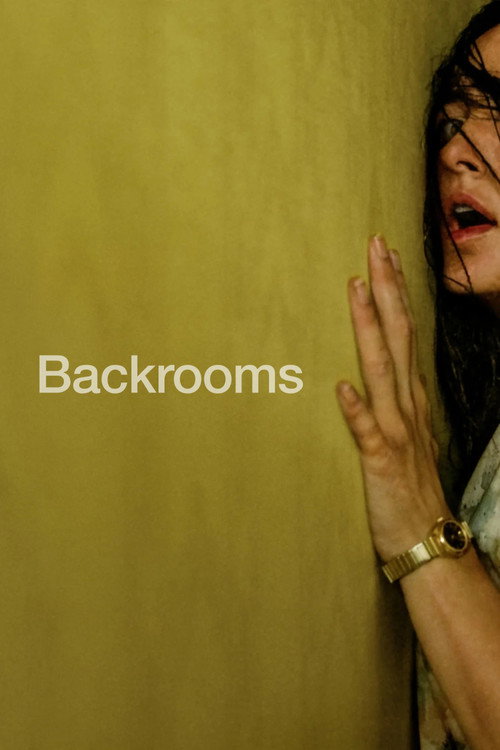
Archetypes, furniture, the architecture of the psyche. *Backrooms *as an internet phenomenon is one that is unquestionably reverberating with familiarity. What’s fascinating about the *Backrooms* is, what initially appears to be a conscious, calculated organism, reveals itself to be devoid of life, irrespective of how it imitates it. Beyond the intrinsic environmental eeriness that is a constant within its vast, ever-expanding lore, the labyrinthine complex’s invigorating ability to communicate an intricate malevolence is equally notable. Not completely successful in being a traditional horror, or even particularly strong in communicating existential dread, what stands out is a bleakness. A fatalist, hopeless quality. The titular *Backrooms *are perhaps excessively literal, evocative of an inevitability to it all. The physical makeup of the rooms contain all the undesirable features of a declining society, reflecting an optimism annihilated by the short-sighted, predatory malignancy, an “enshittification” that permeates the present. Gaudy fluorescent lighting, yellowed ceilings, musty carpets. Outdated furnishings, both utilitarian and erratic in their placement. Outside of time and out of place, a cancer that must be studied. This is particularly evident in how a large percentage of its hostility is marked by a passiveness, an inconsistent internal teleology — a forced incomprehension placed on the audience by the filmmakers. The synthetic elements the *Backrooms* are composed of, is reminiscent enough of existing media and literature tropes, that it must do little to convey the unnatural. The natural order of mankind, inhibited. Trapped in a prison of its own making, responsible for our own demise. There’s an interesting thematic thread woven into the script about control and accountability, but, alas, that too is a woefully mishandled. Unfortunately, Parsons dedicates too much of the runtime to what it doesn’t need to. Parson’s interpretation of the *Backrooms *is a warped, inverted reality forged from the forgotten, a subterranean (or sub-dimensional? or subconscious?) realm of dark matter. A centrifuge of nuclear uncertainty. All great ideas — but the film doesn’t escape a redundancy encapsulated by it being a little late to the game. Beyond the countless related forums, threads and short films online, in the realm of television we’ve seen this production design in *Severance*, we’ve seen the background “real world” stuff in dystopian sci-fi and YA novels of questionable quality, so it all feels rather trite and unexciting when it’s all said and done. Additionally, unlike *Severance*, the out of date tech and old-fashioned cars outside the *Backrooms *feel more like a cop-out than a justified world building choice. It even doesn’t replicate the same liminality of the spaces that the short films capture, it’s missing a certain flair that what something labeled a liminal space carries, what is not merely a transitional space. With how painfully derivative the film is, as visceral in its atmospheric thrills as it is frustrating, I’m surprised it isn’t more polarising. Perhaps it speaks to the nature of my generation. Not only do we borrow a facsimile of the past, idealising the mundane, not only do we spend too much time curating the aesthetics of yesteryear to appear more refined, to stand out from less culturally aware slop, but we fail to have anything new to say, or a truly refreshing way to say it. The failure of *Backrooms *as a feature adaptation lies in its superficial tendencies, a preoccupation with imitating everything that defines genre filmmaking produced by pseudo-indie film studios, the precisely crafted industry standards pioneered by Wan and Perkins, in an effort to do everything *correctly*, as if following a checklist of conventionality. I could really do without a Perkins credit on the next horror film I see. It is convenient to point out that the quintessential hollowness of the *Backrooms *and its construction (both narratively and conceptually) is partly by design, and predominantly by consequence. Despite a healthy dose of skepticism, the film surprised me in its missteps in translating a mythology characterised by its anarchic malleability (an IP no one truly owns, only an iteration of it) and its initial cult following. When I think of such technicians, Michael Bay, Joseph Kosinski and James Cameron come to mind. Where their filmographies exhibit a more sophisticated approach to engineering spectacle, but is less adept in terms of dissecting character, or original narratives. In the age of AI, advancing technology, and an oversaturated entertainment industry, it will take a lot to retain interest and satisfy audiences. Parsons’ career looks very promising and far surpasses what people my age are capable of doing with a budget like this, but he really needs to work with better writers. If all that seems like pseudo-philosophical gibberish, it’s representative of yet another shortcoming of the film — terribly written dialogue and exposition, and an incredibly misguided edit. It would not be unreasonable to think even in this criticism, there is an element of eulogising, an overanalysis of the thematic scope *Backrooms* has to offer, and this is true, in a sense. Rather it’s more like what Parsons could have aspired to, but in spite of his intense technical skill and creativity, he has a long way to go in terms of refining his craft to elevate what feels like a middle of the road video game adaptation as opposed to a precisely coordinated beginnings of a franchise.
Toy Story 55.0June 27
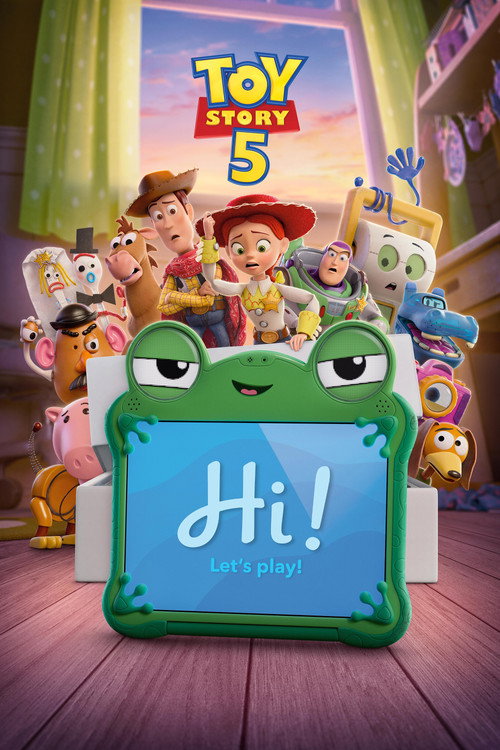
Kinda sorta saw this against my will…. perhaps the last film of the mid-year releases I had any desire of seeing. At some point it must be accepted that these films are no longer made with my demographic or a more mature audience in mind anymore, and that’s fine — we move on. Evidently not nearly as influential or an instant classic as the original trilogy, nor as boldly egregious as its immediate predecessor. Even the philosophical musings, nuanced as they attempt to be, feel tired and lack any angst, urgency or the existential weight of every prior *Toy Story *film, even the fourth. Indeed, this lacks stakes and a lot of turmoil, or even a tactful stronghold over emotions that Pixar previously delivered on more efficiently. To *4*’s credit, while being a wholly more unsatisfying (to the point of hardly resembling the values and motivations of the characters as they were in the original trilogy) narrative, it was comparatively less predictable, at the expense of being less engaging and puzzling to decipher. Unlike perhaps any other Pixar I’ve seen, this has far more in common with a Disney film or virtually any other animated studio, which is a real shame. Instead, to little surprise, this is safer and more formulaic, sidelining different characters than the last but without retaining a sense of precision or refinement that older Pixar had (clouded by nostalgia of course). This will be far less polarising though, and its observations are astute enough even if it’s a fair bit behind the curve and overly simplistic in their inclusions. A positive of the film would be an introduction of a new (human!) character, one of two who I would have gladly enjoyed more screentime of. Must echo that Conan is a fitting addition to the franchise, and one of the few good things that have come out from these redundant and unnecessary sequels. A less frustrating experience than *4*, while it’s certainly more palatable, it left me sighing intermittently throughout for different reasons. Also potentially one of the worst crowds I’ve had the displeasure of sitting with in theatres, especially considering there were hardly any children.
Riverstone8.0May 22