Skip to content

Recent activity
Rashomon8.0April 11
It’s funny this movie came out a year after Orwell’s 1984 because the study of the uselessness of reality in the absence of truth is absolutely peak in both
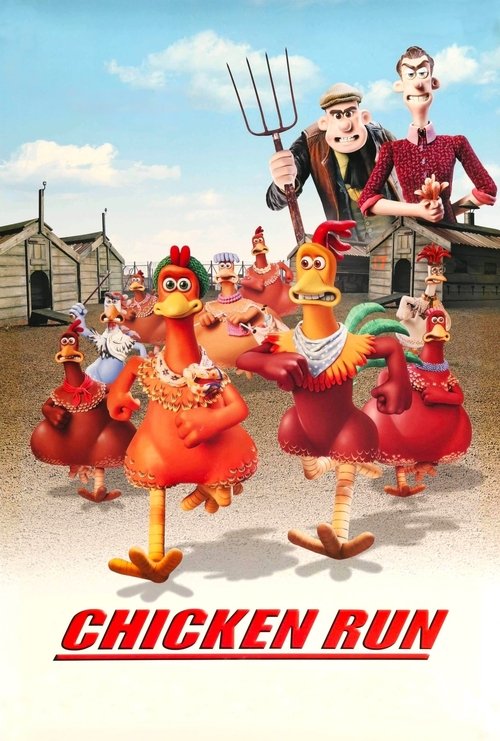
Chicken Run7.0April 11
Dreams7.0April 10
*Dreams* seems like a true passion project after a triumphant directorial career. It is the most surreal movie I’ve seen of Kurosawa’s, almost Lynchian at times. I feel that surrealism works best at its most subtle in message, leaving the audience to do the thinking themselves. The 8 dreams presented in this movie varied greatly in their subtlety, which was a major factor in my enjoyment of each. Obviously I’m going to rank them. 8. The Blizzard. Definitely the most forgettable film, and as it takes place entirely inside the titular blizzard, it is also one of the least visually interesting. Still, it is an interesting commentary on human endurance, and the men’s beleaguered breathing was quite harrowing to listen to. 2.5/5. 7. Mount Fuji in Red. The opening scene was pretty insane to look at, and I liked the contrast between Mt Fuji being illuminated by nuclear reactors on earth as opposed to the giant nuclear reactor in the sky. The ideas the short presented were pretty clear cut though, which limited my interest. 3/5. 6. The Tunnel. There were some beautiful shots at the beginning of this short, and the central idea was executed very nicely. Unfortunately ‘man is tortured by the ghosts of the soldiers who died in the war with him’ is a trope as old as cinema itself, and while there was some novelty to this short, it ultimately wasn’t hugely transformative on content I’d already seen. 3.5/5. 5. The Village of the Water Mills. A joyful picture of a quaint village that provides a nice finale to the film to offset the apocalyptic themes of the previous two shorts. I feel like Tolkien would have liked this one - it portrays the most admirable side of conservative and traditionalist philosophies and politics. The focus on the environment ties together the theme which runs strongly through all 8 shorts, and the presentation of funerals as celebrations of one’s accomplishments in life was poignant. 3.5/5. 4. The Weeping Demon. I like to think that the man we follow through the film is an angel descended to Earth to see what has become of it. It’s *very* heavy handed but the depiction of a post-nuclear apocalypse hellscape filled with former politicians and billionaires who have turned into demons is nonetheless very effective imagery. An interesting insight I would read into it is a warning of the paradox that comes with punishing these people - by destroying the world in individual interest they are manufacturing their perfect hell/punishment. To stop this fate for everyone, one must also take pity on the demons, saving them from themselves. 3.5/5. 3. Crows. It’s a bit insane that *Crows* was written and directed by Akira Kurosawa - it is so unlike anything else by him, though mostly in superficial ways. It utilises a green screen, is entirely in Italian and English, and Martin Scorsese acts in it 😭😭😭. I like that Kurosawa (a man who inspired so many) is essentially paying homage to one of his own inspirations in Van Gogh. The influence of paintings as an art form on the way Kurosawa directs is undeniable. Also, the commentary on what it means to be an artist and make art is very interesting. 4/5. 2. Sunshine Through the Rain. The first and second shorts are my favourite two, which did kinda overhype me for the rest of the movie. The last shot in this short alone is a strong contender for my favourite shot in anything ever. The whimsical yet dangerous fantasy nature in this is perfect - it’s essentially all the best parts about *Spirited Away *condensed into one 10 minute piece. Beautiful, eerie, and a magical encapsulation of the strange world we all inhabit as children. 4.5/5. 1. The Peach Orchard. Another short dedicated to childhood, this time capturing the first moment where loss and change sink in as a kid. The peach blossoms floating in were divine, even if some of the shots were a tiny bit cooked by my bitrate. The secret joy on display here for a world that exists maddeningly beyond the bounds of one’s own, just out of reach but occasionally fully visible for mere moments is really personal and special to me, so this short really worked in that regard. 5/5. Overall well worth the watch - Kurosawa with colour could direct paint drying and I’d probably be blown away. If you’re only vaguely interested or only have half an hour of spare time then I’d highly recommend watching the first two - the rest are more hit or miss.
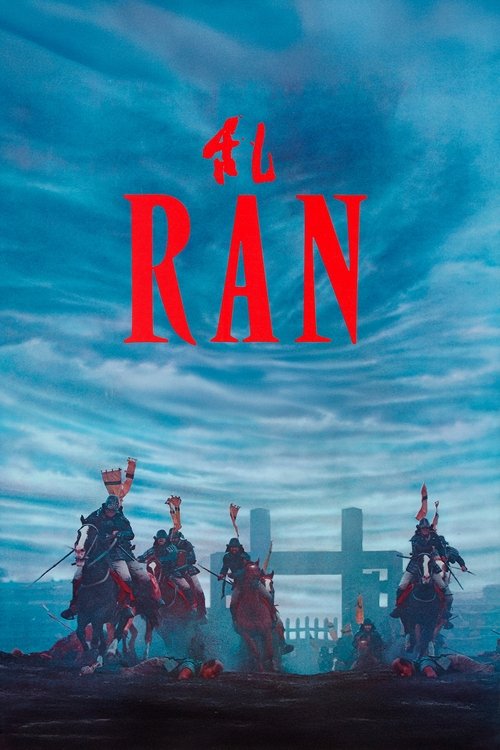
Ran10.0April 10
This is the best movie I’ve ever seen and it really isn’t very close. I genuinely can’t articulate what’s so incredible about it in a review because it’s genuinely everything. The whole movie. There isn’t a single scene that isn’t better than the best scenes from 90% of the movies I’ve seen. Nonetheless, I’m going to quickly mention a few specific things that I really love about it. The massacre at the Third Castle is the best and most horrifying battle scene ever done. The entire sequence where Kurosawa cuts the sound and just leaves you to watch it with music in the background is some mouth-agape shit. What a way to end the movie too. That final scene is genuinely the perfect cherry on top, I love how it leaves you with an image of Buddha - the characters talk about and mythicise their deity the entire movie, but Buddha is only seen for the first time at the very end, seeming so monumentally indifferent to everything. The setting is also masterfully constructed from the very first shot. In no other movie am I so completely transported into the setting as in *Ran. *Every landscape is filled with so much beauty and depth it feels fantastical, like the idyllic world your imagination creates when you’re reading a book - which tracks as *Ran* is an adaptation of a play. On that note, the acting is also incredible at achieving its purpose. In almost every movie, actors take a very naturalistic approach to their roles, but *Ran* is acutely aware of its source material in all of its performances. The monologuing and dramatic weight behind each one only works so perfectly *because *of the setting and story the movie tries to tell. Lady Kaede is also such a good individual performance (alongside Tatsuya Nakadai as Hidetora obv). Her influence was one of the best additions to the movie, serving as the perfect foil to the outward brutish violence of the other characters (and potentially as somewhat of an analogy to Lady Macbeth). Her perspective sort of exposes the hypocrisy behind the entire machine of war - Kurogone’s line ‘Such is the vanity of women’ is almost farcical in the context of the entire movie. I also have to point out how interesting of a decision it was to present Hidetora (the films depiction of Lear) with so many differences from the play. Lear in the play is comparably harmless and foolish - Hidetora is undoubtedly a fool, but he was a violent war lord his whole life, someone who’s brutality shaped the world and lives of every other character. It is more than merely ironic that he is betrayed by his sons - his whole life he taught them to act in the very way they would against him. I feel like *Ran* is both the most and least inspiring for a filmmaker to watch. On one hand, it shows you just how high the ceiling for film as a medium really is, but on the other hand, Kurosawa does NOT give you any tips on how to reach his level. I genuinely have no idea how you would even start making a movie like this. TL;DR - I’ve changed my mind. You don’t deserve to watch this as your first Akira Kurosawa movie. Go watch Seven Samurai first or something, then watch this and realise that he is the greatest director to ever live.