Skip to content



Recent activity
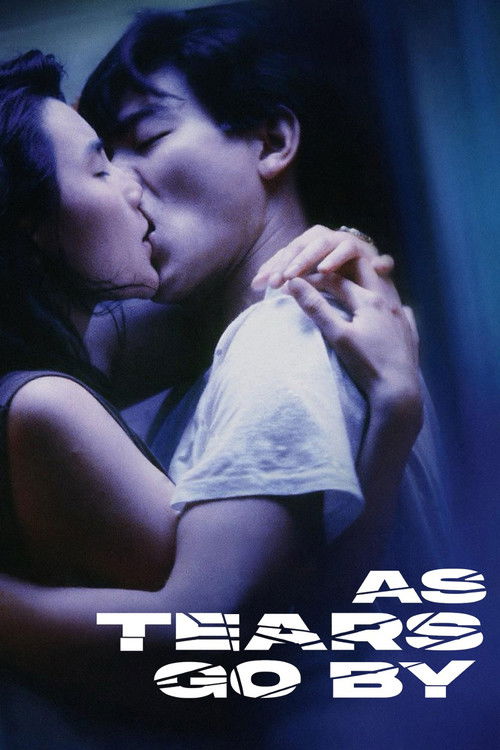
As Tears Go ByJune 14
(written for a quick introduction to the film in a local cinema) Wong Kar-wai was born in Shanghai in 1958. When he was five years old, his family fled to Hong Kong to escape political upheaval. His personal journey almost mirrors the history of Hong Kong cinema itself, whose commercial and aesthetic roots once lay in vibrant Shanghai before wars and political upheavals drove the industry away. Wong was initially drawn to graphic art before specializing in television and film production. By the 1980s, he was firmly established in the local industry, churning out screenplays: for soap operas, sitcoms, and feature films. An almost ironic footnote to his career: During his time as film director, Wong Kar-wai is notorious for shooting without finished scripts. The explanation for this lies precisely in that rigorous apprenticeship. He has often said that he now “hates” traditional screenwriting because simply filming a finished script is, for him, simply too boring. In 1988, he finally got the chance to direct a film himself. The project had originally been entrusted to him as a vehicle solely for the then-very-popular singer and actor Andy Lau. This marked the beginning of a pattern that would run through Wong’s entire career: working with the absolute megastars of Asian cinema. Success proved him right: his debut promptly made it into the prestigious Directors’ Fortnight section of the Cannes Film Festival in 1989. Reactions to “As Tears Go By,” however, were mixed upon its release. The film was not a commercial success in Hong Kong, but its enormous success in Korea and Taiwan ultimately led to it receiving nine nominations for the Hong Kong “Oscar” (the “Hong Kong Film Award”). To properly contextualize “As Tears Go By” within film history, we need to take a brief look at the cinematic climate in Hong Kong at the time. In the late 1980s, director John Woo, who would later go on to direct the second *Mission: Impossible* film, achieved massive success with *A Better Tomorrow*. Suddenly, all of Asia wanted to see highly stylized films about “heroic gangsters”; honorable, almost larger-than-life triad heroes. Wong Kar-wai and his mentor Patrick Tam wanted exactly the opposite: they wanted to tell the story of real-life petty criminals. Originally, the material was even planned as a major trilogy. The first part was to shed light on the gangsters’ youth, the second part, our film today, their twenties, and the third part their resigned lives in their thirties. Incidentally, the latter was already filmed by Patrick Tam in 1987 under the title “Final Victory.” When Wong was then given the chance to take the director’s chair, he decided to tell the backstory of these disoriented young men. He drew inspiration not (only) from mainstream Asian cinema, but from Hollywood. A major influence was the classic melodrama of the 1930s, such as Howard Hawks’ 1932 film *Scarface*, in which the protagonist acts almost carelessly and distractedly despite being in constant mortal danger. Even more influential, however, was Martin Scorsese’s “Mean Streets” (also known in these parts as “Hexenkessel”). Wong was fascinated by how similar Italian and Chinese cultures are in some ways: the deep sense of family, the ever-present mothers (or female "mother figures"), the cultural value of food, the mafia structures. The unpredictable, explosive character played by Robert De Niro in Scorsese’s film clearly served as the inspiration for the impetuous character Fly (played by Jacky Cheung) in "As Tears Go By". Despite the gritty gangster milieu, Wong’s films are almost entirely free of irony. They take the capriciousness, the manic bursts of energy, and the self-expression of youthful restlessness deadly seriously. It is cinema with the soul of classic rock ’n’ roll, celebrating fleeting heartbreak. This is also reflected in the original Chinese title “Mongkok Carmen”: it contrasts the brutal reality of Hong Kong’s rough Mongkok district with the romantic promise of love from Bizet’s opera “Carmen.” Pay close attention to the opening credits right from the start. Wong Kar-wai’s visual style is immediately apparent here, and you can already recognize the signature style of the future master director in the very first minutes. Wong and his cinematographer Andrew Lau work masterfully with color contrasts. The opening titles appear in bright red and yellow: the colors of the neon signs that dominate Hong Kong’s nightlife. This is juxtaposed with an almost surreal installation reminiscent of video artist Nam June Paik: on numerous television screens stacked at an angle, we see a brilliant blue sky with white clouds. This visual clash is not merely a gimmick, but establishes the film’s central spaces and emotions. The intensely saturated neon colors and the dark streets represent the gloomy, restless world of gangsters. The glowing blue of the monitors, a color Wong often uses in the film to expressively charge the night instead of traditional black, represents an idyllic tranquility and the hope for a better life, embodied by the female lead Ngor (played by the wonderful Maggie Cheung). You’ll now witness a director reinventing Hong Kong cinema: with vibrant colors, intense emotions, and a melancholy you won’t soon forget.
Roma elasticaMay 21
🎶 *She had Billie Eilish Style moving to Rome for a little while *🎶
AliveMay 14
The hysterical woman, only to be talked down upon by the adult hippie and lifted up by the teenage fuckboy. What a lovely clichee-book.
The Pirate Queen: No Safe WatersMay 12
A videogame starting cutscene made for ScreenX. But when does the game start? And the wikipedia articles at the end killed me completely. What a waste of time.