Skip to content
Recent activity
Dinner in America2.0March 29
// a rewatch to help contextualize my original criticisms all art is political, but in *dinner in america*, the connection between the body of its aesthetics and the soul of its political statements never fully converges. the film builds an identity as an ode to unapologetic individuality, yet does little with that message beyond simply asserting it. while offensive or vulgar depictions, however satirical, don’t always need to serve a grand commentary, they become excessive when they function as character shorthand, without any contextual grounding. a film can’t position itself as being for the “social outcasts” while simultaneously relying on provocative language that marginalizes others, without engaging with that contradiction. simon’s punk identity becomes both the beginning and the end for his crude behavior, just as patty’s neurodivergence is treated as the entirety of how she is perceived and perceives herself. patty’s characterization feels extremely two-dimensional, reduced to a single defining trait, rather than explored with real depth. both characters and their dynamic have the potential for complexity, but ultimately fall flat in a film that seems convinced that it is saying more than it actually is.
Mississippi Masala6.0March 28
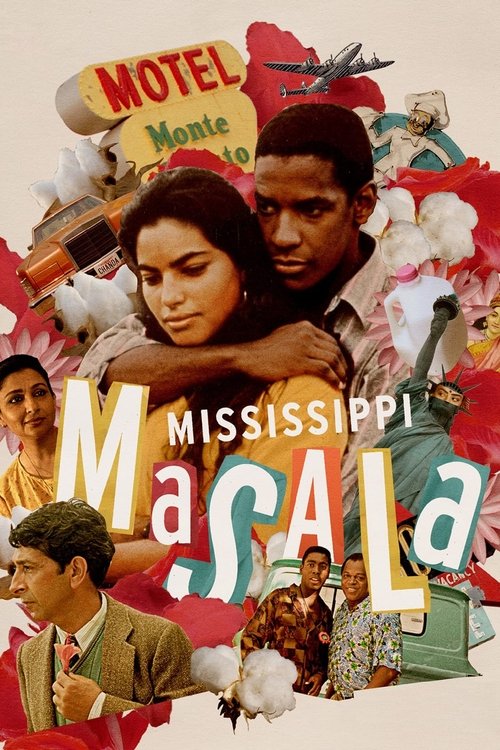
“There is so little love in the world, and yet **so much**.” a textbook example of gorgeous coloring and cinematography doing much of the heavy lifting for a film that otherwise has struggles with form and substance, despite having access to the storytelling tools to do so much more. characters in the film continuously exoticize and eroticize mina while simultaneously demonizing demetrius, without offering any meaningful racial commentary about why those choices matter, even though the film is set in a period layered with racial undertones. yet, it seems hesitant to fully engage with these complexities. the developing relationship between mina and demetrius often comes off more like a romeo-and-juliet style plot device rather than a reflection of what it intends to say in respect to historical and social context. the claim of “i don’t see color” opens the film but quickly unravels once mina and demetrius are caught together, as both the black and indian community contest their relationship. the film acknowledges the superficiality of this attitude, but fails to explore it as deep as it arguably should. its central storyline is meant to navigate post-colonialism, race, heritage, immigration, and love, along with other intersections. overlooking color does not negate its real presence and systemic impact, especially in the context of this narrative. it is possible to meaningfully explore multicultural communities thoughtfully without diluting individual differences to simplistic harmonies in relationships.
Past Lives8.0March 26
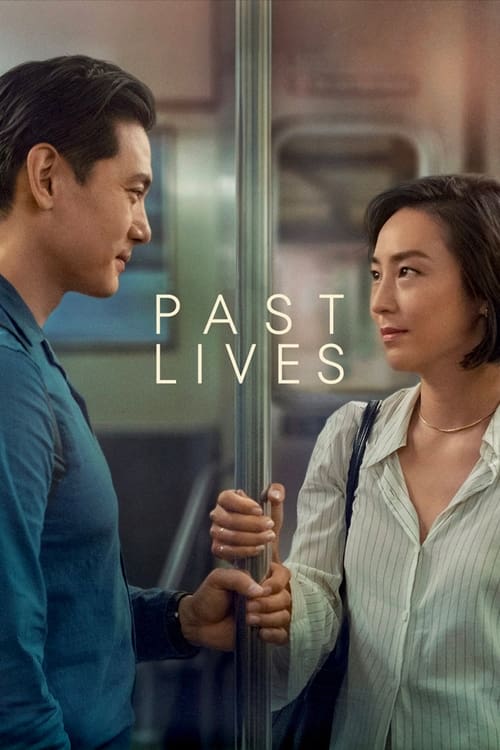
“You had to leave because you're you. And the reason I liked you is because you're you. **And who you are is someone who leaves**.” there’s a lot to say about this film, but a major aspect i enjoyed was how raw it depicted the nuances of love. i’ll always believe that love is something you do, not something that happens to you as a passive actor. that’s why it feels impossible to just “quit,” and why i struggle to believe in soulmates (or even the concept of ‘inyeon’ as nora mentioned) the most intimate thing about romantic love is that it’s not predetermined. people choose to surrender themselves to something fragile, just for a chance/the pursuit of connection. even in the context of past lives, we choose to love someone in each individual life we experience, not because we are fated to. in that sense, i can appreciate the ending. love is something you practice, and over time it becomes ingrained in you. it does not simply go away because it is willed to, and that is a risk accepted the moment you choose to love in this life (and possibly, every past one wink wink) all in all, i appreciated this a little more than the first time + this is my first real letterboxd review where i try to say something of substance yayyy
Dinner in America3.0March 23
?