Skip to content


Mike
@rich_dog15
*“I just wanted to leave my apartment you know? Maybe meet a nice girl… SO NOW I GOTTA DIE FOR IT?”* Rating system: **0–14 ——— ½** **15–24 ——— ★** **25–34 ——— ★ ½** **35–44 ——— ★★** **45–54 ——— ★★ ½** **55–64 ——— ★★★** **65–74 ——— ★★★ ½** **75–84 ——— ★★★★** **85–94 ——— ★★★★ ½** **95–100 ——— ★★★★★**
Recent activity
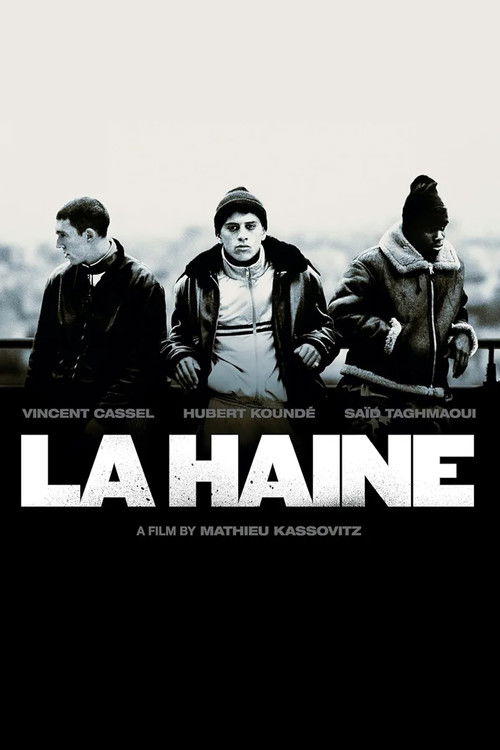
La Haine10.0July 25
**97** > *“Hate breeds hate.”* The 1995 film ‘La Haine’, Mathieu Kassovitz’s magnum opus, is one of those movies that contain all the necessary elements, which, as a result, successfully manage to coerce the audience into disputing their personal life choices and beliefs—an aspect for which people love movies. Pairing the latter emotional force with existential and philosophical questions that lie beneath a mere moving picture and hide deep down at the movie’s core, which are outwardly presented in a veiled manner through simple realistic instances that occur to three distinct gentlemen from the Paris ghetto over the course of one day, the viewers are able to enjoy a true work of art, a tour de force. A provocative film? It surely is. From the initial montage of multiple documentary-style real riots between the French people and the police it becomes clear of Kassovitz’s motive and idea, what was proven by his own words a long time ago. The montage also superbly prepares the viewers for the coming tragical story demonstrated through creative artistic decisions and enticingly filmed shots. Besides the evident commentary on the violent methods of interrogation of the police and its overall ferocious approach to sustaining peace on the streets, to prevent the film from becoming a simple insult to the federal law enforcement Kassovitz implemented ‘hate’ ideas into ‘La Haine’. As such, throughout the film the audience becomes witness to several expressions of emotional hate. They are offered a glimpse into the lives of our three main characters: Vinz, Saïd, Hubert. And it turns out, every depicted occurrence ends with the same outcome—an insignificant spoken word or decision serve as a spark, which ignites the protagonists’ rage-filled nature, resulting in a yet another banter. So, what does the audience inspect? A ‘hate’ cycle. “*Hate breeds hate.*” With the population’s desire to change the regime, it utilizes hate, which merely does not change anything. ‘La Haine’ perfectly outlines this exact theme and idea. And this idea translates into the following principle: “*So far so good*”. A ticking time bomb. Acting as an effective way to induce tension, the multiple timeframes in the movie highlight that the ‘hate’ cycle will eventually end. It is all a matter of time until something bad happens, which will ignite yet another ‘hate’ cycle, and so on, as proven by the ending of the film. Similarly, ‘La Haine’ translates to ‘The Hatred’ or ‘The Hate’ from French. I have also noticed repeating gangster themes, for instance the willingness to earn respect. Such theme can be traced back to ‘A Bronx Tale’ (1993). As well as the influence of films like ‘La Haine’ can be seen in ‘City of God’ (2002). As for the relevancy, ‘La Haine’ does not miss. To be completely honest, its commentary becomes more and more relevant nowadays. And it is through an exceptional execution that the film really manages to deliver the message. As such, the technical aspects are flawless. From the storyline to the distinctive and timelessly unique shots, for instance the iconic Dolly zoom or the mirror scenes—a perfect representation of utmost creativity from the creators. ‘La Haine’s’ realism and portrayal of metaphorically and spiritually lost youngsters killing time on the streets without having an urge or desire to fulfill their dreams or destiny truly felt similar to a documentary rather an artistic expression. Furthermore, the film touches upon themes like the urge of some individuals to break the endless cycle of hate or poverty, represented through Hubert’s moral debates. Out of the negatives, however, I would only mark Hubert’s acting as satisfactory, but comparing his portrayal with that of his co-stars’, unfortunately, leaves him in the shadow. To conclude, ‘La Haine’ is a classic for a reason. People love it for its realism, relevancy, acting, directing, etc. There are many reasons to love a film. Whether it’s purely based on vibes or technicality, but ‘La Haine’ has it all. It had a huge influence on not only French cinema, but films in general. For me, it would not be an exaggeration to say ‘La Haine’ without a doubt became one of my favorite films of all time. As such, I believe it deserves all the praise it gets.
A Minecraft Movie3.0July 20
Star Wars6.0July 17
**60** > *“Use the Force, Luke. Let go.”* A long time ago, in a galaxy far, far, away…An applicable motion picture had caught my eye. As you may have already scrutinized by the title of the movie above this review and the aforementioned quote, my words tend to describe the film ‘Star Wars: A New Hope’, released in the distant year of 1977. Whose human mind could have possibly produced any living idea of what this film would eventually become and the influence it had had on modern cinema and the sci-fi genre? Presumably, only a few individuals’. The pure uniqueness this movie had demonstrated throughout various creatures, designs, characters, visuals, special effects is colossally commendable and unprecedented, generating forever memorable personas like the infamous Darth Vader, Han Solo, Luke Skywalker, and others. As such, overall, ‘Star Wars: A New Hope’ is undeniably a technical masterpiece in itself. Though primarily taking place on a fictional planet called Tatooine, the depicted events unfold on a series of imaginative space objects, including the menacing Death Star, which plays a vital role in the structure of the film’s main conflict and essentially serves as proof of George Lucas’s extreme talent at world-building. However, to my dismay, the ability to comprehend all the minute details and physics of this utter galaxy was beyond me. As to my understanding, a prequel trilogy was released after this, in which I assume more information would be disclosed on the galaxy itself and its origins or rules. Though, I have heard their quality was evidently worse than that of the original movies. Furthermore, the Empire’s motive is not clear. But it is interesting to notice that Lucas’ Empire was based on the principles of fascism, so I guess the conflict’s lack of proper development is explained. That, however, does not take away from the confusing plot and its holes. For example, the absolutely unnecessary sub-plot, involving Skywalker and Princess Leia that did not receive enough attention or screen presence for the audience to properly connect to the characters. Moreover, be it for the time of the release or not, the pace was not great. Finally, in general, ‘Star Wars: A New Hope’ does not spend its runtime on exposition at all. The viewers are simply thrown into a whirlpool of events without any explanation (excluding the initial monologue). So, besides the confusing absence of Skywalker’s history or Obi-Wan Kenobi’s, or any of the characters’ for that matter, with the initial ‘iconic’ monologue at the beginning of the movie doing some heavy lifting, the technical aspects of the film are implausible. It contains exceptional cinematography and visuals. I would even put it on par with ‘2001: A Space Odyssey’, in terms of cinematography. Little details like the two Suns and stunning character designs fully deserve the praise they constantly get. Moreover, even though the movie was released in 1977, the visual effects manage to hold up to this day very well, indeed. Of course, you cannot possibly ignore the masterfully made and enormous practical sets, such as the Death Star and the Millenium Falcon. To conclude, ‘Star Wars: A New Hope’ unfortunately did not impress me as much as I thought it would. More specifically, the storyline was confusing and the characters have not had much depth. Plot holes and unnecessary side stories did not make things better. On the other hand, this heavily contrasts with the technical elements of the film, which are of particularly striking quality. Jaw-dropping cinematography and visuals should leave every viewer impressed. That said, I would not consider the technical side of the movie to make for its writing issues. Overall, ‘Star Wars: A New Hope’ left an indelible mark on the movie industry, but I myself did not find it completely flawless, though I am able to comprehend the reasons why this film gets so much praise.
Rain Man8.0July 15