Skip to content

Recent activity
Werckmeister Harmonies10.0July 18, 2025
Moby-Dick presented the whale as an inexhaustible slate for metaphor, spending its epic length wringing out every philosophical angle of every aspect of God’s most massive living creation. Tarr treats it the same way here - it’s whatever everyone needs it to be, the missing piece in the puzzle of a miserable society that, when completed, leads to violence, even if they don’t understand why. Laced with metaphor, but also a rich work of atmosphere - love the shot of the circus truck arriving to the town, casting a massive shadow over the rows of aged shops and storefronts like a descending agent of certain doom.
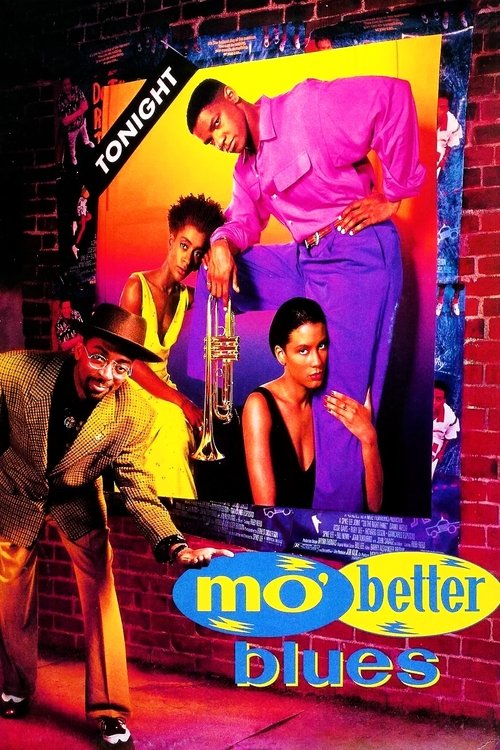
Mo' Better Blues8.6July 16, 2025
Visually rapturous, with one of the coolest opening credits sequences ever, and beautiful/expressive use of colored lighting throughout. Obviously a movie about jazz, but I was not prepared for just how much music drives it; someone on here likened it to a film adaptation of a jazz concept album, and I think that's a perfect way to put it. It also has an interesting out-of-time feeling - the music and feel of it suggest the 1950s, but details make it clear it's set in the 1980s. Stronger in style than in narrative - the heavy focus on Spike himself's character is a mistake, I think - but man, what style. Oh and of course there's Denzel.
Lessons of Darkness9.5July 14, 2025
A (literal) hell of an experience. Presents a bit of a dilemma for me, because the most common critique leveled at this is both very serious and kind of objectively true. Like, yes, this is absolutely aestheticizing war, presenting imagery from a very real contemporary conflict in which people died and completely stripping it of geopolitical context in favor of rendering it as a series of John Martinesque apocalyptic landscapes around which Herzog spins a Biblical destruction myth. The workers putting the fires out are referred to as “creatures” and typically shown wearing wraps and goggles that obscure their faces; they are not presented as men doing jobs, but as the natural inhabitants haunting this desolate landscape. There is some narrowing of scope in the early sections about torture weapons and two women relating their horrific experiences during the war, but not a lot of context is given there either. Herzog clearly saw a truth in the terrible grandeur of what he was seeing that went beyond the conflict that produced it, into the larger question of man’s tortured relationship with himself and the world around him. We wrought this upon the earth. We will do it again - it’s our nature. “Now they are content. Now there is something to extinguish again.”
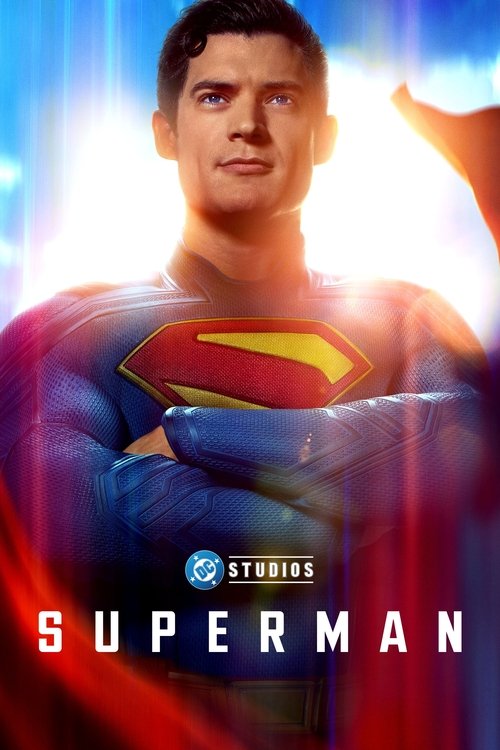
Superman7.1July 13, 2025
At this point, Superman is such a pop-culture staple that he's a little out of fashion. What place does a world this fractious and complex have for a character so morally righteous and incorruptible? This is exactly the question James Gunn's new reboot tries to answer. It takes a little bit from all the approaches to the character we've seen; it has the upbeat tone and unerringly good Superman that Donner's films had, but it places that unbendability in a slightly more challenging worldly context - nowhere near the oppressive bleakness of the Snyder films, and plenty comic-booky, but still certainly a world with some geopolitical complexity that does not fully trust Superman - and sees how he deals. Right off the bat, it makes a really smart decision - mercifully, rather than depicting Superman's origin yet again, it simply drops you right in the thick of things. Gone is his jettisoning to Earth by his Kryptonian parents Jor-El and Lara, who are only seen in hologram here (though they are still quite important to the story). Gone is his childhood at Ma and Pa Kent's farm, except again in flashback. Gone even is his initial move to Metropolis, hire at the Daily Planet, and introduction to Lois Lane - Superman has been in business for three years when this film starts, and his relationships with all the principals are already well-established. David Corenswet's got the jaw and physique for the job, and his take on the character is great - enormously likable, sincere, and indignant at the very idea of injustice. Gunn even gives him a couple of corn-fed monologues that he delivers with zero irony. When the film starts, he's just got done saving a very obviously Palestine-coded country from invasion by a very obviously Israel-coded country being funded by Nicholas Hoult's Elon Musk-coded Lex Luthor (by Elon Musk-coded, I mean profoundly uncharismatic and cripplingly envious of figures people actually like, but I'm also giving Musk too much credit - at least Luthor is actually smart and competent). He's acted outside the law to do what he believes his right, and even Lois Lane (Rachel Brosnahan, with a tenacious take on the character) presses him on the morality of that decision. Look, I'm not going to act like the thing is a super nuanced exploration of Israel-Palestine, but historically, whenever the villain of a blockbuster is a foreigner, it's usually just whoever the State Department currently wants you to hate. Seeing Israel get the short end of that stick is a new one, so credit where it's due. In an era where every blockbuster seems to feel like 150 minutes is the absolute minimum runtime, it's refreshing to see one that's just two hours and change. Watching the film, though, it's clear how it got there: this is a *busy* movie, a lot packed into a little. No less than four other superheroes (or "metahumans", as they're called here) are introduced and figure heavily into the plot, though not in a way that feels too consciously like franchise-building - that is, these characters have the feeling of colorful side characters who will stay that way, and they're all fun presences, so they don't gum up the works too much. The plot comes to involve some pocket dimensino fuckery that, together with the ongoing conflict between Not Israel/Not Palestine, means that by the time we hit the third act, there is simply way the hell too much going on. Not to mention the fact that an interdimensional rip threatening to tear apart Metropolis and an all-too-familiar-looking military invasion are worlds apart in groundedness and sobriety, and cutting between them during the climax is just way too much for the movie to withstand. As good as Corenswet is, the movie's so busy that he never gets a chance to work the Clark Kent/Superman dichotomy - there's one early scene where he's in Clark mode, but for the rest of the film, he's either suited up or among characters that are aware he's Superman and thus has no reason to go full Clark. Filming the type of action promised by a hero like Superman is no easy task, and no filmmaker has really nailed it. Donner's action looked stiff and wire-bound, and Snyder's was incomprehensible explosions of particles and chaos. James Gunn, I regret to say, has not found the solution. His approach is to keep the camera close up and locked on to whatever the focal point of the action is, no matter how chaotic things get, which creates plenty of stiff and unpleasant-to-look-at camera movement that extends even into the more intense dialogue scenes. The bright colors of Metropolis are at least nice and comic-booky, befitting the film's approach to the material, but when anything intense is happening, things start getting shaky visually. The film is far from perfect, in other words. But it gets the character right, and it's almost entirely free of irony, and that counts for a whole lot. From his first moments onscreen, Superman feels right. He's inserted himself into a "complex" geopolitical situation because lives were in immediate danger. During every major setpiece, saving civilians from the destruction is as much of a concern as fighting the foe. When a kaiju rampages through Metropolis, Superman, in the midst of fighting it, advocates against killing it in favor of taking it alive to a galactic zoo. He willingly gives himself up to authorities when the people are given reason to distrust him. And it shows that this strong moral compass came *not* from his Kryptonian birth parents, but from the simple wisdom of his all-American found family Pa and Ma Kent. (Gunn has boldly cast Pruitt Taylor Vince, a character actor known for playing freaky and imposing roles, as Pa Kent, and lets the pre-third act emotional climax hinge on him. He crushes it). Through it all, David Corenswet plays Superman with a golly-gosh gee-whiz sincerity that feels just right for the character. It's probably the most challenging to pull off take on the character to date - relentless optimism and relentless bleakness are one thing, but placing Superman in a world of geopolitical conflict and black site interrogation sites and still having the incorruptibly decent essence of the character be front-and-center through it all is commendable, and I would say Gunn has done a messy but solid job of it. As a final note, John Williams' main theme from the original 1978 film is used as the main theme here, and I love that. It seems like we've all just accepted that that's Superman's theme, regardless of iteration. Has that ever happened with any other character or series?