Skip to content


Recent activity
Angel's EggJune 23
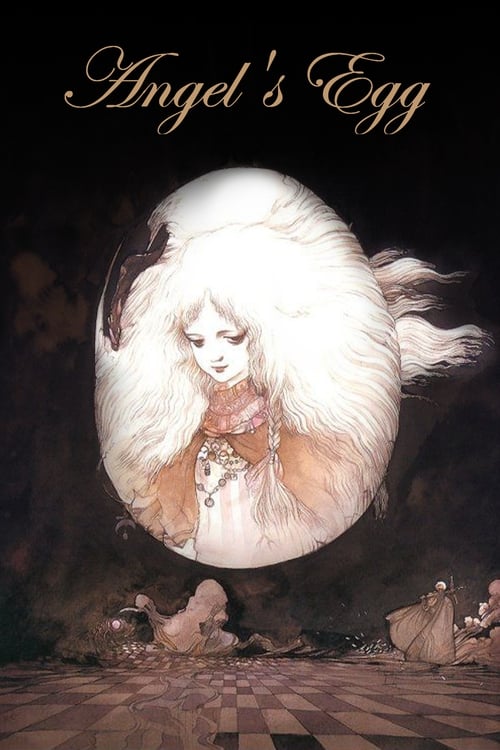
> ***“Alas, the time of the most despicable man is coming, he that is no longer able to despise himself. *** > ***Behold, I show you the last man. 'What is love? What is creation? What is longing? What is a star?'—thus asks the last man, and he blinks. *** > ***The earth has become smaller, and on it hops the man who makes everything small...'We have invented happiness'—say the last men, and they blink.” *** > ***- Thus Spoke Zarathustra*** A prophetic eschatological vision of humanity's final bastion of innocence stranded atop Noah’s ark whilst undergoing an alchemical transformation toward a state of esoteric sublation. This film is the perfection of your least favourite English teacher's famous adage “Show, don’t tell.” Narrative exposition is almost entirely absent as each visual component of the film serves as a single vibrant thread in a masterful latticework of, albeit rather antiquated, esoteric philosophy. The colour palette structures this circulation through a truncated schema of the Magnum Opus, wherein ***Nigredo ***saturates the world as an ambient condition providing a sense of historical afterlife in which civilisation persists only as a sedimented remainder of a long-since withdrawn divinity. Within this, the girl and her egg represent ***Albedo*** as a contrasting force of clarity and purification. However, this is not to be taken in any moral or essentialist sense, as her egg is that of an angel’s. Serving as a Paracelsian womb of being, the egg functions as the literal and metaphorical vector of creative power, initiating how creation unfolds at all levels of reality. Moreover, the “Whiteness,” for lack of a better term, latent in ***Albedo*** can also represent the colour of the rib bone used to create Eve in biblical scripture. This homage to the material substratum of femininity restates Agrippa’s comparison of the fundamentally material origins of the sexes… > **"But to proceed; as in order and place, so also in matter of her Creation, Woman far excels Man. things receive their value from the matter they are made of, and the excellent skill of their maker: Pots of common clay must not contend with China-dishes, nor pewter utensils vie dignity with those of silver. […] Woman was not composed of any inanimate or vile dirt, but of a more refined and purified substance, enlivened and actuated by a Rational Soul, whose operations speak it a beam, or bright ray of Divinity.“ ** > ***- Declamation on the Nobility and Preeminence of the Female Sex*** However, a more accessible register of interpretation would situate this movement within a broadly Jungian grammar of individuation or spiritual maturation, though this risks smoothing over the film’s more imaginative dimensions. The narrative of the film follows, in a displaced and fragmentary sense, from Agrippa’s* De Occulta Philosophia: * > *** “The matter of the whole world, he calleth Pan; the soul, as it ingendereth things below, contemplateth things above, and retracteth itself into itself, he honoured with three names, viz. Maris, Neptune and Ocean, and more of this kind…”. *** > *** - Heinrich Cornelius Agrippa*** ** Maris - The girl** **Neptune - The boy** **Ocean - The oceanic emptiness of the setting itself** ** **These represent the three modes through which being disperses, folds, and returns to itself amidst the transcendental matter of Pan. Maris ***“as it ingendereth things below”*** designates a relation of proximity to emergence, a mode of dwelling within not-yet-formalised meaning, where the Paracelsian womb of being (the egg) contains projection, attachment, faith, and ontological investment rather than a symbolic maternity in any crudely bio-essentialist sense. Neptune ***“as it contemplateth things above” ***marks a mediating or interpretive position, constituted through fragments of inherited discourse (religious, technological, mnemonic) without possessing access to their originary coherence, a figure of interpretive violence as much as interpretation itself. Ocean ***“as it retracteth itself into itself”*** names the condition in which distinction itself becomes untenable, where world, memory, and symbol collapse into an undifferentiated field most clearly represented by the film's dystopian depiction of Christ's ***“Fisher of men.” ***The symbolic significance of this depiction, of seemingly catatonic men throwing spears at the shadows of fish, rather thankfully extends beyond the confines of Biblical scripture when considering once more the words of Heinrich Agrippa, > ***“Again thou must consider, that the virtues of things are in some things in the whole (i.e.) the whole substance of them, or in all their parts, as that little fish Echeneis, which is said to stop a ship by its mere touch, this it doth not do according to any particular part, but according to the whole substance. "*** > ***- De Occulta Philosophia*** To conclude, the final sequence sees the girl drown and dissolve into a cluster of smaller eggs after The Boy uses his scrap-metal cross to break the Angel’s egg. She then becomes a central statue on a large mechanistic moon reminiscent of a floating spherical cathedral emerging from the sea. Thus, the soul which ***“ingendereth things below”*** as Maris (the girl) ultimately ***“retracteth itself into itself”*** through Ocean (literally) as a result of the actions of Neptune (The Boy) who ***“contemplateth things above.”*** Ultimately, we are left alone with the last man, a commissar of a godless land plagued by false visions. Gazing upon the inaccessible Rubedo sky with unmoving solemnity, **“What is love? What is creation? What is longing? What is a star?”—thus asks the last man, and he blinks.”** > **References:** > Agrippa, C., & Purdue, E. (2021). Three books of occult philosophy. Inner Traditions. > Ferguson, J. (2014). Rosarium Philosophorum - The Rosary of the Philosopher. Volume Edizioni srl. > Frederich Nietzsche. (1969). Thus spoke Zarathustra. Penguin Books. (Original work published 1883) > Henricus Cornelius Agrippa. (2007). Declamation on the Nobility and Preeminence of the Female Sex. University of Chicago Press. > Jung, C. G. (2014). Psychology and Alchemy. Routledge. ****
ResurrectionJune 13
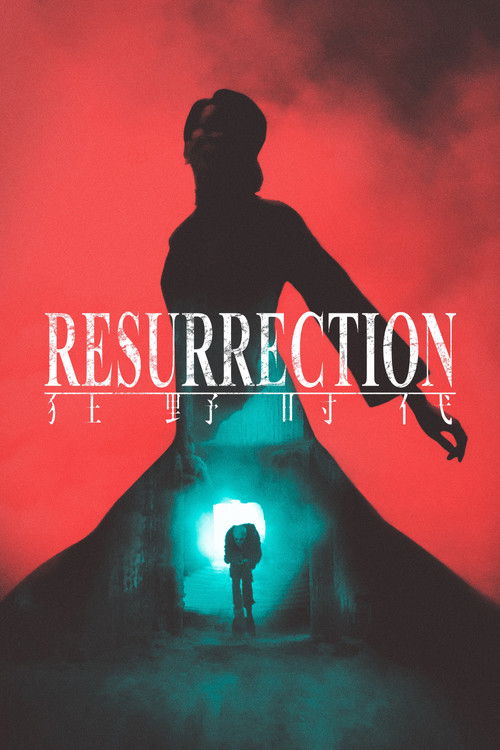
> ***“That which withers in the age of mechanical reproduction is the aura of the work of art. This is a symptomatic process whose significance points beyond the realm of art. One might generalize by saying: the technique of reproduction detaches the reproduced object from the domain of tradition. By making many reproductions it substitutes a plurality of copies for a unique existence. And in permitting the reproduction to meet the beholder or listener in his own particular situation, it reactivates the object reproduced. These two processes lead to a tremendous shattering of tradition which is the obverse of the contemporary crisis and renewal of mankind. Both processes are intimately connected with the contemporary mass movements. Their most powerful agent is the film. Its social significance, particularly in its most positive form, is inconceivable without its destructive, cathartic aspect, that is, the liquidation of the traditional value of the cultural heritage. This phenomenon is most palpable in the great historical films. It extends to ever new positions. In 1927 Abel Gance exclaimed enthusiastically: “Shakespeare, Rembrandt, Beethoven will make films . . . all legends, all mythologies and all myths, all founders of religion, and the very religions . . . await their exposed resurrection, and the heroes crowd each other at the gate.”*** > *** - Walter Benjamin, The Work of Art in the age of Mechanical Reproduction.*** > ***(Despite my additions below, I do believe that this excerpt provides a perfectly satisfactory review of this film by itself.)*** Bi Gan’s Resurrection is a 5 part ode to cinema and resurrection of artful media in a neo-Lynchian style that concludes the Kaili trilogy with a masterful flourish. And yes I said trilogy. Because, Kaili Blues, Long Days journey into Night, and Resurrection is in fact a staggeringly ambitious trilogy that must be taken together as a unified poetic narrative in order to fully appreciate its cinematic and intellectual magnitude. Each “chapter” of this film coincides with one of the senses starting with sight, hearing, taste, and touch, before finishing with time. It achieves this by sowing together a patchwork of styles tinged with the piercing self-awareness of post modernity. Bi Gan rejuvenates the once revolutionary styles of silent German expressionism, solemn neo-noir, gritty Y2K romance, and classical Chinese folk. Concluding with his own curiously neo-lynchian style that draws from his own experience as a poet serving as the symbolic culmination of previous cinematic tradition and effectively the Resurrection of what is ***“the most important of all the arts.”*** ***- Lenin, Collected Works*** Although nebulous and ponderous the film is not at all meaningless or trivial as some unfortunate detractors claim. Bi Gan’s film responds to such criticism by subtextually echoing the sentiment of Lu Xun’s* Diary of a Madman* amidst a tearful indictment of the passive audience and mechanical reproduction, > ***”What they like best is for a man to take off his belt, and hang himself from a beam; for then they can enjoy their heart's desire without being blamed for murder”*** > ***- Lu Xun, 狂人日记*** However, Bi Gan does not satisfy himself with this condemnation. As he concludes the film with a clear flourishing crescendo that announces the death and subsequent resurrection of what Benjamin would call the “Aura of art”. Providing the material manifestation of Abel Gance’s 1927 prophecy in perhaps the most crucial of times, > ***“Shakespeare, Rembrandt, Beethoven will make films . . . all legends, all mythologies and all myths, all founders of religion, and the very religions . . . await their exposed resurrection, and the heroes crowd each other at the gate.” *** In this sense Bi Gan is a testament to the wisdom in Gandalf’s classic phrase, ***“A wizard is never late, nor is he early, he arrives precisely when he means to..." ***And in doing so, has pulled us ever so slightly from the precipice of the proverbial (and very real) Nietzschean abyss. Crucially, an understanding of this film and the broader Kaili Trilogy cannot be achieved rationally as the film does not intend to convince you of any coherent rationale. Rather, much like the myth of Galahad and the Holy Grail the significance of the film is predicated on a heavily baptised imagination that does not lend itself to interpretation by the spirit of bitterness that is dispassionate and dispossessed contemporary intellect. In the words of Gilles Deleuze, and contrary to Francisco Goya’s famous etching (The Sleep of Reason), > ***“It is not the slumber of reason that engenders monsters, but vigilant and insomniac rationality.” *** > ***- Anti-Oedipus *** Whilst the film itself has a far more intricate series of mediations throughout each of the 5 chapters, in light of my own logic, I shall leave the subtle vicissitudes of this magnum opus to your*** imagination.*** > ***“Go to your bosom; knock there, and ask your heart what it doth know.” *** > ***- Shakespeare, Measure for Measure*** > ***References:*** > Benjamin, W. (1936). The Work of Art in the Age of Mechanical Reproduction. Penguin Books. > Gilles Deleuze, & Félix Guattari. (2009). Anti-Oedipus: Capitalism and Schizophrenia. Penguin Books. (Original work published 1972) > Lu. (2013). 狂人日记 : 鲁迅小说精选 / Kuang ren ri ji : Lu Xun xiao shuo jing xuan. Zhongguo Hua Bao Chu Ban She. > Shakespeare, W. (2005). Measure for Measure. Washington Square Press. (Original work published 1623) > Vladimir Lenin. (2026). Lenin Collected Works. Marxists.org. [www.marxists.org/archive/lenin/works/cw/index.htm#volume42](https://www.marxists.org/archive/lenin/works/cw/index.htm#volume42)
Run Lola RunJune 1
Upon watching this film for the first time, I am reminded first and foremost of Walter Benjamin’s 1940 essay On the Concept of History, in which he writes: > ***“We have been endowed with a weak messianic power to which the past has a claim.”*** This power is weak because it does not command history and cannot force justice to occur. However it is Messianic, as it allows the subject to redeem the past and undermine triumphant narratives of past and present through interactions, remembrance, critical pedagogy, and many other facets of redemptive influence. For me, Lola represents a cinematic manifestation of this endowed power through her apparent ability to fundamentally alter each failed present by ever so slightly shifting minor aspects of the past. Furthermore, she is repeatedly granted the chance to do this not via a cliché omniscience or supernatural power, but by simply going for a run (with the occasional mental breakdown) after each symbolic rebirth. Following this, the film continues to successfully anchor its chaotic theme's of contingency and indeterminacy around the symbolic power of Lola’s scream. This added reinforcement of the subjects agency within time and space successfully avoids the Foucauldian blunder of absolute delegitimisation whilst providing an interesting modifier to Benjamin’s original thesis. Visually the film, very subtly, suggests that Lola’s scream has impacts beyond the physical realm. This is achieved with erratic shifts in camera focus, orientation, and visual style suggesting that the true focus of the shot is just beyond perception. Now perhaps my intuition has gone completely off the goddamn rails here (as it has been known to do) but I do believe this to be the earnest truth. Viewed this way, the scream becomes more than an expression of frustration, desperation, or some crude *“feminine Jouissance.”* More appropriately, it becomes a symbolic gesture of the liberating force of deterritorialization, breaking down artificial constructs, just beyond the veil of visible phenomena, to embrace new possibilities and radical change. This Deleuzian twist complements Benjamin’s original insight wonderfully while remaining perfectly in step with the film’s frenetic editing, genre-hopping aesthetic, and grounded refusal of linear certainty. To put it less pretentiously, *Run Lola Run* is fundamentally an attack on certainty. Through repetition, variation, and existential pillow-talk it demonstrates that the stories we tell ourselves about causality, fate, and necessity are often retrospective constructions imposed upon a reality that could always have unfolded otherwise. Entire lives are transformed by missed phone calls, split-second decisions, and chance encounters. Overall, *Run Lola Run *is a kinetic, exhilarating meditation on time, contingency, and the strange accidents upon which entire lives depend. > ***References:*** > *Benjamin, W. (1940). On the Concept of History. Marxists.org. [www.marxists.org/reference/archive/benjamin/1940/history.htm](https://www.marxists.org/reference/archive/benjamin/1940/history.htm)** > * > *Deleuze, G., & Guattari, F. (1987). A thousand plateaus. Bloomsbury.* > *Gilles Deleuze, & Félix Guattari. (2009). Anti-Oedipus: Capitalism and Schizophrenia. Penguin Books. (Original work published 1972)*
The Sheep DetectivesMay 26
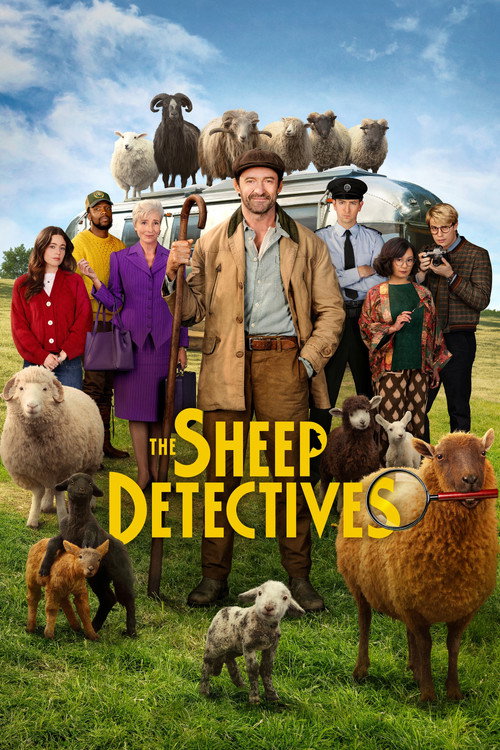
> ***“The real world is more complex than in books.”*** Had you told me that a film about a flock of anthropomorphised sheep solving the murder of their shepherd would invoke the likes of Immanuel Kant and David Hume in its overarching narrative, I would likely have met the same fate as Chrysippus upon witnessing a donkey devour his figs. Yet, to my genuine bewilderment, one of the more vital messages for the contemporary youth has emerged from the unlikeliest of places. *The Sheep Detectives *ultimately provide perhaps the clearest popular illustration of Kantian epistemology that I have encountered (be it intentional or not). The film juxtaposes Sebastian’s hardened empiricism with Lilly’s rational and imaginative capacities in order to demonstrate, in a distinctly Kantian sense, that neither faculty is sufficient in isolation. Experience without imagination risks producing a narrow minded adaptation, whilst rationality detached from experience risks producing abstraction without moral substance. In bridging this divide, the film recalls Hume’s belief that literature and cultivated sentiment disclose moral truths inaccessible to rationality or experience alone as ways of knowing. The result is an unexpectedly prescient and somewhat Deleuzian epistemological vision that promotes a return to memory, narrative, and imagination as key methods of understanding the world and how to act within it. Methods that have, for far too long, been dismissed as a symptom of escapism to be cured. In this rhetorical sense, the world is not at all “more complex” than it appears in books. To presume otherwise on the basis of experience or rational calculation alone is to deny oneself the clarity afforded by what Hume understood as the cultivation of the passions. Or, put simply, to condemn oneself to living an incomplete life with no ability to see the world with any degree of fullness or nuance. To loosely quote Jaques Derrida ***“There is nothing outside the text.” - Derrida, Of Grammatology*** While I can’t speak much to its technical qualities, I can certainly tip my hat to its unabashed simplicity and brilliant illustration of crucially important lessons for both its youth audience and western cinema at large. But perhaps the key takeaway is far more simple… > ***“If there's one secret to happiness in my life, it's taking care of the kindest creatures on Earth, sheep!”*** In any case, well played sheep detectives, well played indeed. > ***References:*** > *Derrida, J. (1967). Of Grammatology. The Johns Hopkins University Press.* > *Giroux, H. A. (2020). On critical pedagogy. Bloomsbury Academic, An Imprint Of Bloomsbury Publishing Plc.* > *Hume, D. (1748). An Enquiry concerning Human Understanding. Clarendon Press.* > *Hume, D. (2004). A Treatise of Human Nature. Penguin UK. (Original work published 1739)* > *Kant, I. (1781). The Critique of Pure Reason. Penguin Classics.*