Skip to content

Recent activity
Prisoners8.4February 16
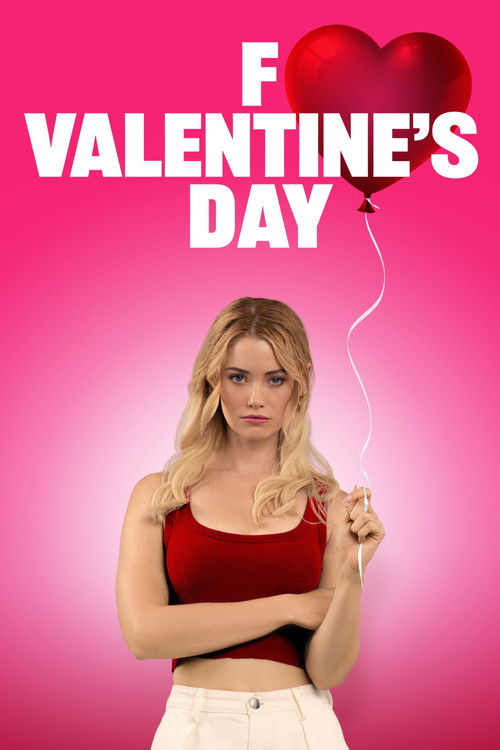
F Valentine's Day0.3February 14
first of all, it felt almost poetic that i watched this on valentine’s day. the title matched the mood. the timing was impeccable, but the execution was catastrophic. the movie starts with gina hating valentine’s day because it falls on her birthday. okay. fair enough. that’s actually a decent setup. growing up with heart-shaped balloons instead of birthday banners? your friends ditching you for their partners once you’re older? mildly tragic. we could’ve worked with that. but instead of building something layered or funny or even emotionally coherent, the film just spirals into nonsense. gina as a protagonist was exhausting. she’s written like a checklist of “cool girl” clichés. loves sports, hates salads, worships greasy burgers, constantly reminds everyone she’s not like other girls. and it’s not ironic. it’s played straight. i was tired. and the supporting cast? equally unlikable. the only person i remotely tolerated was her mother. and speaking of her mother — why was she played by marisa tomei? an oscar winner. in this. for what? where did the budget go? because it clearly didn’t go to the script. actually — maybe it did go to her. because why were the pizzas cgi? i need to talk about this. they cgi’d the pizzas. multiple times. noticeably. distractingly. i don’t understand the financial breakdown of this film. we have real-life greece, but fake-looking food, and somehow also an academy award–winning actress in a supporting role. make it make sense. and then the plot. oh my god, the plot. so last year, gina accidentally gives a $5,000 (because she thought it was actually $50) greece resort voucher to johnny, the owner of a pizzeria, instead of paying for her birthday pizza. okay. absurd, but fine. fast forward a year: she goes to the same resort with andrew, her boyfriend of one year, who plans to propose. she doesn’t want andrew to know about the voucher mistake, so she ropes johnny into lying. johnny brings his twin, mickey, who pretends to be his fiancée. identities blur. secrets pile up. chaos ensues. but here’s where the movie completely lost me. andrew and gina have been dating for a year. serious enough that they go to greece so he can get her mother's blessings and propose. and you’re telling me ONE day apart — one single day — is enough for andrew to cheat on her with mickey? one day. dude. you were about to propose. and gina herself almost kisses johnny. so apparently everyone’s loyalty evaporates within 24 hours of mediterranean air exposure. how did this relationship even survive a year if it collapses in a long weekend? and the cheating. oh my god. it gets treated like a minor inconvenience. like someone forgot sunscreen. gina is upset for approximately five business minutes. then she’s laughing about it with her mom the next day. excuse me? you were about to get engaged. either you never loved him, or the script forgot that emotions exist. and then — the joint wedding idea. a joint wedding. with the man who cheated on you. because mickey and johnny are twins. no. i don’t care how identical they are. i would not share a wedding venue with my ex who folded in less than 24 hours. absolutely not. the emotional detachment in this movie is unreal. nothing feels earned. nothing feels real. every conflict dissolves instantly. consequences don’t exist. the green screen is distracting. the food is fake. the stakes are nonexistent. it feels like a fever dream stitched together with rom-com clichés and a travel brochure for greece. rating: 1/10 (because i cannot possibly go lower on letterboxd) messy. illogical. emotionally hollow. a romcom where no one seems to actually care about each other — and somehow we’re supposed to. there was nothing redeemable about this movie. the only consistent thing in the movie was the cgi pizza. and even that didn’t look convincing.
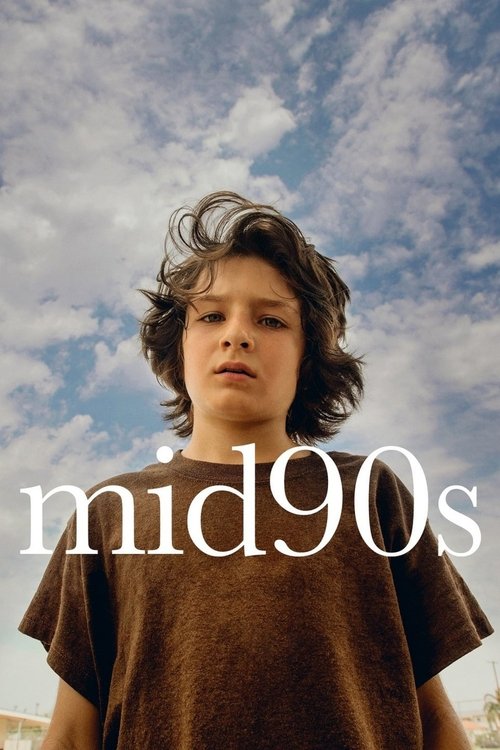
mid90s7.8February 3
this movie is short, quiet, and somehow says so much with so little. i picked it because it was on the shorter side, expecting something light — and instead it hit way harder than i thought it would. i genuinely really enjoyed it. and that surprised me, because for a film that barely cracks feature length, it manages to say more about growing up than a lot of longer coming-of-age movies ever do. every scene feels intentional. nothing is wasted. i felt awful for stevie. like genuinely terrible. he’s thirteen, living in an environment where he’s constantly trying to survive rather than just be a kid — an abusive older brother, a home that doesn’t feel safe, and this desperate need to be seen and accepted. watching him cling to skate culture and older kids as a lifeline is heartbreaking, because you get why he does it, even when it’s clearly not good for him. what really stayed with me was the ending — especially the hospital sequence. after the accident, when stevie wakes up and his brother is there and hands him the orange juice. it’s such a small moment, but it’s quietly devastating. no big apology. no dramatic speech. just this tiny, human gesture that says more than words ever could. i thought it was really cute, actually. tender in a way the movie rarely allows itself to be. and then there’s the detail that honestly pushed me over the edge emotionally: finding out that all his friends stayed overnight at the hospital. they slept in the reception area just to be there for him. that was so unexpectedly sweet. it really drives home the idea that despite all their flaws, bad decisions, and rough edges, they do have good intentions. they’re not just reckless older kids dragging stevie into chaos — they care about him. they show up when it matters. and that makes everything feel more human. that said, i do wish the film explored some characters more. especially ian. there’s clearly more going on beneath all that anger and violence, and i feel like there was real potential to dig deeper into that complexity. same with the skate crew. they feel incredibly real, but i wanted more insight into who they were beyond the group dynamic — more moments that showed their individual flaws and softness. one thing the movie does really well is showing that no one here is perfect, but no one is purely evil either. everyone is flawed in their own way, shaped by their environment, still capable of goodness even when they mess up. it doesn’t excuse bad behaviour, but it contextualises it —and that feels honest. there were moments that made me deeply uncomfortable, though. especially the scenes involving stevie and the older girl. not in a “this is badly done” way, but in a “this is hard to watch” way. the age gap is uncomfortable, and knowing the actress was significantly older than the character made it even more jarring. i’m glad the film didn’t show anything explicit and handled it with restraint, but it’s still meant to make you uneasy — and it does. it really drives home how vulnerable stevie is, and how little control he actually has in situations he doesn’t fully understand yet. mid90s isn’t nostalgic or romantic. it doesn’t glamorise childhood or skate culture. it shows growing up as messy, confusing, and sometimes quietly damaging. and for such a short film, that honesty hits hard. rating: 7.8/10 raw, uncomfortable, and surprisingly tender. a short film that says a lot, trusts the audience, and leaves you thinking about how fragile kids really are. not easy — but very, very real.
The Phoenician Scheme6.5January 31
wes anderson said “narrative clarity is optional” and then fully committed. i genuinely don’t think i’ve ever been this confused by a movie. like not in a “oh it’s complex and i’ll get it later” way — i mean actively, constantly lost. and the thing is, i was trying to pay attention. every time a new subplot showed up, i’d be like wait… what’s happening? and just when i thought i’d finally figured it out, the story would pivot, introduce another arc, and i’d be right back at square one. rinse and repeat. for the entire movie. but also… i kind of expected this. it’s a wes anderson film. going in expecting it to make total sense is kind of on me. his movies aren’t really about plot in a traditional way — they’re about rhythm, tone, and controlled chaos dressed up as precision. visually, it’s exactly what you think it’ll be: symmetrical, curated, borderline obsessive. every frame looks like it’s been placed there with tweezers. it’s pretty. like, really pretty. and aesthetically pleasing. sometimes distractingly so, which might explain why my brain kept short-circuiting trying to follow the story. benicio del toro is such an interesting lead choice — very grounded, very tired, very “i’ve lived a life.” he kind of anchors the madness, even when the plot refuses to be anchored. the supporting cast pops in and out like theatrical cameos, all delivering that signature deadpan, emotionally repressed dialogue wes anderson loves so much. the humour is there, but it’s not laugh-out-loud funny. it’s more… witty. dry. “that was clever” funny. very wes anderson funny. you’re not bursting into laughter, you’re just quietly amused, maybe smirking, maybe exhaling sharply through your nose. emotionally, it’s muted but present. the usual themes are floating around — fractured families, emotional distance, people who care about each other but absolutely cannot communicate it properly. it’s subtle, almost buried under the aesthetic and the chaos, but it’s there if you squint. is it all over the place? yes. does the plot kind of feel like it’s happening to you rather than with you? also yes. and yet… i oddly enjoyed it. not in a “wow this is amazing” way, but in a “that was strange, mildly entertaining, and not terrible” way. it’s not life-changing. it’s not crazy good. but it’s also not bad. it exists in that weird middle space where you’re confused the whole time but still sort of vibing. rating: 6.5/10 messy. confusing. aesthetically flawless. a movie i didn’t fully understand and probably never will — but still kind of enjoyed anyway. very wes anderson. very “don’t ask questions, just accept it.”