Skip to content



Recent activity
Before Sunset8.0May 12
Marty Supreme10.0May 11
the ending scene still gives me chills lol
The Long Goodbye9.0May 10
This guy might be one of the coolest characters I have ever seen put to film. There is some weird allure to such a loner character who is simultaneously charismatic and heroic. A noir-style hollywood is cool enough on its own but following an intelligent, analytical detective cruising around Malibu listening to cool jazz makes it so much cooler. The funny thing is that he is a bit of a loser being consumed by his isolation while the world passes. Marlowe’s headstrong nature adds to this charisma because while everyone wants to dog him for some reason or another, he never really cares and continues his mission. Another aspect that enhanc*e*s this film is that the whole film is based off of loyalty and nobility. Marlowe is standing up to a corrupt system miscarrying justice for somebody who he considered a friend. Not to mention the reason that Marlowe is even in this situation is because he took his friend to a whole different country no questions asked. It was super cool to watch a private detective challenge the public system and even the underworld of Los Angeles in pursuit of justice. I don’t have much else to say, the character made the film for me. I know there is definitely some commentary on domestic abuse and the entrapment of women into this endless cycle, but i’m not sure it was anything beyond portrayal for awareness. No other comments, 9/10 film.
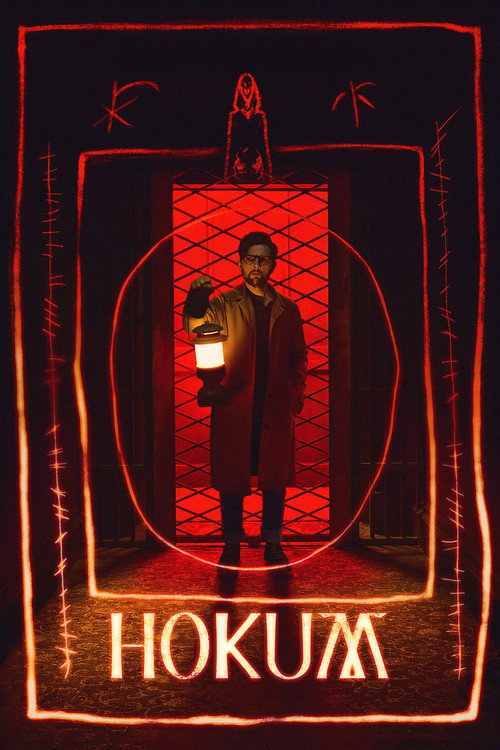
Hokum7.0May 10
I watched most of this movie with my face covered so I’ll do my best to appreciate this movie despite that drawback. *Hokum *is an exploration of grief and nihilism wrapped up in a terrifying supernatural setting. For the first third of the movie, the audience is led to believe that the demonic presence comes in the form of his dead mother. The mother is what is discernible from supernatural episodes and is therefore assumed to be the antagonist. Right at the beginning of the third act, it is revealed through a (terrifying) TV jump-scare that our protagonist, Ohm Bauman, accidentally shot the mother while playing with his father’s firearm. This revelation drastically reframed Ohm from an insufferable precocious prick to a deeply disturbed man with a heavy conscience. Some men are only unconditionally loved by their mothers and Ohm, for lack of a better word, killed this love. Along with the murder of his mother, Ohm also inadvertently murdered his father through depression fueled alcohol episodes stemming from this incident. Ohm is truly alone and his insolent behavior is a byproduct of him not wanting to let anyone into what he believes is a meaningless life. Along with being an interesting twist, this epiphany also justifies most of the face-palming “dumb horror movie” moments. The only reason Ohm is even at the haunted hotel is to do right by his mother; he is also likely searching for some kind of connection to the woman that has faded from a mother into an unfamiliar face lost within the realm of old photographs. Ohm’s troubled past also justifies him going into the haunted portion of the hotel to search for Fiona because he has caused harm upon her and hopes to repay her in a way he couldn’t do for his mother. The strong character writing is not limited to plot points, it also materializes through philosophical infusions within the movie. Bauman is undoubtedly a cynical nihilist who has lost all hope for himself and the world around him. The supernatural aspects of the film force Bauman to confront his previous grievances and confront his mental effects that have lingered in his subconscious. His grief induced depressive episode is shattered when he literally has to face his mother and allow himself to pardon his accident from his youth. This event creates a switch in a man who attempted suicide to then try his hardest to avoid death. I may be partial to this aspect, but I also believe in some sense this is an exploration of mankind’s wrestling with afterlife and purpose. If a man is confronted with a supernatural event beyond explanation, perhaps like a witch encounter, it is then logical to assume that there are other higher powers in existence and therefore nihilism is invalid due to the holistic perspective regarding our lives. Bauman’s psychological transformation is a result of being confronted with higher powers and experiencing a newfound sense of hope that his life has inherent purpose and is not in vain. I do want to add as well that forgiveness is a driving force of this transformation and that could be reminiscent of Christianity since forgiveness is the cornerstone of our religion. Overall, *Hokum *is a terrifying movie with nuanced depth and philosophical infusions lingering all around every corner. The film is not confined by typical horror movie tropes and is instead it’s own exploration of grief and depression through ab original framework. *Hokum *stands strong as a symbol of horror evolving from cheap jump-scares to developed and layered commentary intertwined within the classic dark hallways and dimmed lights.