Skip to content

Recent activity
I Stand Alone9.1April 25
👀
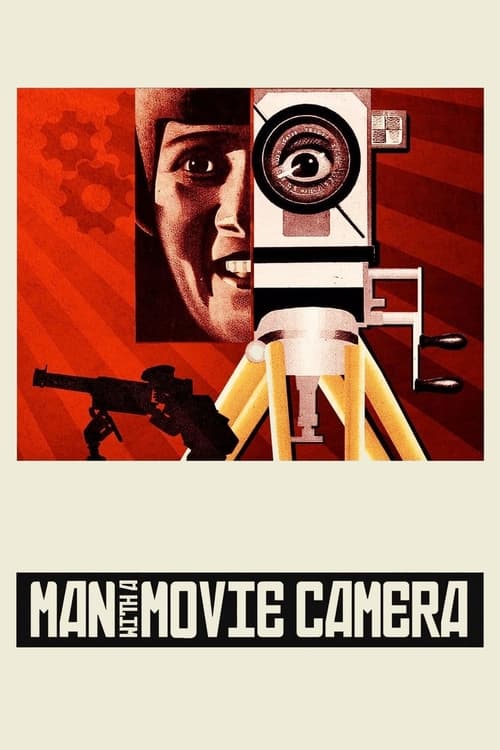
Man with a Movie Camera10.0April 19
Cinema in its purest form. There’s something almost miraculous about watching *A Man with a Movie Camera* today and realizing it still feels more modern than most films being made now. There’s no story, no characters in the traditional sense, no intertitles guiding you by the hand. What exists is pure cinema in its most essential state, as if Dziga Vertov decided to strip away every trace of literature and theater to build an entirely new language. Here, cinema stops being an extension of other arts and becomes something autonomous, something sculpted directly out of light and time. Each image doesn’t just represent something, it exists on its own, and in that existence it begins to converse with others, forming a kind of universal language that needs no translation. The editing is where everything explodes. It’s not just innovative for its time, it’s outright insane in the best possible way. Rapid cuts, superimpositions, double exposures, slow motion, fast motion, impossible angles… everything is in constant motion, as if the film itself were alive and breathing. But what’s most striking is that it never feels like a cold or purely intellectual experiment; there’s a chaotic energy driving it forward, like cinema discovering itself in real time. Vertov isn’t just editing images, he’s editing ideas, emotions, rhythms of life. The city turns into a living organism, and the mechanical eye of the camera becomes more precise, more honest than the human eye. This is editing that doesn’t seek continuity, but collision, revelation, a kind of truth that can only emerge when images crash into one another. And beneath all of this lies Vertov’s ambition to capture life as it is, without artifice, without actors, without scripts. His concept of the “Kino-Eye” wasn’t just a technique, it was almost a philosophy: the camera as an extension of reality, as a tool capable of seeing beyond what we can perceive. And even if that idea may sound utopian or even naïve, what he achieves on screen is undeniable. *A Man with a Movie Camera* doesn’t simply document a Soviet city; it documents the very act of seeing, of perceiving, of transforming reality into images. That’s why it’s impossible not to consider it one of the most important documentaries in the history of cinema. Not because it establishes rules, but because it destroys them all to show that cinema can be anything. It’s a work that didn’t just anticipate its time, it practically invented possible futures for the medium. And what’s most incredible is that, despite its radical nature, it never loses that sense of wonder, of pure discovery. As if every cut, every frame, every flicker of light were proof that cinema, in its purest form, is still a language in the process of being created. **100/100**
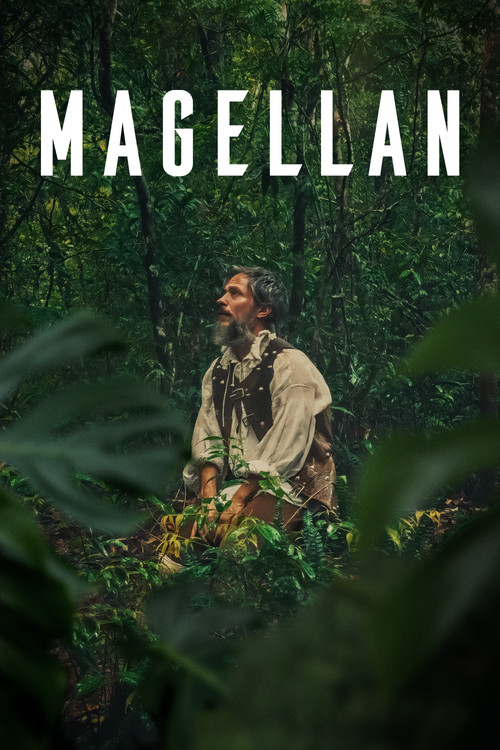
Magellan9.0April 18
Magellan by Lav Diaz is a cinematic experience that feels lived rather than watched, its atmosphere stripped almost entirely of music so that silence becomes immersive and every scene, though slow, unfolds with a striking sense of reality, as if you were physically present within it. The cinematography is mesmerizing, with each frame resembling a carefully composed painting that captures both the beauty and harshness of its world. Beneath it all, the story leans into themes of colonization, not as grand spectacle but as something human, uneasy, and deeply reflective. At the center, Gael García Bernal delivers a restrained yet powerful performance that blends into the landscape and narrative itself, becoming part of the film’s dense and absorbing atmosphere. **94/100**
Antichrist7.0April 18
Dedicating this film to Tarkovsky has to be one of the most elaborately crafted jokes in history. A film that treats nature as a creation of Satan, when in Tarkovsky’s cinema it has always been portrayed as something divine, something that transcends the human being, feels almost ironic. The performances were excellent as well, but it hardly matters when the film barely knows how to handle the theme it’s dealing with. Of course, I understand that this film is an introspective analysis of the director’s depression, but I didn’t really feel it that way. It ends up being one of the most disturbing films I’ve ever seen, and honestly, I appreciate how it creates terror without relying on cheap horror techniques. It genuinely unsettles you on a psychological level. The cinematography was also very strong, but it still doesn’t save the film for me. It’s definitely not bad, it’s just not for me. **74/100**