Skip to content




phil
@sapphiccinephil
i vant to suck ur blud *once you overcome the one-inch tall barrier of subtitles, you will be introduced to so many more amazing films*
Recent activity
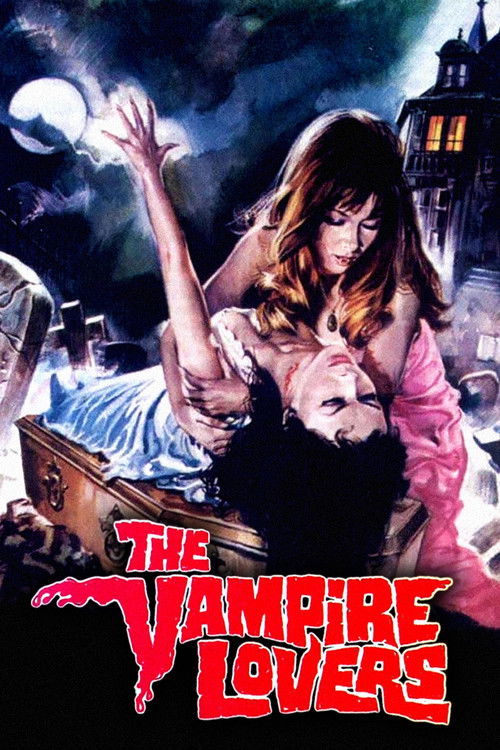
The Vampire LoversJune 11
Interesting adaptation of Carmilla. I really enjoyed the Emma saga, but I found the Laura saga lacking? Even though she desired to turn Laura and Emma into vampires as her immortal companions, I think her relationship with Emma was shown a lot more and I preferred it. Strangely, in the book, Emma is the original victim, and Laura is her second more detailed lover? That felt like an unnecessary change, though it obviously didn't detract anything. I do feel with the emphasis on Morton being an Englishman and therefore unfamiliar with the Vampires, as well as the comments about "this part of the world" caring too much about fairytales, that perhaps the focus on Emma was intended to emphasis her Englishness, in juxtaposition with Laura Spielsdorf who is obviously continental European. While not a minority, obviously, the positioning of her as more Eastern compared to the English Emma seemed to contribute to this change, especially with Carmilla Karnstein also being from the area and having a strangely prominent accent (considering they're literally all from the same town). Unfortunately, Joseph Sheridan Le Fanu would probably have appreciated a greater emphasis on the characters' 'foreign' nature, so I guess they stayed true to the story. I really didn't enjoy the addition of several male characters. Carl Ebhardt as a love interest, who ultimately saves and comforts Emma, was not a character in the book. The fathers save their daughters when they kill Carmilla, and his addition felt hetero normative. He was also not attractive enough for both Emma and Laura to want him this badly, like he was just the village bicycle. Renton felt like a male fantasy. He wasn't introduced until Morton left and Perrodot was put in charge of Emma and the estate. He literally just served as a man undermining a woman in power, and Carmilla's control of him is the control of the foreign Vampire woman, in the vein of Cleopatra and Antony. Furthermore, the random irrelevant Vampire servant man who appeared after every 'vampiric' scene undermined Carmilla entirely. By framing her actions with him, he becomes the threat, and indeed the fact that they killed Carmilla and he survived leaves him as the final villain. That genuinely contributed absolutely nothing, and it's not part of the books. On the other hand, I did enjoy the more explicit nature of the 'Vampire Lovers'. Obviously, the name implies that the movie wasn't going to shy away from it, but I'm still impressed considering other Carmilla adaptations do serve more as porno fodder when it comes to her and Laura (Emma)'s relationship. Obviously, Carmilla's nude scenes were part of the ongoing sexualisation and fetishisation of women, but I appreciated that it was clear that Carmilla had a sincere love for Emma. She is jealous of Carl, and doesn't accept the idea that it is different, and at the end, she chooses to save Emma and abandon Perrodot. While she has multiple victims, and she even turns Perrodot, it is clear that Emma is her actual lover, which I enjoyed. It felt like a greater care was put into their relationship, though it's obviously still not fetish free or perfect representation - especially considering at one point they have a semi nude play fight, that literally reads as the teenage boy fantasy of a girls' pillow fight in little pyjamas at a sleepover. And even though I didn't like the Laura saga, or the swapping around of the names, I enjoyed that they highlighted Carmilla's pattern of behaviour, and they even showed her other victims and response to the funeral procession.
The Mandalorian and GroguMay 22
Overall, the pacing was probably too fast, it was all action and no moment to actually sit with the characters. Grogu's purpose as comedic relief was perhaps overused, because he's funny because of his physicality, he can't 'turn it off' which detracted from serious scenes. It was also annoying that they constantly referred to situations as 'messy' when there were hardly any real risks or casualties. No one on the good side 'died', it was constantly the case that the Mandalorian never missed, but somehow everyone else's laser missed him. He literally came away from the dragon-snake with a small scratch while the Twins got eaten alive?? However, I do think the Mandalorian being constantly in his helmet did make the scene where the Hutts took it off more impactful. To me at least he definitely seemed more vulnerable without it. And the movie was, to a degrees, entertaining.
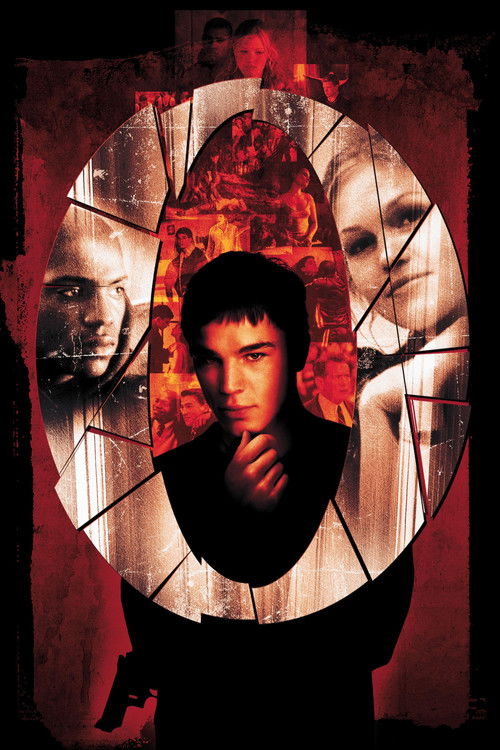
OMay 13
Shakespeare's Othello toes the line between a social critique miles ahead of its time and a typical Jacobean depiction of race. Somehow, this adaptation from the 2000s crosses that line into purely derivative racism. To begin with, the set up is completely distant from the original Othello. Odin swears, unlike Othello's poetic language, he and Desi have a sexual and physical relationship, unlike the idealistic intellectual relationship portrayed in the first Act, and the choice to adapt Othello's military prowess as Odin's basketball skills not only undercuts Shakespeare's original positioning of Othello in stereotypically white spheres to highlight his isolation, but relies on stereotypes of today that depict Black people, especially Black men, as hyper-masculine basketball players. For some reason, after Roderigo and Iago (Roger and Hugo) accuse Odin of raping Desi, him and 'Big Mike' attack Roger - unlike the reasonable, level-headed Othello Shakespeare introduce us to, who appears honestly unaware of Roderigo the entire play. Repeatedly, the movie establishes an Othello constructed around modern day stereotypes of Black Americans, while initially Shakespeare's Othello exists in juxtaposition with Jacobean stereotypes of 'Moors'. Not only does this undercut and undermine Othello's tragic fall, the premise of the entire play, but it manages to double down on the racist elements present in Shakespeare's original work. Aside from the racial stereotypes, it is bizarre to portray Iago in such a sympathetic light. Iago lays out his motivations for his manipulation of Othello as a hatred driven by him choosing Cassio over Iago himself, and a unfounded rumour that Othello slept with Emilia. In this movie, Hugo is being neglected and publicly humiliated by his dad, who claims Odin as his son. Before Hugo drives Odin to kill Michael and Desi, we are shown a scene where Hugo's Dad invites Hugo over for dinner, only to talk about Odin. Iago's purposefully disturbing sexual motivations are cut out. Furthermore, the movie removes the blame for the racial abuse Othello faces from Iago's shoulders, when Michael, unprompted, calls Odin racial slurs and mocks him to Hugo. The tragedy of Othello believing that Cassio and Desdemona would do this to him despite their loyalty and love is undercut by the fact Michael, at the very least, is incredibly racist. Similarly, the movie attempts to portray a flirty scene of Odin and Desi lying together in bed, where Odin says he's allowed to call himself the N-word, and Desi asks why she shouldn't be able to say it when her people invented the word. THIS IS NOT A CUTE OR COMPELLING RELATIONSHIP?? Othello's public striking of Desdemona and attempts to bend her to his will in front of Lodovico are cut, and replaced by a rape scene, that Desi attempts to justify by arguing that Emily wouldn't be calling it rape if Othello was white. That's actually not how rape works, and escalates Othello's already stereotypical domestic violence to an incredibly racist portrayal of the violent, hypersexual Black man. Multiple casting choices also undercut Othello's isolation. While a Black teenager in 2000s America is not as isolated as a Black man in 1600s Venice, casting figures like the policeman at the end of the movie as Black undercuts the message of institutional oppression - they arrive to enforce the justice that disproportionately impacts Othello, and while Black police officers do uphold the racist police institution, it doesn't have the same visual power. Furthermore, the casting of the opposing basketball teams as Black characters could've been really interesting, in the context of Othello's association with the Ottoman invaders in the play, however, this goes completely unmentioned, and makes it feel like once again, the people behind the movie are stereotyping Black athletes as basketball players. Overall, the movie waters down a lot of the original messages. It even cuts out Emilia's proto-feminist speech, which would've been interesting alongside Emily's nuanced take on 'marital' rape, which was legal at the time of the movie. However, the reliance on stereotypes even more than Shakespeare with a lot less excuses than a pre-colonial playwright ultimately makes the movie suffer.
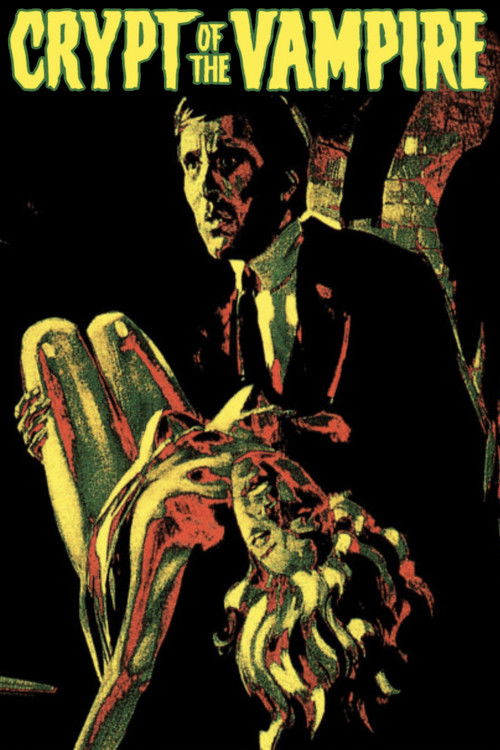
Crypt of the VampireMay 2
Mastrocinque creates an interesting adaptation of Carmilla by allowing for the possibility that both Laura and Ljuba could be 'Carmilla'. Immediately, we are introduced to Laura as a Karnstein and living under the shadow of Sida Karnstein, a cursed ancestor. In this movie, it is Laura, not Ljuba/Carmilla, who is changeable and infatuated. Even her nursemaid and her dad's secret girlfriend suspect her of the deaths that are happening around her. It feels all but confirmed when after a nightmare of Laura drinking Ljuba's blood, Ljuba's neck is marked with the trademark vampire bite. The choice to keep Sida consistently faceless, until the very end where Ljuba turns to Laura and reveals herself as 'Carmilla', either to kill her or elope with her, was so good. I'm a big fan of Carmilla, but I even bought in to the idea that it was Laura. While (obviously) not explicitly lesbian, I enjoyed the clear romantic undertones. To begin with, it's clear that, for Laura, vampirism serves as a vehicle for her coming-of-age. While Laura is never explicitly given an age, we can assume she is on the cusp of womanhood - she is still unmarried, and yet her peer, Annette, has fashioned a serious enough relationship with the Count. Ljuba tells her to prove she is not still a girl when they run to the bell tower together. Then there is, of course, the more symbolic evidence - there has been a sudden uptick in Karnstein deaths since April (implying a recent change), the evidence of Laura's sleepwalking vampire nature is depicted as blood on her sheets (evoking period blood or her wedding night), and then there is the parallel between Laura's vampiric nightmares and wet dreams. The connection of all this with Ljuba and her arrival in Laura's life positions Ljuba as Laura's romantic other. She even refuses Friedrich, claiming that with Ljuba she is no longer alone. I think it also slightly subverts the lesbiphobia in the original Carmilla, as Ljuba is not enforcing the romance on Laura in the same way Carmilla does. I have to give Mastrocinque credit for not positioning her as a foreign intruder bringing lesbianism with her - for the most part, we only see how into her companion Laura is. Unfortunately, because this movie was made in the 1960s, once they kill Ljuba, she is suddenly, supposedly interested in Friedrich. #dontbelieveit. Visually very beautiful movie. I loved the shots of the castle, and the cinematography used in Laura's dreams especially. Adriana Ambesi is so gorgeous, and I think her facial expressions conveyed the gothic nature of her character so well.