Skip to content


saraspieces
@saraspieces
marianne sheridan / connell waldron variant [1:32:05](https://boxd.it/aSVk)
Recent activity
We Bought a Zoo7.0August 10
Dracula10.0August 7
> *"Jsou v nás dny prvních nadějí > **Jsou v nás, ty nepomíjejí > ****Krev má tepnou tvou prochází**."* Nádherné. Tisíckrát nádhernejšie, než som si kedy predstavovala a pamätala. Karel Svoboda bol géniom a potvrdzoval to každým projektom, ktorého bol súčasťou. Spolu s textárom Zdeňkom Borovcom vytvorili klenot, ktorému silné melódie a hlboké verše vdýchli nesmrteľnosť. K neuveriteľnému scénickému spracovaniu sa pridáva božský Daniel Hůlka, pre výkon ktorého neviem nájsť dostatočné slová, fenomenálna Lucie Bílá s hlasom bohyne, či strhujúca Leona Machálková. Pri takýchto prekrásnych inscenáciách mi jednoducho nejde neplakať. Dracula je presne taký, akého som si želala, a ešte oveľa lepší. > *"Co zůstává je tvé já > **Nad nízkostí se vznést má > **Ať zbožňován, ať na hůl brán > **Buď kým chceš být, jsi svůj pán."* Divadlo nikdy nezomrie, muzikály budú žiť naveky!
Just Go with It7.0August 1
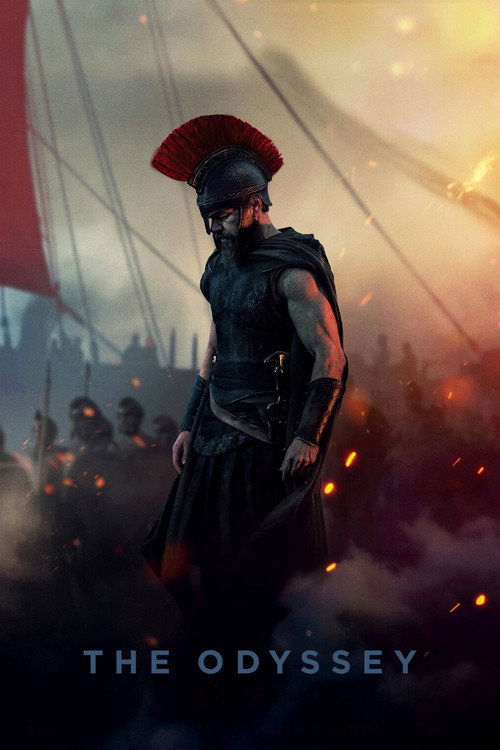
The OdysseyJuly 29
The ultimate male fantasy. And I weirdly liked it. Christopher Nolan’s *The Odyssey* is a masterfully crafted film that knows its greatest strength lies in offering a new perspective on the world’s most famous, legendary epic. Judged on its own merits, it could easily stand among Nolan’s best works. This is, partially, overshadowed (as it often is with Nolan) by his inability to create a visually epic film while preserving the core of the story he is adapting. *The Odyssey* is an amazing film as it is, but as an adaptation, it misses the mark. My criticism will therefore focus mostly on that. As someone who loves the original poem deeply, it is difficult not to feel somewhat disappointed by certain choices made here. On the one hand, Nolan proves once again that he cannot write a female character to save his life. While much of the film’s press centres around its women (rightfully so), Nolan’s *The Odyssey* simply lacks a female character with any real depth. Perhaps Penelope is the exception: Nolan appears to make an effort to give her a voice and personality, which only makes it more disappointing that every other woman in the film is so severely diminished. Circe is reduced to a drugger rather than a powerful witch; Calypso is transformed from a goddess into a therapist; Nausicaa is erased entirely. Conveniently, the only deity Nolan chooses to keep is Athena. If I set aside my feelings about Greek mythology, I found what he decided to do with her character genuinely interesting, particularly in her scenes with Odysseus. Yet by making her the only deity, he removes arguably some of the most fascinating elements of Homer’s epic: Poseidon as the central antagonist, the cattle of Helios (bizarrely attributed here to Apollo), Aeolus and the bag of winds, which are among my personal favourite parts of the poem. I understand that not everything can fit into a film, and to be fair, there are countless moments in which Nolan’s vision is undeniably effective. The cinematography is powerful, the tension is incredible, and the haunting score proves once again that Nolan knows how to craft a spectacle. Many individual scenes are breathtaking, and there were perspectives and interpretations I genuinely loved (among which the Hades sequence, which might honestly be one of my favourite parts of the film). But with a story like *The Odyssey*, spectacle is not always enough, which leads me to another point. The performances themselves rarely disappoint; there are moments when you find yourself completely in awe of them. But the actors are so limited by a script obsessed with delivering valuable lessons that, after hearing “Zeus’ law” for what feels like the twentieth time, you begin to realise that these characters are rarely allowed to speak to one another like ordinary people. This is made even stranger by Nolan’s decision to have them speak in a more casual register. He argues that Emily Wilson’s translation served as the backbone of the film, but quite frankly, I am not convinced he even opened the book, as I could not have been more surprised by his interpretation of the story (this last part is more an observation than a critique). Ultimately, very little comes across as genuinely human, despite the evident lack of divinity I mentioned earlier. Personally, I think one of the most disappointing moments came around the first-hour mark, when Odysseus does not, in fact, use the most famous trick in all of Greek mythology and, ultimately, the reason his journey lasts ten years in Homer's poem. Yet in Nolan’s version, he will definitely not remain a “Nobody.” I am sure the film will be discussed for years as one of the classics that defined not only Nolan’s career but, most definitely, Matt Damon’s, who absolutely blew me away. He somehow carries the emotional weight of an entire epic on his back, transcending even the dull aesthetics and clunky armour he (and others – I am looking at you, Benny Safdie) is forced to wear. For all my criticisms, I had a great time in the cinema. I could talk about everything I appreciated, and everything I didn't, for many more paragraphs, but I will end on a note that feels truest to my experience: this may not be the Odyssey I knew and loved for years, but I genuinely loved experiencing Nolan’s interpretation of it on the big screen.