Skip to content

Recent activity
Inland Empire7.0August 7
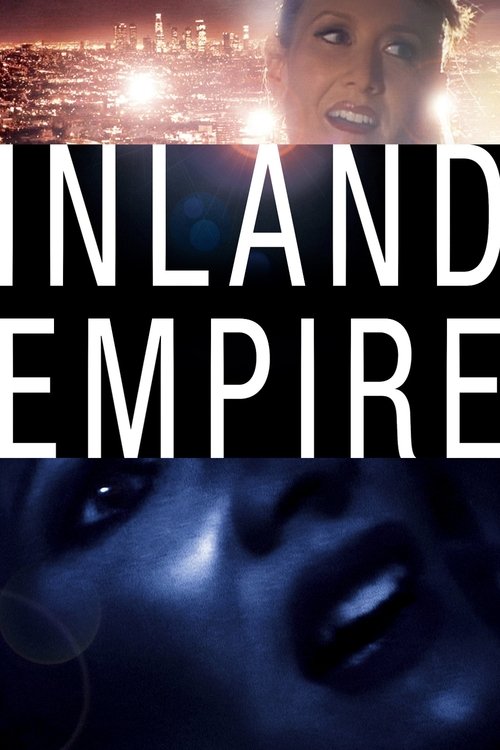
Fuck this movie. I will say, right off the bat, I don't really know what happened in this movie. It's a mess, in every sense of the word. From the get-go, I really liked the digital camera camcorder visual of the movie. I read a review that said that it is the medium of "*home movies, viral video, and pornography*", framing the entire movie as something private or intimate, giving it a kind of voyeuristic quality, a recurring theme in Lynch's work. 20 years later, it feels like found footage; disturbing, eerie but also authentic (which makes it all the more creepy). Speaking of, eerie, weird, creepy, disturbing, confusing, nonsensical, surreal, intriguing; all of these qualities are off the charts with this movie. Laura Dern is impeccable in this (I would almost say that she is, in some ways, this film's saving grace); she conveys so many emotions and characters so effectively. At the same time, however, I felt betrayed by her. While Jack Nance in Eraserhead consistently looked about just as confused and scared as I was (but with that constant hint of curiosity that drives the movie forward), Laura Dern more often than not looked more in on it. Like she had more of an idea what's going on, making me, as the viewer, feel a bit more alienated. But that's just how Inland Empire is; you are alone in this. I will always say that a one-man production is a recipe for disaster, and when I read the first sentence of the Wikipedia article for this movie: "*Inland Empire is a 2006 film **written**, **directed**, **shot**, **edited**, and **scored** by David Lynch*", I was horrified. This is Lynch unfiltered, completely and shamelessly self-indulgent, about as close as we can get to a direct broadcast from his mind. This is a double-edged sword; on one hand, this is really cool, it feels like watching the movie he always wanted to make but couldn't and I really like that. On the other hand, it makes it completely inaccessible. Resigning all creative control to a single person results in great cult flicks like The Phantom Menace and lines like "I don't like sand". I don't care if you're a visionary, hubris and complete control makes you blind to your own short-comings. I will say, despite this, it is still pretty good. No complete script and shooting everything as just kind of isolated scenes does make me pity the cast and crew who had to submit to this. Inland Empire is a betrayal in three stages. Originally, I was prepared for the absolute worst (or so I thought): a completely disjointed, surrealist horror collage of different individual scenes that barely relate to each other. Essentially, a three-hour compilation of David Lynch dicking around with a camcorder. To my surprise, it starts out relatively normal. It's definitely Lynch-type-of-weird from the get go, but the plot makes some sense and is actually linear at the start. An actress gets the part for a promising movie that happens to be a remake of a cursed production, where the in-movie infidelity becomes real-life infidelity, blurring the line between the two. Just past the one hour mark, shit starts to hit the fan. We get time travel, switching back and forth between different places and Laura Dern's character can no longer distinguish between movie, reality, and whatever else. Beginning of the third hour (I think), however, I am utterly lost. Nothing seems to make any sense anymore, we're in some Polish family's home, Laura Dern experiences a completely different life with her Polish husband that is parallel to her actual one (I think?), she hangs out with prostitutes in a living room and on Hollywood boulevard, she goes to a movie theater, she shoots a guy with a gun (supposedly the main antagonist ...I think?). That's not even scratching the surface, this is still some of the stuff that kind of makes sense. "Put the watch on and burn a hole in the silk" ...what? Therefore, it's actually worse than I expected because it lures you in with an interesting narrative that (I can't even say it gets abandoned because I don't know what the fuck happens in this movie) goes somewhere, nowehere, anywhere and everywhere all at the same time (that should cover all the bases). It is important to say that some things do come together, like the murder with the screwdriver, the Phantom, the Polish circus (sort of). In terms of Lynch's filmography, it is his final feature film, perhaps fittingly as he battled studios and lack of creative control a few times during his career. At the same time, it is the third part of his LA trilogy. And it kind of delivers; it actually explores a lot of the trauma that plagues Hollywood and a lot of the associated dirt and grime that oozes from every production. It also looks at what it means to be an actor. But at a certain point, it just all goes sideways. I will say, it does stick to the recurring theme of identity, probably (if you really think about it) better than Lost Highway and Mulholland Drive. Identity is no longer split to escape grief and guilt or just escape completely, it is a tapestry of every aspect of who we are. We are us but also every other conceivable version of ourselves: real, fake, pretention, present, future. The actor is the role, just as the role is the actor (quite literally for Laura Dern). I really like that. Inland Empire is, in some ways, also a callback to Lynch's first film, Eraserhead. A lone protagonist traversing a surrealist existence but cranked up to eleven. For me, however, Inland Empire is most comforting in the context it provides for Twin Peaks: The Return. I felt completely alienated by The Return. I felt (much like now) that I've been played, that I've been had by Lynch as he plays a sick trick on the audience that waited 25 years for a continuation of one of the most influential TV shows of all time. Yet Inland Empire makes me realize that The Return is actually a much more refined narrative compared to Inland Empire. Inland Empire is more like a meditation (no I won't elaborate on that). For my Twin Peaks rewatch, I will remember that things could be much, much worse. The Return has, most of the time, a plot where all of its strange parts maintain some sort of relevance, even if abstract and completely anti-TV-show-reunion. For David Lynch fans, this is an absolute must-watch and juuuuuust about worth its runtime. There is some stuff to latch onto, enough that it'll make you want to decipher this movie a little more instead of writing it off as just random bullshit. That's probably Lynch's greatest trick. I kind of hate this movie. Yet here I am, giving this incomprehensible (the whole thing's not even in English!!) mess of a motion picture, this sick joke (David Lynch was either the biggest genius or a complete prankster; I say he was probably both) a pretty good score. It's not a masterpiece, it's not infinitely deep but it damn sure is interesting. Lynch's parting gift to the world of cinema is a mental exercise, a contradiction within itself. You cannot write this movie completely off (if you do then you're an idiot) but you also cannot tell me that everything in this movie serves a specific purpose (if you do then you're just pretentious). Lynch is the kind of filmmaker where some stuff is there just for the vibes and you cannot tell me otherwise. I am, ultimately, very happy that this movie exists. Will I rewatch it any time soon? Fuck no. I did think to myself that I will never watch this movie again because one time is enough ...but that probably isn't exactly true. But it's gonna be a long while before I do. Moral of the... wha...?
Moonlight10.0August 6
I don't think I've ever seen anything so unbelievably authentic. It's both beautiful and heartbreaking, which is probably why it feels so real. A deconstruction of masculinity, an exploration of love and sexuality; it’ll bring you to tears. Excellent performances from all three main actors; I can’t believe they haven’t been in more movies since. Phenomenal.
Spider-Man: Brand New Day7.0July 31
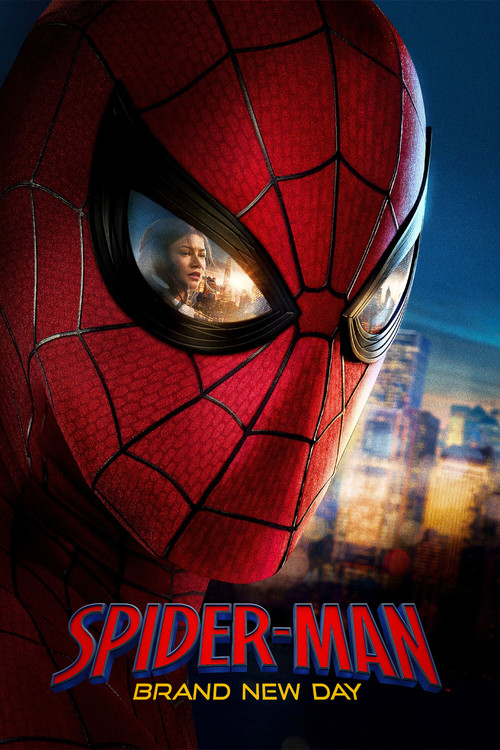
A great breath of fresh air for Tom Holland's Spider-Man. In a lot of ways, it's exactly what I wanted; a more street-level, down to Earth, involved, friendly neighborhood Spider-Man. It is also the most personal MCU Spider-Man movie and it really explores Peter as a person, fighting both external and internal battles. Them adapting the The Other storyline with Peter becoming more spider-like is really cool and presents a very interesting conflict and identity crisis for the character. Peter also grappling with losing his friends is heartbreaking but at the same time, resolved too quickly. There are so many civilian characters that can surround Peter and only sticking to the two we've had since the first movie is a little lame. I get it, best friends for life and the love of his life but just give me something more. I really liked Peter's and Frank's dynamic. Their, perhaps unlikely, friendship was the highlight of the movie for me. Lots of great laughs and it felt like Peter's finally finding new friends in this world that are his own. I do think that, this being the 4th MCU Spider-Man movie, Peter deserves his own story, that is just his own, in his hometown, with his own villains. No world tour, no fan service cameo galore, and no setting up for a soft reboot that hopefully saves the mess that currently is the MCU. From that last part, I think it's clear that Spider-Man still doesn't have his own true movie. Maybe next time. Jean Grey is, in my opinion, mostly a pretty bad pick for a Spider-Man villain. With all the villains that were in the trailer, the posters, even the lego sets, I figured they would at least do some sort of Sinister Six plot for at least the first half of the movie. They didn't. None of those villains have any plot relevance, which I think is a real shame. Jean Grey is very obviously just a setup to introduce mutants into the MCU but they do so ...without mentioning them? If you're going to milk Spider-Man to help you make sense of this mess you've created in the past 6 years, at least do it properly. Bust out the X-gene if you need, do some real exposition if this is what you're going for. Hulk is also underused (although it was really cool to see og Hulk back) and Bruce Banner gets shipped off to a psych ward and that's it for him. Can they give this guy a break? I will say, the whole inhibitor chip is a cool invention for Peter to have to grapple with. Obviously, the implications of such device are terrible and I think it's a pretty good setup for future conflict. I'm all for Peter Parker to have his own Ultron or Frankenstein's monster. Yelena (aka New Black Widow) was a cool addition and didn't distract too much from the main plot like I feared. If anything, it improves the world-building and makes everything feel more interconnected. Similar thing with the Punisher and Hulk. All in all, it's a good movie and maybe even a great Spider-Man movie. Not without its issues and wider problems but it is definitely worth a watch and stands above at least the last two MCU Spider-Man movies, if not all three.
Collateral8.0July 18
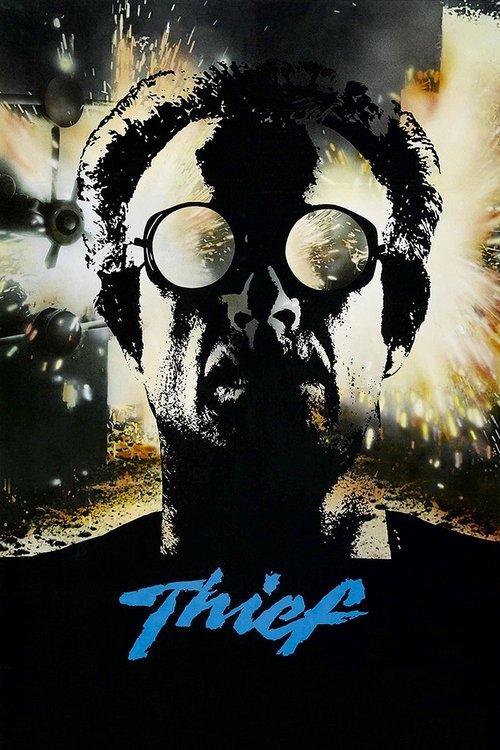
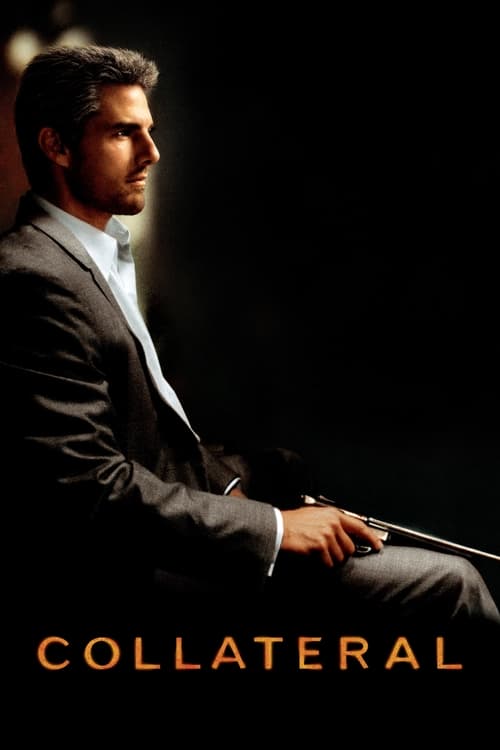
Heat was very blue, the Criterion remaster of Thief is also very blue. Collateral is yellow. LA doesn’t look cold or distant, it feels grimy, almost matching the lack of any reverence for life that Vincent has. Mann also is a master of using focus. Again, I don’t know how else to spell out to an audience the term ‘indifference’ than putting Tom Cruise in a shot and having him be out of focus. A lot of the handheld camera angles also remind me of the claustrophobic shots of Good Time, especially when Max and Vincent are talking in the cab or the entire club sequence. The dynamic between Vincent and Max, their moral, philosophical and even physical battle rivals the dynamic of Neil and Vincent (De Niro and Pacino) in Heat, and that’s saying A LOT. Comparing this movie to Thief and Heat, I think it exhibits a kind of moral maturity from Mann. While both Caan’s and De Niro’s characters were sympathetic, from Heat onwards it’s evident that Mann tries to instill more of a moral message. In Collateral, Tom Cruise is the bad guy. Granted, he is an assassin, not someone who does heists but he still fits the cool criminal type. And Mann says, no he ain’t. His nihilistic worldview exposes him for a husk of a human being, a person devoid of empathy. And against him, Mann places not a cool, equally rough and tough badass lead man, he puts an ordinary cab driver. Max’s hopefulness, his dream, his unwillingness to submit to Vincent’s worldview ultimately causes him to prevail. That I think makes for a great story. Narrative wise, the different callbacks and mirror images that are created throughout the movie just speak to how meticulously it is constructed. Jamie Foxx and Tom Cruise are excellent of course but I think it’s worth to also mention Mark Ruffalo’s character and performance. If you, like me, thought that he was gonna save the day, then this movie has subverted your expectations of a Michael Mann movie. It’s no longer cops and robbers, the real struggle is philosophical. Michael Mann might just be one of the greatest to ever do it, and I’ve only seen 3 of his movies.