Skip to content



Joshua Timpko
@timpkojo
Check out my YoutTube channel for reviews and essays! 0.0 - 0.4 is 0/5 0.5 - 1.4 is .5/5 1.5 - 2.4 is 1/5 2.5 - 3.4 is 1.5/5 3.5 - 4.4 is 2/5 4.5 - 5.4 is 2.5/5 5.5 - 6.4 is 3/5 6.5 - 7.4 is 3.5/5 7.5 - 8.4 is 4/5 8.5 - 9.4 is 4.5/5 9.4 - 10 is 5/5
Recent activity
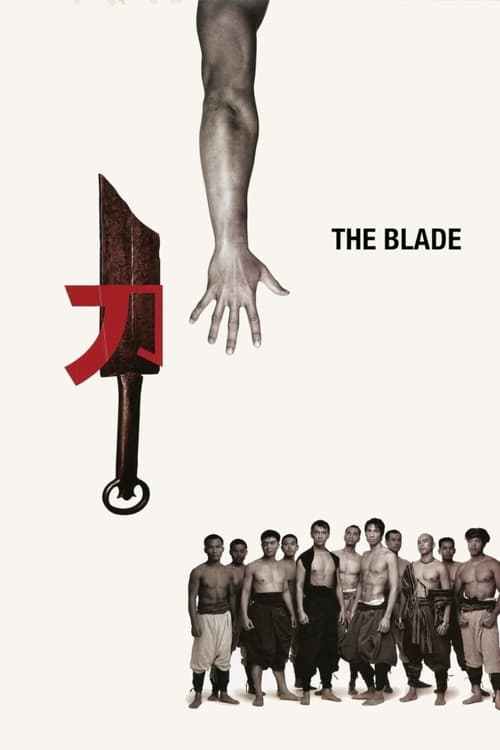
The Blade7.0July 21
[Criterion Challenge 2026](https://boxd.it/RfM7i) Challenge #9: 1990s Tsui Hark is another filmmaker added to my ever-growing list of people I’m surprised I hadn’t heard about earlier. Some of his films have crossed my path in name only, like Peking Opera Blues or the Hong Kong epic series of films Once Upon A Time in China. But the name Tsui Hark seems to be one that carries a legendary status that may have tapered off in the 21st century. Going through his filmography is fascinating because he seemed to be a renaissance man of a filmmaker, dabbling in just about every genre, with a strong emphasis on action and martial arts. You’ve got romance films like The Lovers in 1994, crime films like Time and Tide, an action/comedy film where Jackie Chan plays twins, two films with Jean Claude Van Damme, romance-sci-fi, time-travel hybrids like Love in the Time of Twilight, and fantasy action adventure films like Zu: Warriors from the Magic Mountain (a film that apparently inspired Big Trouble In Little China), the list goes on and on. Point being that this is a Hong Kong cinema legend who completely breezed by me and since watching The Blade, I have to say my interest has been piqued. Based on Chang Cheh’s 1967 classic One-Armed Swordsman, The Blade has the feeling of a classic Hollywood Western revenge tale. It’s told from the perspective of Sui Ling as she narrates on her desire to be loved, specifically by a man named Ding On, a worker at the sword foundry that her father owns. She also talks about something called Jianghu, which means the philosophy of honorable warriors standing up against the malicious and powerful. The film depicts this in the opening minutes of the film when some hunters stroll into town, looking to stir up trouble and attack a woman, when a monk, trained in Kung Fu steps in to save the day. Ding On and his best friend and coworker Iron Head get inspired by this act of bravery and wish to follow his lead when the monk is ultimately killed in the street. Now, this isn’t a revenge story for the monk, but in fact Ding On wishes to get revenge on the men who killed his father when he was a baby. He learns from Sui Ling that his father was killed by someone by the name of Flying Dragon. Intent on tracking down Flying Dragon, Ding On steals his father’s broken blade and leaves the foundry. During a fight with those same hunters who killed the monk, Ding On has his arm chopped off and he tumbles down a cliff, presumed to be dead by Ling and Iron Head and the rest of the foundry. But he’s not dead. He’s nursed back to health by a young girl named Black Head, who eventually presents him with a book on mastering kung fu. Ding On teaches himself how to fight with the one arm he is left with and becomes somewhat of a folk hero in the region and a threat to the bad guys who are rampaging through the towns and villages. Eventually Ding On finds Flying Dragon, and you can probably guess the rest. There’s obviously so much left out there, but I want to get to my thoughts. Initially, my thoughts are that this kicks way more ass than I was expecting, with a crucial caveat. I love watching martial arts films, especially when they are rooted in themes so universal and have the feeling of a Hollywood western. I love a revenge tale. I love a film that isn’t afraid to get nihilistic and bloody and mean. This film is mean from the very beginning when we see the hunters laughing maniacally as a stray dog steps into a bear trap that they’ve laid out on the street. And I guess maybe it’s time for a brief history lesson (for you and me), on the wuxia style of filmmaking. Because I think it’ll be helpful to see how Tsui Hark actually subverts the genre in interesting and clearly inspirational ways. At its core, Wuxia means "martial hero." Unlike grounded gongfu movies focused on realistic hand-to-hand fighting, Wuxia films take place in the Jianghu—a lawless, mythic underworld ruled by wandering swordsmen, clan feuds, and a strict code of honor. Popularized in the late 1960s by Shaw Brothers classics like The One-Armed Swordsman, the genre is famous for its poetic swordplay, tragic revenge stories, and gravity-defying wirework. The central drive of a Wuxia hero isn't self-defense or sport; it is actually righteousness, loyalty, and personal duty. Now, when King Hu and Chang Cheh (the director of The One-Armed Swordsman) revolutionized the genre at Shaw Brothers in the late 60s, they shifted Wuxia away from opera-style stage craft into operatic violence, visceral editing, and tragic romance. What Tsui Hark did was take the same general principles and apply a sweaty, muddy, bloody, kinetic, cinema verite tone that was unlike anything martial arts filmmakers at the time were doing. And the fighting is the main talking point with this film really. It is equal parts a daring formal choice and experiment from Hark, but also can leave much to be desired, depending on what type of movie watcher you are. I found myself dizzyingly enamored with the way the fight scenes seem to consist of flashes of imagery and shaky camera movements, like something out of a Paul Greengrass film. I don’t think there’s a moment in this film where the frame isn’t obscured by some object in the foreground or someone walking by. It results in you feeling like you’re peeking around corners to watch the action, constantly dodging something getting in the way. And mixed in there you have frenetic editing that cuts to flashes of bold colored lights illuminating the scenes, or characters spinning around in vicious circles. It was stylistic in a way that was almost equal parts disorienting and brilliantly admirable. At times, the fighting and camerawork following it feel improvisational, like the cameraman had no idea where the actors or stunt performers were going to go next. And apparently, that’s actually the case. In the special features of the Criterion disc of The Blade, there is a documentary on the making of the film in which they talk about the verite-style of shooting that made this film look the way it looks. “It is not meant to be seen clearly,” Tsui said of the action in The Blade. “The fighting is but fleeting impressions.” They began shooting without a proper script--meaning the script had no dialogue, just the vague action of “so-and-so tells Ding On about his father” and shit like that. You can pretty clearly see that in the final product. I’m still wrestling with my general thoughts on it, setting aside the fighting and stylistic approach to the film. What you get is what feels like the start of classic folk hero legend stories like Zorro or Robin Hood, where the One Armed Swordsman goes on to fight more battles and save villages from evildoers in the name of chivalry. These types of mythological stories always hold a special place in my heart, as they do transcend the formal choices and even the nitty gritty details of the plot to get at something more universal and aspirational. The One Armed Swordsman (the character) and the film The Blade is a representation not only of Hong Kong political history (the impending 1997 handover, when Hong Kong would relinquish its status as a British colony and become China’s HKSAR), but also the more baseline structure of good vs. evil storytelling, the belief that honor is what should drive a man or woman to act according to a code or protect the innocent. So, while the film didn’t always work for me, there was so much to chew on and so much spectacle that it was hard not to be swept away for the ride. Did the cinematography and verite camerawork get in the way a little bit? Sure. But it didn’t detract from my overall enjoyment of the story being told and the fact that Tsui Hark might just be one of those filmmakers that I will have to dive deeper into in the future. 7.4/10
The Faculty7.0July 20
This will forever hold a special place in my heart and remain a guilty pleasure for me. Harlie said, after we watched it, “I give that a 6/10” and I replied, “yeah that’s about right” But I love the hell out of it. It’s not quite goofy enough to be a parody of all the things it’s clearly parodying in terms of high school drama, like Delilah and Stan’s relationship. All of the teenage archetypes are here and it’s delightful to see them work together to achieve a common goal of thwarting an alien invasion, even if the aliens seemed pretty inept at their mission. The scene of the core group walking out of Jon Stewart’s classroom and through the school and into the parking lot is perfect at capturing the paranoia of being surrounded by aliens. Also it’s a perfect setting for a body snatcher story because who doesn’t feel a little alien in high school? (And the movie goes to great lengths to keep highlighting that point) Some stuff doesn’t age well, sure, but I love seeing practical effects at the end with the queen bee. It’s got a killer cast, including the immaculate Famke Janssen, who I had a big crush on back in high school (and Jordana Brewster, so it’s a two for one). This is probably my fourth rewatch of this and I never get tired of it. It’s campy, it often makes no sense, but it takes itself seriously and the performances are committed in a way that makes this charming and utterly rewatchable. 6.6/10
Assault on Precinct 137.0July 17
Eh.
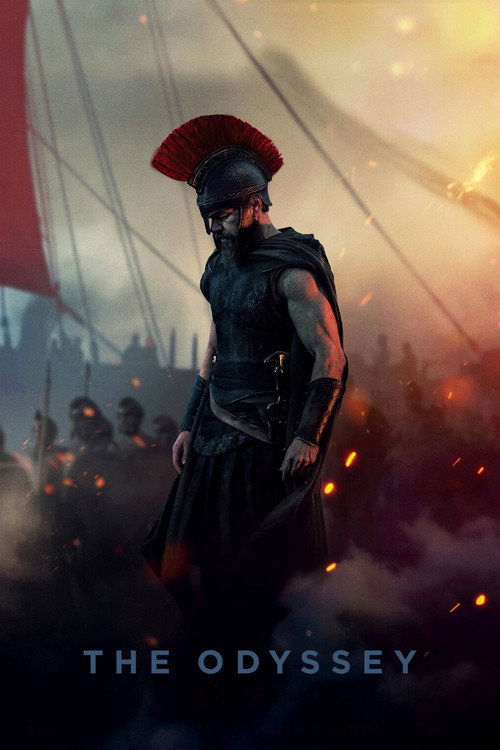
The Odyssey9.0July 16
The one word that's been floating around about this film that I actually agree with, now that I've seen it, is achievement. This is a massive achievement on a lot of levels. Based on my cursory knowledge of the original poem (I wasn't exactly paying attention in English class) the film does a genuinely successful job of conveying the gritty, human, realistic nature of Homer's text. That's the biggest takeaway for me: the way it humanizes everyone and everything in it, monsters included, with Odysseus at the center. I don't think I can really spoil the ending of one of the oldest known stories in existence, but the way Nolan and company redirect the meaning of that ending (into something that echoes what he pulled off with Oppenheimer) is staggering, and ultimately very poignant. Prescient, even. Eye-opening in a lot of ways. There's a running theme of Odysseus reflecting on the Battle of Troy, played with a kind of ambivalence throughout, until the end, when you realize it was never ambivalence at all. It was guilt. It was shame. That feeling carries through the film, especially after his visit to Hades, where he has to look at the faces of the men who died beside him because of decisions he made. That's the point where the film really hit its stride for me, thematically and morally. Back to that word achievement: this film looks nearly unlike anything else out there, or anything cinema has produced this century. It has a real tactile quality, which I think is both a feature and a bug, and I'll get to why later. Every trial Odysseus and his men face (the Cyclops, Circe turning the men into pigs, the island with Calypso, the Sirens, the dead in Hades) is rendered with such raw matter-of-factness that it defies the fairy-tale expectations we've been conditioned to bring to this story. This is not the fairy-tale Odyssey. It's bare bones and realistic, right down to the Circe transformation sequence, which is some of the most difficult-to-watch body horror I've seen in a Nolan film, maybe in any film. People in my theater were audibly wincing. A lot of it is achieved practically, in-camera, and that has to be commended. Beyond Odysseus's own physical and emotional journey, I found myself just as invested in the tension back home in Ithaca, Penelope and Telemachus. The cross-cutting between Odysseus's journey and Telemachus's own quest for answers (through his mother, through the bard's song, through his visit to Menelaus and Helen) is well balanced. And even though I claimed I never paid attention in English class, I found myself a step ahead of the film at every turn. Which was fun, honestly, like reliving nostalgia for a story I never really had a relationship with. The Odyssey has been adapted plenty of times, in plenty of ways (look at the Coen brothers' O Brother, Where Art Thou?) I can't say I was ever itching for a straight sword-and-sandals adaptation, but once Nolan announced it as his post-Oppenheimer project, it suddenly felt like the most obvious thing in the world. It's a grand story. An epic in the truest sense, maybe the original epic. I'm giving this four stars walking out of the theater, with the caveat that Nolan films tend to settle in me over time, and I expect this one will too. Now I’ll touch on where it falls short for me: There's a certain distance this film creates. I felt the emotional impact of nearly everything on screen, and there are genuinely grand, epic sequences one after another. This is a film I can recall clearly and distinctly, which isn't always true when walking out of a nearly three-hour movie. But something about the scale stayed a little too earthbound for my taste. I'm not sure what I was expecting (maybe some dabbling in that fairy-tale register) but the film almost never lifts the camera above eye level of the characters. Everything unfolds from Odysseus's perspective, or his men's, or Telemachus and Penelope's. It sometimes sits too close to the action. I think of classic epics like Ben-Hur or Lawrence of Arabia, giant expanses, huge images, huge spaces. There's some of that here, but I wanted more of it. There's something humanizing about experiencing this from ground level, right next to Odysseus, but it costs the film some of that capital-E Epic quality. My other real gripe is technical: the fight choreography is pretty lackluster, which is true of most Nolan films whenever the action doesn't involve Joseph Gordon-Levitt fighting in a rotating hallway. A lot of the action sequences feel rough around the edges, like Odysseus's fight with the suitors at the end especially. It's hard to follow and frustrating to watch because I kept wanting Nolan to pull the camera back instead of keeping us in the weeds. Half the scene is in darkness, the other half out of focus, and you lose the sense of what's actually happening. It undercuts what should be a pivotal moment, a man fighting for his life, his family, his kingdom, and turns it into something closer to the D-Day scene in Saving Private Ryan. A strange, unexpected choice, and not one I'm happy with. That same instinct crops up elsewhere. Even the Battle of Troy feels a little too committed to that humanizing, ground-level approach. I know that's a strange thing to take issue with. But I connected more with the quieter scenes, like Telemachus and Penelope, Odysseus and Calypso, Odysseus and Circe, because those scenes allow for more control, and that control is what's missing from a lot of the bigger sequences. Even the Hades sequence, visually striking and powerful as it is, pivots right back into that handheld, Paul Greengrass–style chaos where you can't quite track what's happening. The casting generated a lot of conversation online, and I'm not going to add to that particular fire. What I'll say is that the performances are strong across the board, even if some stick out more than others. Not necessarily in a bad way, just noticeably. John Bernthal as Menelaus took me out of the film more than most. But this might be some of Matt Damon's finest work. Watching him turn off the wink-and-smirk charm he brings to nearly every role is genuinely interesting, especially as the film lets him drift into villain territory, at least from his men's perspective. Anne Hathaway probably delivers the most scene-stealing performance of the whole cast. I know people like to trash Tom Holland, but I think he's excellent, and not out of his depth at all, no matter what other people keep saying. He plays Telemachus with a youthful pathos that had me genuinely scared for him, especially during the assassination attempt at Athena's temple. Samantha Morton is similarly scene-stealing as Circe. Robert Pattinson as Antinous is devilish in all the best ways too; he’s also a standout. I wish we'd gotten more of Zendaya as Athena and Charlize Theron as Calypso. Though the female characters here, as in Homer's original, don't have a ton to do, and come across somewhat underwritten or one-note. That said, this is a story that's arguably meant to be the blueprint for this kind of storytelling going forward, one-note and all. I may come back and amend all of this. Like Oppenheimer, which took several days and a lot of conversations with other people before it really clicked for me, I don't expect The Odyssey to be any different. Nolan's other work never demanded that much of me before I could sit with it. It's interesting watching him in this stretch of his career, where he isn't trying to wrongfoot you or bend your mind the way he did in The Prestige, Inception, or Memento. He's telling straightforward, adult stories about complicated men. And I've followed his career unconditionally since middle school. Wherever he goes, I show up on day one. The most fascinating thread here is Odysseus's arc and the way the film recontextualizes his decisions, particularly the Trojan horse. And how it makes you reconsider a character, an archetype, I never really thought to question before. It's a smart, fascinating angle. And here is, I think, the real real subversion at the heart of Nolan's Odyssey: Homer's poem never actually asks Odysseus to atone for Troy. Cunning is his virtue, not his sin. The destruction of the city is his triumph, the thing his fame back on Ithaca is built on. Nolan takes that same act and treats it as the thing Odysseus has to spend the rest of the film answering for. It crystallizes in the Hades sequence, when he reaches Sinon, the soldier he deliberately cut out of the horse plan and sacrificed, left to sell the Trojans on the "gift" and die for it. Sinon tells him flatly he should be ashamed of his own cunning, and that's what sends Odysseus down the spiral that carries the rest of the film: even after he's told point-blank that every one of his men is fated to die and only he will reach Ithaca, he vows to defy the gods and bring them home anyway. That's not a hero accepting his glory. That's a man trying to buy back something he thinks he broke. It's hard not to read that against Oppenheimer, and I think that’s Nolan’s intention anyway. Both films end in the same place: a man who built something (a weapon, a war-winning trick shaped like a horse) forced to actually sit with what it cost the people on the other end of it. Oppenheimer ends with a man staring down the possibility that he's ignited something that will consume the world; The Odyssey ends with a man having to tell his own wife, plainly, what he did to Troy. Nolan even bakes the guilt into the film's visual grammar. Odysseus spends the whole movie being visited by Athena, played by Zendaya, seen by no one but him, and it's only in the final stretch that we learn she's taken the shape of a woman he watched get beheaded in the fall of Troy. The goddess who's been guiding him home this entire time has been wearing the face of someone his own deception got killed. That's about as clear as Nolan could make it: this isn't a hero's journey blessed by the gods. It's a man being haunted by what the gods let him get away with, so to speak. What you see is the guilt and self-alienation of a soldier who did things in war that violate his own ethics, and who can't “find his way home” even after he physically arrives there. So, all that said, I'm going to give this some time to marinate. For now: a stunning achievement with some genuinely glaring technical drawbacks, and a lot of movie to sit with before I can talk about it with any real clarity. But you can probably already tell, this has the juice to be one of Nolan’s best and one of the best of the year. EDIT: Oh yeah, and this movie is LOUD AS FUCK. Talk about full immersion. When they stabbed the cyclops' eye, and he started wailing, I thought my head was going to explode. Same with the storm that carries Odysseus' men out to sea. Deafening stuff (complimentary). I see a sound design Oscar in this film's future. 8.0/10