Skip to content


Recent activity
Thunderbolt and Lightfoot10.0June 4
**(4K)** > “[*The wolf shall dwell with the lamb, and the leopard shall lie down with the kid.*](https://youtu.be/xRg6KP_gfJw?si=3NGxDvOjzZbiF-sw)**”
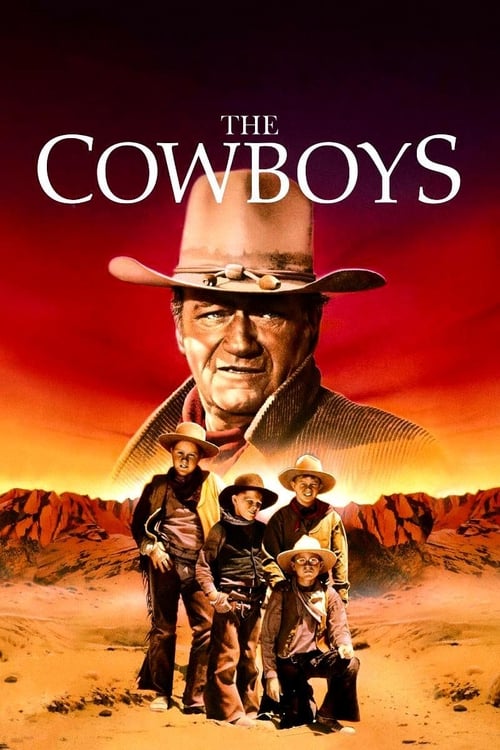
The Cowboys9.0June 1
> “[*Every man wants his children to be better than he was. You are*](https://youtu.be/PZgH9cGVGOg?si=GXjrlkYNqgWQ96st)**.” Felt appropriate to give this a revisit after starting my first read of Cormac McCarthy’s *All the Pretty Horses— *another fable about a boy wandering out into the territory, and becoming shaped into something else by it. My core memory of *The Cowboys *is also still the earliest one I have of it: my father watching it downstairs in his man cave, and I so happened to wander in during the moment where John Wayne gets shot dead like a dog. I really just remember that image specifically kind of haunting me. Taught me that heroes aren’t immortal and that sometimes stories can be immensely fucking sad. I do think this is one of the two best of his late career pictures, the other being his final in *The Shootist*. By the time we get to the 1970s, watching The Duke exist in a landscape that had been thoroughly altered by the emergence of a guy named Clint Eastwood was an incredibly interesting experience. It does sort of break one’s brain to remember that the system was ushering in the New Hollywood counterculture guys and, at the same time, for more than half of the decade, John Wayne was still there doing what he did best. And yet he still changed what you could really expect, at least in small ways. His films got grittier and bloodier, a lot of his vanity seemed to get left at the door and he embraced a willingness to portray actual old men. A lot of the criticisms I have for his mid-late 1960s output get resolved during the last stretch of his career. I mean, let’s not beat around the bush, the concept of the Western as John Wayne envisioned it was undeniably out of style and already a thing of the past. But he did show at least a half hearted willingness to let it grow up a little bit. And that’s plenty evident in *The Cowboys*. Hardly my first viewing of the film but certainly the first time I’ve sat and watched it from start to finish in a rather long time. Had forgotten how poignant and honest a film it is. An aging American heirloom like John Wayne largely gets to sit back and play mentor to a surly, unruly bunch of boys who get drunk, talk about whores, and cuss and fight. I have to imagine Duke relented a lot of his notorious creative control and followed director Mark Rydell’s lead on a lot of this because it feels less like a John Wayne vehicle and more like something he might have done thirty or forty years prior, and that’s sign on to serve a director’s vision. Watching him bark at and then later come to deeply care about these little shits is genuinely quite moving. I’ve seen a few people who aren’t fond of this film (or, frankly, of John Wayne in his entirety who I will readily admit was a son of a bitch) that want to argue that the film’s message is insidious because Wayne’s character “leads the boys into violence”. Which I think is pretty well bullshit. He takes their guns and locks them away early on, instructs them to keep their heads down when trouble arises and then only resorts to violence to protect them and dies for it. Uses his dying words to try and get them to go home. When the boys choose to avenge his death, it is displayed as an act of defiance. Right, wrong or indifferent, their response to his murder is treated as the exact opposite of his instructions. Which I think is a rather inspired choice and something that Wayne probably deserved to be commended for allowing to make the final cut, considering how protective he was of his image as a badass. That all of the kids are actually quite good in their roles is also one of the film’s bigger accomplishments. They hang with Wayne every step of the way and you come to care a great deal about all of them. I will admit it’s kind of a stretch that these children, and they *are* children and not twenty somethings masquerading as children, could become a death squad that can take down a gang of rustlers in the last leg of the film but I’ve bought enough into the journey for the previous two hours that I hardly care about the threat of exaggeration looming in the home stretch. Plus, when you got Roscoe Lee Browne (who is wonderful in the film and consistently makes me laugh out loud whenever these kids piss him off) delivering an absolutely [electric monologue](https://youtu.be/LEcjWPkok7s?si=tWaWLIwD6mxB_5FP) that announces them descending upon the gang like wolves, how can’t I get wrapped up in that? Speaking of electric performances, I’d honestly forgotten how little (in the grand scheme of things) he’s actually in it but Bruce Dern is such a motherfucker here. Pretty much doomed himself to play the bad guy for all of eternity by taking this role but with a face like that, maybe it was just inevitable. One of my favorite stories is Wayne telling him the world would hate him for killing him and Dern saying he’d be a hero at Berkeley. And, full disclosure, Duke was right. My father has nursed a fifty year hatred for Dern (while acknowledging he’s a terrific actor) and a completely inability to imagine him as anything other than a scoundrel. He’s genuinely unhinged and frightening here. But he’s also a fucking weasel who picks on little boys and shoots old men who beat his ass fair and square in the back. I think very few people have ever been as punchable as when he starts breaking that kid’s glasses with a grin on his face. That fight scene between the two of them is handled pretty masterfully. The John Williams completely disappearing and all you can hear and see are their punches and their breathing getting more erratic and their faces getting bloodier. Rydell seemed to understand what an opportunity he’d been afforded by getting to do the impossible and kill the Duke and he treats it like a massive fucking deal. It is genuinely startling seeing Dern and his gang walk over John Wayne’s dying body sprawled on the dirt. One of the many expertly crafted images scattered throughout the entire thing. Others are hardly as vile, including a gorgeous panning zoom of Wayne and Browne watching over the boys as they’re gathered around a campfire with a guitar. None move me nearly as much as the shot of them all standing over his grave sight, and you can see how much they’ve changed and hardened over the course of this journey. Somehow such young faces, most of whom can’t be any older than thirteen, look like they’re made of stone. Perhaps the last true epic of John Wayne’s legendary career. A lot of stirring and poignant meditations on mortality and death and innocence. There’s a simple, quaint beauty to the way this film depicts boyhood. That Wayne was willing to relent some on his family friend formula and showcase these kids as rebellious hellions who get into the whiskey bottle and work up the nerve to talk to sex workers and curse up a storm, all in desperate attempts to grow up because they think that’s what they should do, shows how much he believed in the story and how willing he was to let it play out uncompromised by his instincts. But it also never forgets that they’re children in a man’s world, and it shows that they face incredible odds but have gained the fortitude to overcome those odds. A really wonderful, funny, harrowing, moving film. Far quieter and more contemplative than I’d remembered. Have to imagine this one’s gonna touch home in a whole different way about thirty years from now when I’m the same age as Wayne’s Wil Anderson, when I’m the one looking back on what it meant to be young. Looking forward to it. > “*You have to go out and prove yourself in the world. I guess that's right*.”
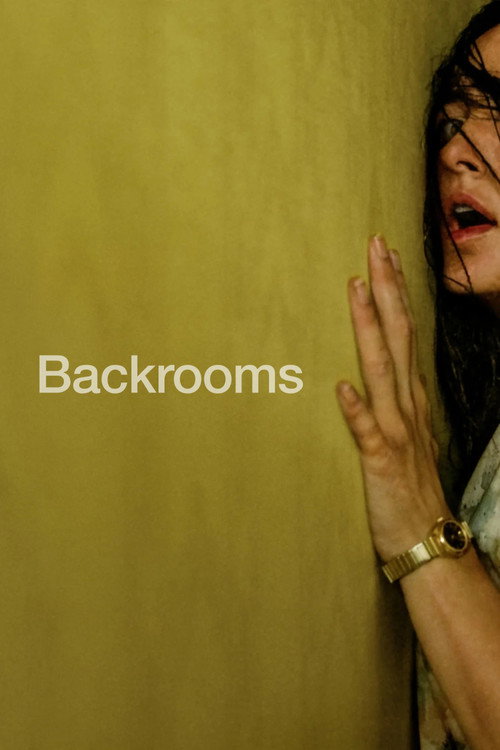
Backrooms8.0May 29
> “[*The Devil’s in the details*](https://youtu.be/y7uFoEfejdU?si=VoeUJfAG1_c19Oyz)*.*” Going in completely cold and coming out on the other end perplexed but in a good way. Don’t think the story is nearly as absent as what I’m seeing detractors say but I will concede that it certainly comes second to the film’s real goal which is just to drown you in this super isolated atmosphere. Lurking around in these oppressive, vast, empty spaces never did fully lose its effect on me. I’m just claustrophobic and anxious enough to where Kane Parsons (whose age makes me realize I’m such a fucking chud) ran circles around me in terms of his scoring and his framing. The biggest praise I can hand this thing is that I do think production designer Danny Vermette should basically have his name engraved on that Best Production Oscar trophy, unreal how this thing looks and feels. You really do feel like this place is such a rabbit hole that just goes deeper and deeper, to such a degree that escape feels impossible. I admire a horror film that understands restraint and I was just itching with curiosity by the time it reveals all its cards. Drags on longer than it should and I do think the character work isn’t as strong as it could be but, to be brutally honest, I kind of just expect that a lot of the time with the genre. But the world it sets up and throws you into genuinely creeped me the hell out. That thrumming, pounding score that ramps up when things are teetering on the edge of getting nuts was electric in my ears. Really scratched an itch in the back of my brain, the one that is scared of tight spaces and heights and the feeling that you’re not actually alone, even when you can’t see another soul. If nothing else, I thought it was an incredibly interesting experiment. It’s been a very horror dominated month and I do think there is an obvious modern masterpiece to have come out along the way. *Backrooms *isn’t it. But I do think it promises that Parsons has a bright future ahead of him. Whatever issues I do have with it, find myself keeping in mind that he’s not even a legal drinking age and he’s playing around with a concept he’s apparently already dabbled with for some time. But he still managed to direct the fuck out of this and show a total control of style and mood. His trajectory can only be upward from here. Would very much love to see him tackle something that’s totally out of his wheelhouse. The end result can go either way but I do find myself kind of admiring when a horror film noticeably has no idea how to explain the lore so it never really even bothers. Just throw me headfirst into the deep water and see what happens. Came out of this honestly thinking about what it all means and piecing together whatever makes the most sense to me, rather than having everything spoon fed to me with the subtlety of a sledgehammer (hello, *Black Phone 2*). I understand that’s not going to be the singular experience. I find it refreshing, others will probably be irritated beyond belief. I found myself riding with it the whole way, even though it’s got some very obvious imperfections. I’ll tell you this much, my therapist and I are gonna have a real awkward talk next time I see her. If I ever find a pocket dimension in my studio apartment, she better believe me right off the rip faster than this guy’s did. The one big thing I would level against this whole thing: I hope somewhere Tobe Hooper’s ghost is chilling with a smug grin on his face. *The Texas Chain Saw Massacre *is pretty provably the greatest American horror film of all time. Everything that’s come since has been eating off of its table for the last fifty years. Whether any of them even come close to it, though, is a completely different story. > “*Do you ever feel like you’re living behind glass?*”
Blood on the Moon8.0May 27
> “[*You and me, together, we could’ve licked ‘em. But you always had a conscience breathing down your neck…*](https://youtu.be/x9WWVNt8_O8?si=qeGNwUX3AQbAJsaQ)**” Our greatest living filmmaker lists *Blood on the Moon *as a key [companion piece](https://boxd.it/pUdmi) to his latest masterpiece, and it’s not hard to see how or why. A Western tinged with betrayal and deception and familial blood shed over property and capital. The use of shadows in this thing is just breathtaking. Feels more like a film noir that happens to have the Western genre operating as window dressing. You get the stunning depictions of the frontier and the terrain that you’d expect of any given classic within the genre, of course, but the film almost seems far more content to bathe in the dark of night and coast off a mysterious, secretive energy. The third act ends rather sentimentally, sure, but it also really builds upon its lead actor’s reputation as one of American cinema’s great anti-heroes, obscuring him from light and letting him lurk through the trees, picking off the bad guys one by one like a wraith. Staggeringly gritty and brutal for the period in which it was made. When people fight with their hands, it’s violent and animalistic and depicted as if these two people are actually trying to kill one another. Case in point: absolutely electric shot of Walter Brennan (who is wonderful in the film) lingering in the doorway after a savage fight in a bar, smoking gun in his hand, the only sound in the backdrop being Robert Mitchum’s ragged and exhausted breathing. A highlight of the ruthlessness that exists rather prevalently across the runtime, as if you’ve sat through a very real and authentic example of what happens when people act like caged animals. And what the aftermath looks and sounds like. The key, crucial standout note to me upon this first viewing is that Robert Wise’s film seems to believe that love can absolve you of your crimes and your sins, a sentiment that Scorsese’s *Killers of the Flower Moon *wholeheartedly rejects. Robert Mitchum was one of Old Hollywood’s greatest assets and here is no different. He makes for a rather exceptional hired gun who chooses to redeem himself when he realizes he’s been deceived into crime and murder. The chemistry he has with Barbara Bel Geddes is the thing that kept me most consistently hooked. That the film has such a brief runtime and still manages to convincingly take these two on a journey that begins with them shooting at each other across a pond and culminates with them realizing that they belong with one another other is a testament to the craft on display. There is something about a violent man (specifically within the Western genre) being lulled into domesticity by a strong woman that I find irresistible from a storytelling perspective. Get plenty of that here. For a film that is so frequently angry and deceitful and quick to violence, to hone a slow burn, rather understated romance at the epicenter makes for an incredibly compelling plight in favor of what love can do. That the film was written by a woman and so prominently features capable women in roles that have agency and who are illustrated as possession the intelligence to protect and stand up for themselves is incredibly refreshing. The rugged outlaw getting the innocent girl at the end of the story could be such an easy layup into something of a male power fantasy, but the dichotomy as it’s depicted here was a welcome change of pace. He doesn’t think he’s any good for her, doesn’t think it’d be worth her time to even consider a future with him and gives her a chance time and time again to walk away from it. But she sees good in him, sees a chance for him to be something better than what he presently is and stubbornly plants her feet once she knows he’s what she wants. To be together is less Mitchum’s asserting of his will as much as it’s something that Bel Geddes takes for herself, making an active choice to love a man she sees hope for. The scene where he comes back to her father’s ranch to try and right his wrongs and she tends to the cut on his hand, never once breaking eye contact with him, when you first get the scent of something brewing just beneath the surface with the two of them— that’s the stuff. A very gentle and quietly delivered note of optimism to end a film that also has the time to show a quiet, devastating scene where father mourns a house that once hosted his wife and son, both of whom he has unwillingly outlived. That Scorsese holds this up as a mirror to the story he told of Ernest and Molly Burkhart lends this a far more bittersweet aftertaste. In a perfect world, love will save you. But this isn’t a perfect world. > “*I’ve known dogs that wouldn’t claim you as a son.” *