Skip to content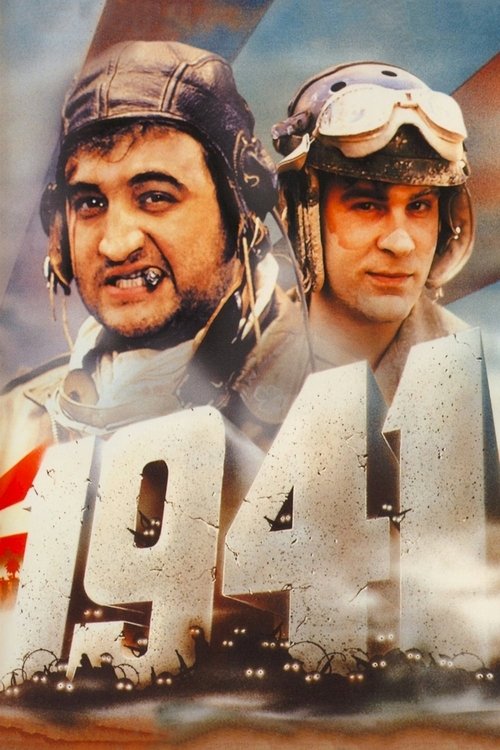

Recent activity
19413.0April 4
*** Watched the Director’s Cut, which clocks in at 146 minutes *** Steven Spielberg’s got a lengthy filmography with a lot of highs and very few lows. It’s remarkable how consistent his output is, considering how long he’s been at it and how many movies he’s made. On the other hand though, when the movie stinks, it really stinks. And that is unfortunately the case with 1941. It’s especially disappointing considering this is the first outright bad movie he’s made and the level of pedigree both on camera and behind the camera. The story of 1941 is as follows: Days following Pearl Harbor, there’s a panic in the air in Los Angeles. People are uncertain of what’s to come in the war, and they are buying into the fears that they are the next targets for the Japanese attacks. In the movie, the fear is not unfounded, as it literally opens with the Germans and the Japanese coming onto the shore and discussing about what it is they should destroy. The rest of the movie follows military officials chasing the sub and trying to stop them from coming onto the shore. There’s many many problems with the movie, the biggest of which is that it’s just not funny. And for a movie with the words “A Comedy Spectacular!” on its poster, that’s a major issue. Of course, comedy is subjective and not everyone will find the same things funny, but to me, it just wasn’t funny. The movie bombards with gags and keeps them going on far too long to the point of exhaustion. And at 146 minutes, it’s so incredibly bloated that at one point, I just contemplated turning the movie off all together and coming back to it later. I didn’t, but it’s bad when the gets me thinking that way. No matter the run time, I always try and stick it out, but this was a long two and a half hours. I’ve watched movies of similar length where it felt like five minutes. This was not one of those times. All the gags feel like they are thrown together in a chaotic manner, and they don’t really have a cohesive feel to it. It plays like an assault on the senses, with so many sight gags, explosions, screams, et cetera to the point of exhaustion. It’s especially bad because very few of the gags, if any, are even funny, so for them to go on as long as they do, it’s just not a pleasant viewing experience. I could maybe forgive some of that if I could tell who it was the central character is supposed to be. From what I could gather, it was supposed to be John Belushi’s character, but if a film doesn’t make clear who the central character is supposed to be, then how can I be expected to enjoy it. It just doesn’t seem like a whole lot of thought was placed into characters and story, instead relying on gags to pad out the run time. Gag heavy movies like Monty Python or The Naked Gun series, at their best they have a lot of gags, but a lot of thought is also placed on the story and the characters. They don’t sacrifice the characters and story for a gag. 1941 is just a huge disappointment on a lot of fronts. Spielberg is a very talented director and he had already shown that with Close Encounters and Jaws, and for him to make this movie makes you wonder what happened that caused this. It’s a waste of Spielberg’s directorial prowess, the comedic talent on screen with Belushi and Aykroyd, who were SNLcomedic heavyweights, and Robert Zemeckis who would go on to make Back to the Future and Death Becomes Her. It’s a waste of talent on all fronts, and it’s easily among the worst movies Spielberg’s ever made.
Practical Magic5.0April 3
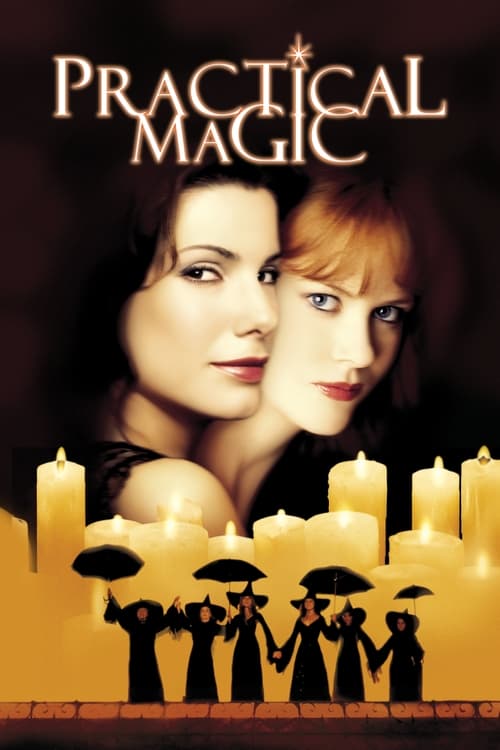
Sometimes it’s hard to watch a movie that is so beloved by a generation. It builds up a certain expectation, and the moment you don’t click with it or enjoy it, then you start to wonder what it is that makes other people like it but not yourself. There have been many instances where I watch a popular movie, not give it 4 or 5 out of 5 stars, and think to myself what it was that other people like or not like about it. Don’t get me wrong, I’m never going to apologize for my rating because at the end of the day, it is my opinion and that is the only one that matters to me. But it is something to ponder. That’s something that happened when watching Practical Magic. It was enjoyable enough sure, and the performances were solid. But there was just so much holding it back that kept me from truly loving it. There’s a whole litany of problems, but there’s so much charm in the movie that it allowed me to somewhat overlook the flaws in the movie and have a decent time with it. The movie’s main problem is the tone. Or more accurately, the uneven tone that the movie can’t seem to decide on. It tries to be so many things without landing on one and it doesn’t always work. It tries to swing from cozy romantic comedy to dark supernatural drama to family drama, and instead of feeling dynamic and natural, it just feels jarring. And it’s a shame because the idea of sisterhood and witchcraft and generational trauma is genuinely compelling. But without committing to a certain tone or theme, it just feels awkward. One way we know what tone in the tonal Cuisinart that is this movie we’re about to get is a music cue using a popular song. Now, I’m not opposed to using popular music in movies, but they shouldn’t be used to tell the audience how to feel. In Practical Magic, it uses it to intrude and force transitions between events that just don’t make logical sense to transition. The performances are really good, and Nicole Kidman and Sandra Bullock have some fantastic chemistry together. Plus the supporting cast is fun and part of me wishes that the movie focused more on them rather than Nicole and Sandra. The aunts are amazing and steal the show. I can see why this is a cult movie for some. It’s charming enough and the autumn vibes are cozy and remind me a lot of Gilmore Girls. Plus the performances are good and the Aunts are genuinely hilarious. It just is such an uneven movie tonally, and the use of music to guide the movie instead of just being there really took me out. This had a lot of potential, which hopefully the sequel coming out this year will resolve, but it just didn’t click with me.
The Drama6.0April 2
Picture it: you’ve met the love of your life. You’re going along, everything is going great, and then you pop the question. Your partner, they say enthusiastically and you two share the excitement as you begin the next phase of your relationship. Now you plan the wedding, you deal with the stress that that brings with it, and you just count down the days until you reach the altar, profess your love for each other, and hopefully spend the rest of your lives together. The week leading up to the wedding, you have a menu tasting with two of your closest friends. Food tastes great, wine is flowing, everyone is just sitting back, having a great time. Then, towards the end, one of your friends suggests you play a game. What is the worst thing you’ve ever done? Everyone goes around the table, sharing the skeletons in their closet, thinking it’s a safe space and everyone can just laugh it off because it was in the past and it ultimately doesn’t matter. Then you share a secret that sours the whole night, and maybe the whole wedding. How do you respond? Do you just awkwardly laugh it off, or do you just call off the wedding, deciding that you two don’t know enough about each other to share the rest of your lives together? That’s the question posed in The Drama. And Kristoffer Borgli mines that secret and the aftermath of revealing that secret to mixed results. The twist (I don’t even think it’s a twist really; it’s the foundation on which the movie is built after all) is that Emma (played by Zendaya) shares a secret with her fiancee and her maid of honor and his best man one night that when she was younger, she was battling with depression, and as such, one day decided to plan a school shooting. She doesn’t go through with it of course, but it’s still a big bomb to drop a week before a wedding. It’s shocking, but that’s mainly because when was the last time you saw a movie even dare to tackle this topic. It’s pleased with itself, thinking it’s provocative and shocking, but it’s also rooted in an unfortunate reality that America just refuses to deal with. The Drama is essentially a one note movie. It’s a good note, for sure, and Borgli mines a lot out of it, but it’s still essentially one note. Borgli is a filmmaker who isn’t interested in commentating on the gun crisis or any other social crisis in America, but rather, the cost of living at the mercy of public opinion. Weddings are a great setting for that because there you have two people, so deeply in love that they decided to commit the rest of their lives to spending it with each other, standing at the front of a room confessing their love and adoration for each other in front of a group of friends and family. The movie isn’t interested in answering whether we want to know everything about our partners. No, the movie moreso wants to examine what happens when that knowledge is perceived by those who know it. So let’s break down how each person at the table perceived Zendaya’s secret: Rachel, played by Alana Haim, who just confessed to locking a mentally handicapped person in a closet and leaving them to fend for themselves and lying to people about where he was, is the most upset, because her cousin is stuck in a wheelchair now due to a shooting. She essentially ends the friendship. She’ll still go to the wedding and stir the shit and be an overall menace, but afterwards, the friendship is essentially over. Her husband, played by Mamoudou Athie, laughs awkwardly, reeling from the shock, but it’s something he’ll get over. And Charlie, played by Robert Pattinson, is shocked by it. He spends the rest of the movie just spiraling, dealing with the revelation as well as the stress that comes with planning a wedding. I think my main problem with the movie’s treatment of the reveal is that it never goes far enough with the consequences to really say anything interesting. The movie acts like it’s building up towards something shocking at the end, and Borgli throws out some red herrings to make you think that that’s what is going to happen, but instead of going with those and leading the story down more interesting directions, Borgli plays it straight. I get what he was going for with the juxtaposition of Haim’s character, who did something pretty bad but clearly doesn’t feel a lot of regret versus Zendaya’s character, who never actually did anything and still feels terrible, but I think the ending fell a little flat for me because of the buildup to the wedding and the expectation of something shocking and it just not happening. The film shares in the discomfort of Charlie’s dilemma, and it all proceeds with a pained awkwardness and desperation for more conventional plot lines in an attempt to stabilize itself. It’s not all that particularly deep, and the film doesn’t really offer any new insight into this particular area of human nature. It’s obvious that Borgli prefers shock over depth, without realizing that it is possible to have both. How do you deal with something in your personal life that society itself refuses to deal with? Do you just politely ignore it and move on with your lives, or do you break off relationships, even temporarily, and contemplate your own life in the process. The Drama’s glib approach to the material makes the movie thin and more rhetorical, but it’s still humorous enough and the performances are good enough to enjoy watching a second time.
The Super Mario Bros. Movie5.0April 1
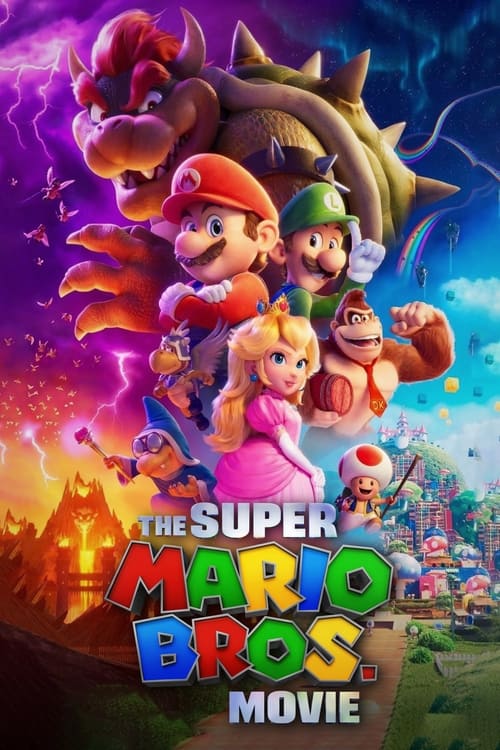
I’ve always liked the Mario games. I was never a big fan of them, but I enjoy them enough to get excited for a new entry in the 2D or 3D series. So when they announced a Mario Bros. movie, I was excited enough to watch it in the theater. And since the sequel, The Super Mario Galaxy Movie, is now officially out, I decided to rewatch the original in preparation for watching the sequel sometime this weekend. And honestly, I was left disappointed in it. There’s some good in the movie, but there’s also plenty wrong with the movie to just leave me a bit disappointed. The main issue I have with the movie is the plot. Now, the Mario games aren’t really known for their plot, but they make up for it with fun and inventive gameplay. Having a paper thin plot works for a game because you’re interacting with it and playing it. That doesn’t work for a movie though. You can’t have a thin plot and expect it to work. Mario’s got plenty of lore to draw from to make a semi-decent plot, but the movie instead just decides to focus on fan service and deep cuts instead of making an interesting plot. The plot is mostly the same as in the games, where Mario has to rescue someone from the throes of Bowser, and he has to use power ups to try and accomplish his goal. Along the way, they throw in Mario Kart and Donkey Kong. But if the plot is this thin and not all that interesting, why watch the movie when you can play the games and get the same story, only this time you are engaging with it and having fun with it? Of course, that’s not to say the movie is all bad. It’s Illumination’s most expensive movie (I think; I don’t know if Galaxy has a higher budget) and it clearly shows. It’s a beautiful movie and there’s a lot of little details that you just don’t see in your typical Illumination movie. I don’t know if it would need to win any awards or anything, but it is easily the best animated the studio has put out. Again, I haven’t seen Galaxy yet, so I don’t know if its better animated or not, but as of when this movie came out, it is the best of the Illumination lineup in terms of animation. Another strong point is the voice acting of the cast. All the characters are on point, and I remember when they announced that Chris Pratt was going to be the voice of Mario in the movie, it induced a groan from me and the collective internet. In 2023, we were reaching peak Chris Pratt oversaturation, and that he was just going to do a normal Chris Pratt voice with Mario. Which he does to an extent, but he also adds enough of a Mario twist to his voice to make the character his own. I don’t know if it’s a movie I would die to rewatch again when there are so many other better animated movies out there, but for a video game adaptation, it’s surprisingly solid. I’m not sure if it’s the low bar in which movie adaptations of popular games have set, but this movie clears the bar. It’s not the greatest thing in the world, and there are plenty of flaws, but considering how bad it could’ve been, given the studios pedigree and the history of video game adaptations, it’s an okay time.