Skip to content

Wyatt Wilcox
@wyattwillwatch
Rating system: ★★★★★ — Transcendent masterpiece A film that reaches a level beyond normal greatness and beyond what I previously thought possible. Personally life-changing, unforgettable, and/or one of the greatest achievements in cinema. ★★★★½ — Major masterpiece An exceptional film that is among the highest achievements of its era/genre. Pretty much everything works, and its strengths are overwhelming. ★★★★ — Minor masterpiece A truly fantastic film with artistic importance, emotional power, or exceptional craftsmanship. It may have noticeable flaws, but what it accomplishes is extraordinary. ★★★½ — Great film A very strong movie with clear strengths, but its couple of or even many weaknesses prevent it from reaching masterpiece status. ★★★ — Solid film A decent, somewhat movie with meaningful qualities, but not something you’d consider exceptional. The basic level that most movies fall under. ★★½ — “Meh” film A film with both strong qualities and major shortcomings. There are moments worth appreciating, but the flaws are difficult to overlook. Not a bad experience, but ultimately uneven. ★★ — Bad film A disappointing film that fails more often than it succeeds. It may have a good idea, a few memorable moments, or some technical strengths, but the overall execution is lacking severely in substance, polish, or otherwise. ★½ — Awful film A fundamentally flawed movie with very little that works. There may be a few redeeming qualities, but they are heavily, heavily outweighed by the problems. ★ — Horrendous film A failed attempt at filmmaking. The concept, execution, or both fall short, leaving little value beyond perhaps curiosity, production design, or a few isolated moments. ½ — Unwatchable film Utter failure, arguably the worst movie ever made.
Recent activity
Minions & Monsters6.0July 30
Scooby-Doo! The Mystery Begins2.0July 27
Sallie Gardner at a Gallop5.0July 27
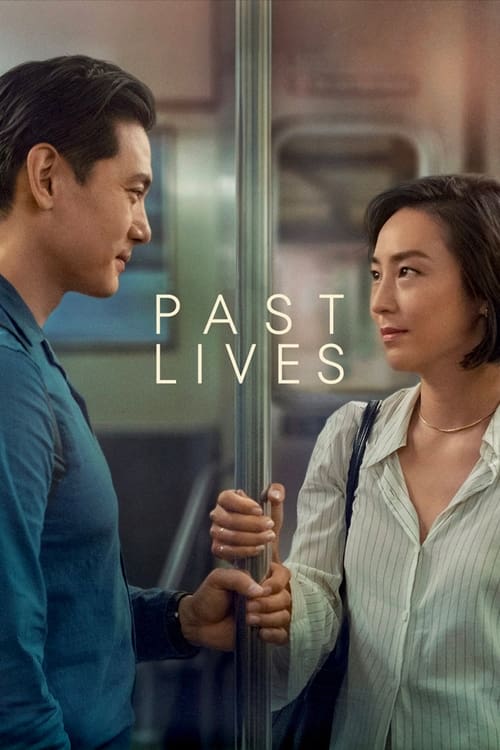
Past Lives6.0July 27
Right away it feels like there’s a lot of intentional visual storytelling. The shot of Na Young and Hae Sung walking home in opposite directions after spending time together feels like it foreshadows their lives taking separate paths. The framing with the two statues facing each other and the tree between them on their childhood “date” also stood out to me—it seems like each statue represents one of them while the tree symbolizes the distance that will always exist between them. I also liked the hide-and-seek game as a metaphor for their relationship. It feels like one of them is always chasing while the other is just out of reach, so they’re never fully on the same page emotionally. The subway scene also does a good job at conveying this, as they are always divided by a pole, each of them on opposite sides of the frame. This is subtly demonstrated at many points throughout the film, like when they meet for the first time as adults and she hugs him deeply for a long time, and just as he starts to melt into the hug she pulls away. The adult introductions also do a good job establishing how different they are. Hae Sung is introduced comforting a friend, immediately showing his empathy and emotional openness, while Na Young is shown laughing at people she used to know, Googling old classmates, and then in a business meeting, emphasizing how career-driven and forward-looking she is. Na Young is consistently displayed as rather detached from deep emotion. She doesn’t understand why Hae Sung would want to reach out to and find his old childhood sweetheart. She thinks that what is in the past is what is in the past and she has nothing to ever be sorry about for leaving so suddenly. I also wasn’t a fan of how she was introduced as a kid—being upset over finishing second in her class made her come across as arrogant and unlikeable to me. The narration is the weakest part. It feels repetitive and a little too on-the-nose, often explaining ideas that the visuals are already communicating much more effectively. The movie takes too long to pick up, but once it does and the romantic tension between Na Young and Hae Sung takes off, it really takes off. The final scene where Na Young walks through the city back home after saying her final goodbye to Hae Sung is really powerful because it’s essentially a brief run through of her life, and how she left him to go through all of these different events in her life without him, all leading up to her husband, the man she loves, but taking her away from Hae Sung, the boy she loves. Ultimately, I think Past Lives works much better as a visual character study than as a narrative. I like a good character study—Magnolia, Fight Club, Raging Bull, and Taxi Driver are all among my favorites—but what makes those films so compelling is that they pair fascinating characters with strong dramatic momentum. Even when they slow down, you always feel the story building toward something. Past Lives often feels content to simply observe a life rather than shape it into a compelling narrative. Watching ordinary people live can be emotionally affecting, but on its own it doesn’t make for a great film. Good movie. The last 45 minutes are genuinely excellent, and the first hour is visually rich and filled with intentional framing and blocking, but it lacks enough narrative direction to make it consistently engaging.