Skip to content

david
@dh26
* 我就跟這個世界一樣, 這個世界是不會變的! * reviews are imperfect initial reflections and often pretentious, usually written in 15–45 minutes logged films reflect only what i’ve seen since joining letterboxd currently working through the [sight and sound's critics list](https://www.bfi.org.uk/sight-and-sound/greatest-films-all-time) ([93](https://letterboxd.com/davidhsueh26/tag/challenge:-sight-and-sound-critics/films/by/your-rating/)/264) ***rating scale*** ½ (0–19): unwatchable ★ (20–34): poor ★½ (35–49): flawed ★★ (50–64): passable ★★½ (65–74): solid ★★★ (75–84): strong ★★★½ (85–89): top 250 of all time quality ★★★★ (90–94): top 100 of all time quality ★★★★½ (95–99): top 50 of all time quality ★★★★★ (100–101): top 25 of all time quality 🧡: something I’d repeatedly rewatch
Recent activity
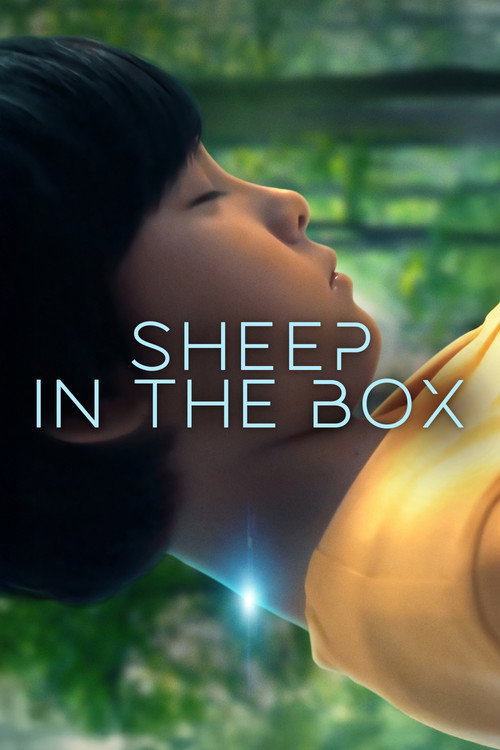
Sheep in the Box4.0July 23
It was an absolute honor to see and hear from one of my favorite directors, Hirokazu Kore-eda, in person. Unfortunately, * Sheep in the Box * is an uncharacteristic miss, sterile and flat in ways that feel genuinely strange coming from the director of * [Shoplifters](https://boxd.it/fnmKzn)* and * Still Walking, * a film whose premise promises exactly the kind of quietly devastating inquiry Kore-eda does better than almost anyone alive, and whose execution delivers almost none of it. The premise is unmistakably his. A couple whose child has died is offered a humanoid robotic replica of him, and the film follows what happens when grief is given a physical object to attach itself to. In the Q&A following the screening, Kore-eda described the idea's origin: > "A very famous singer was brought back to life through AI, and she was on TV singing a new song. I remember… feeling a vague sense of discomfort. It's often things that make me somewhat uncomfortable that lead to the start of some kind of project. At the time, I wasn't able to put into words what that discomfort exactly was, but it led to this question of, 'Who do the dead belong to?'" It is a remarkable question, and one the film never adequately answers, circling it from a distance rather than pressing into it the way his best work does. The robotic boy Kakeru knows about trains and carries the capabilities of an AI powered intelligence, but he rarely smiles or cries or complains, and I think the film's central problem is that he does not feel like at all a child. Kore-eda's tendency to let mundane moments accumulate into genuine familial intimacy, the quality that makes the beach scene in * [Shoplifters](https://boxd.it/fnmKzn)* or the cemetery scenes in * Still Walking * or the small moments of connection in * Like Father, Like Son * so affecting, works in reverse here. Those films earn their emotional power through accumulation and through the patient observation of people learning to love each other in ordinary moments. However, the absence of that patience in * Sheep in the Box * is felt in every scene the three characters share. They occupy the same spaces without occupying the same world, and the actors, though clearly capable, are let down by characterization so skeletal that there is almost nothing for them to build from. The father Kensuke's resistance to accepting the humanoid as his son and the mother Otone's gradual warmth toward it are the film's two most dramatically promising threads, and neither is developed with anything close to the attention they need. Since the film never makes the viewer feel the weight of what the original Kakeru meant to his parents, the grief that drives the entire narrative remains abstract. The third act attempts the kind of collapse Kore-eda executes so brilliantly elsewhere, but it lands without catharsis, because the love between parent and child was never made visible enough for the guilt to devastate us the way it should. What we get instead is a generic register of grief, an "I miss my child, I wish he were here" quality that never accumulates into the specific, lived texture of loss. This is where a comparison to * [After Life](https://boxd.it/bisaCZ)* is most damning. In that film, Kore-eda builds memory through sensory detail so precise it becomes physical, the smell of dust in a room, the texture of air at a particular hour, a man remembering sitting beside his wife on a park bench speaking softly about nothing at all, and finding in that ordinary moment the shape of his entire life. In * Sheep in the Box, * the memories of Kakeru exist only as a collection of videos glimpsed briefly in an early scene and never returned to with the patience the film needed to earn its grief. Kore-eda spoke in the Q&A about grief as a generative process, something he had encountered in a book that left a lasting impression: > “It said that grief work and the processing of grief can also be a creative and generative process. Of course there is sadness, but it's not all sadness. Throughout the process of grief, there are moments where people can shine, can laugh, and can grow." He also described visiting Shanghai to research the film, where he met the CEO of a company using generative AI to bring back the dead: > “What made me the most fearful was the fact that, because it's generative AI, they can develop a relationship with the person in a way that isn't rooted in their past relationship. They can generate new conversations on topics that the person who died never spoke about or knew about." Both of these ideas are genuinely frightening and the film only grazes them. The humanoid Kakeru can reconstruct memories but cannot make new ones, which is precisely the distinction Kore-eda is pointing at, but the film does not stay with this long enough for it to become the argument it deserves to be. A subplot involving abandoned humanoids who wish to build a world of their own adds convolution where the film needed simplicity, and a tonally strange soundtrack, veering between registers that feel mismatched to the emotional temperature of each scene, compounds the sense of a film that does not know what it wants to be. There is something potentially interesting in the film's recurring fixation on nature and organic materials, Kakeru's fascination with wood, the mother Otone's work as an architect designing a home for a family, and the humanoids eventually choosing a forest as the site of their new world -- all of it gesturing toward an argument about returning to something rooted and natural in an age when grief has been handed over to technology. Kore-eda develops none of these threads with enough clarity or patience for them to cohere, and what might have been the film's most resonant visual argument instead feels like a series of observations looking for a film that could contain them. The title of the film comes from the novella * The Little Prince. * The prince asks the narrator to draw him a sheep, and after several failed attempts the narrator simply draws a box and tells him the sheep is inside. The prince is delighted, because he can imagine the sheep for himself. It is a metaphor for the power of imagination, for the things most important to us being precisely the things we cannot see, and Kore-eda returned to this idea directly in the Q&A: > "Human beings' ability to imagine is a very important component of what makes us human. Maybe the fact that we might be losing this ability to imagine what is most important to us." The argument underneath * Sheep in the Box * is that the impulse to replace grief with a replica costs us something in our capacity to mourn and to grow through loss -- that clinging to a reconstruction of the dead is itself the thing that makes us less human. The sheep, Kore-eda is telling us, has to stay inside the box. The moment you try to draw it, you have already lost it. ** 57 ** Story & Pacing: 9/20 Characters & Acting: 7/20 Themes: 35/50 Cinematography & Editing: 4/5 Soundtrack & Sound: 2/5 Memorability: 0/1
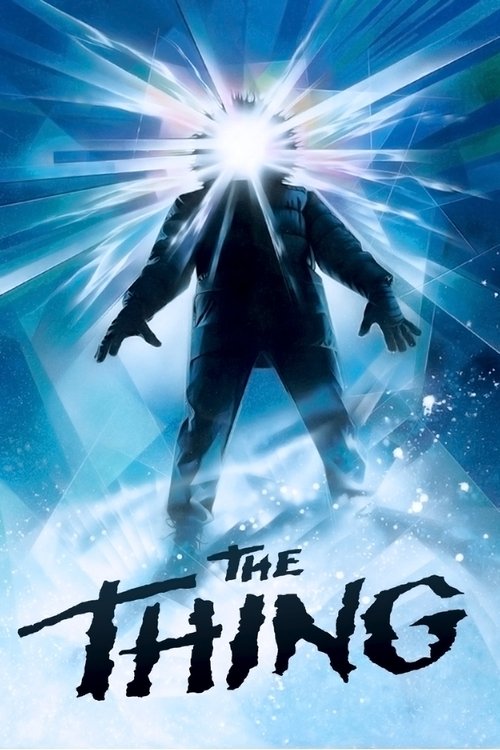
The Thing7.0July 20
** * This review contains heavy spoilers only in the fourth (last) paragraph. Read at your own discretion. *** John Carpenter's * The Thing * is a film that has genuinely gotten better with age, with its paranoia as enthralling now as it was in 1982 and its practical effects still startling. Roger Ebert disagreed, but modern consensus has shown that he was clearly wrong. Released in 1982, at the height of Cold War hostilities and with Leonid Brezhnev still in power as Soviet leader, * The Thing * captures the specific cultural dread of nuclear annihilation and of mutually assured destruction. The moral question the film poses at almost every turn -- that perhaps the characters should all die together because they cannot determine who among them has been assimilated -- is the same logic that governed the nuclear standoff between East and West. A one-sided defeat is worse than total destruction, and so total destruction becomes preferable. The paranoia of the mere possibility of assimilation is enough for the group to choose collective annihilation over the risk of being wrong, and Carpenter films this with a coldness that makes it feel like a documentary about how the Cold War actually worked in the minds of the people living through it. The flat characterization of * The Thing * is a valid critique, but it is also possibly the point. At roughly the film's halfway mark, Childs asks the group: "So how do we know who's human? If I was an imitation -- a perfect imitation -- how would you know it was really me?" Nobody in the room could answer. The characters stop and change the subject, because they genuinely do not know what makes Childs distinct from a perfect copy of Childs, nor what makes any of them distinct from a perfect imitation of themselves. In some ways this thematic debate reminded me of Mamoru Oshii's * [Ghost in the Shell](https://boxd.it/d2XhNJ),* where a human is more than physical appearance and traits, where the core of identity is consciousness and the capacity to reason. The ensemble's shared flatness of character can be read as Carpenter's diagnosis of a society that has made itself less and less reliant on its own personality and individual identity, until the people within it have become so similar to one another that the question Childs asks becomes genuinely unanswerable. This diagnosis feels more accurate now than it did in 1982. The concern Carpenter was pointing at -- the erosion of distinctive identity, the soullessness of a society organized around appearances and money rather than around genuine selfhood -- is something my generation (Gen Z) has inherited and intensified. Among us, the algorithmically flattened personality, the curated self, the disappearance of having hobbies, and the growing difficulty of answering what makes any individual genuinely distinct from the person next to them, Carpenter was diagnosing all of this forty years before it became the defining anxiety of a generation. Have we built a world so focused on surfaces that we have forgotten what makes a human a human? The ending of * The Thing * is as bleak as any in American cinema. Regardless of whether an assimilated creature survives among the remaining characters, the two men left are so consumed by paranoia and mutual distrust that they will destroy each other anyway. The alien may have won without ever needing to win. They sit in the wreckage of the Antarctic station, the cold pressing in around them, and the mutually assured destruction the film was always pointing toward coming from the inability of two human beings to trust each other enough to survive the night. ** 87 ** Story & Pacing: 20/20 Characters & Acting: 13/20 Themes: 43/50 Cinematography & Editing: 5/5 Soundtrack & Sound: 5/5 Memorability: 1/1
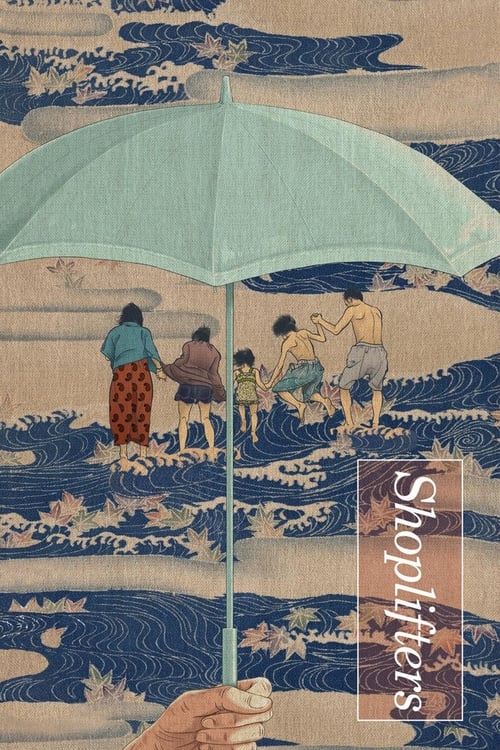
Shoplifters7.0July 19
Hirokazu Kore-eda's * Shoplifters * ends with young Yuri alone on a balcony with her toys tossed to the side and her expression lifeless and defeated as she peeks through the balcony coverings and uses a step to look out and past at something the camera cannot show us. The last shot holds on her face, turned slightly toward us, looking at a distance the film has spent its entire runtime making feel real and then taking away. It reminded me of the final image of * [A Brighter Summer Day](https://boxd.it/aeXdEd),* Xiao Si's mother holding up her son's uniform, mourning the past and mourning her own failures alongside society's, and the two shots sit together in my memory as among the most devastating endings in cinema. What is Yuri thinking as she looks out from that balcony? Whether she is mourning, or hoping, or simply suspended in the absence of everyone who once filled her life, Kore-eda leaves the question open, and the openness of it is what makes the shot so unbearable. The third act of * Shoplifters * is a sudden collapse, a deconstruction of everything the film has been carefully building. The family the film spent an hour and a half constructing is dismantled by the very laws and institutions that were supposed to protect the people inside it, and Kore-eda uses this dismantling to ask something the film has been circling from its first scene. Can people who break laws, who steal and deceive and bend every moral code available to them, be genuinely good and loving people? The family in * Shoplifters * shoplifts instant ramen, shampoo, and other items of basic need, and justifies this by telling themselves that things not yet sold have no owner. The moral code is flawed and they know it, and it unravels further as the film progresses into acts of thievery and worse. Yet these same characters in some ways are among the most loving people in the society Kore-eda depicts, and the gap between their warped morality and their genuine warmth is where the film lives. "I don't know anything else to teach them," the father Osamu says when asked why he taught the children to shoplift. The city outside the family's cramped shack is clean and raging and indifferent, and the contrast between that world and the one these characters inhabit pervades every frame. Kore-eda has said in interviews that he wanted to study the relationship between family and society, and * Shoplifters * shows not only the economic failures of Japan's Lost Decades but how the laws of a society can do more harm to the people they claim to protect than the crimes those people commit to survive. The film's understanding of alienation and of the capitalistic system of production that makes workers strangers to what they produce and to each other, runs beneath every scene of people existing together in the only space the world has left them. What the film is really asking is what a family is, and whether the answer has anything to do with blood. Grandma Hatsue warns early that this chosen bond cannot last, but the beach scene, the family together in the sun, her whispered thank you directed at no one in particular and at all of them at once, suggests otherwise. Yuri's biological parents wanted to abort her and then abused her when she arrived. When someone tells Nobuyo that children need their mothers, she asks: "Giving birth automatically makes you a mother?" * Shoplifters * spends its entire runtime answering that question, and the answer is visible in every shared meal and every moment of tenderness between people the law would never recognize as family. The children resist calling the adults mom and dad, and yet by the time the third act comes and the institutions of society come to take it apart, the viewer understands what it was, and what the loss means, better than any of the characters can say. ** 89 ** Story & Pacing: 16/20 Characters & Acting: 18/20 Themes: 45/50 Cinematography & Editing: 5/5 Soundtrack & Sound: 4/5 Memorability: 1/1
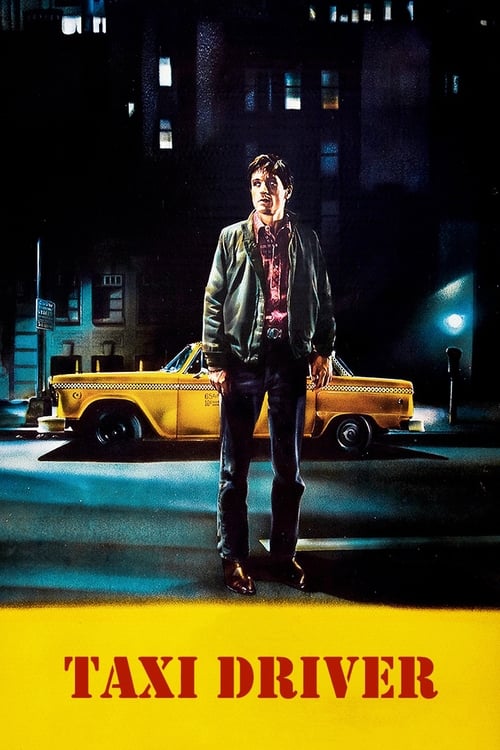
Taxi Driver9.0July 2
** * This review contains heavy spoilers only in the fifth (last) paragraph. Read at your own discretion. *** Martin Scorsese made * Taxi Driver * in the aftermath of Vietnam and Watergate, during a period of economic stagnation and governmental paralysis, and the New York he presents is the direct consequence of those failures made visible on screen. The discriminatory policies of redlining and the systematic defunding of public housing, with the withdrawal of federal support from urban communities -- all of it accumulated into the city Travis Bickle drives through every night, its streets grimy and overcrowded and its people punished by the very institutions that were supposed to sustain them. The world of * Taxi Driver * looks apocalyptic, and Scorsese is documenting it as a nearly forensic portrait of what American cities actually became when government policy actively produced the conditions it then abandoned its citizens to survive. It is within this world, genuinely unredeemable and genuinely neglected, that Travis's downward spiral becomes legible as the logical outcome of a society that left its most vulnerable people with nothing and then looked away from what that produced. Travis is a character designed to unsettle, and the film is insistent about this in ways that its popular reputation has consistently obscured. The toxic masculinity film-bro cult that has grown around * Taxi Driver, * the tendency of a certain kind of viewer to see Travis as a figure of lonely masculine virtue, represents a reading Scorsese was actively diagnosing in the culture, one the film itself presents with deep discomfort. Travis is awkward, repulsive in his social interactions, his diet a form of self-punishment, and his understanding of pop culture and ordinary human connection so impoverished that every attempt he makes to enter the world around him ends in failure or humiliation. Scorsese's compositions reinforce this constantly, the camera restless and distracted, mimicking Travis's inability to settle, moving from end to end as though unable to find a stable point of view, most memorably in the opening scene where Travis applies to be a taxi driver and the camera drifts upward toward Wizard through the window as though Travis's own attention is already elsewhere. He is a man in pieces, and the film never lets the audience forget it. The conversation with Wizard is the film's most honest moment about the limits of what a community can offer someone like Travis. Wizard admits plainly that he has nothing to give, that he is just a cab driver, and that the wisdom Travis is looking for does not exist in the world Travis inhabits. The political language of Senator Palantine offers nothing either, the same crossroads-of-change rhetoric that politicians have always deployed and that has never once changed the material conditions of the people listening to it. Travis has no institutional support and no person capable of meeting the depth of what he needs, and the film understands this as a structural failure before it understands it as a personal one. The police do nothing, Travis observes, and the film validates this, presenting a city so overwhelmed by its own dysfunction that even the institutions nominally responsible for order have effectively withdrawn. Scorsese also uses Travis to diagnose something specific about how governmental neglect gets redirected into racial hatred. White Americans in cities like New York, who were punished by the same policies that punished their neighbors, were conditioned to direct their frustration at racial minorities, pinning on them the consequences of a political failure that preceded and produced the conditions all of them were living in. Travis's violence follows this pattern of thinking, and Scorsese presents this pattern as a symptom of a diseased political culture, the logical expression of a society that gave its most desperate people grievance and no legitimate outlet for it. The ending is possibly the film's most devastating and most misread sequence. Travis embarks on his moral crusade and in some ways succeeds, as Iris is returned to her family and he is celebrated in the press as a hero, but then the film simply continues. New York is still a slum: the same streets outside the windshield and the same prostitutes and drug dealers going about their night. The same grimy and unredeemable city that produced Travis is still producing everything he believed he was purging from it. His single act of violence has altered nothing about the conditions that made him, and the film makes this visible in the most starkest way it can: Travis catching his own reflection in the rearview mirror, that quick and unsettling glance, the face of a man who is beginning to understand that the world looks exactly the same as it did before he decided to save it. Society did not change, and he won’t either. Throughout the film Travis imagines a real rain coming to wash the scum away, and finally, the rain has come, but the scum still remains. ** 95 ** Story & Pacing: 17/20 Characters & Acting: 20/20 Themes: 47/50 Cinematography & Editing: 5/5 Soundtrack & Sound: 5/5 Memorability: 1/1