**7#**[ JAPANUARY CHALLENGE!](https://letterboxd.com/yuksteria0001/list/japanuary-2025/) - ** GOTH (2008)**
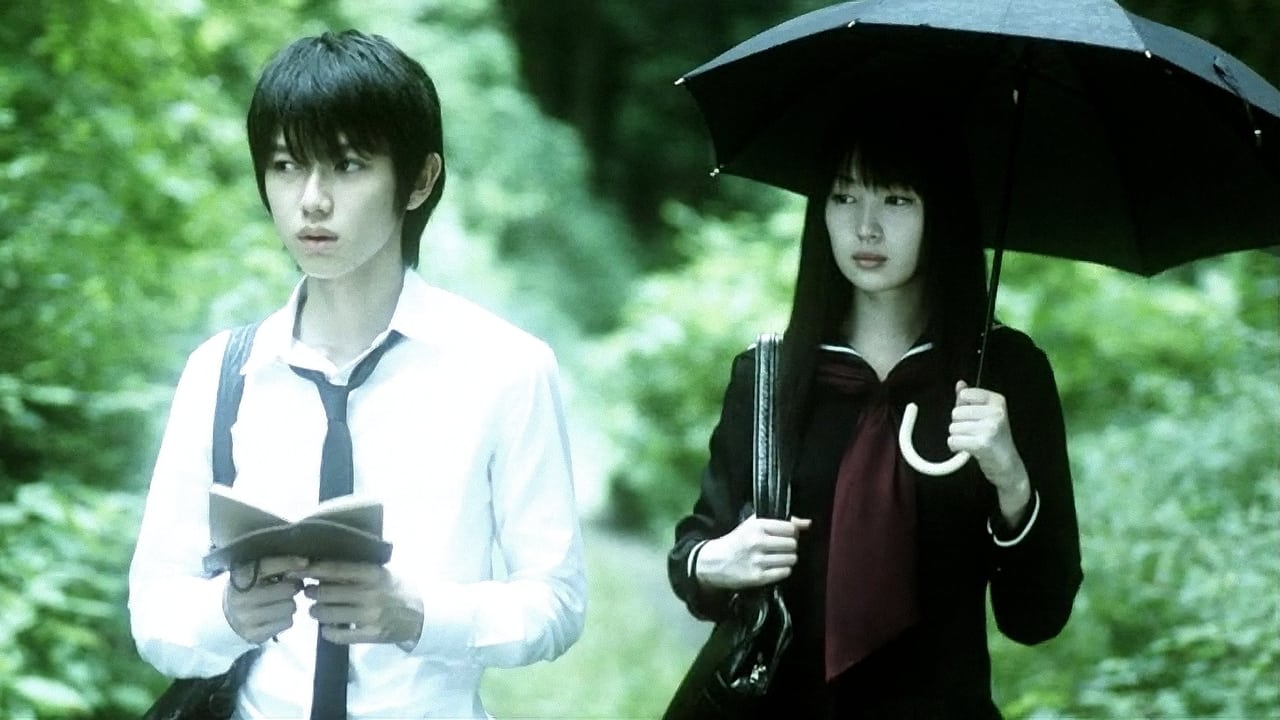
Adapted from Otsuichi’s popular novel, Goth delves into the dark and twisted minds of two high school students who are drawn together by their mutual fascination with death. Directed by Gen Takahashi, the film unfolds as a psychological thriller exploring human obsession, moral ambiguity, and the thin line between curiosity and compulsion.
Plot Overview
The story follows Morino and Kamiyama, two classmates with contrasting personalities yet a shared morbid interest in death. Kamiyama, the charming and seemingly normal protagonist, masks a deep curiosity about death, while Morino, his withdrawn and enigmatic counterpart, harbors a much darker, more personal connection to the subject. The pair inadvertently find themselves embroiled in a serial killer’s trail after discovering a diary that describes the killer’s gruesome acts.
Instead of reporting their findings to the authorities, they pursue the case themselves, driven by their own motivations rather than any sense of justice. What unfolds is not a conventional detective story but a grim exploration of their psyches and the unsettling allure of death.
Strengths
One of Goth's strengths is its atmospheric direction. Takahashi creates a world shrouded in bleakness, with muted colors and haunting visuals that complement the film’s somber tone. The deliberate pacing mirrors the introspective nature of the characters, allowing viewers to feel the weight of their obsessions and moral detachment.
Takahashi’s focus on the characters’ inner worlds, rather than sensationalizing the murders, gives the film an understated yet chilling quality. Morino’s quiet intensity contrasts well with Kamiyama’s seemingly detached demeanor, and their interactions form the core of the narrative.
The cinematography stands out with its use of shadows and light to evoke unease. The score, too, is subtle but effective, amplifying the film’s eerie atmosphere without overpowering the visuals or dialogue.
Weaknesses
While Goth excels in mood and atmosphere, it may feel too slow for audiences expecting a traditional thriller. The film’s introspective approach and lack of resolution might leave viewers unsatisfied. Some elements of the novel, such as the deeper exploration of Morino and Kamiyama’s motivations, are lost in the adaptation, leaving their characters feeling underdeveloped.
Moreover, the film avoids explicit violence, relying instead on implication and suggestion. While this works to its advantage in some moments, it can also make the story feel less impactful, particularly when it comes to the tension surrounding the serial killer.
Themes
At its heart, Goth is an exploration of human fascination with darkness. It questions why people are drawn to morbidity and whether such curiosity inherently makes someone dangerous. The characters’ ambivalence about life and death challenges traditional notions of morality, leaving viewers to grapple with the same discomfort the protagonists embody.
One huge thing that I should mention is, altough should be considered a flaw, I find the fact that we didn't see much of Kamayama's backround (like we did with Morino, which made us aware of why she has no empathy)-- interesting. Was he born like that? Can you be *born* without empathy? I found myself asking that throughout watching the movie, and even after finishing it.
Final Thoughts
Goth is a contemplative, atmospheric film that prioritizes mood and character study over traditional thrills. It’s not a film for everyone; its slow pacing, ambiguous narrative, and philosophical undertones may alienate viewers seeking straightforward storytelling. However, for those willing to embrace its somber tone and introspective nature, Goth offers a haunting glimpse into the darker recesses of the human mind.
In my opinion, I enjoyed it much more than I expected to. The soundtrack was fitting to the tones of the movie, the themes were interesting, the characters, altough a little bit too edgy for me were really interesting, and we don't really have a hero here, altough Kamayama did save Morino, but I don't think it was because he cared for her, or anything of this sort... so, yeah. In the end, still a very interesting movie.
I might rewatch it sometime, just because I still haven't read the book, and once I do, I shall go back to this movie, and review it once again.