> **There's no need to be alone, you know. Poor little girl. All by herself. All shaking like a little frightened animal.**(Well havent wrote a review in what feels like years so lets see if i still have it)
I think the irony of Roman Polanski directing a movie about the effects that abuse has on a woman is not lost on me, and I believe separating the art from the artist is important (no judgment towards who doesn’t). And when doing so, this is actually a good movie. From the start, Carol is clearly unwell, and she is also very clearly unable to maintain her sanity and hide her true self from society, but no one notices it, or at least no one acknowledges it. No one cares, no one that ever saw her tried to offer her help. The movie relentlessly shows how self-obsession is the defining trait of everyone around Carol and society itself. The men look at her, catcall her, kiss her, pursue her, not for who she truly is but for who they think she is. They walk over her true persona just to get that "pretty face" of Catherine Deneuve. They keep penetrating into her life and mind until she can’t take it. Even her sister, who in her way I believe truly loves Carol, is so absorbed in herself, her affair, and the pleasure and feeling of fulfillment that her lover gives her, that she never took a look at Carol and thought of helping her. She’s an image for everyone: a worker at her job, a trophy for the ones who pursue her, a burden to the sister’s lover. Polanski (god, I hate to admit how good at filmmaking he is) participates in this. He uses the camera to capture her beauty but also her inner decay.
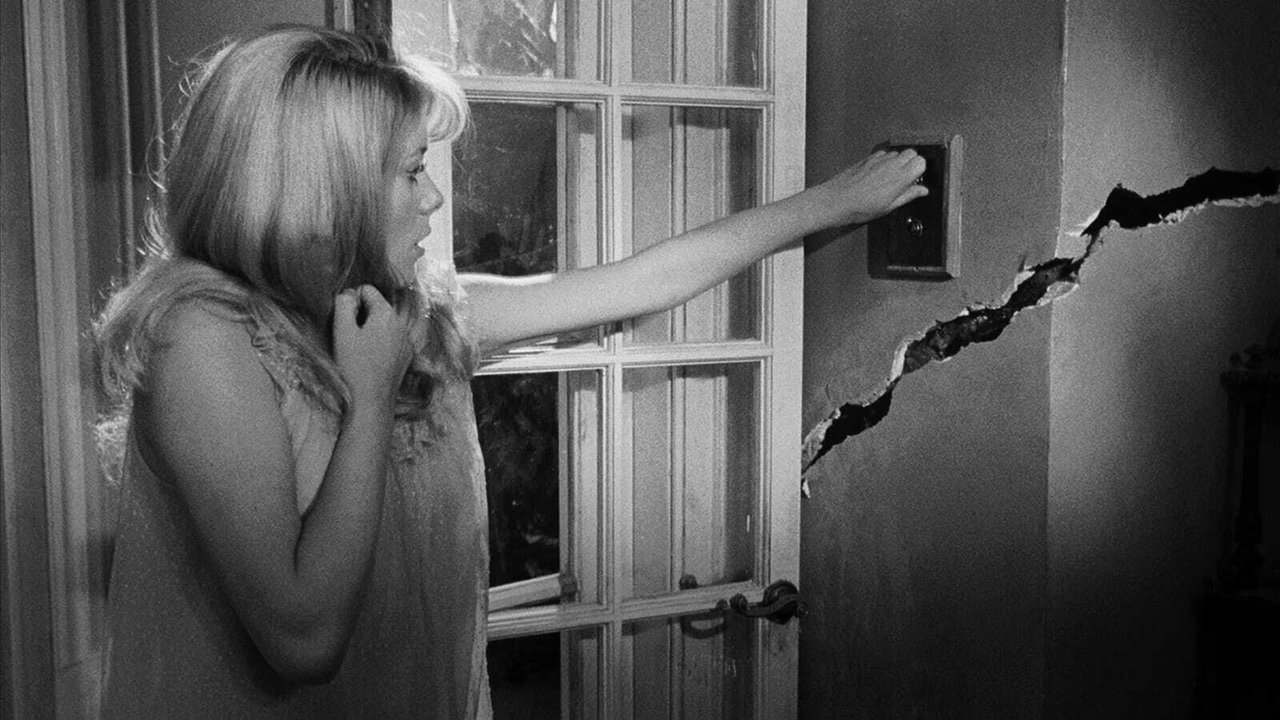
Polanski uses a lot of symbolism to capture all of this, using the apartment as Carol’s mind and as the stage for all of the horrors that she lives through. I do get the need for the slow-burn aspect in this movie, but a part of me (although I liked the movie) wishes it did more. I understand this is the 60s and it was very limited back then, but there were times where this just felt tedious and dragged a little way too much. The symbolism, like the rotting carcass being an image of Carol’s own deteriorating self—showing the neglect that is mostly unnoticed until the "smell" becomes unbearable. The cracks that spread across the wall symbolizing the fracturing of her inner world, for example, could have started earlier, since the film very clearly points that whatever happened to her happened early in her childhood. The photograph of Carol’s family, showing Carol as a child, and in the ending shot it becomes clear that whoever abused her is the person she is looking at. Maybe a family member? Maybe her dad? It doesn’t matter. What matters is that the signs have always been there, that look that she has in the photo of pure repulsion (see what I did there😁) have always been ignored. It was never explicitly stated, but it’s very heavily implied it started there, and the photograph becomes a kind of photographic proof and reminder that the Carol we see is not going mad, she is just scarred, and the scar just kept growing longer and longer because no one ever tried to help her.
No one ever tried to repair the damage, or at least notice it. Doors don’t stay shut, intruders appear inside her, and hands reach out from the walls. She had her boundaries constantly violated, but again, no one saw it. I loved what Polanski did here, but again, the pacing isn’t the best, and the ideas—although for the time were good—just feel a little bit over-expositional now. I still loved the critique, but the movie just felt kinda bland, and I’m not really sure what I think about the ending. It’s obviously the closing scene of Polanski’s social critique: Carol is found between all of the murders she did, and people around her, neighbors and passersby, all gather not with compassion or concern but curiosity. The ending is filmed almost like a show, where Carol is no longer a person but a subject of conversation and gossip. And the ending closes everything up: how she’s always been looked at but never understood. She just becomes the girl who went mad. Her breakdown becomes a public spectacle, which this critique also applies nowadays, how everything is public and the media fail to understand the breakdowns of people and reduce it to shock factor titles and "funny" content to consume and gossip about.
Love the critique, love the themes, love the symbolism and the performances. DESPISE THE DIRECTOR, and how for me it felt so near complete, grandiose perfection, a life-changing movie that would have made it to my top 10, but it’s lacking something I can’t even name. Maybe on a rewatch I will like it more.