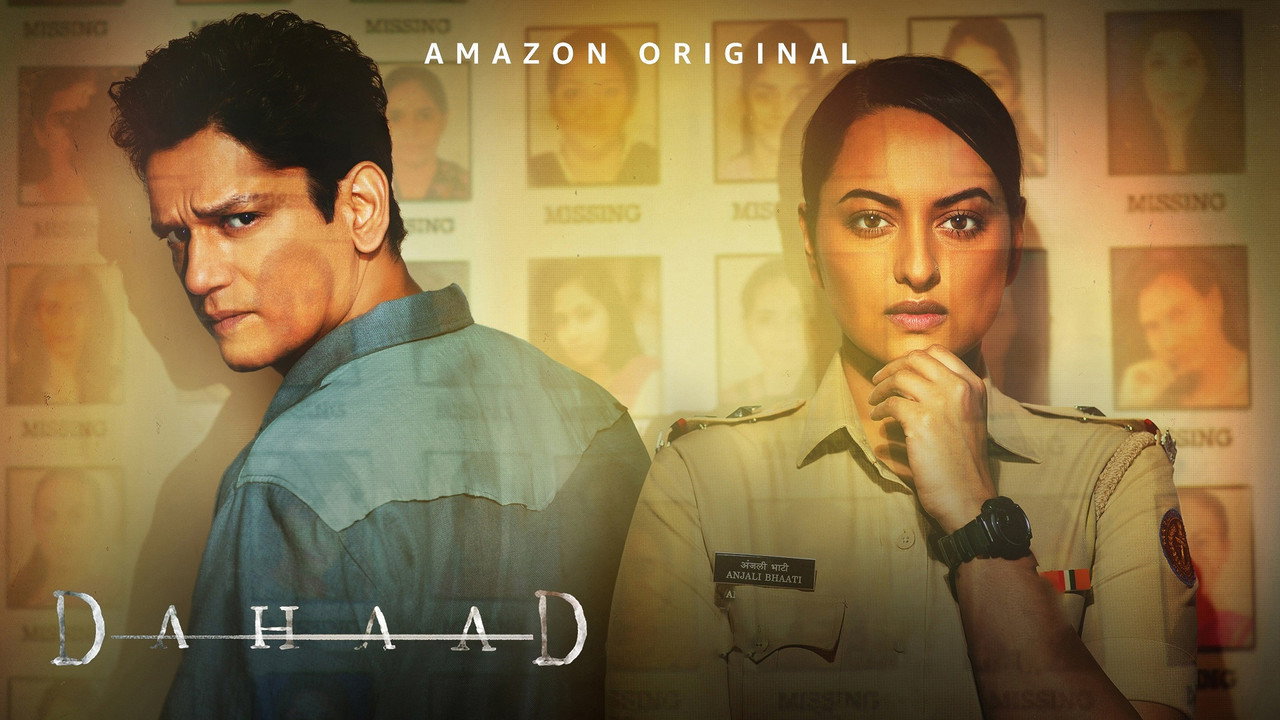
This was pretty interesting, I have to say. More interesting, though, than 'classically' good. There might be a number of reasons for this and, I'll be the first to admit, top of the list is my comparative lack of knowledge about both India (it's geography, politics, and history) and it's cinematic legacy. There is a lot of stuff going on in 'Dahaad' that, while I can tell there's *something* there, just didn't fully register due to my own ignorance. To be clear, I don't think that it is incumbent on a work of art (of any kind) to explain itself fully to me -- I can (and did) look up a whole bunch of things while watching this -- but some elements that may be taken for granted by an Indian audience (such as, not the broad strokes, but the nuances of caste discrimination) just kinda sailed by me, even if I could, however vaguely, recognize their presence. That said, it'd be unfair of me to downgrade it just for that.
The film (well, it's really a miniseries, I guess) follows an investigation (based on a real case) into a woman's death, which appears to be suicide, before expanding into a series of dozens of apparent suicides, which we, that audience know are actually murders. Things get progressively more intriguing when the police realize this as now, they are essentially investigating a series of 'locked room' murders. Meanwhile, much as in Western police procedurals, we learn about the personal lives of the cops both at the station and in their home lives, as well as following the murderer (a term which turns out to be a bit more complicated than you might think) in his various personal and professional settings. Most of this is pretty compelling, though some of the side plots about home life end up forgotten or abandoned, which is kind of odd considering how large a canvas (seven plus hours!) the filmmakers are working with.
The biggest problem for me (beyond the limited cultural knowledge) was that the acting seemed to be all over the place. The work of some actors, whose overly broad or brash characterizations appear to have be drafted in from amateur theatre productions, clashing badly with the more nuanced performances of others; particularly good in this respect is Gulshan Devaiah's remarkably controlled police chief. Show star Sonakshi Sinha is a bit more wobbly though (and I really want to emphasize this) through no particular fault of her own -- her character is just saddled with some absolute clunkers of dialogue that I don't think anyone could sell. As a performer, she's brings a great physicality which mirrors her character's development, it's just that she's just hamstrung every other scene having to deliver either a Ms Exposition-style speech or some kind of underprepared response to the constant sexism she faces (it's not that she faces it, or that it exists, rather that the *script* doesn't seem to really have anything to say about it beyond its existence).
I looked at some other reviews of this and a common complaint people seem to have is that they feel the ending (the last episode, in particular) was rushed. I'm not sure that this is a fair comment, though. Imagine doing a jigsaw puzzle (which the police are kind of doing here); as you get closer and closer to finishing, you will naturally speed up as there are fewer and fewer pieces left to place; this is clearly the case with this story. A better point might be that the earlier episodes had too many diversions -- if, for example, the story isn't going to do more with its subplots, why introduce them in the first place?) -- which have a tendency to offset the balance.
All that said, I enjoyed watching it (and I learned some things I didn't know) and will particularly be interested in more of Devaiah's filmography.