A MONOLITH OF MODERNITY, BUILT TO CONTAIN US, ONLY TO BE RECLAIMED BY SPONTANEITY AND COLLAPSE.
modernity as chaos, life interfering with people, and people interfering with life a hundred delicate, almost invisible fractures creeping beneath the polished surface of sleek uniformity, exposing how the very systems engineered to streamline and uplift human existence often alienate, bewilder, and dehumanize instead. snd yet, within that intricate disarray, there’s a quiet, radiant undercurrent of grace: people stumbling yet persisting, colliding yet laughing, improvising and adapting without ever fully surrendering their clumsy, irreducible humanity. jacques tati orchestrates a sprawling cinematic organism where sound becomes kinetic rhythm, architecture becomes behavioral stage, and comedy seeps out of the fragile seams between order and entropy. it isn’t satire sharpened to injure, but a visual meditation, a gentle rebellion against sterility, a cinematic fugue that transforms mechanical routine into something strangely lyrical. it’s obsessively constructed yet dreamily fluid, a paradox of control and chaos, abstraction and intimacy, guiding the viewer not into narrative clarity but into a tactile, perceptual sensibility that understands how overwhelming, disjointed, and hypnotic the present can feel, and still dares to make it feel light, silly, and absolutely beautiful.
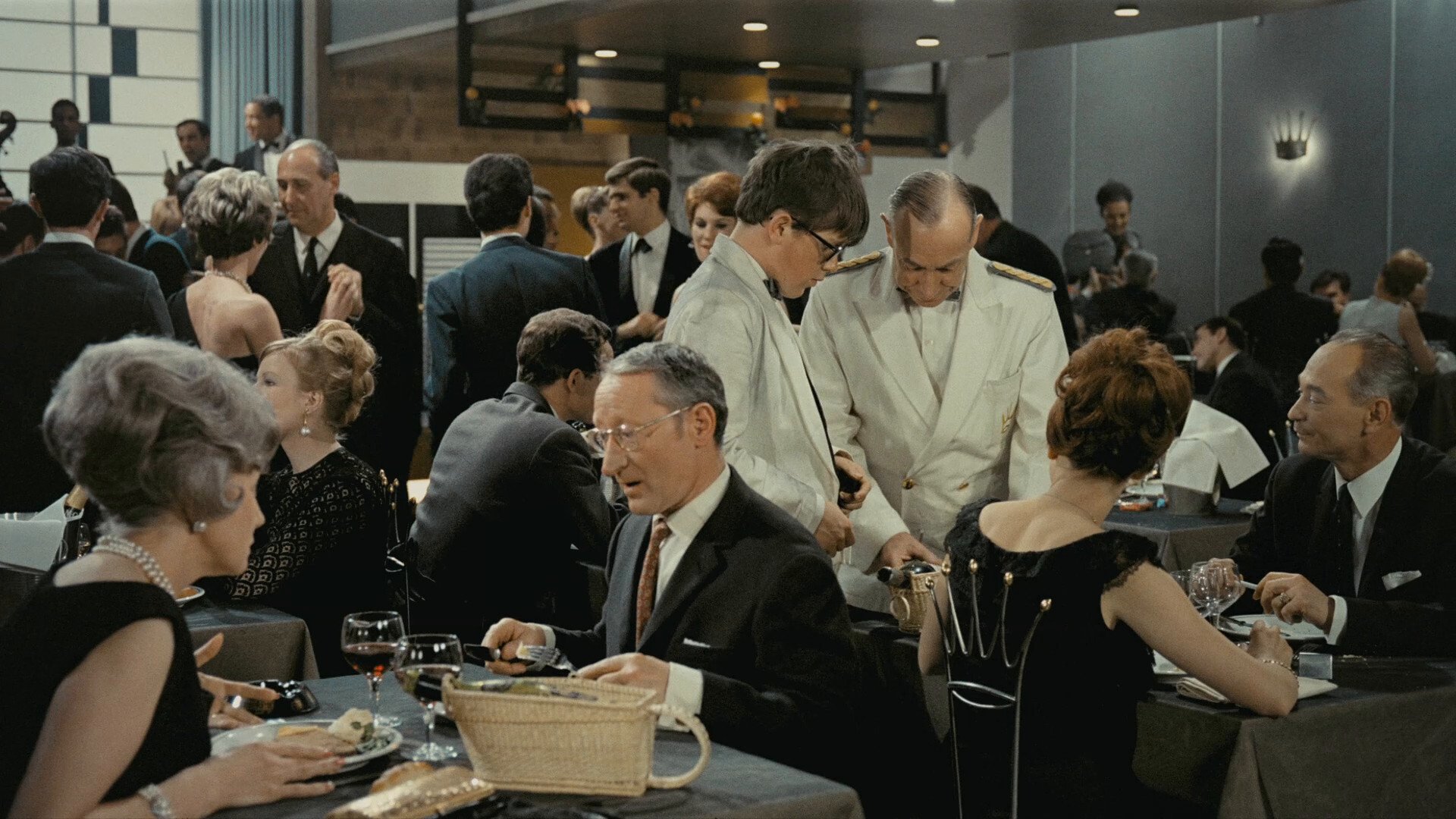
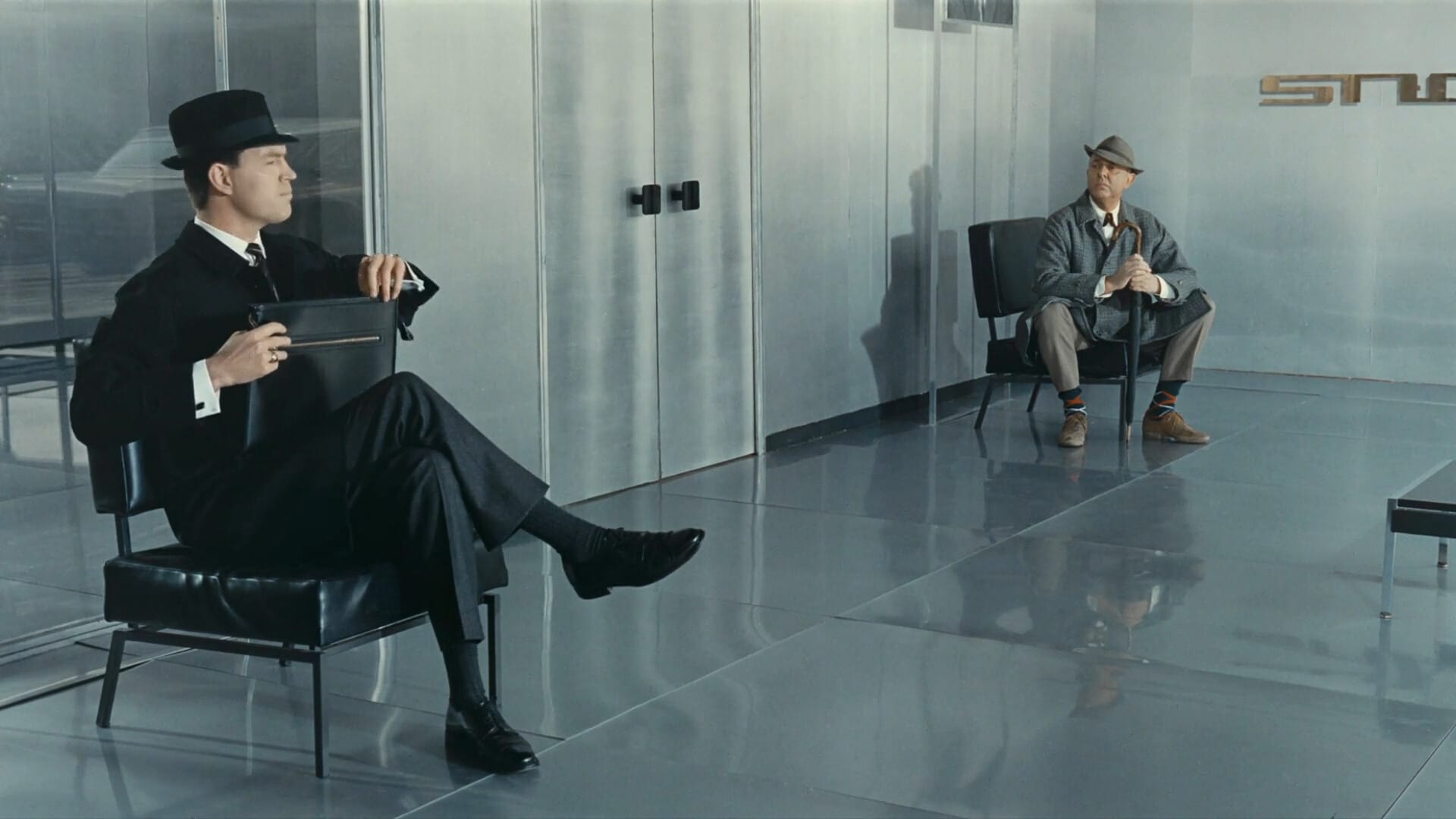
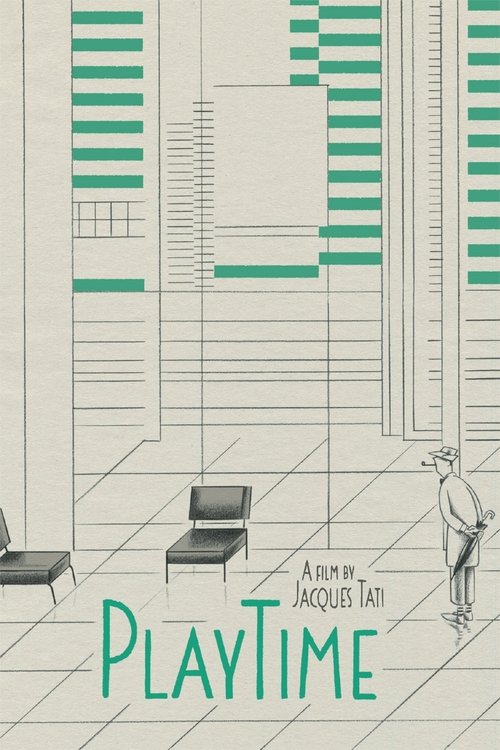
it might be impossible to say whether this film is the best-directed film ever made, but it’s equally impossible to deny how astonishingly few films orchestrate every facet of the cinematic language with such poetic precision and painterly control. visual composition is handled like fine architecture, not merely framing action but designing entire worlds with deliberate spatial logic and expressive restraint; blocking becomes balletic, a fluid geometry of movement through meticulously gridded environments; sound is sculpted with such nuance that a sliding door or the subtle shatter of glass feels as deliberate as dialogue. rhythm is not dictated by plot but by momentum which is casual, gliding, observational inviting the viewer into an urban ecosystem that breathes, glitches, and hums with absurdity. even the furniture tells its own story like cold, square, and unyielding, yet part of a larger visual joke about the impersonality of modern convenience. the entire film behaves like a synchronized machine, or better yet, a choreographed city where every cough, footstep, chair squeak, and flicker of reflection feels intentional, precise, and resonant. tati composes his scenes like a silent symphony, so delicately balanced between satire and celebration that it borders on spiritual. and when what’s on the surface is already this meticulously calibrated this hypnotically alive you sense instinctively that something deeper is always pulsing just beneath.
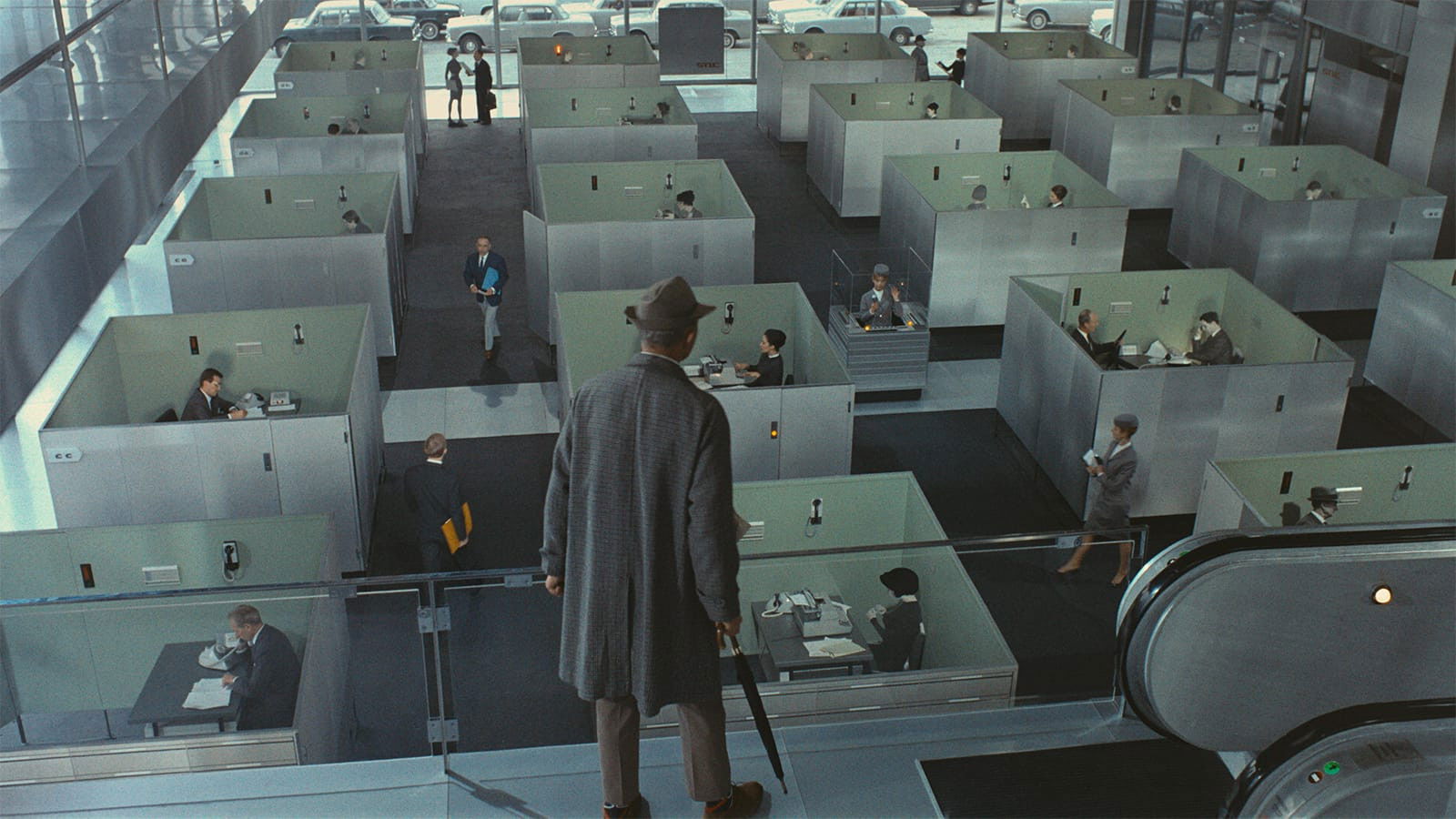
the film marks the third appearance of monsieur hulot, tati’s quietly clumsy and ever-gentle alter ego, a figure of subtle disruption whose presence feels more like a drifting question than a statement. but unlike his earlier outings
Mon Oncle’s playful critique of suburban domesticity or
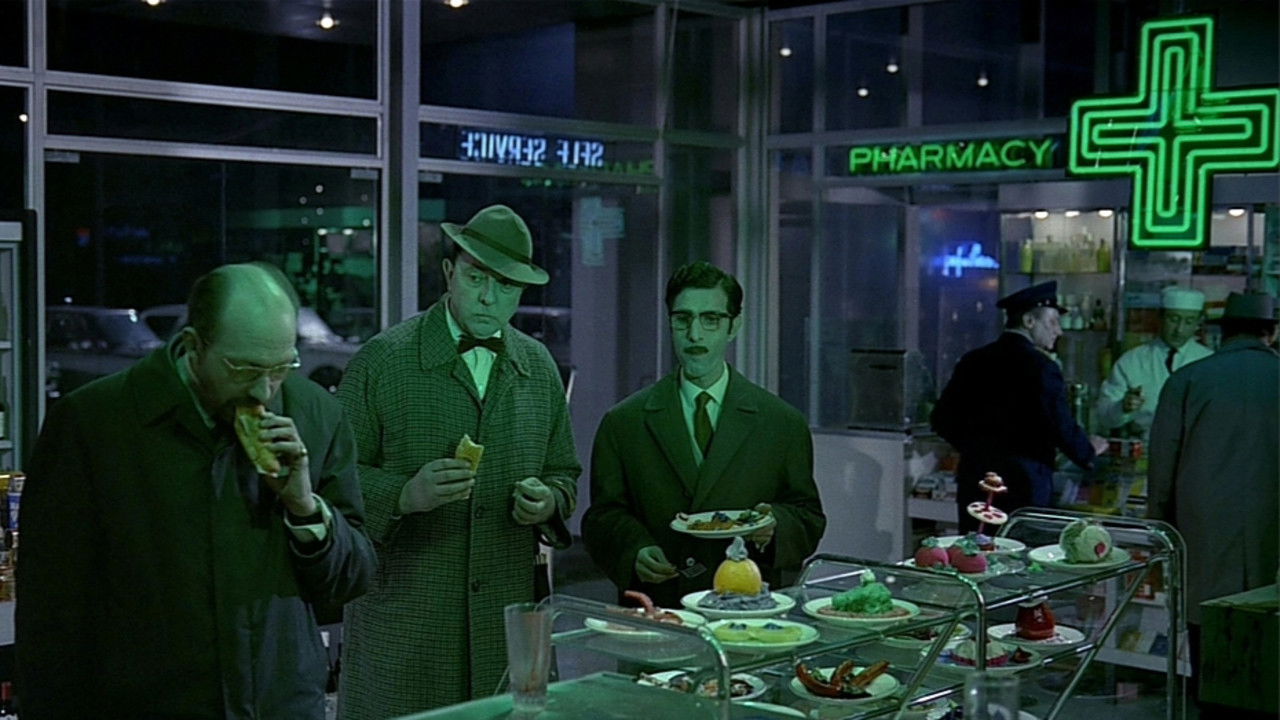
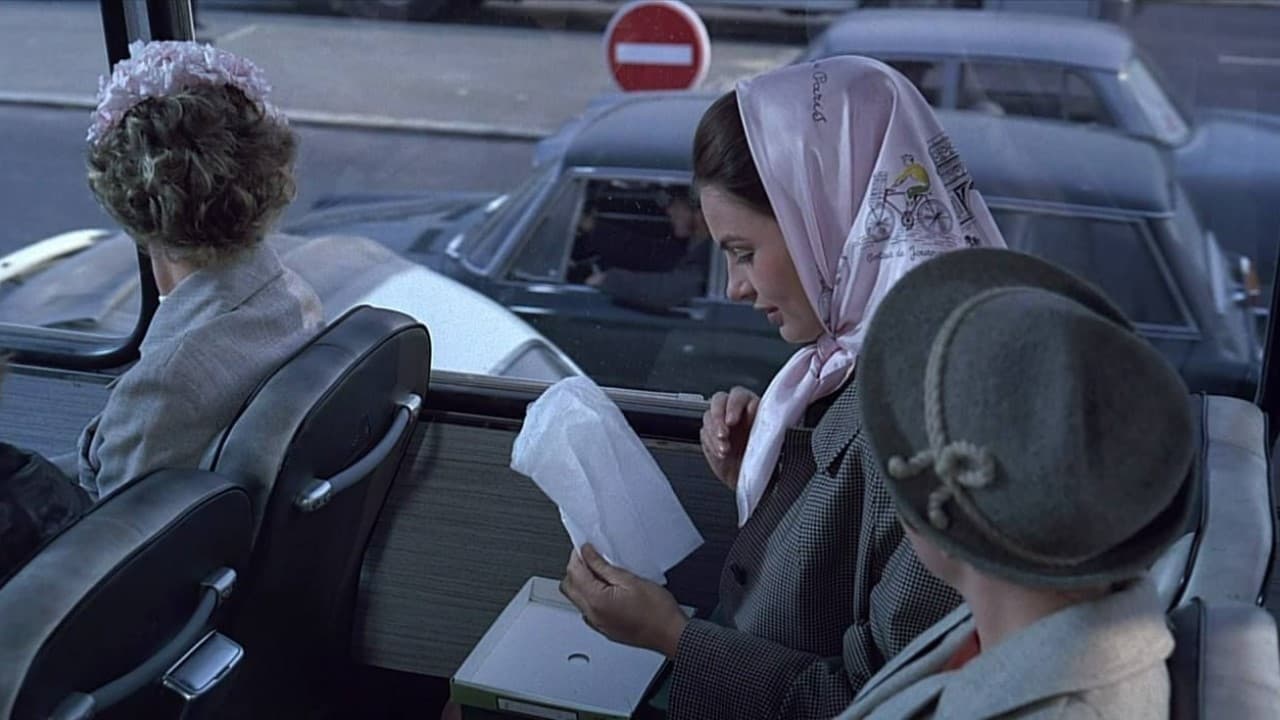
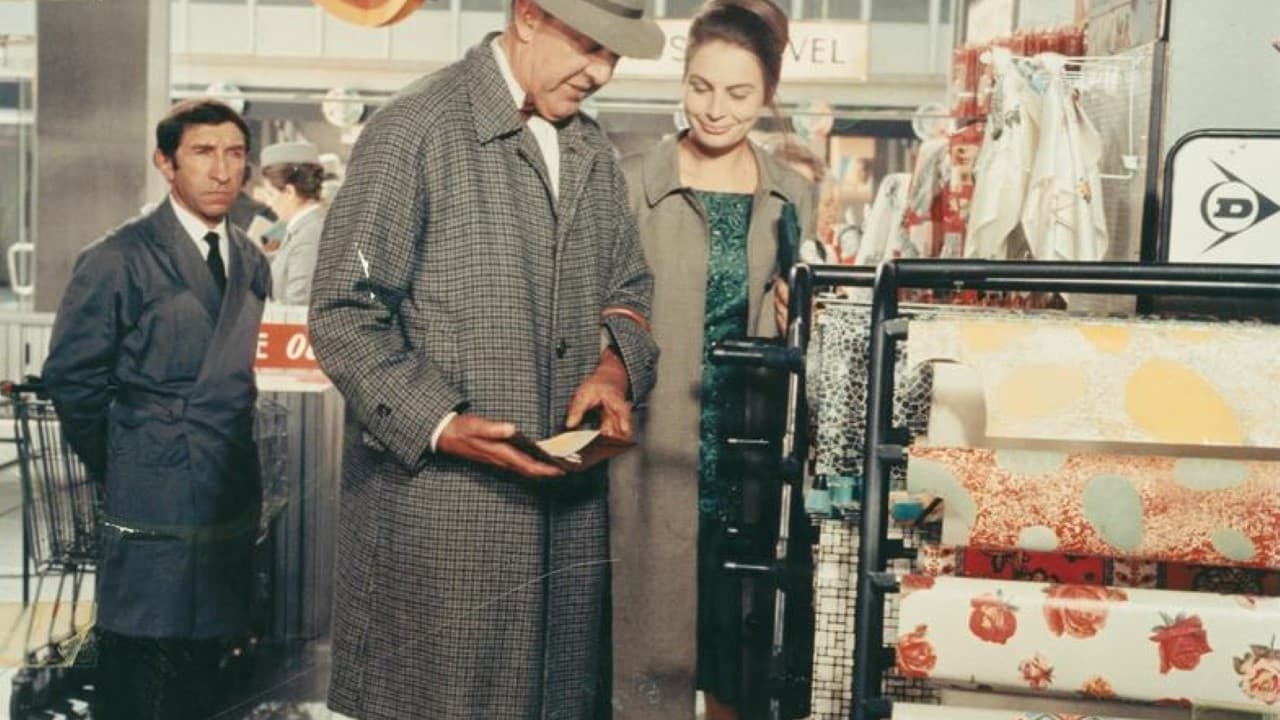
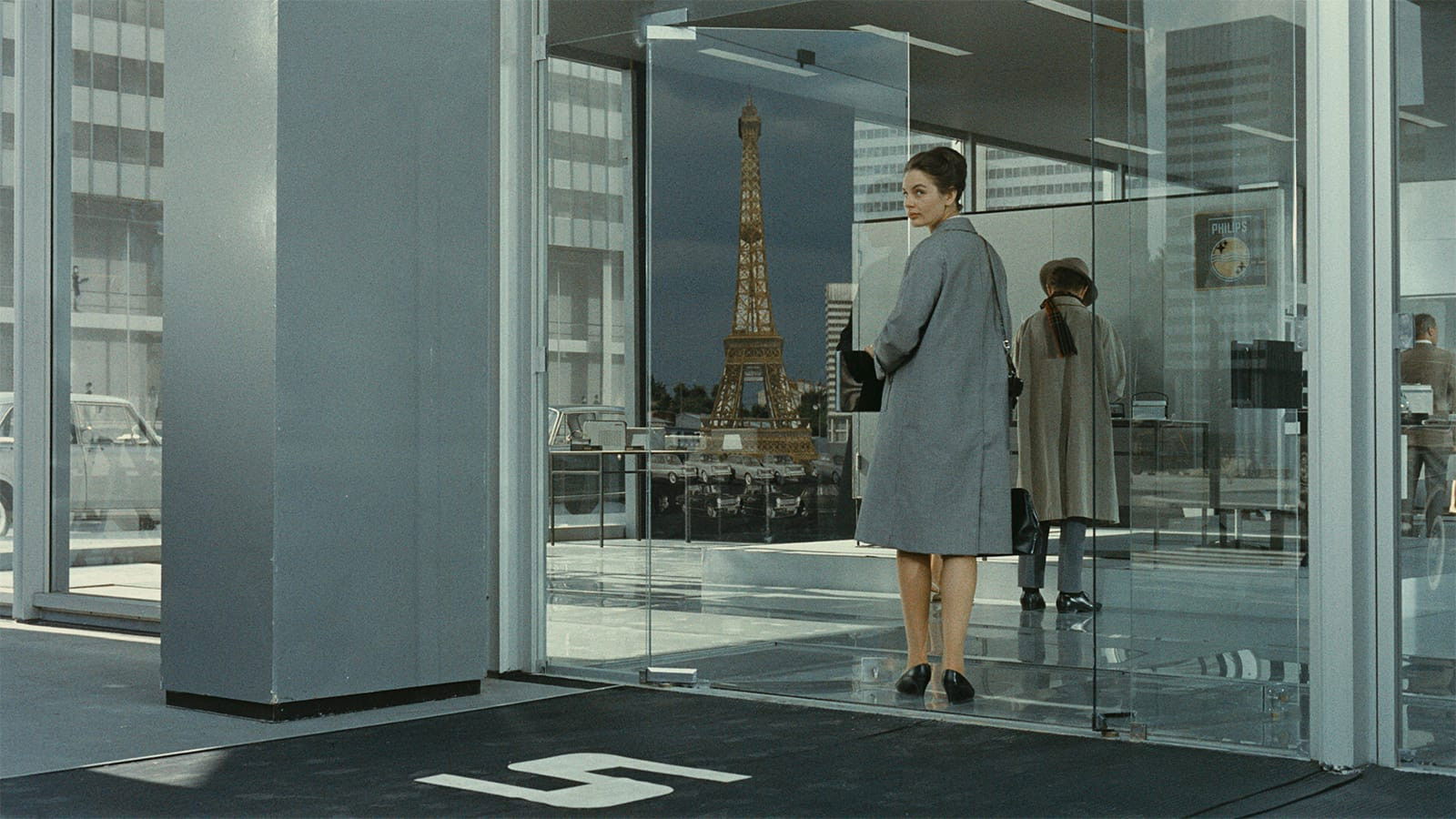
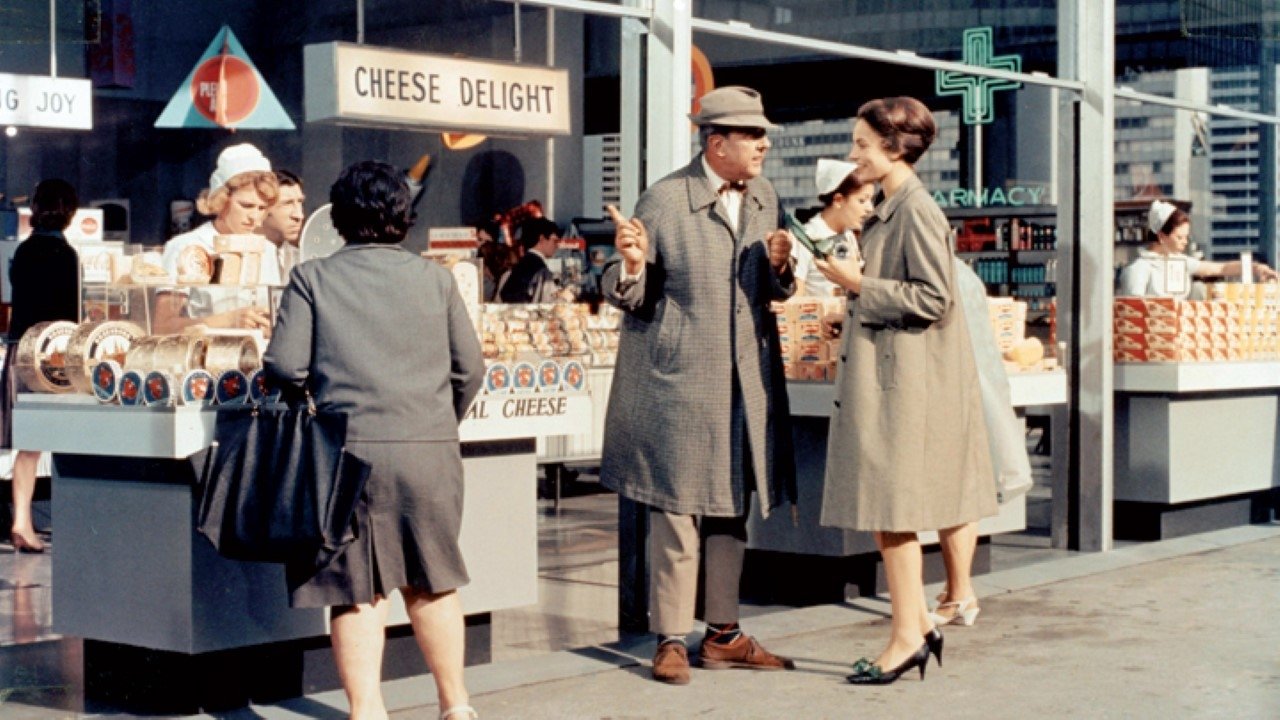
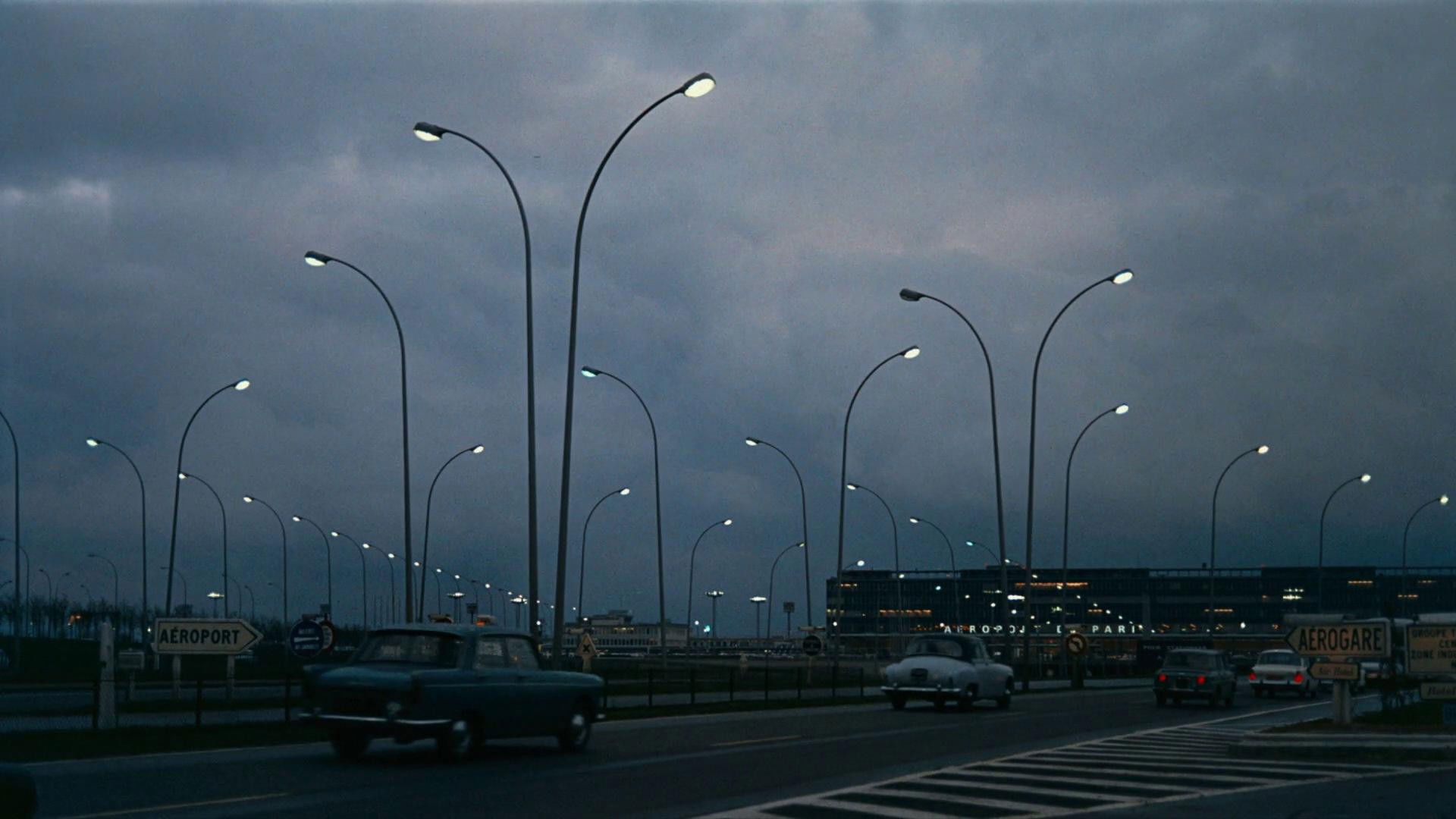
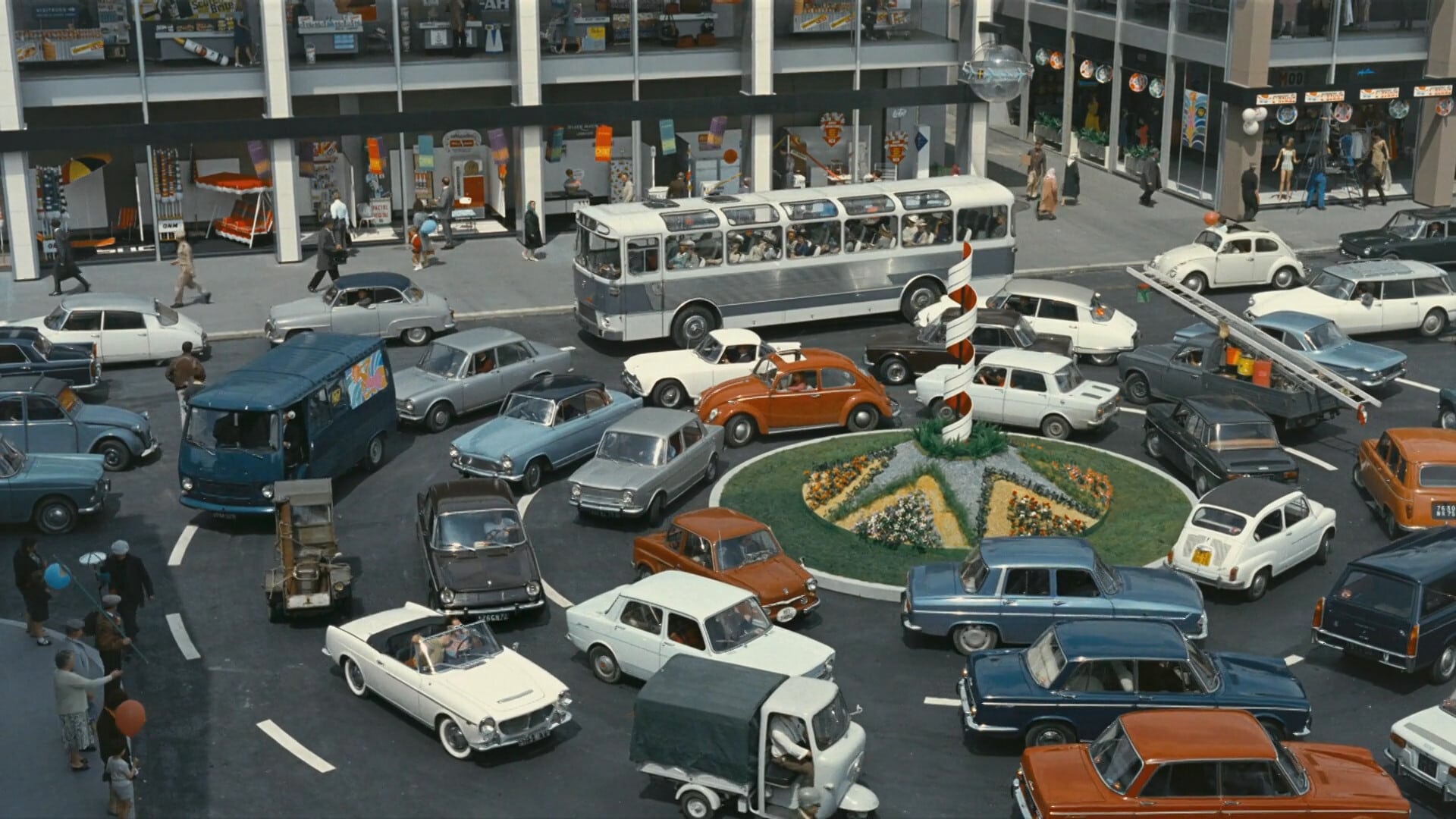
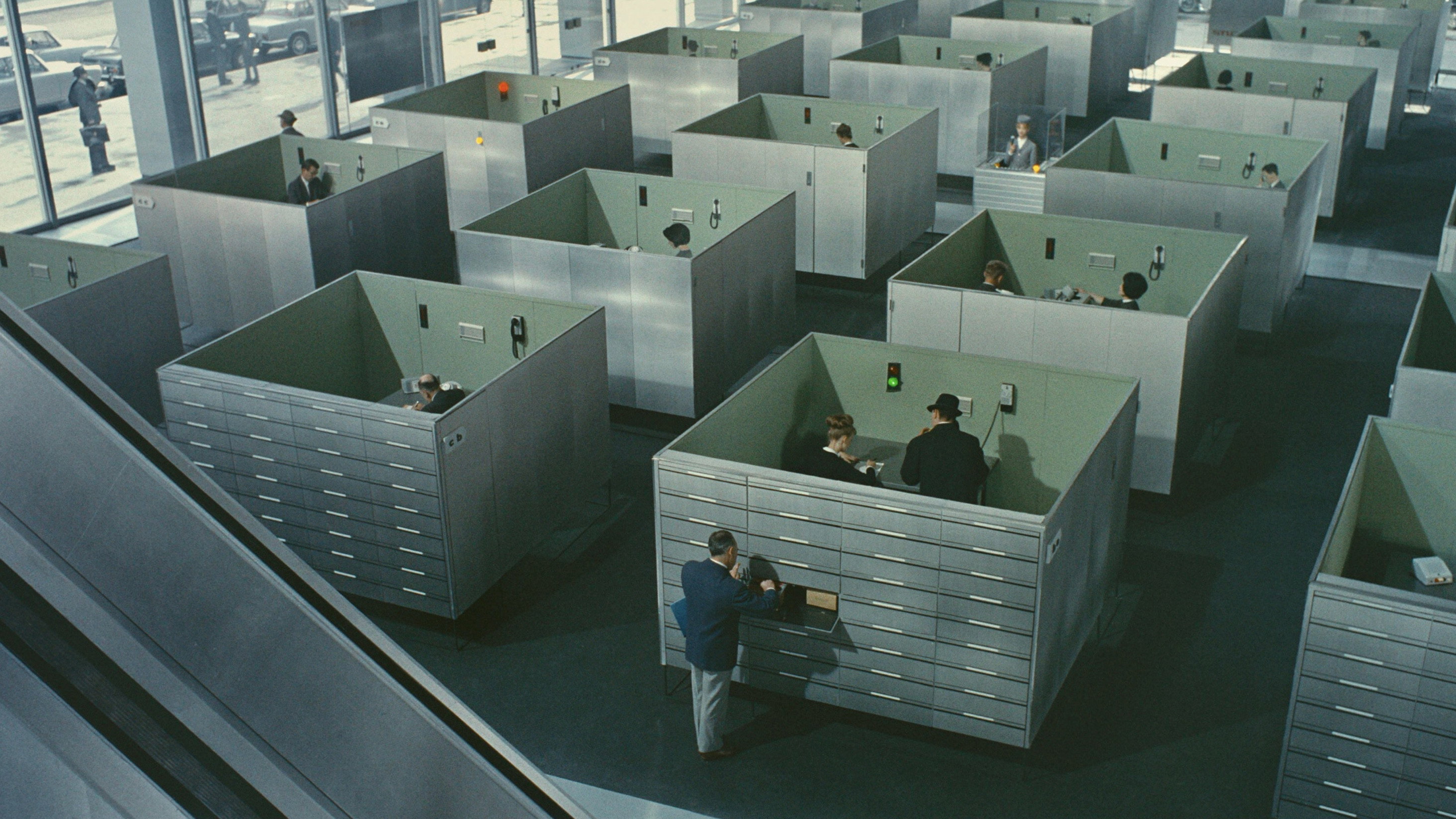
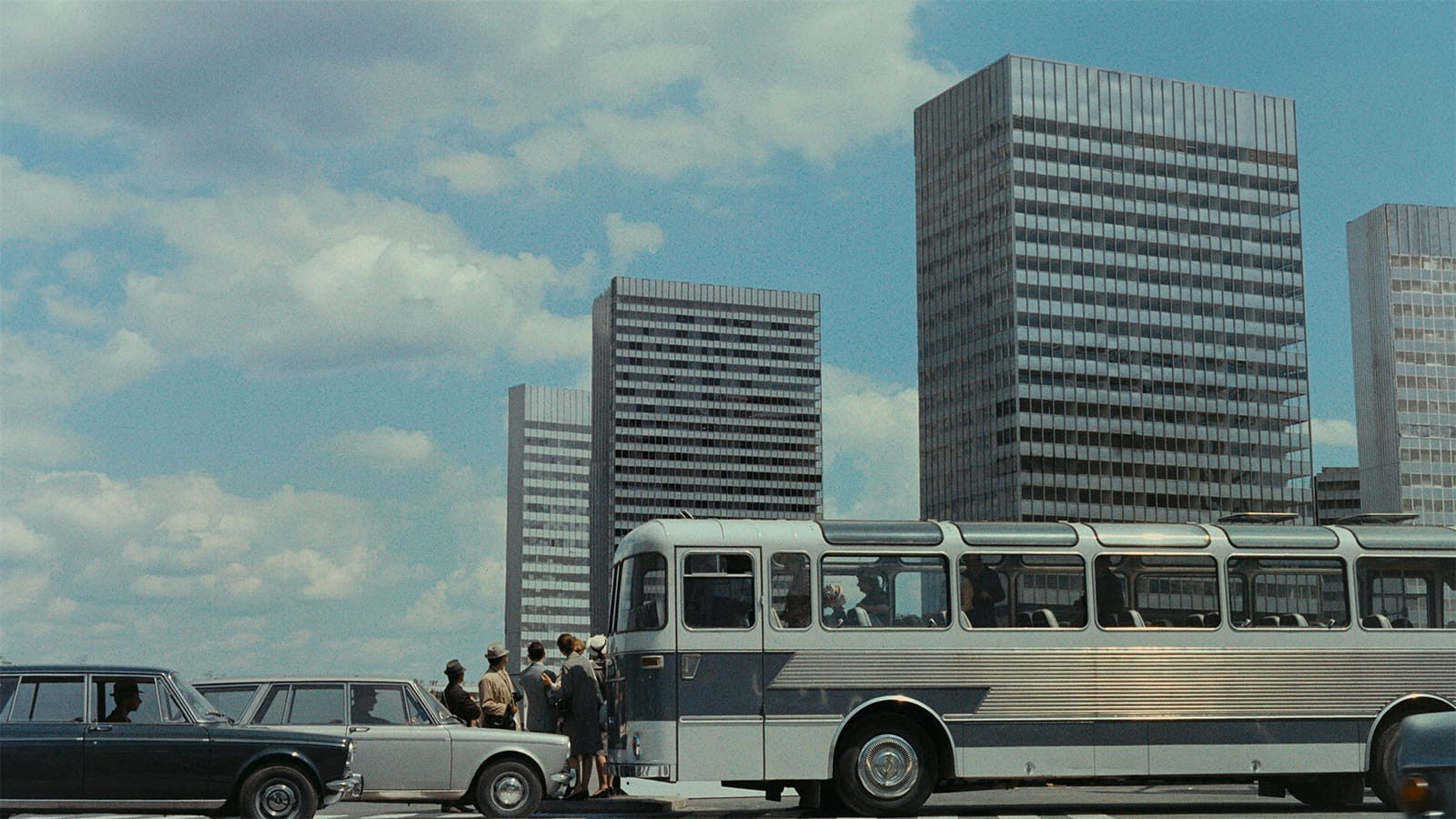
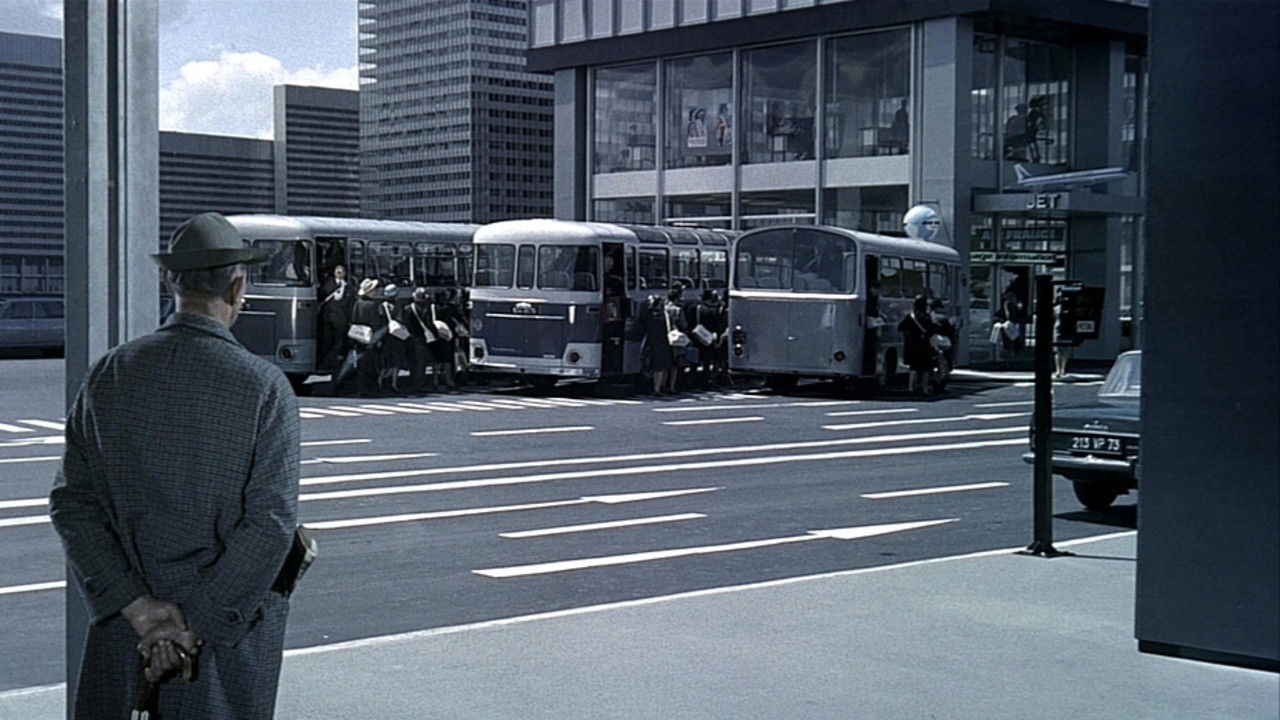
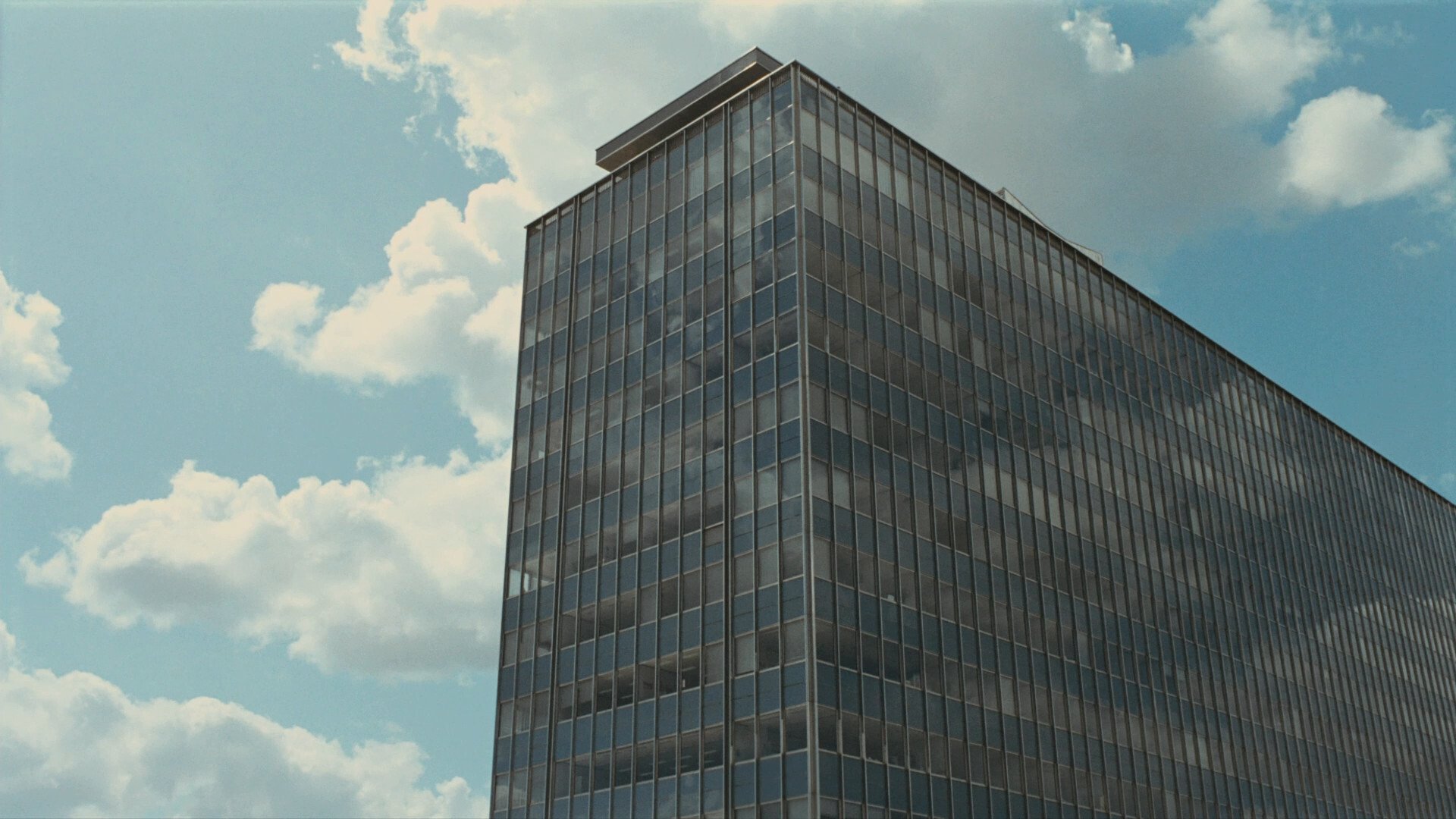
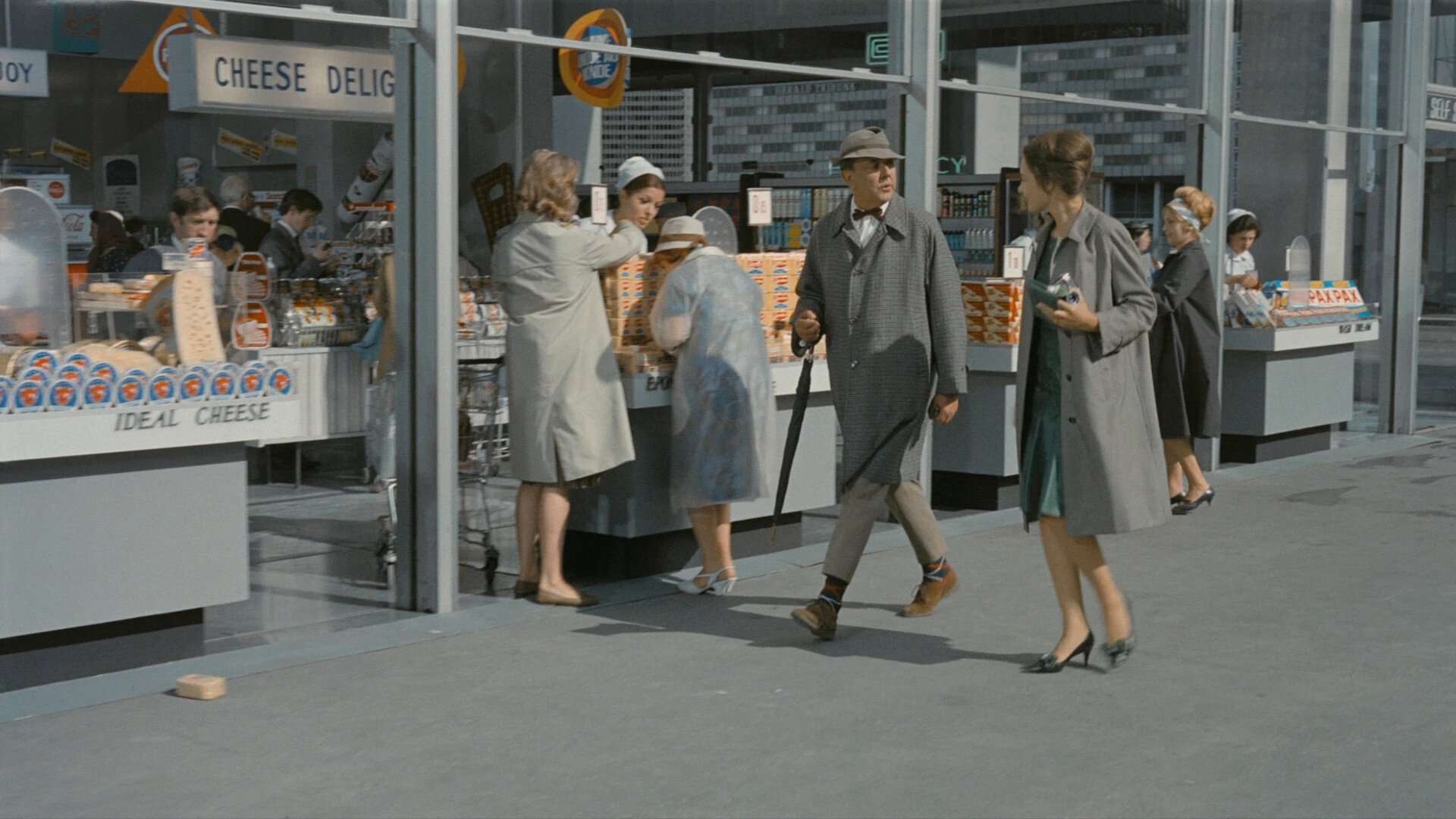
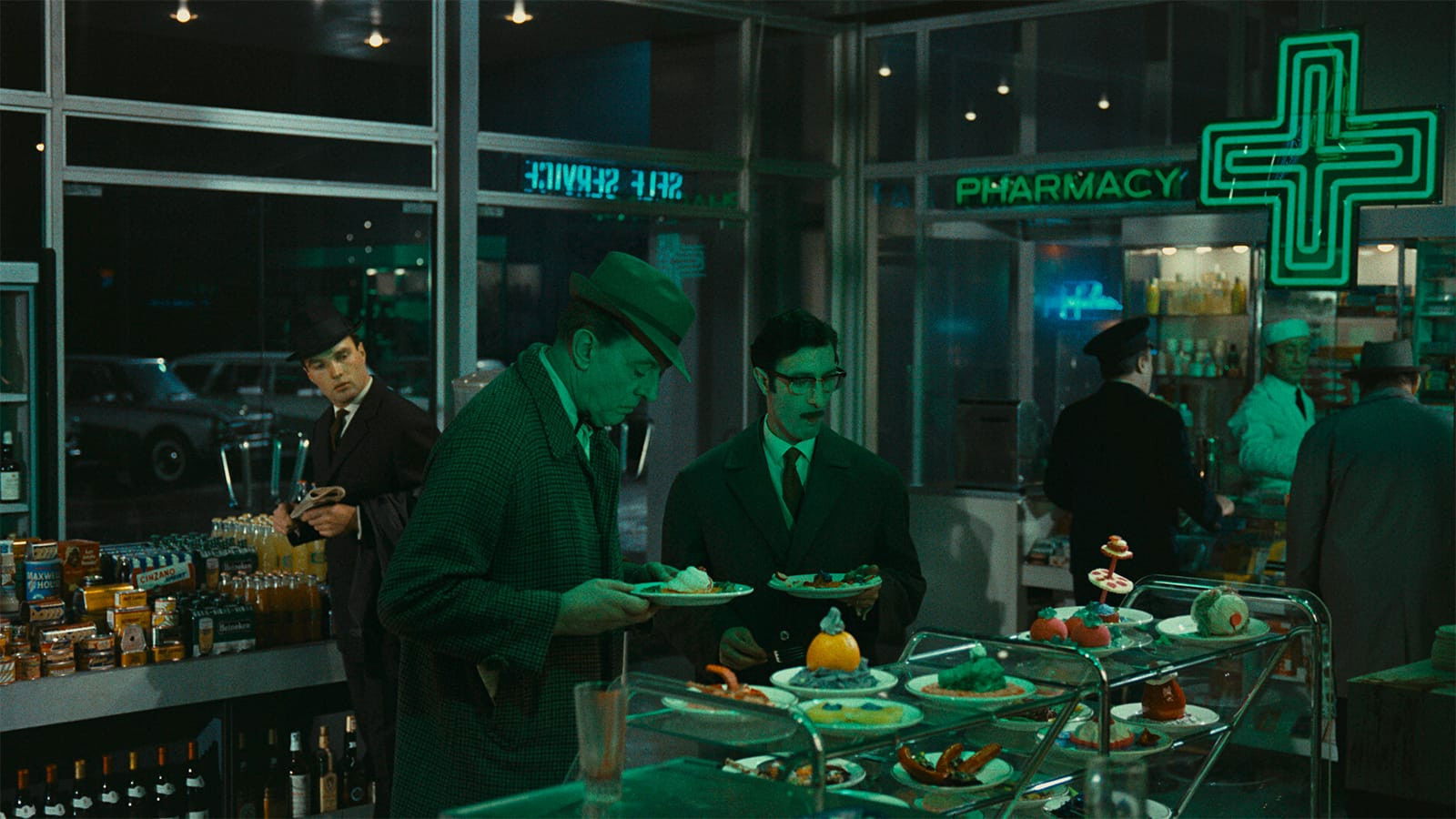
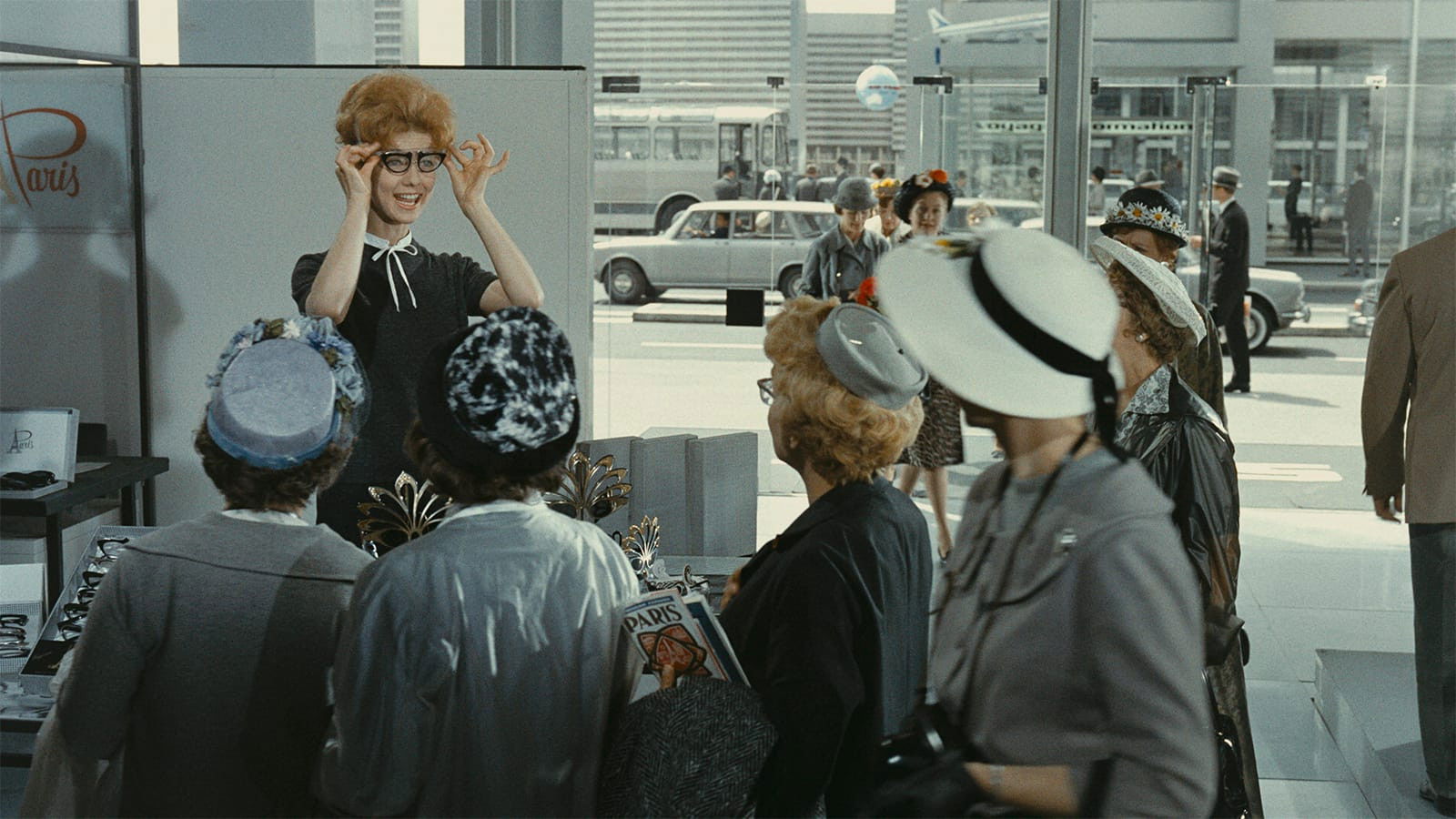
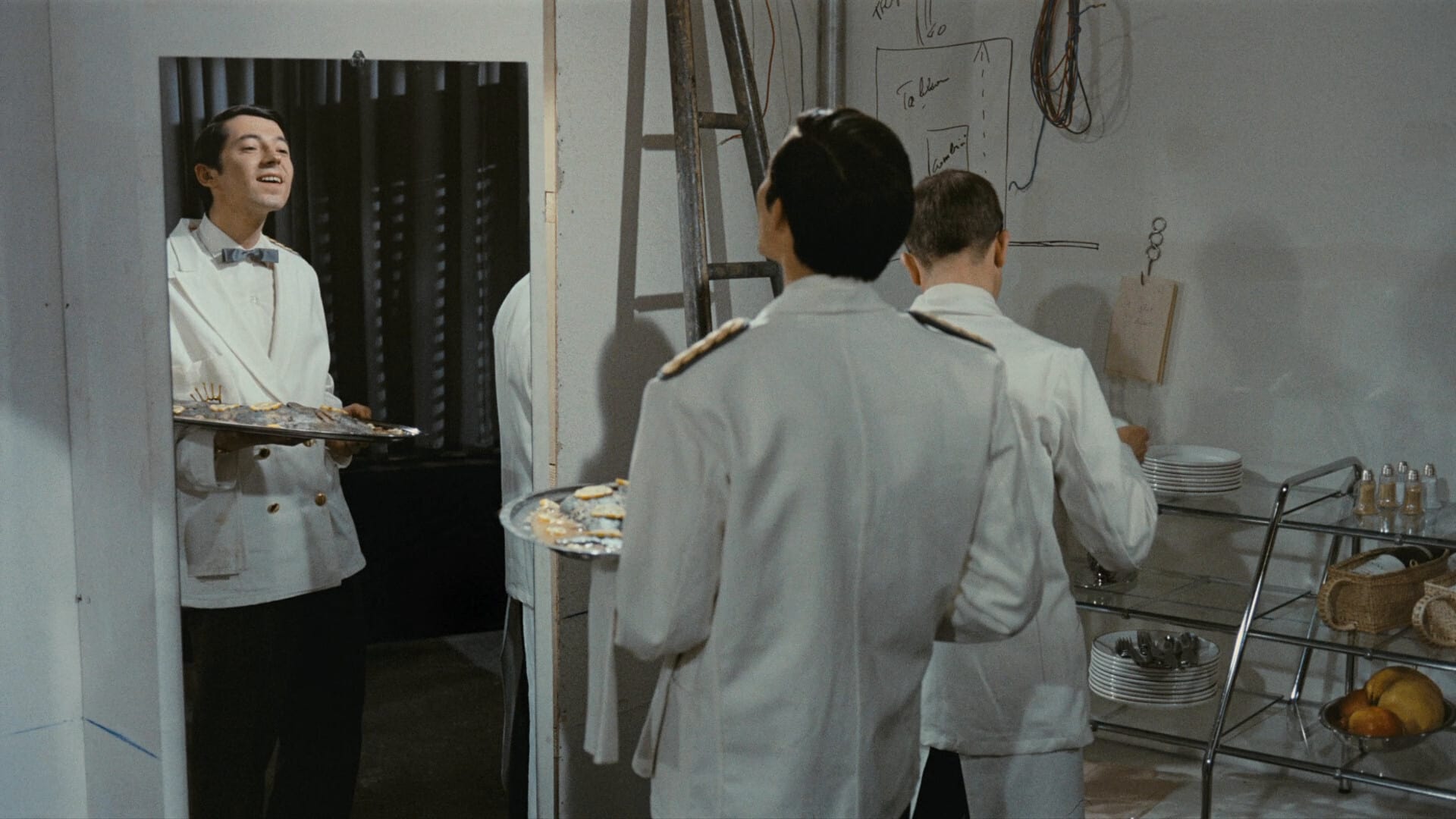
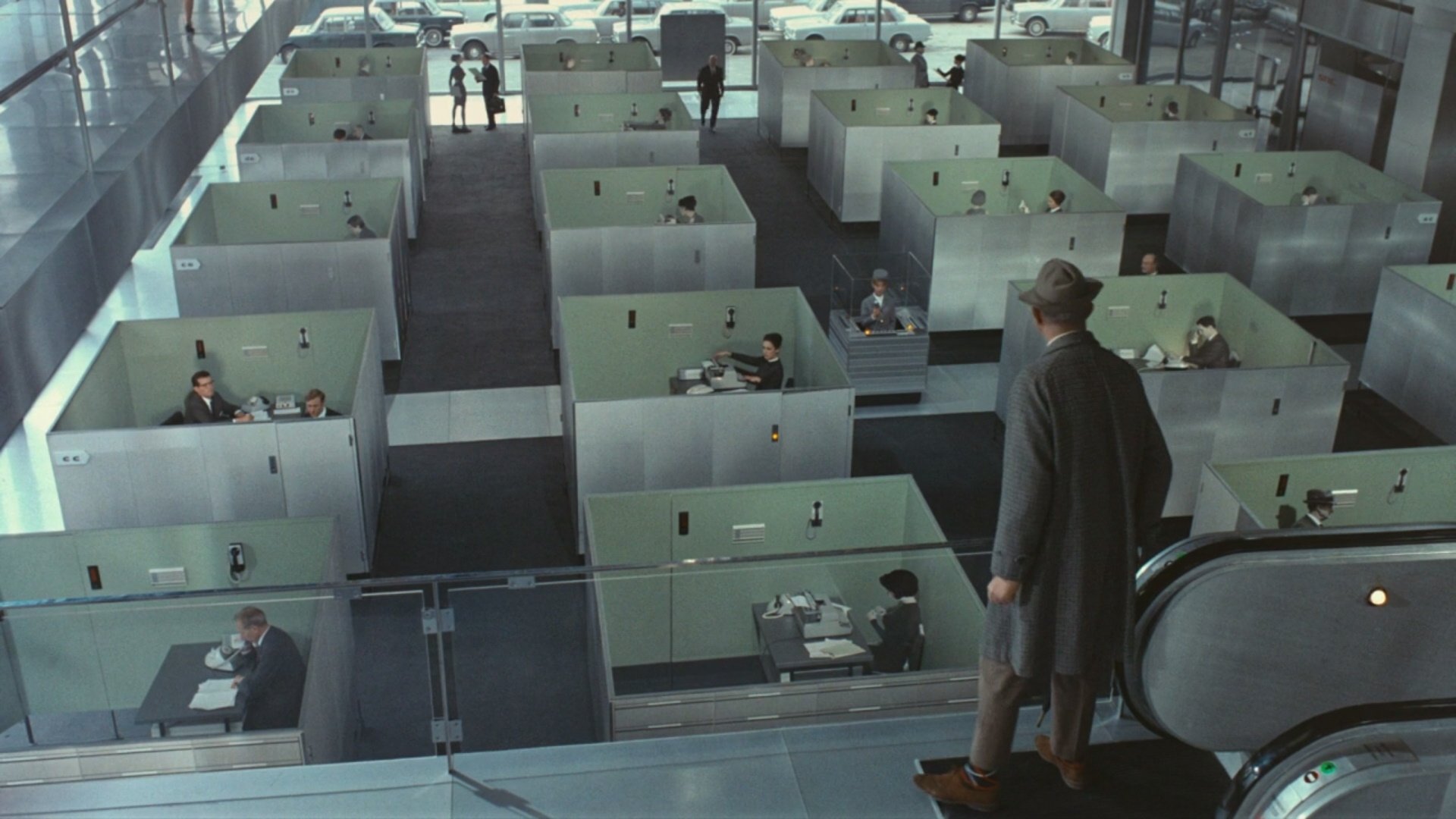
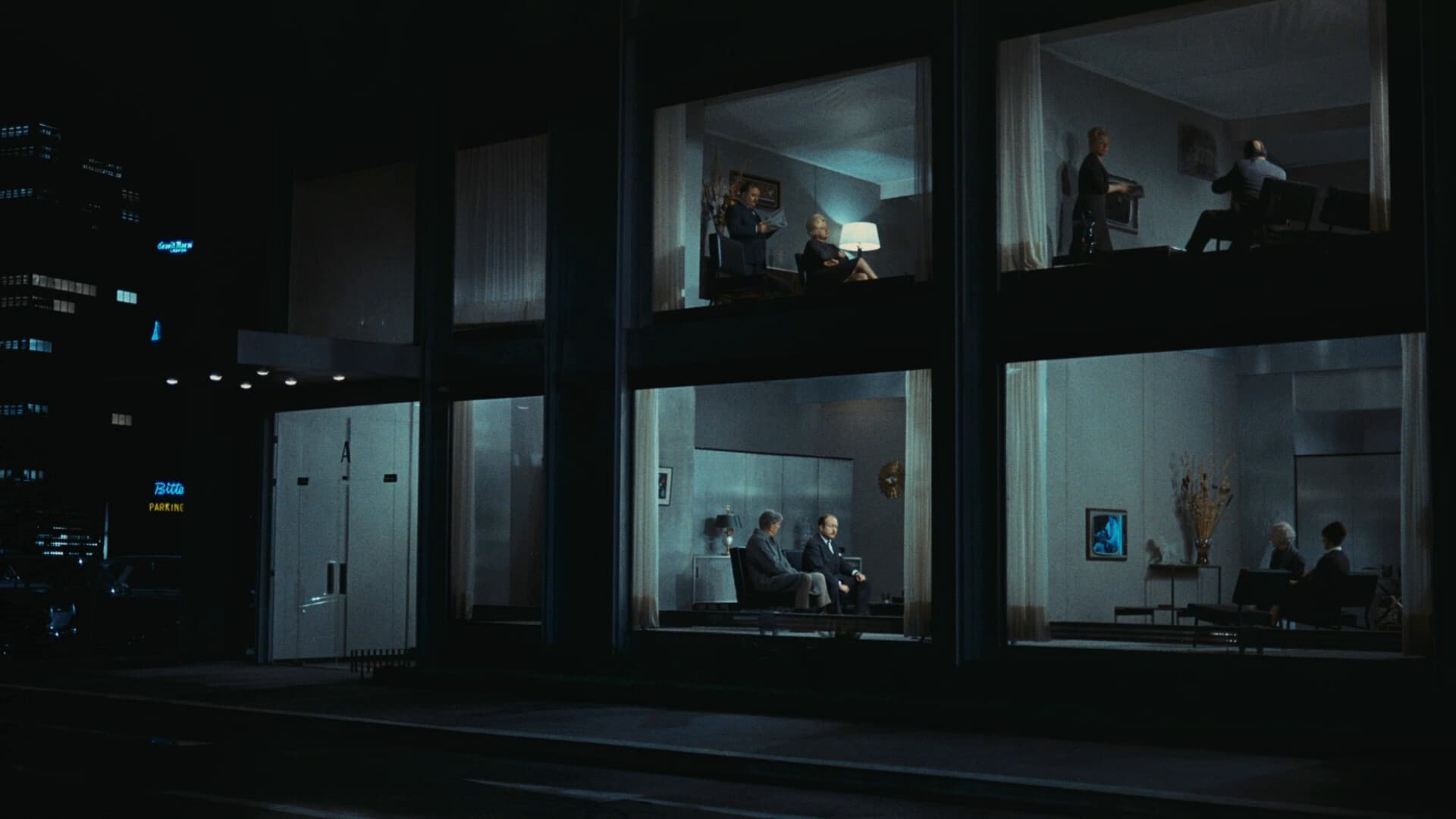
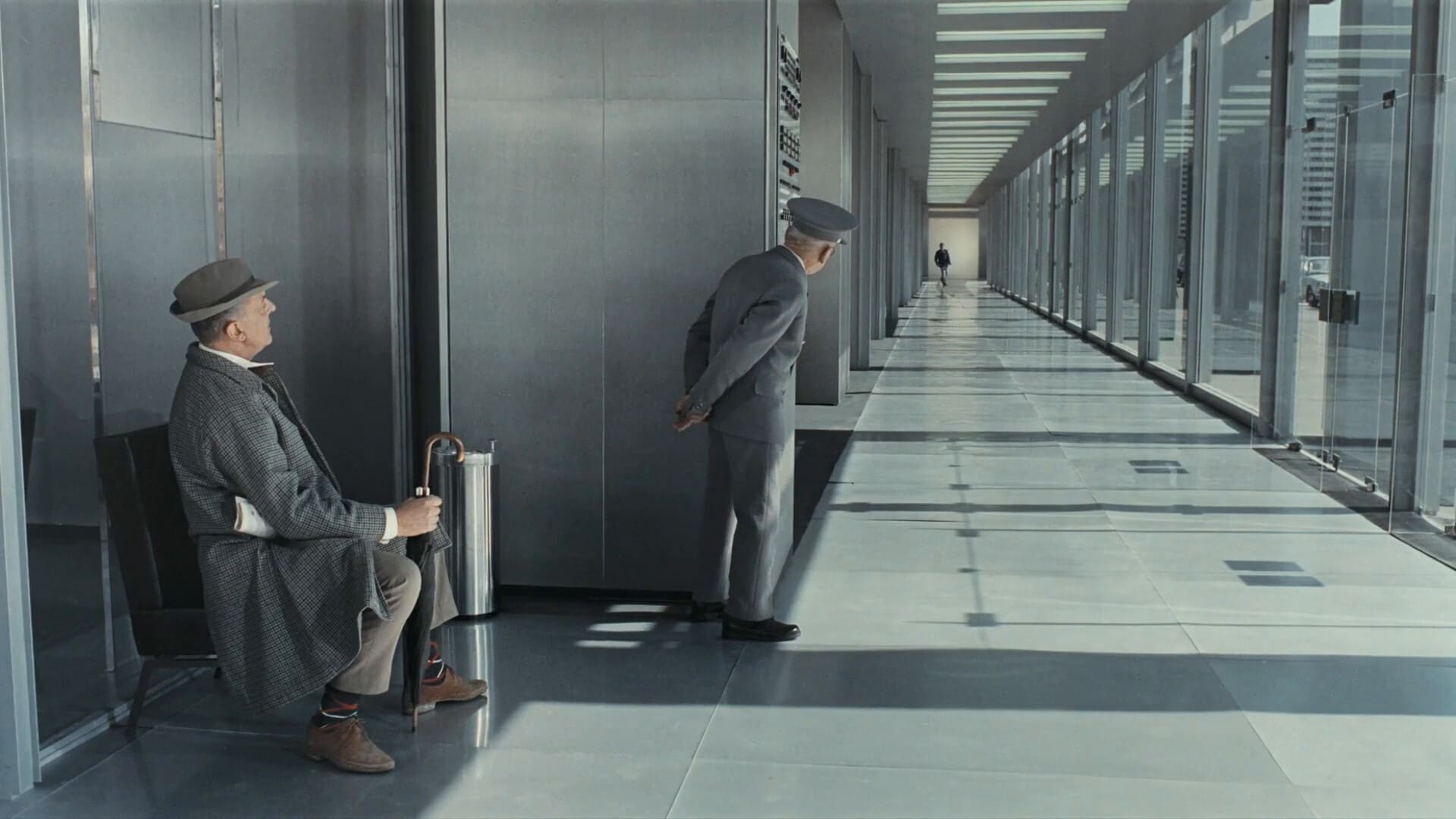
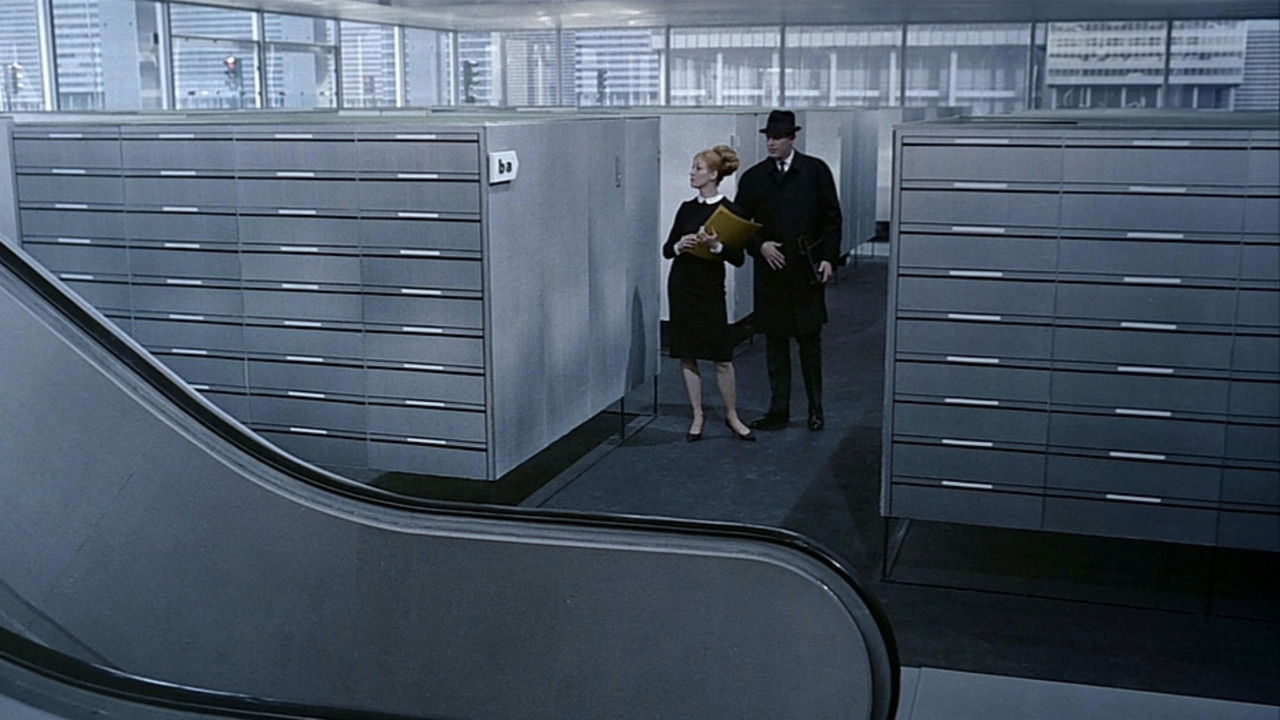
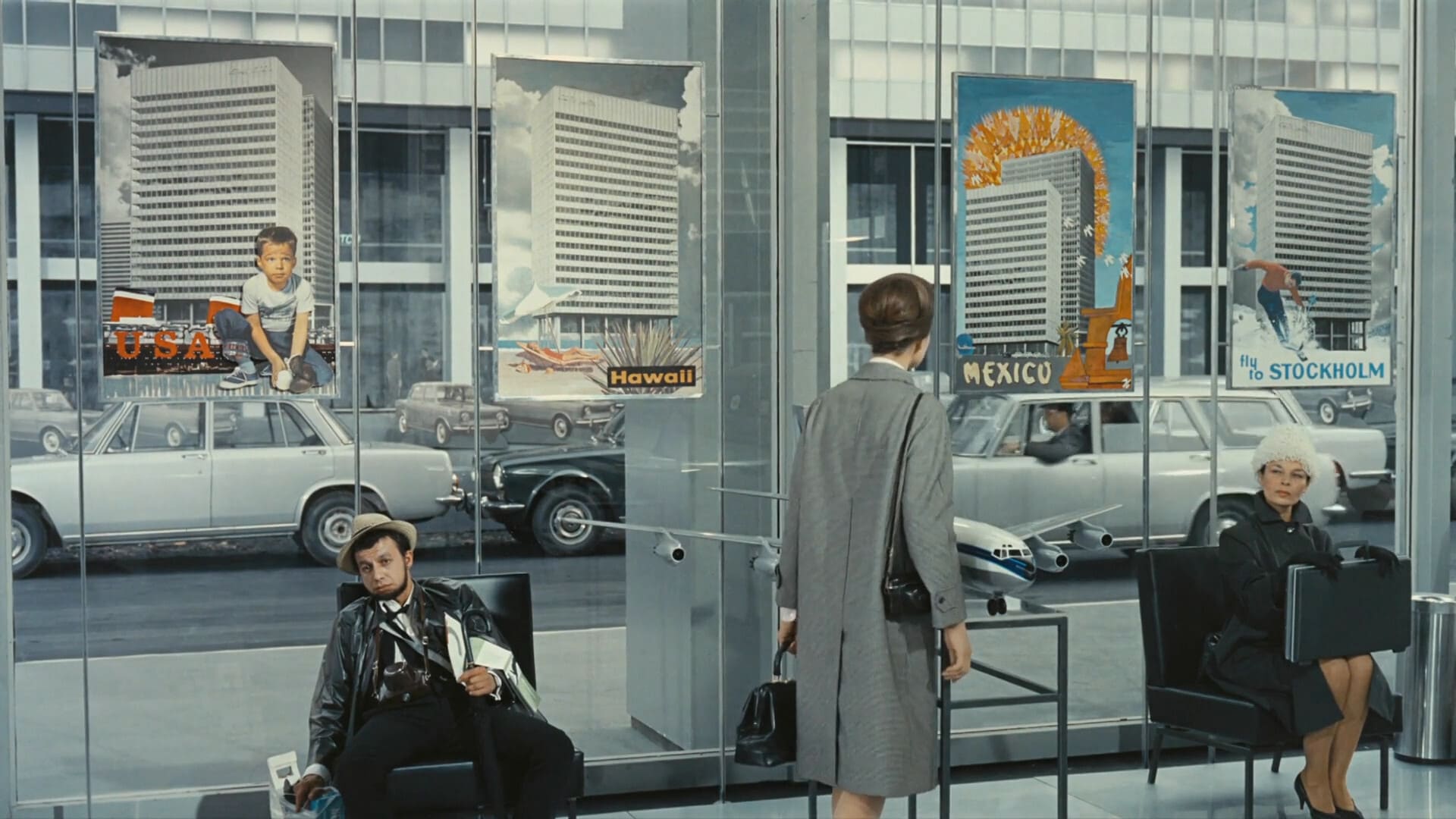
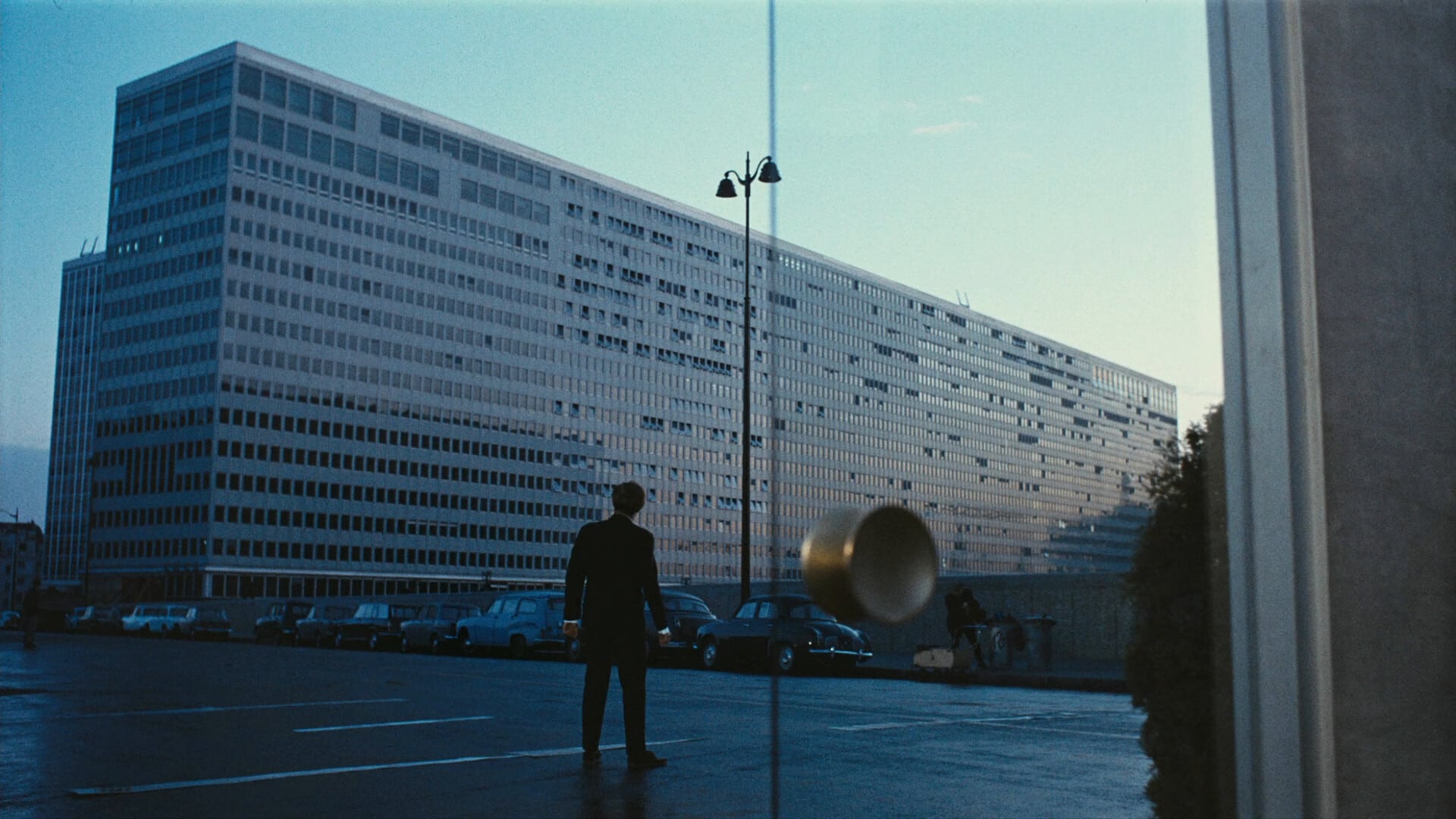
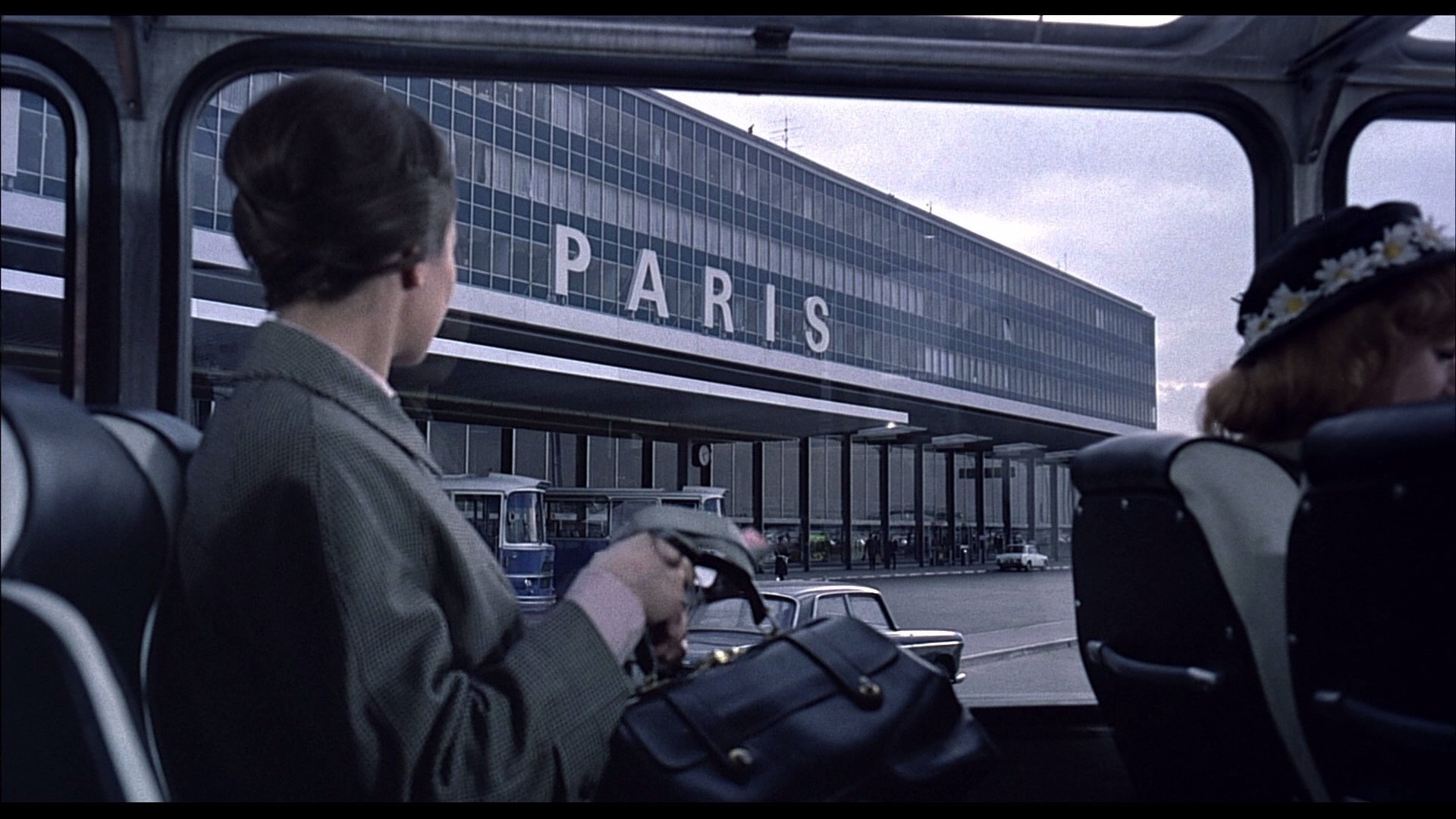
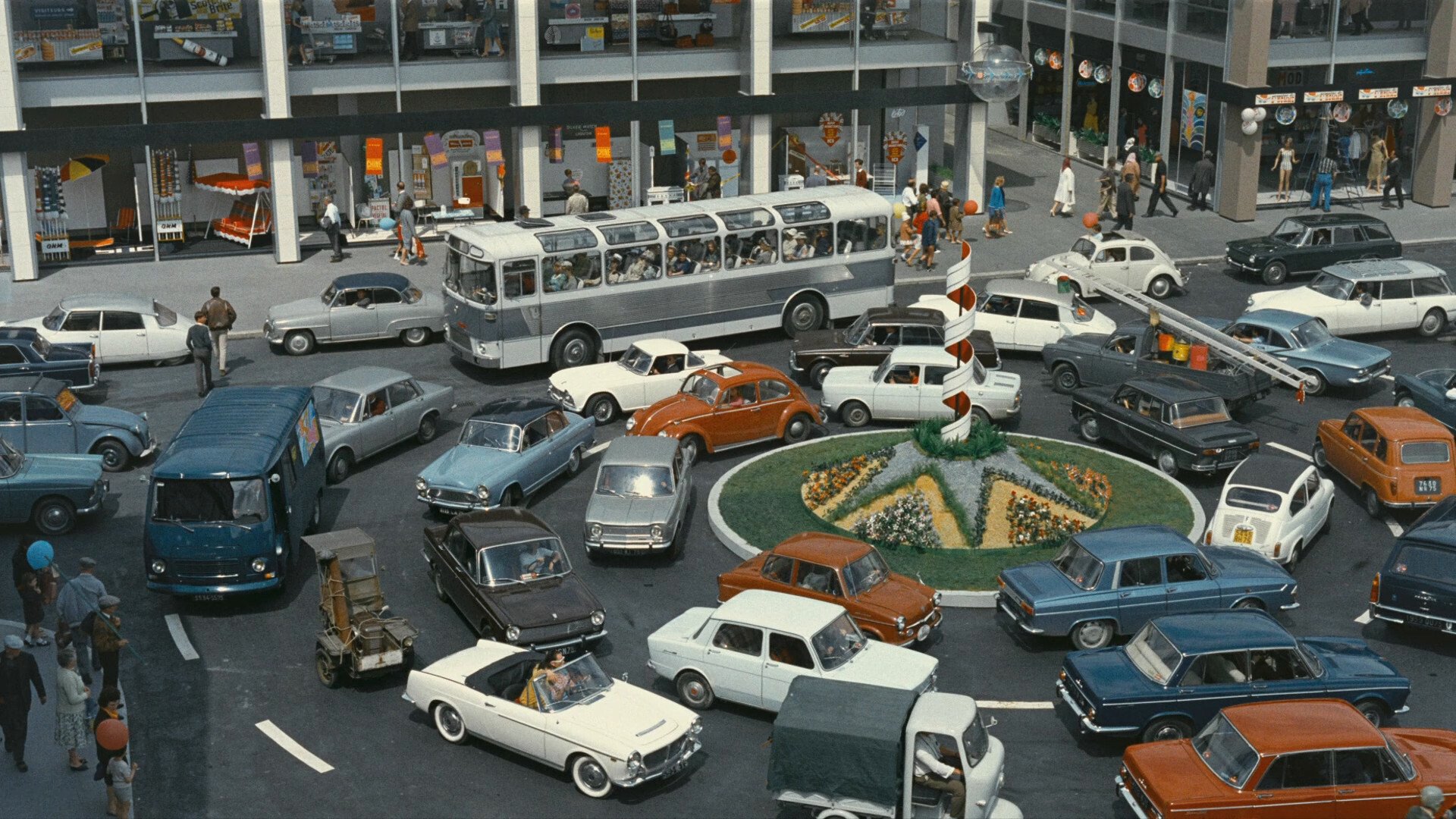
Mr. Hulot’s Holiday’s sunlit sketches of seaside absurdity, this is not a character piece in any traditional sense. it’s a city piece, or more precisely, a meticulously constructed mirage of one: paris, stripped of its texture, bleached of memory, reconstructed from the ground up as a cold, sprawling maze of mirrored façades, clinical lobbies, fluorescent lighting, glass grids and sterile uniformity. the protagonist isn’t hulot, or the american tourist he half-meets, or the bumbling waiters, lost workers, dazed pedestrians, or distracted businessmen. the true lead here is the environment itself, this hypermodern, dehumanized simulacrum of a city where the past has been paved over by bureaucracy and design, where identity is obscured by repetition, where everything looks correct but feels wrong. it is not paris as lived, but paris as theorized, diagrammed, and executed without regard for its soul an architectural dream turned social dissonance, a machine that moves with eerie precision but no heart.
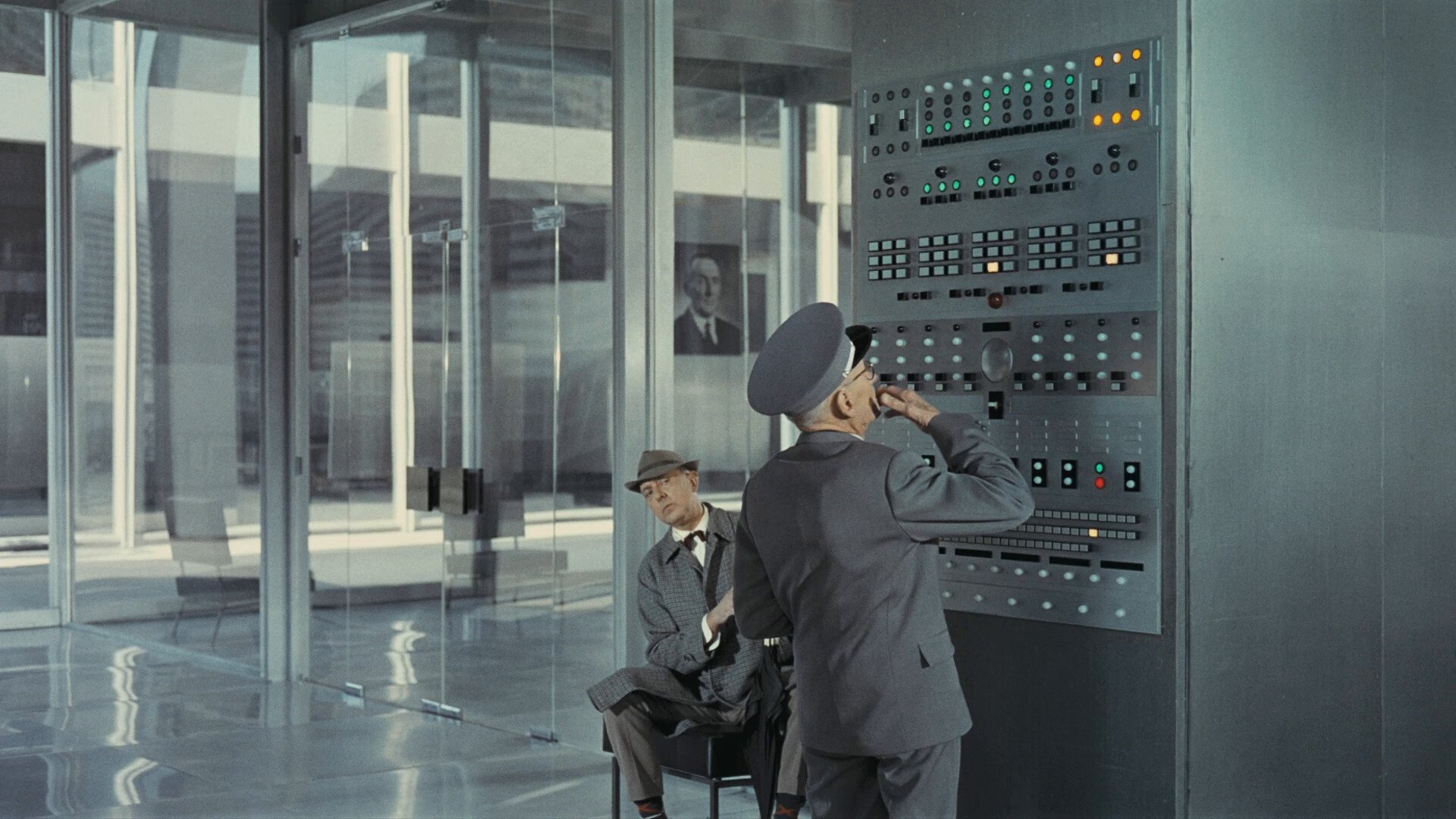
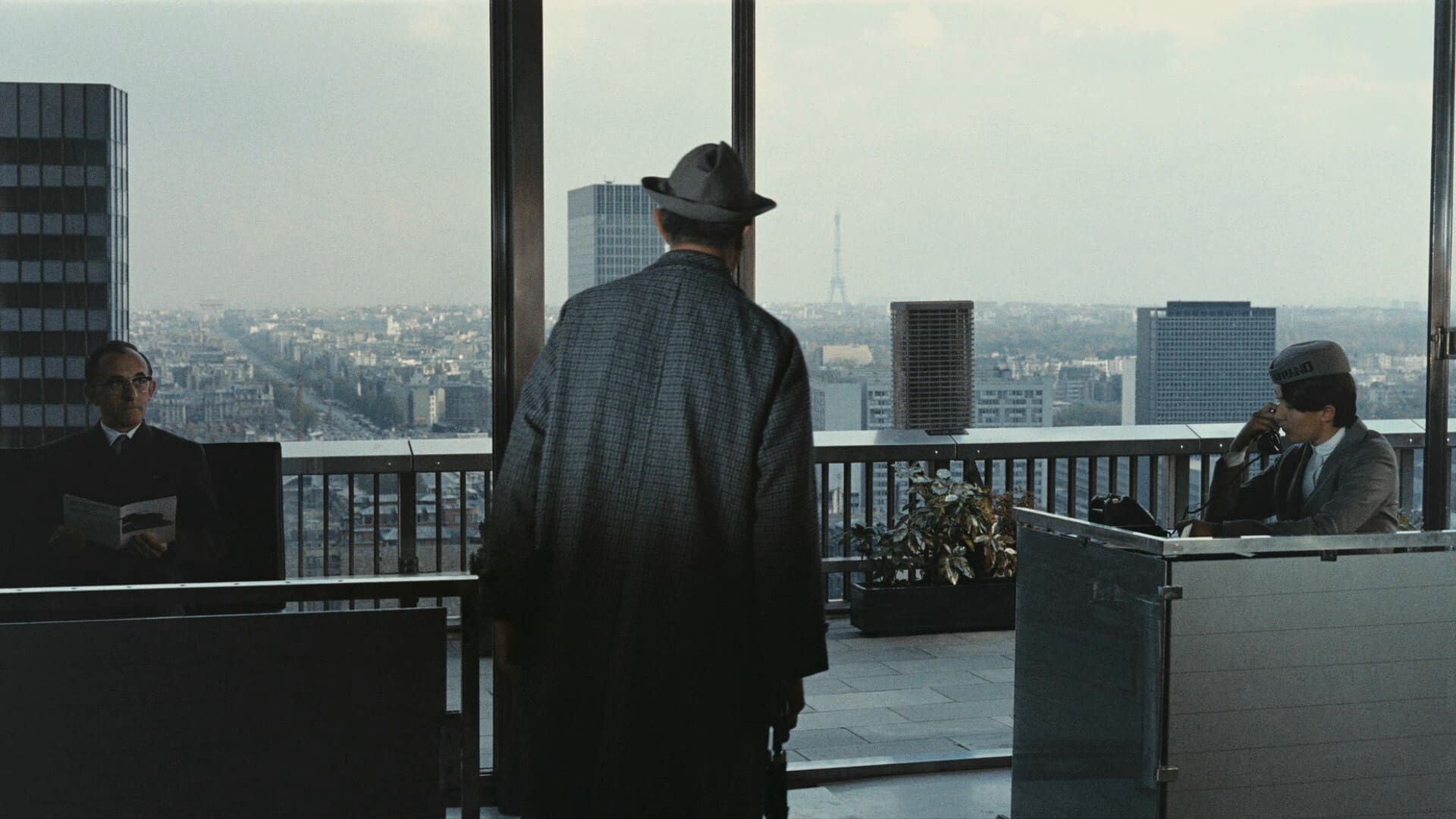
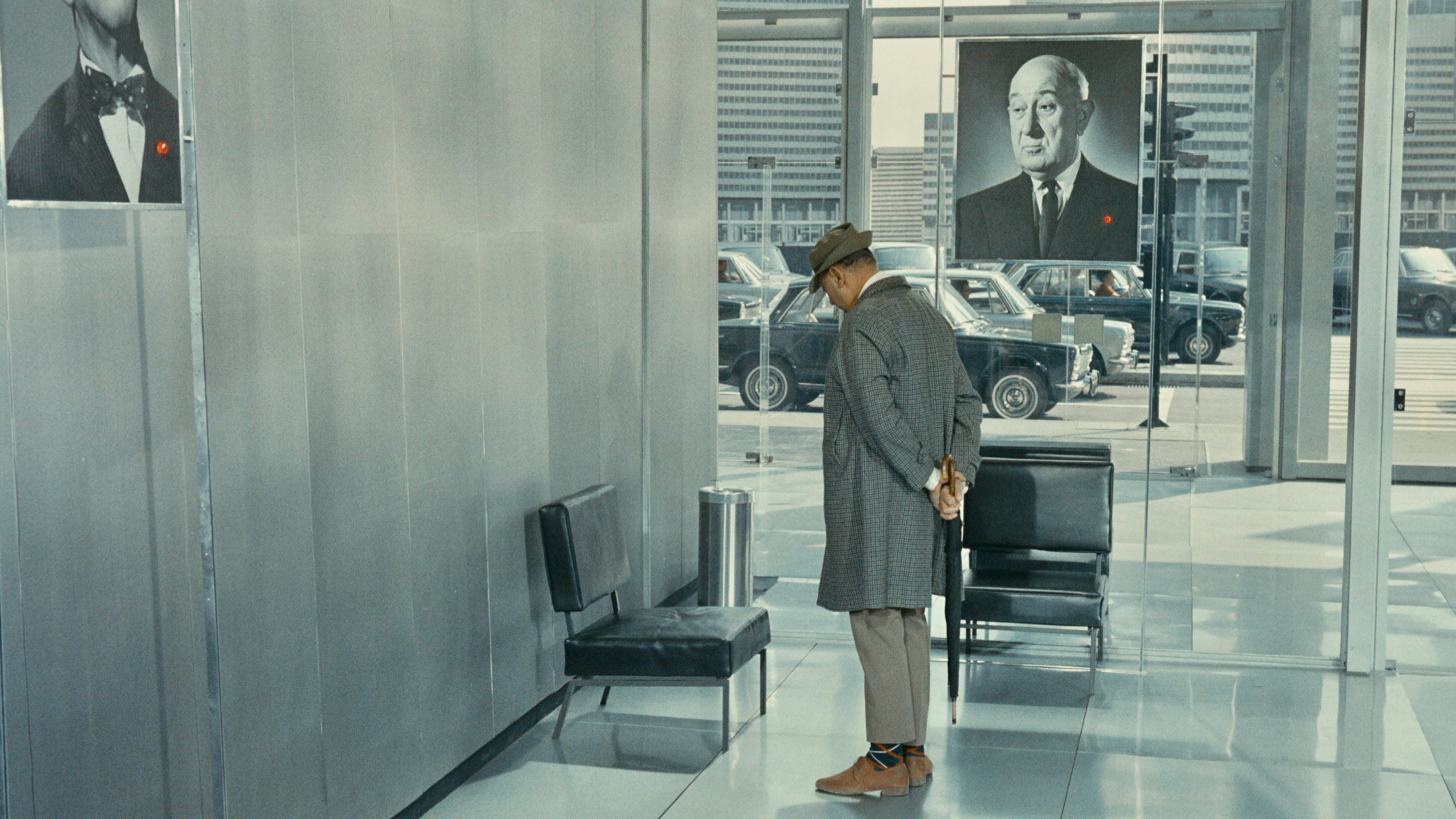
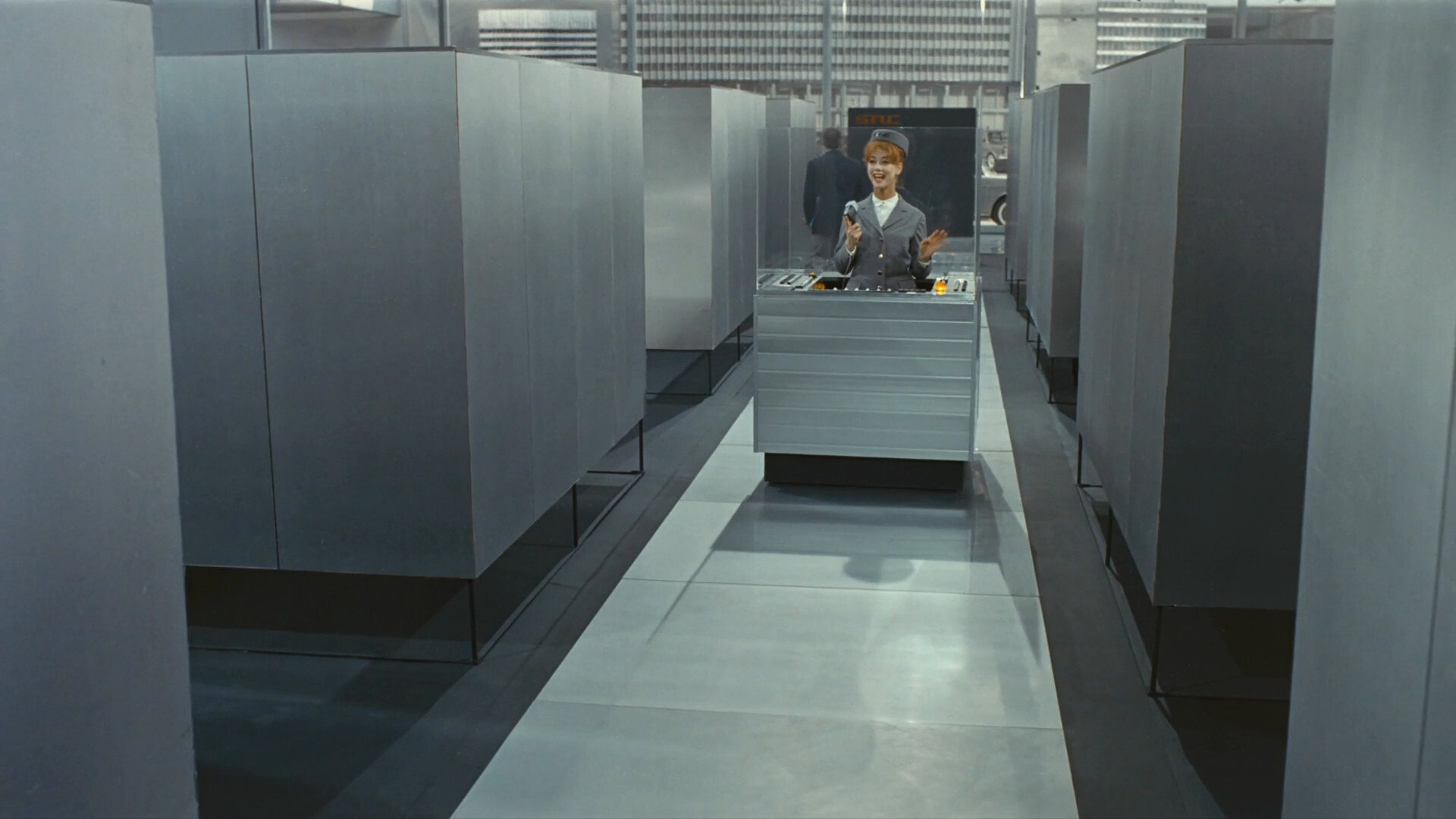
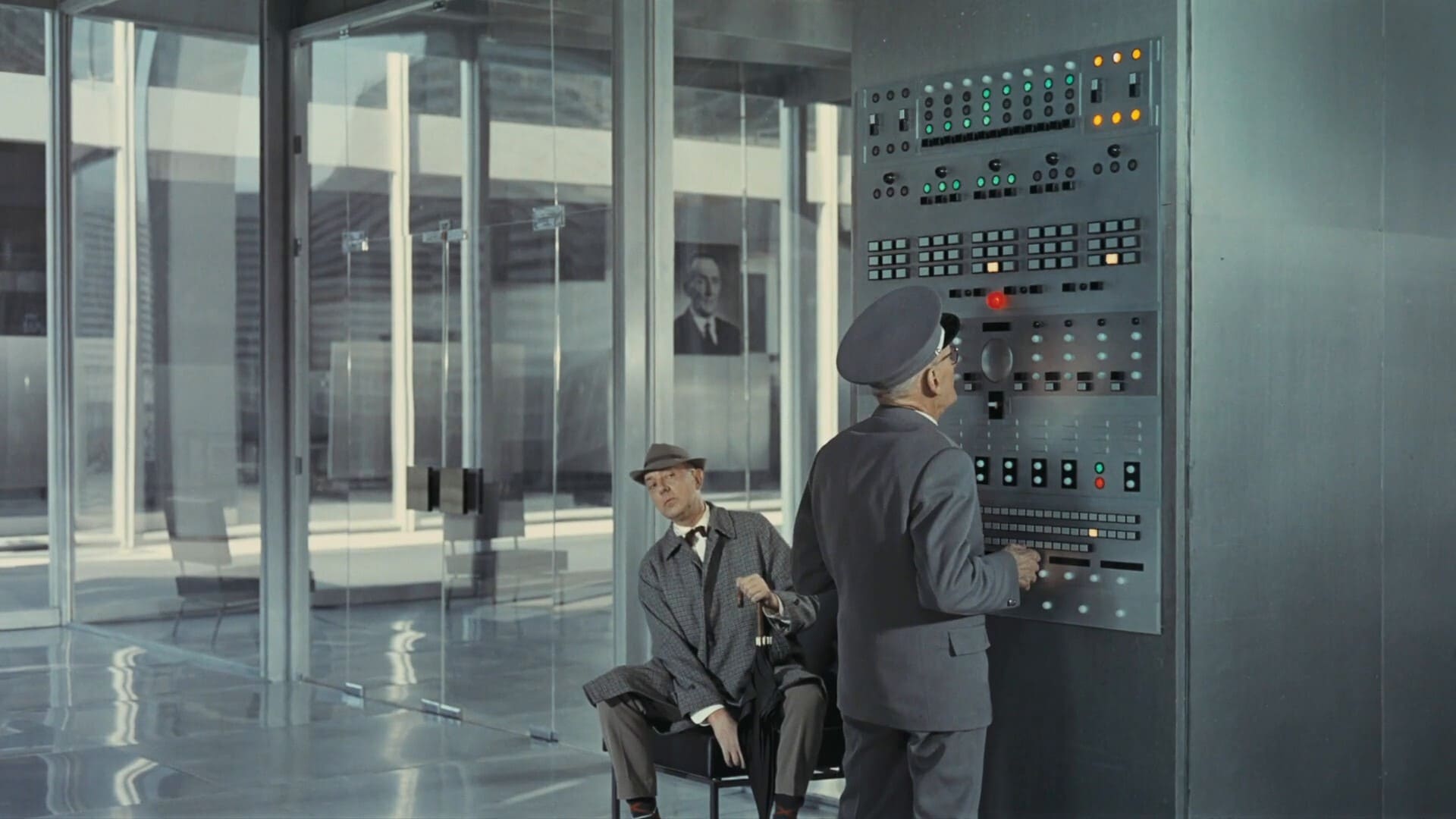
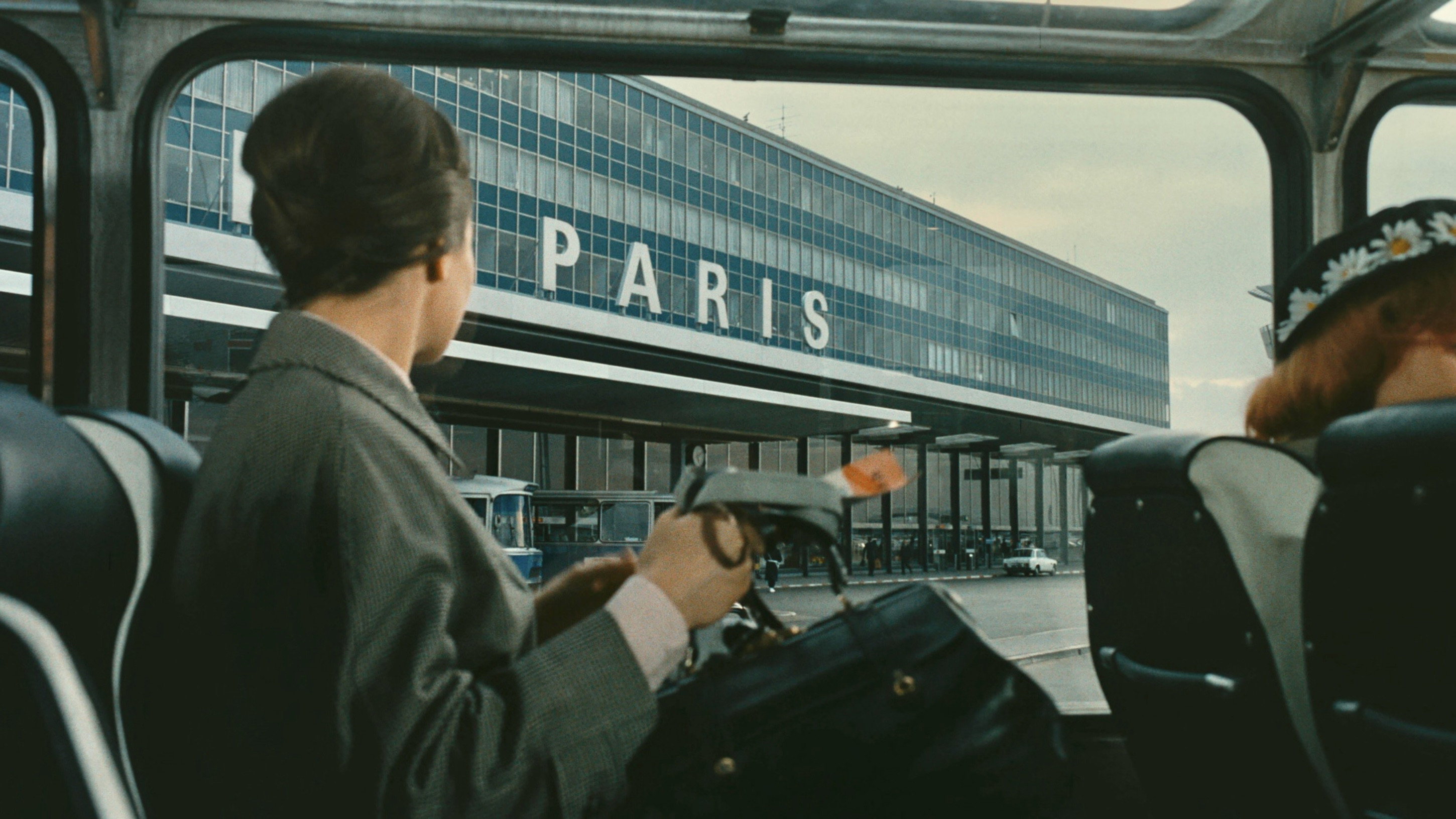
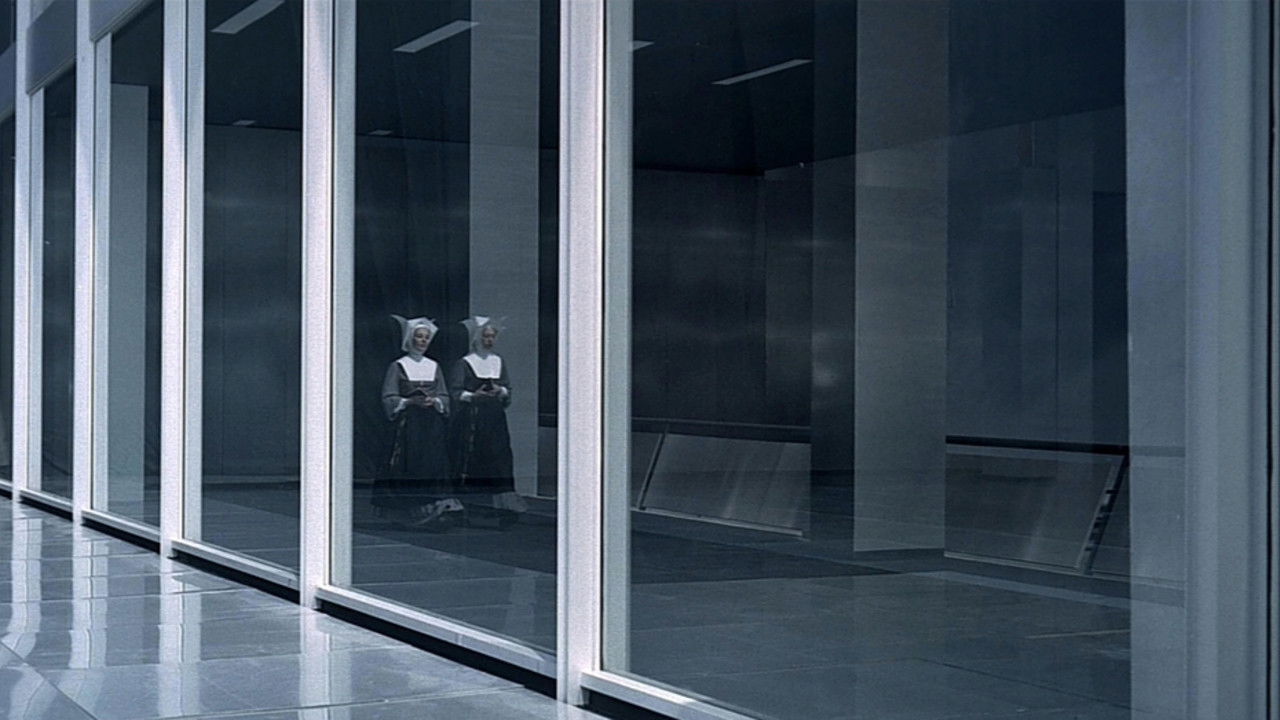
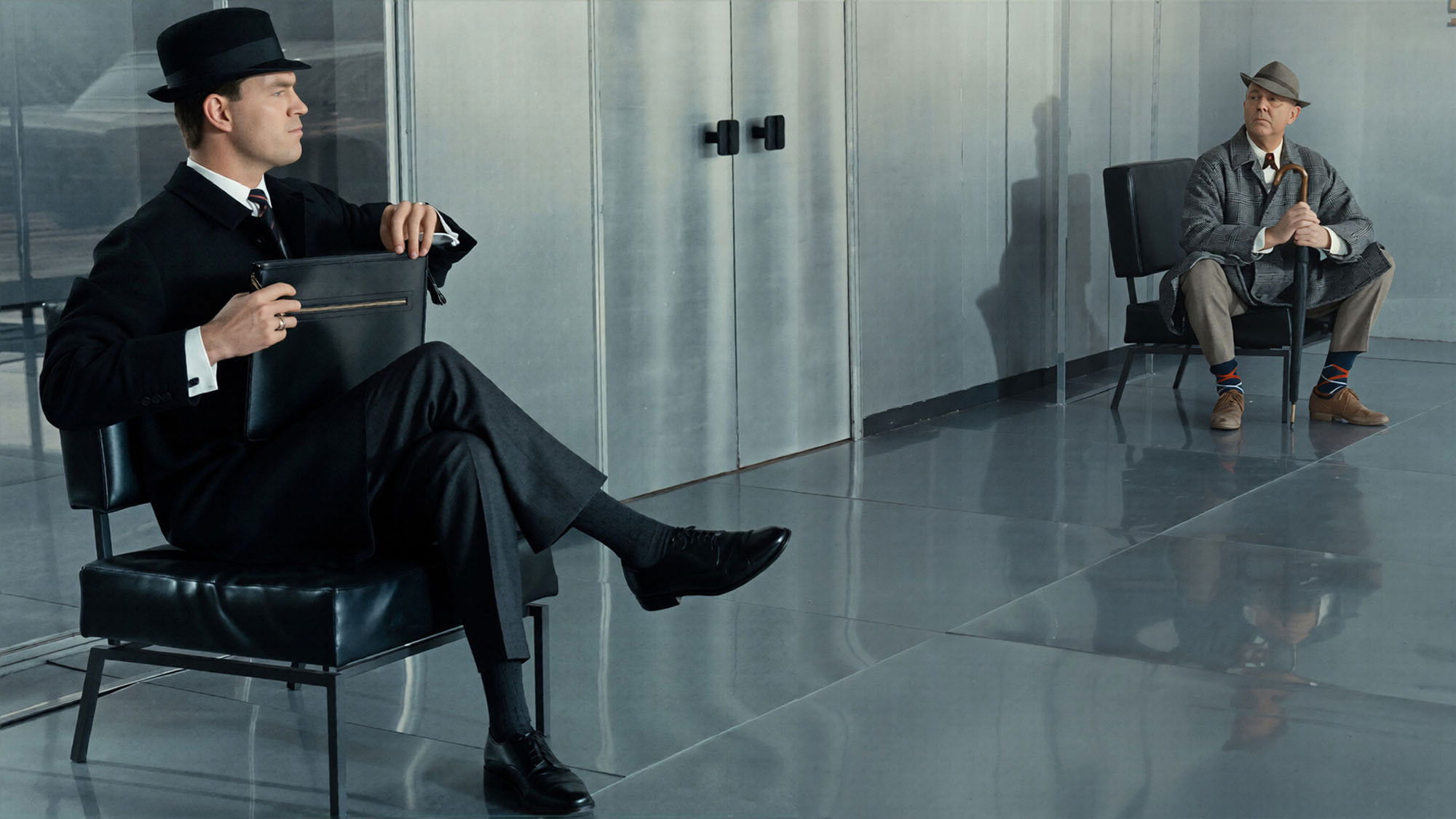
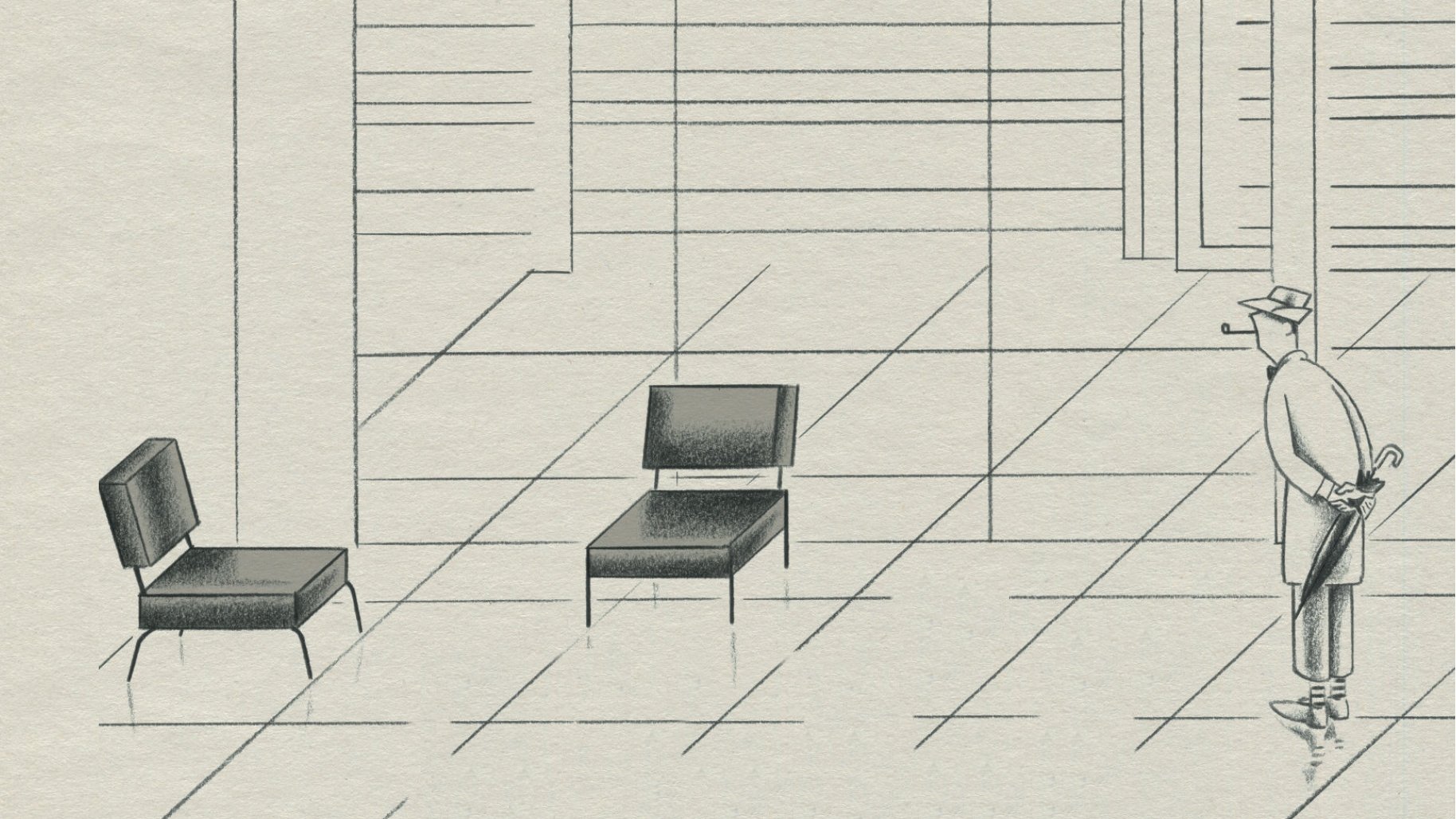
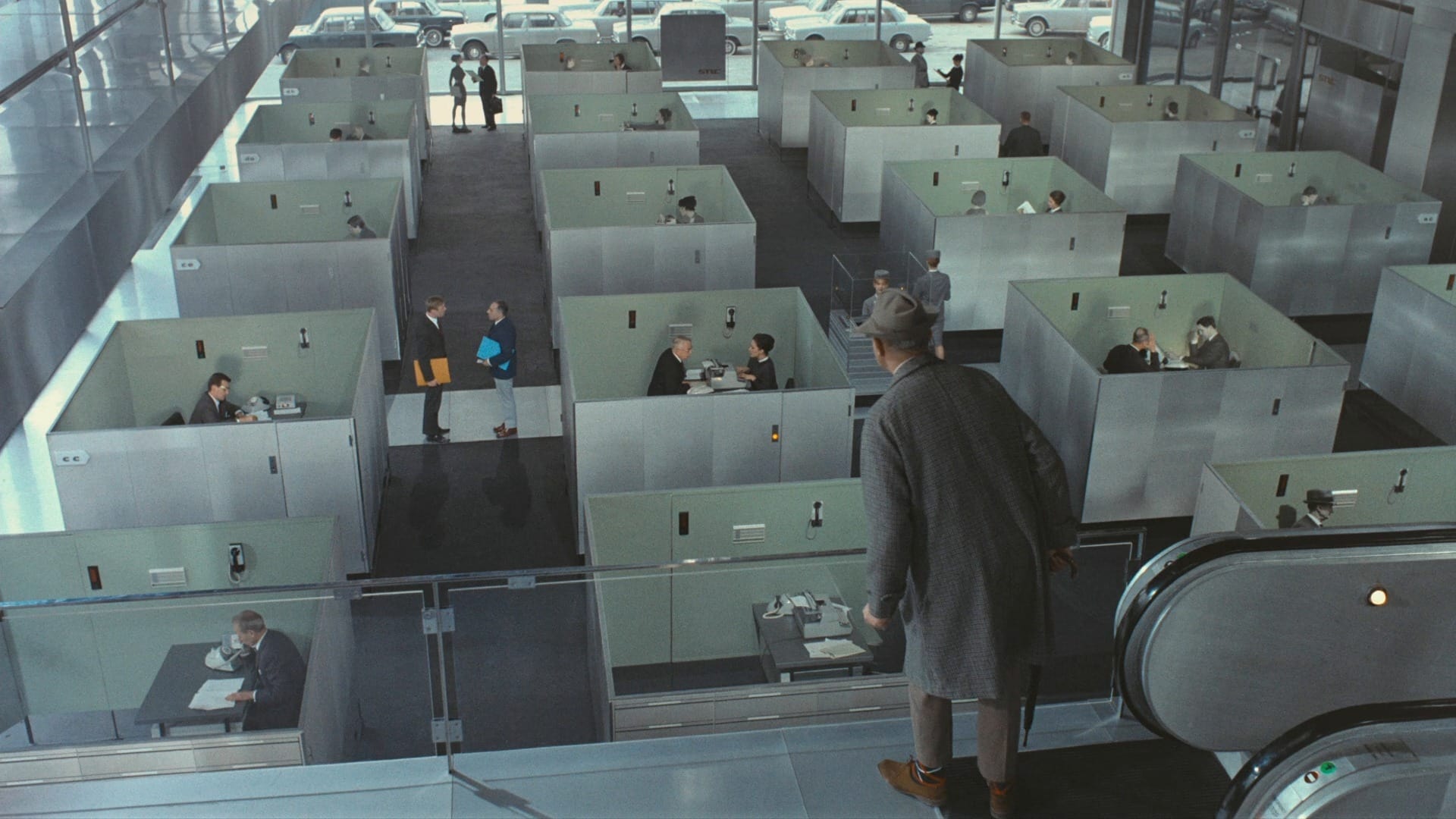
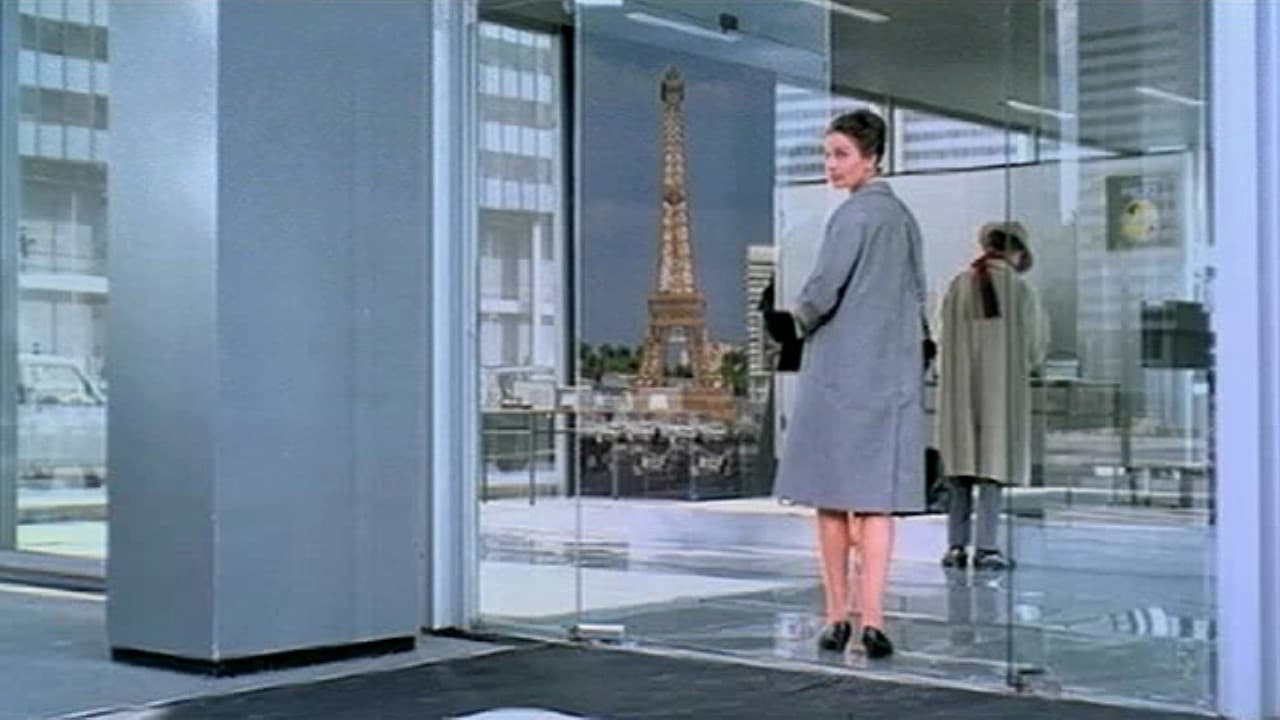
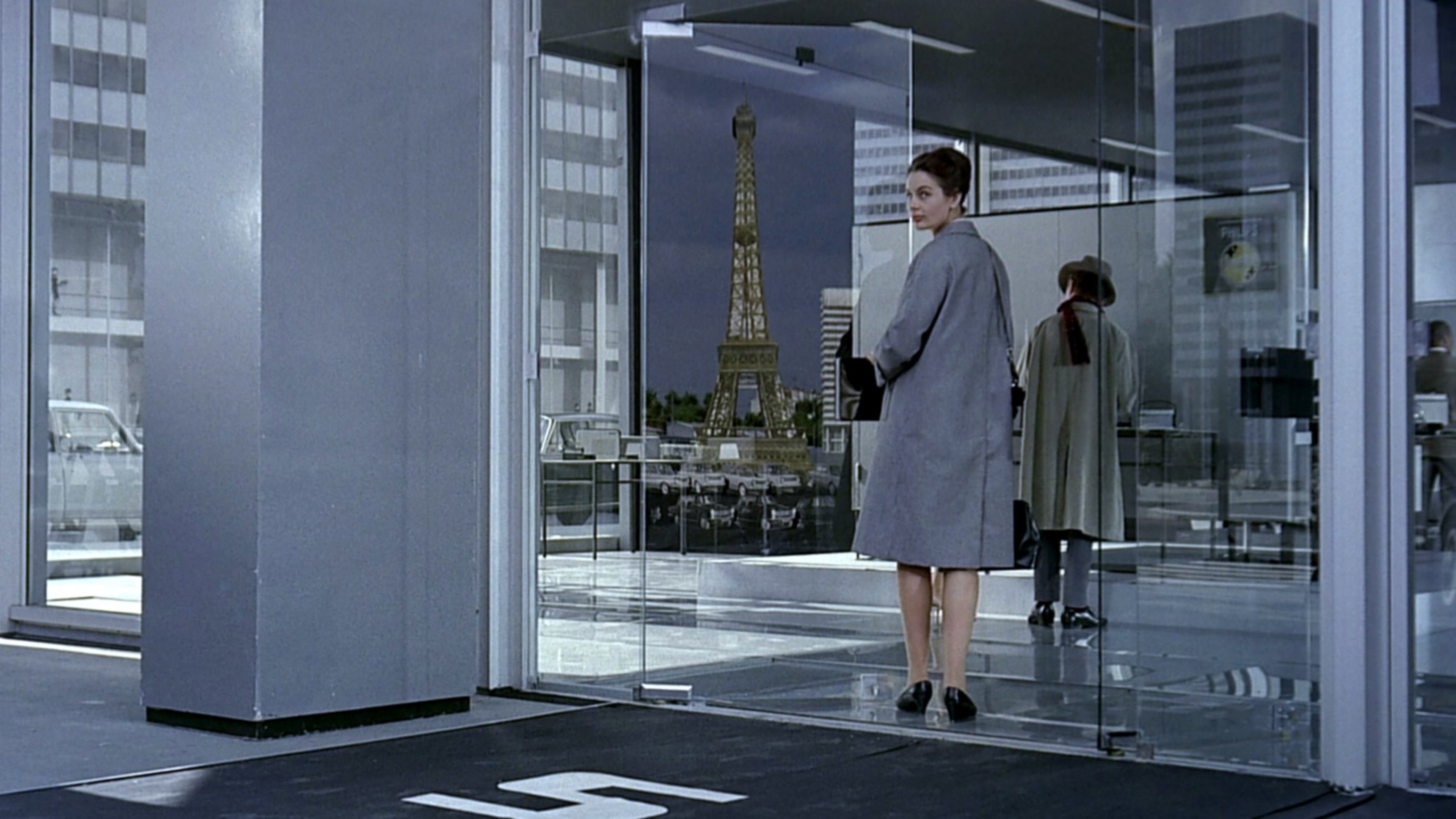
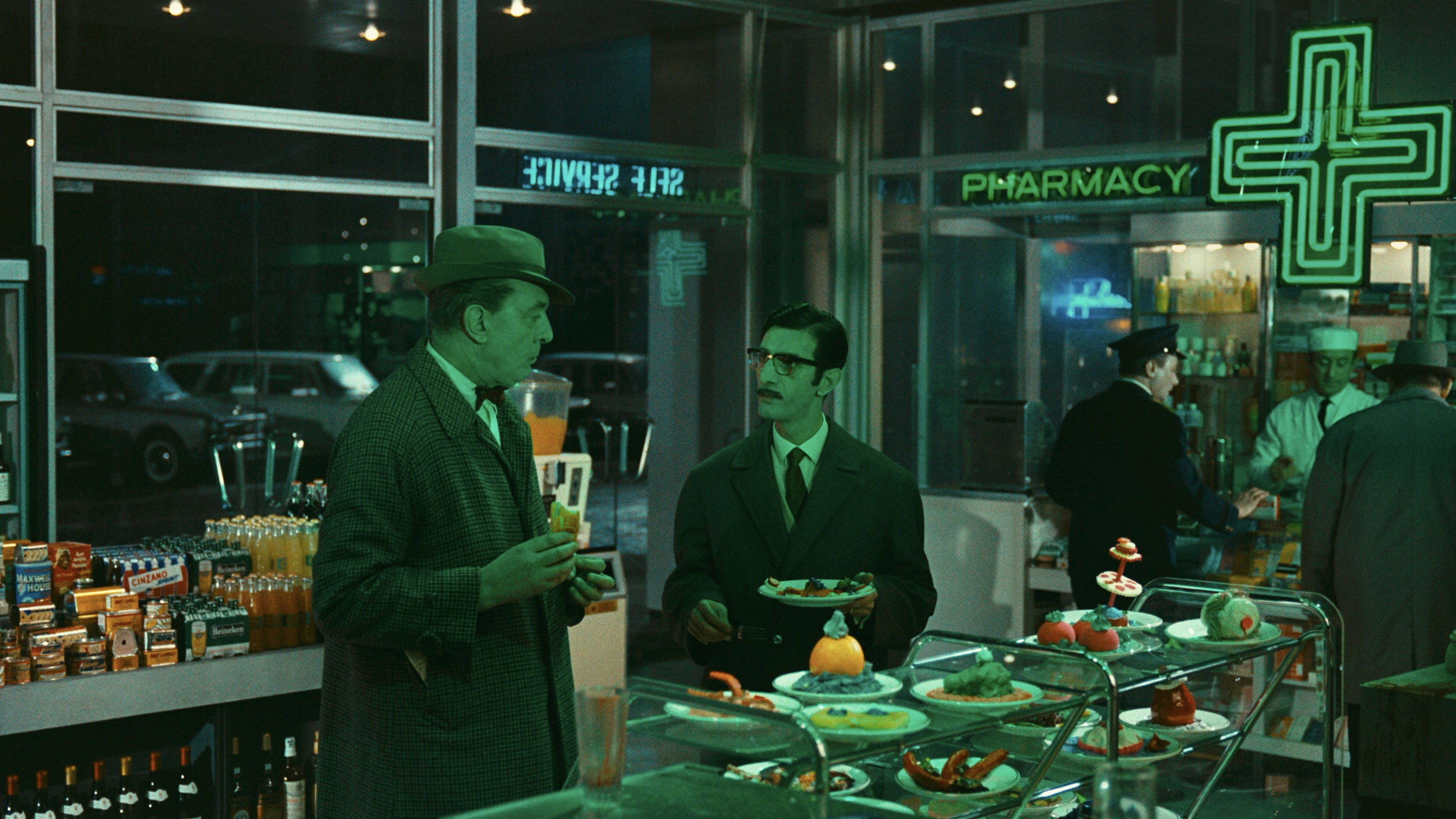
almost every space in this film feels eerily interchangeable like a sterile grids stretching endlessly, mechanical doors that hiss open without warmth, furniture shaped like geometry homework, chairs as rigid and unwelcoming as punishment, and floors so polished and pale they resemble surgical theaters more than city interiors. it’s a landscape of lifeless symmetry, a world built on efficiency that forgot empathy. at first, everything appears sleek, streamlined, supposedly “functional,” but that illusion dissolves the longer you look what’s revealed is a profound indifference to the human spirit. these interiors are cold, soulless, stripped of any texture that might evoke comfort or memory. offices bleed into apartments, lobbies into lounges, until all sense of personal space vanishes under fluorescent lights and chrome surfaces. reflections multiply across endless panes of glass, giving the illusion of depth while offering none, and even paris itself a city once bursting with personality and sensuality is flattened into commercial signage and flattened souvenirs. the eiffel tower doesn't stand it flickers, glimpsed only as a faint imprint behind glossy windows, as if the past has been swallowed whole by an architecture of forgetting.
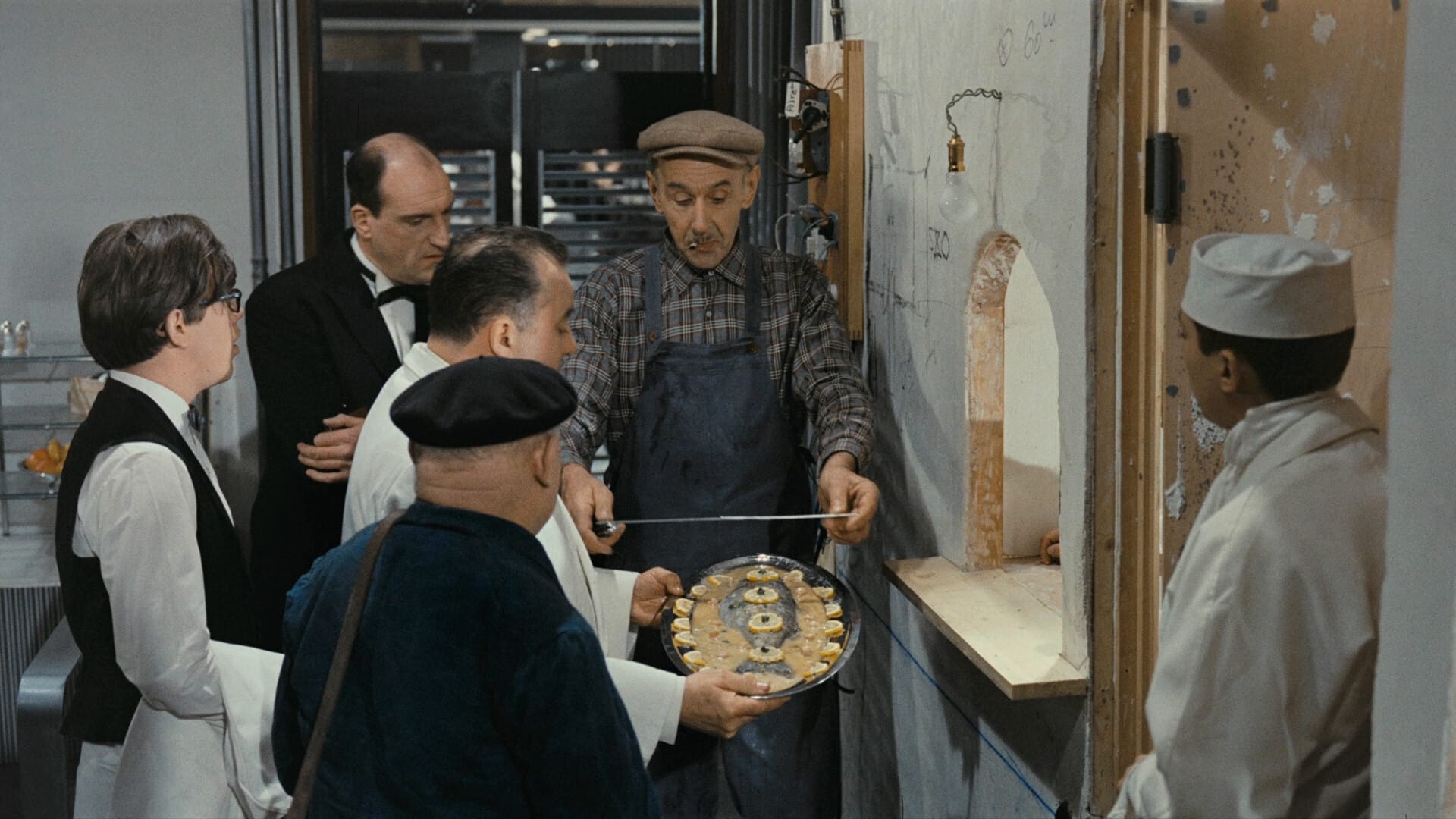
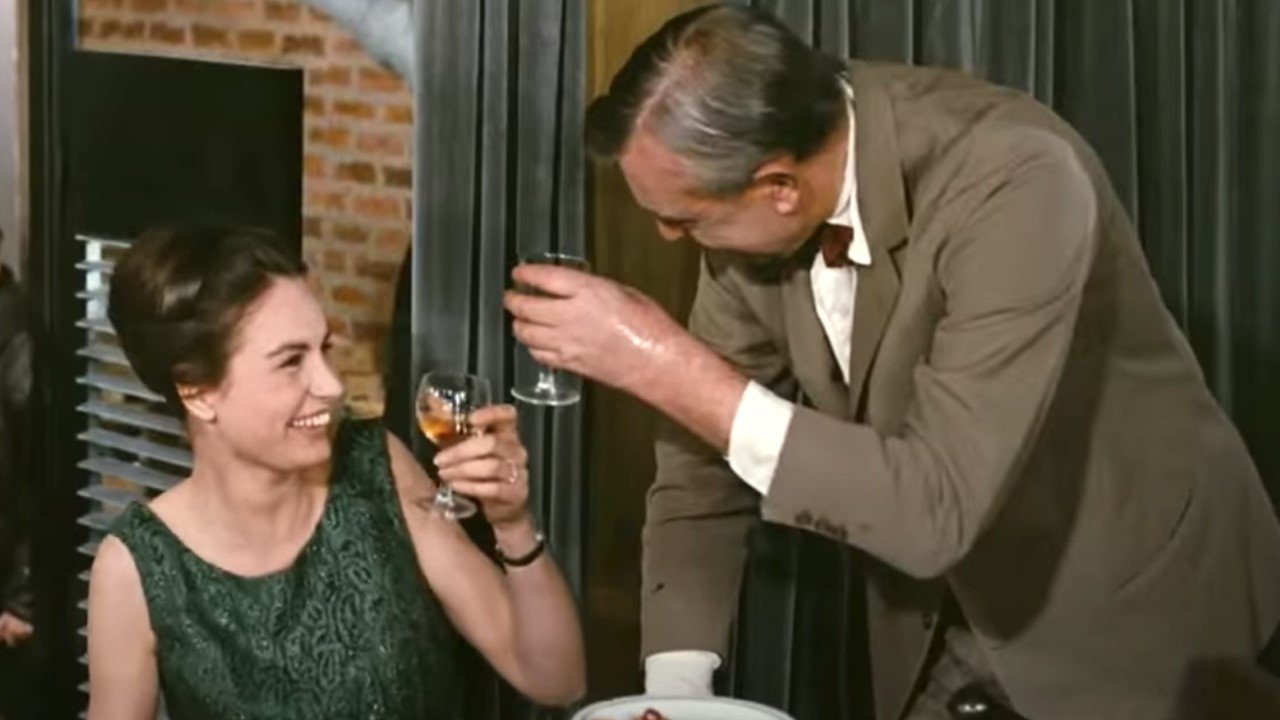
tati’s gaze toward modernity is neither cruel nor naive, he sees its absurdities with sharp clarity but never strips it of its humanity, and that balance is what gives this film its strange warmth beneath the clean, indifferent surfaces; he orchestrates chaos without cruelty, turning malfunction and repetition into something comical, almost endearing, showing that even in a world obsessed with order and functionality, there are people who fumble, laugh, collide, and carry on there’s a quiet optimism in how he lets life spill through the cracks, never forcing it but letting it unfold naturally, and this, more than any overt critique, is what makes the film feel human: not just the satire of glass and chrome, but the moments of hesitation, the small mistakes, the silent resilience that remind us that while the world may be designed without us in mind, we still manage to exist inside it in all our awkward grace.
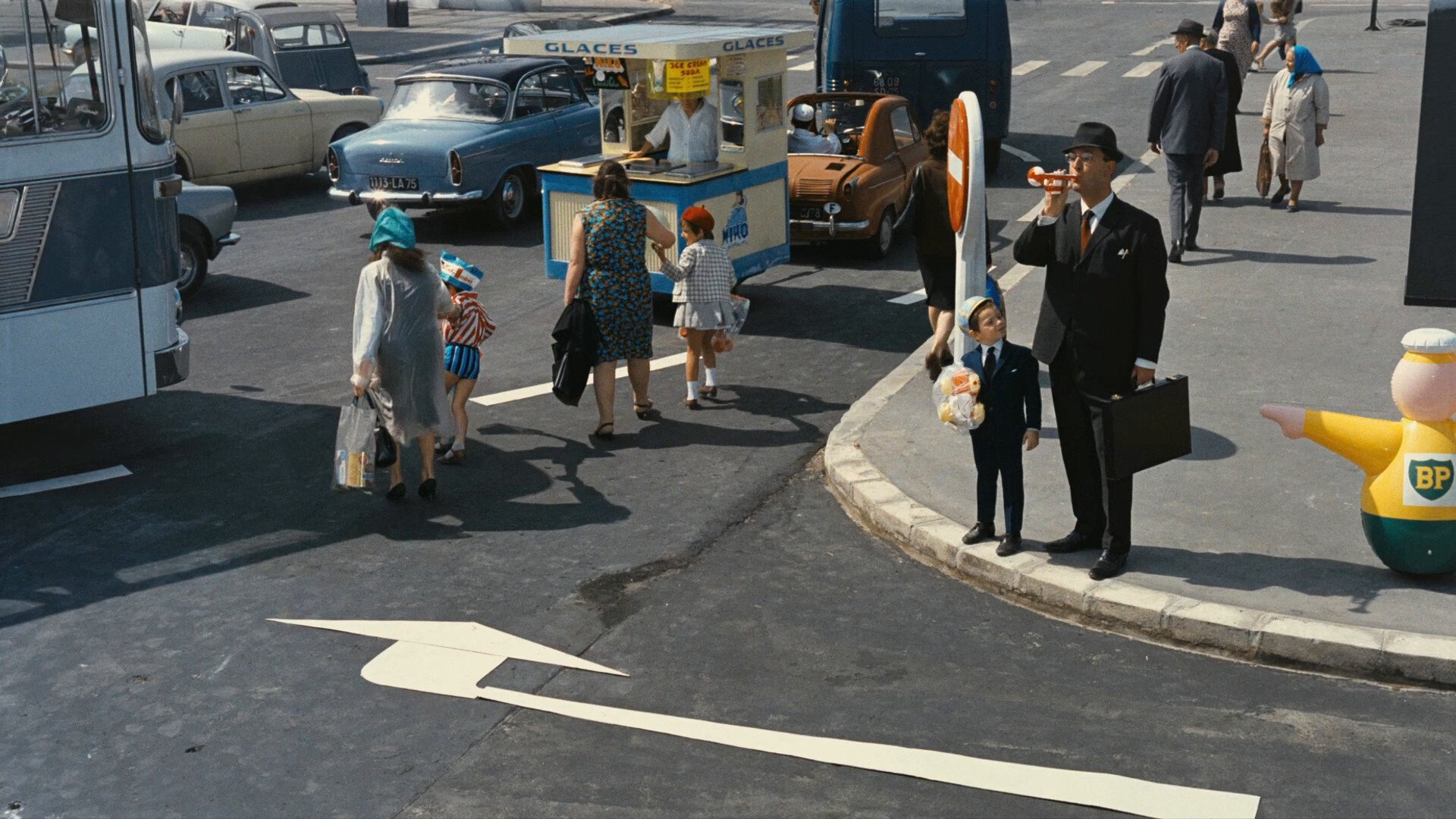
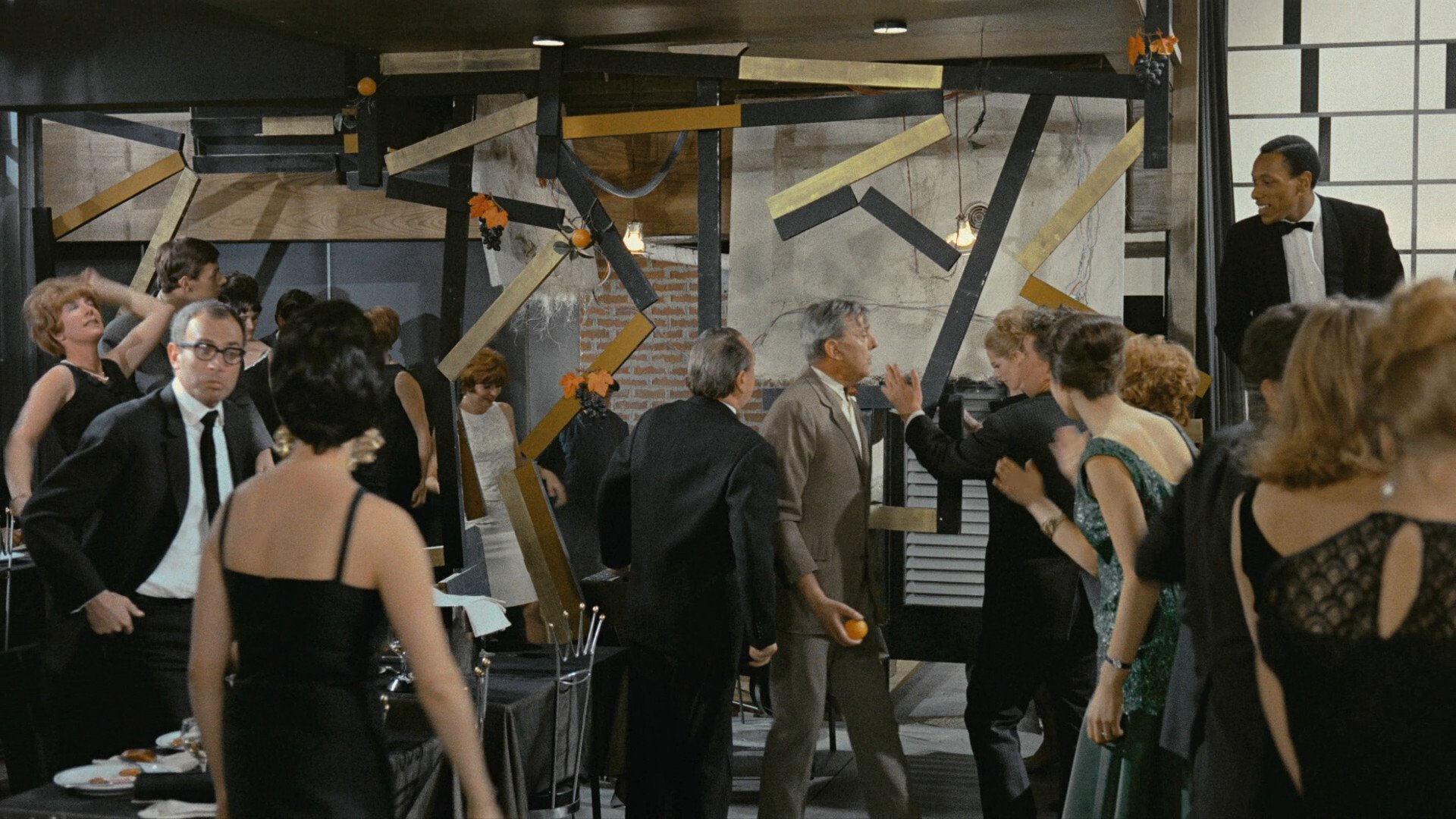
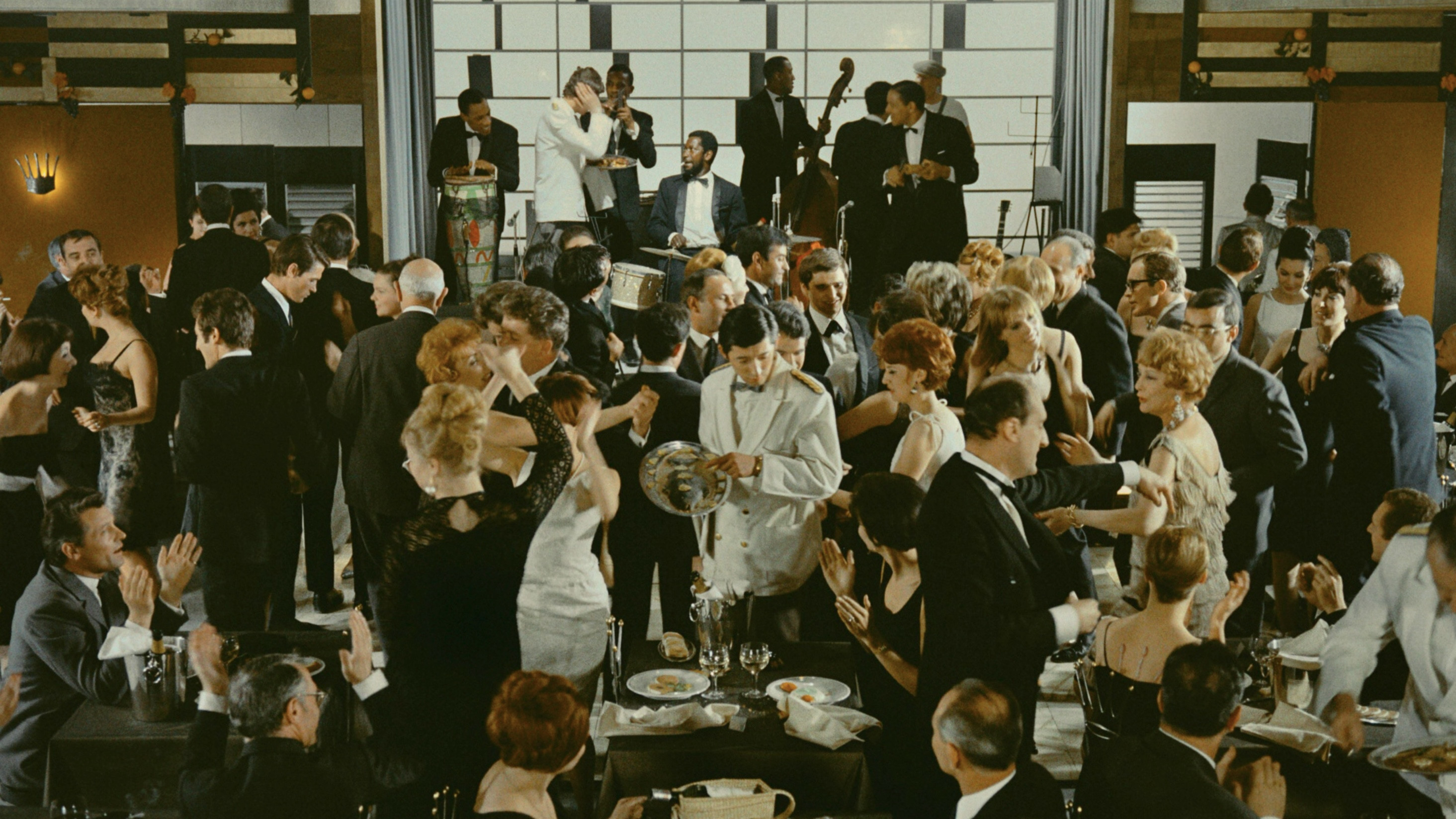
tati’s direction feels architectural in the truest, most tactile sense, not just in how space is captured but in how people are placed inside that space, always small but never insignificant, never staged as isolated but always part of something larger and subtly alive; the camera remains distant yet observational, patient rather than passive, and with the 70mm format, it doesn’t just frame action, it frames environment, frames rhythm, frames the very systems we move through, allowing entire constellations of behavior and movement to coexist in a single shot; there’s no reliance on close-ups to tell us what matters because here everything matters, every fragment of behavior, every human tic or moment of confusion or joy, building an experience that asks the viewer to look not just at the action but at the geometry of life unfolding all around it; the production design carries a deliberate sterility at first, all glass reflections, hard-edged repetition, cold open plans where personality is erased, but slowly the composition softens not just visually but emotionally tones warm, spaces loosen, lines bend, color returns, and without ever making a point of it, the film quietly shifts from rigid observation to something closer to breathing, letting its form mirror its idea: that life, even under manufactured order, finds movement and feeling, not by resisting structure, but by flowing through it.
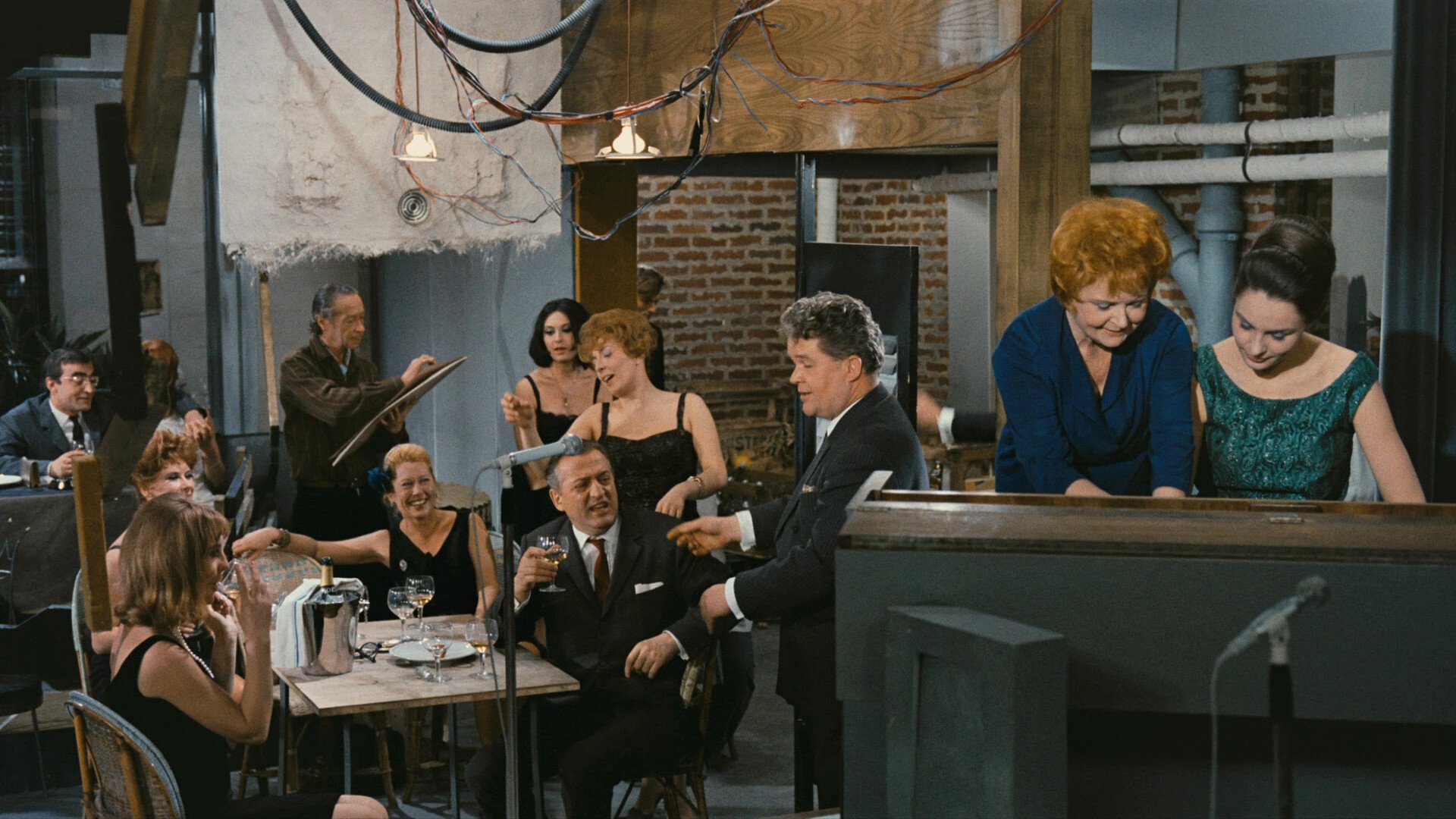
in all that wandering, what emerges isn’t just satire it’s a quiet, aching philosophy about existing within systems too big to hold us, where meaning isn’t handed to us but found in the fragments we gather along the way; playtime doesn’t try to moralize or point fingers, it simply observes how we drift through alienating, overdesigned spaces and still manage to bump into warmth, into error, into each other, how even in a world built with brutal precision and endless repetition, the accidental remains possible moments of unplanned connection, soft chaos, quiet rebellion against the mechanical; and that’s what struck me, how tati’s film doesn’t need to center one voice because its language is architectural, ambient, choreographic, letting the frame breathe while life unfolds not in dialogue but in rhythm, movement, atmosphere it understands that cinema isn’t always about telling but revealing, and in doing so, it creates something that feels oddly human, deeply alive, a film not about plot or performance but about texture, timing, and tone, about the playfulness buried inside routine, and how even amidst confusion, we carry on, we observe, we adapt, we survive and sometimes, when we’re lucky, we play.
rated 5 stars and putting it on my top 10. tati’s vision isn’t dystopian, but it’s not quite utopian either. it is, rather, a precise yet chaotic reflection of how people navigate a world too big for them, too cold for comfort, yet somehow still tender and human at its core. it reminded me of
il posto (1961), in how it captures the quiet tragedy of routine and conformity, but where olmi used silence and subtlety, tati uses movement and mise-en-scène, finding not just melancholy in modern life, but the comedy and connection embedded in its cracks.
#39 : cult movies |
the criterion challenge 2025 |
a personal primer in absolute cinema |
auteur-coded |
film posters i’d sell my soul for |
top 10 films ⋆˚࿔