a short history of brazil, colonialism, and cannibalism. thank you dos santos.
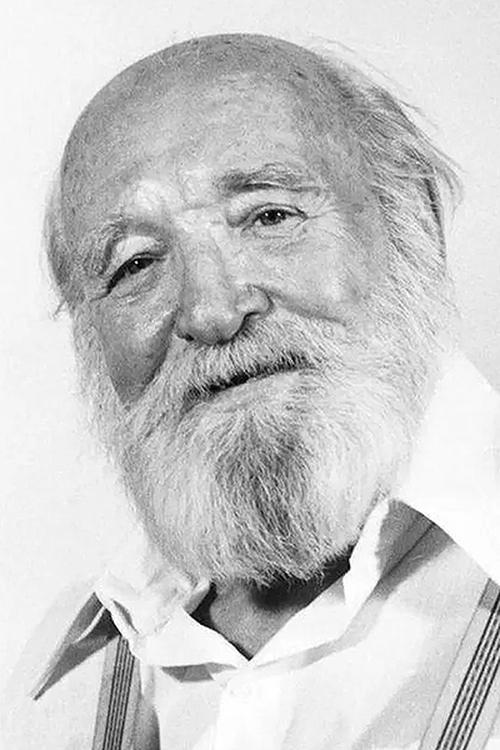
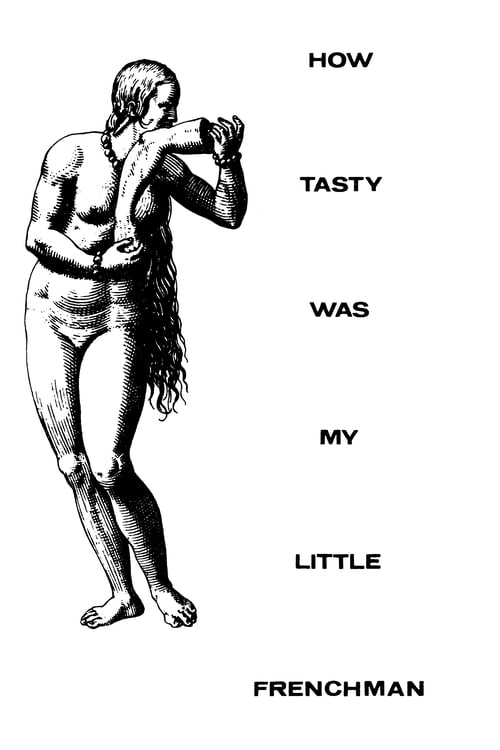
Nelson Pereira dos Santos’s film How Tasty Was My Little Frenchman—a black comedy released in 1971—serves as a dissection of the characteristics of the earlier interpretation of the effects of colonialism. It asks its audience to put itself in the shoes of the Tupinambás for 80 minutes, deconstructing notions of the past and using modernist ideas of cannibalism to inform them of what should be done with European influence in the future.
There are three eras of discussion that serve to contextualize the symbolism within the film. The first spans several centuries, from the beginning of colonization up until the 20th century. Portuguese explorers began to settle around the Brazilian coasts in the 1500s, though their goals were distinct from those of settlers further North. Their goals with the natives that they encountered were partly religious, as many of them sought to convert “heathens”. The other part was more economic. They established trade with some of the tribes there, establishing tentative alliances that would eventually turn to enslavement of the natives. The French would also attempt to do the same in Brazil, which would result in conflict between the two powers. This relationship is essential to one’s understanding of the film, as the Tupinambás were allied with the French and their enemies, the Tupiniquins, were allied with the Portuguese. The attitudes that surrounded the Europeans’ perspective on the Indigenous population was based on Eurocentric ideas of what being “civilized” or “barbaric” was. Within the Tupis, nudity was normal and ritual cannibalism was purported to be an important aspect of their culture, which seemed barbaric to the European settlers who would attempt to teach the natives their cultural practices and religious beliefs. Professor Raimundo Nina Rodrigues’ essay “The Human Races”, written in 1894, demonstrates that these beliefs persisted centuries later. He asserted that people of color were inherently inferior to the Europeans because of their differing levels of mental development. Rodrigues contends that the Europeans improved the natives’ lives through ridding them of their rude customs and making them followers of Christ.
The 20th century would bring about renewed perspectives on this relationship in two phases. The 1920s were characterized by the rise of modernism. Brazilian intellectuals began to reject romanticized notions of their past and reconsider the nation’s relationship with its European influences. Anthropophagy became a salient idea within modernism, demonstrated in Oswald de Andrade’s “Cannibalist Manifesto”. De Andrade used the supposed ritual cannibalism of the Tupi tribes to symbolize what the modernists thought should be done with European ideas: they should be eaten, digested, and made into something Brazilian rather than blindly accepted. Thus, the presence of cannibalism in Frenchman can begin to be understood on an intellectual and cultural level. The second phase is in the 1970s. At the time, the military dictatorship’s policy on the Indigenous was largely focused on colonization and development of their land. Simultaneously, modern Indigenous rights movements were springing up, emphasizing the voices of the native population themselves. They claimed rights over their land and the value of their culture, language, and religion began to be better understood. In the film world, Cinema Novo took off. Inspired by Italian neorealism and French New Wave, the Brazilian movement sought be more political and intellectual than the musicals and comedies that dominated cinemas at the time. It is in this milieu that How Tasty Was My Little Frenchman was created.
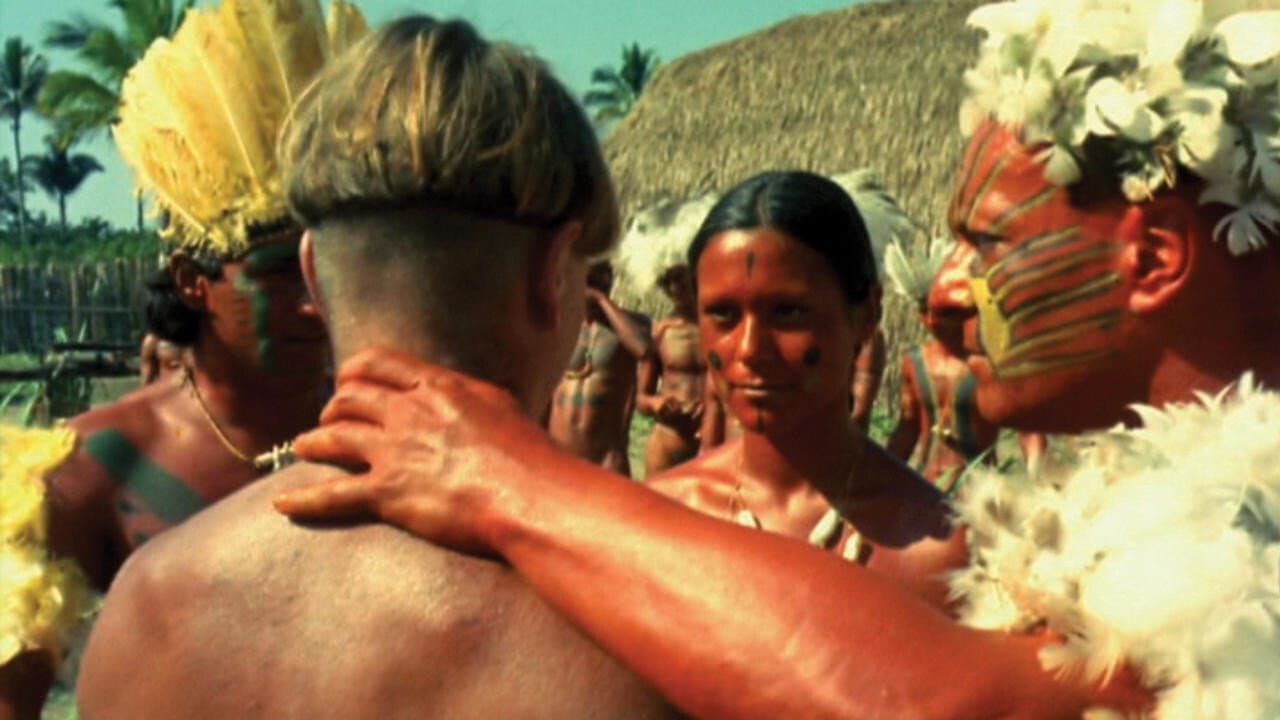
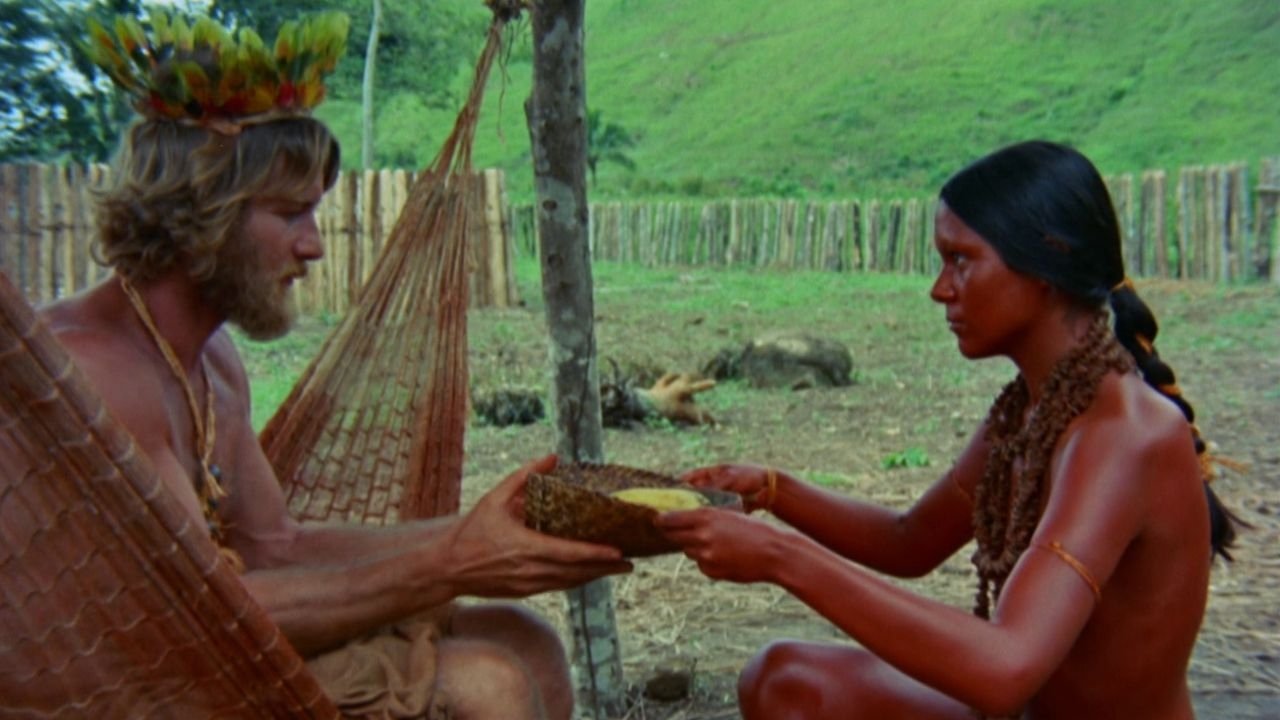
The film is structured around the dual perspectives of the colonizer and the colonized. The Frenchman is a Portuguese captive who was then taken by the Tupinambás. The Tupinambás, allies of the French, don’t believe that he’s one of them because he aided the Portuguese in battle. They sentence him to death for the purpose of cannibalization in eight months, but in the meantime he’s allowed to live with them. Between scenes of the Frenchman’s new life, the film has intertitles that quote the observations of several European explorers detailing their experiences in the New World. These quotes are juxtaposed against the content of the daily scenes. Over scenes of the relatively peaceful lives of the Tupinambá are quotes that describe them as “barbarous savages… without any religion, or any knowledge or honesty or virtue”. These quotes and images against each other create dissonance, telling its audience that everything they have been told about Brazil’s past may not be as they thought. In the same vein, Frenchman normalizes the Tupi customs. Nudity is not treated as a big deal. Everyone walks around mostly naked, including the Frenchman. A majority of the film is in the Tupi-Guarani language, with only small bits of French and Portuguese. Even the way that the film treats cannibalism is remarkable. In conversation between the Frenchman and his Tupi wife, Sebiopepe, she describes the ritual in rich detail, reverent of its spiritual effects. It’s holy rather than blasphemous. Everything that may seem foreign to the modern Brazilian is displayed with little emphasis on its relative abnormality.
What is so captivating about the film is the way in which the historic roles of the Frenchman and the Indigenous are reversed. He is subject to their judgment, customs, and religious rituals. He assimilates. One of the intertitles describes how the French would trade with the Tupinambá for wood, taking “thousands of quintals of Brazilwood” a year. A French trader makes a deal with the captive Frenchman in order to have him released, but it becomes clear further on that the deal would not be honored, and was instead a way for the trader to exploit the Frenchman’s labor in harvesting Brazilwood and finding buried ritual artifiacts. Again, the Frenchman is put in the same position that the Indigenous people have been in for over several centuries. However, the roles are not reversed for long. In the final scene of the film, when the Frenchman’s death ritual is being carried out, he goes off-script and tells the Tupinambá: “my friends will come to avenge me. No one of yours will remain upon this land.” This scene is immediately followed by an intertitle describing the Portuguese genocide of the Tupinambá’s rivals, the Tupiniquin. The fantasy of the captive European cannot exist without the recognition of objective reality. It’s in this moment that How Tasty Was My Little Frenchman uses cinematic language to remind the audience of what really happened, and it begins to ask the audience to consider the world the way the Indigenous people see it.
The questions and solutions that the film raises go back to cannibalism in its symbolic context. The normalization of practices such as that, or to a lesser extent, nudity and the Tupi-Guarani language, ask the audience to reconsider how they see the Indigenous population. Are they as barbarous as you thought, or are they simply different? Is there evil in their worship or their daily customs? Nelson Pereira dos Santos wants the audience to think in the perspective of the Indigenous rather than the Europeans, both in their normal lives and in the way that European rule has disrupted those lives. In his book Tropical Multiculturalism: A Comparative History of Race in Brazilian Cinema and Culture, Robert Stam argues that the film’s use of cannibalism is aligned with Oswald de Andrade’s use of the term. Instead of continuing to accept European influence, both culturally and politically, dos Santos is advocating for “economic cannibalism of European colonialism” (pg. 251). He demonstrates this through an example: the Frenchman gifts the Tupinambá gunpowder to use in battle, but they eat him anyway. In essence, the film is arguing that Brazilians can take what the Europeans have given them and do what is best for them as Brazilians, not as former European colonists or victims of that rule. Thus is the taste of the Frenchman.
Nelson Pereira dos Santos’ work in constructing this film is best understood when one knows Brazilian history on at least a cursory level. Cannibalism seems deplorable when one doesn’t see what the act itself means. To dos Santos, it means a world in which the Indigenous peoples are understood beyond their past. It means recognizing what that past felt like on a personal level. It means eating the influence of the colonizer whole, making it something entirely new. Anthropophagy is acceptable when it means that the product will be a synthesis of the entire world around it.
a short history of brazil, colonialism, and cannibalism. thank you dos santos.
Nelson Pereira dos Santos’s film How Tasty Was My Little Frenchman—a black comedy released in 1971—serves as a dissection of the characteristics of the earlier interpretation of the effects of colonialism. It asks its audience to put itself in the shoes of the Tupinambás for 80 minutes, deconstructing notions of the past and using modernist ideas of cannibalism to inform them of what should be done with European influence in the future.
There are three eras of discussion that serve to contextualize the symbolism within the film. The first spans several centuries, from the beginning of colonization up until the 20th century. Portuguese explorers began to settle around the Brazilian coasts in the 1500s, though their goals were distinct from those of settlers further North. Their goals with the natives that they encountered were partly religious, as many of them sought to convert “heathens”. The other part was more economic. They established trade with some of the tribes there, establishing tentative alliances that would eventually turn to enslavement of the natives. The French would also attempt to do the same in Brazil, which would result in conflict between the two powers. This relationship is essential to one’s understanding of the film, as the Tupinambás were allied with the French and their enemies, the Tupiniquins, were allied with the Portuguese. The attitudes that surrounded the Europeans’ perspective on the Indigenous population was based on Eurocentric ideas of what being “civilized” or “barbaric” was. Within the Tupis, nudity was normal and ritual cannibalism was purported to be an important aspect of their culture, which seemed barbaric to the European settlers who would attempt to teach the natives their cultural practices and religious beliefs. Professor Raimundo Nina Rodrigues’ essay “The Human Races”, written in 1894, demonstrates that these beliefs persisted centuries later. He asserted that people of color were inherently inferior to the Europeans because of their differing levels of mental development. Rodrigues contends that the Europeans improved the natives’ lives through ridding them of their rude customs and making them followers of Christ.
The 20th century would bring about renewed perspectives on this relationship in two phases. The 1920s were characterized by the rise of modernism. Brazilian intellectuals began to reject romanticized notions of their past and reconsider the nation’s relationship with its European influences. Anthropophagy became a salient idea within modernism, demonstrated in Oswald de Andrade’s “Cannibalist Manifesto”. De Andrade used the supposed ritual cannibalism of the Tupi tribes to symbolize what the modernists thought should be done with European ideas: they should be eaten, digested, and made into something Brazilian rather than blindly accepted. Thus, the presence of cannibalism in Frenchman can begin to be understood on an intellectual and cultural level. The second phase is in the 1970s. At the time, the military dictatorship’s policy on the Indigenous was largely focused on colonization and development of their land. Simultaneously, modern Indigenous rights movements were springing up, emphasizing the voices of the native population themselves. They claimed rights over their land and the value of their culture, language, and religion began to be better understood. In the film world, Cinema Novo took off. Inspired by Italian neorealism and French New Wave, the Brazilian movement sought be more political and intellectual than the musicals and comedies that dominated cinemas at the time. It is in this milieu that How Tasty Was My Little Frenchman was created.
The film is structured around the dual perspectives of the colonizer and the colonized. The Frenchman is a Portuguese captive who was then taken by the Tupinambás. The Tupinambás, allies of the French, don’t believe that he’s one of them because he aided the Portuguese in battle. They sentence him to death for the purpose of cannibalization in eight months, but in the meantime he’s allowed to live with them. Between scenes of the Frenchman’s new life, the film has intertitles that quote the observations of several European explorers detailing their experiences in the New World. These quotes are juxtaposed against the content of the daily scenes. Over scenes of the relatively peaceful lives of the Tupinambá are quotes that describe them as “barbarous savages… without any religion, or any knowledge or honesty or virtue”. These quotes and images against each other create dissonance, telling its audience that everything they have been told about Brazil’s past may not be as they thought. In the same vein, Frenchman normalizes the Tupi customs. Nudity is not treated as a big deal. Everyone walks around mostly naked, including the Frenchman. A majority of the film is in the Tupi-Guarani language, with only small bits of French and Portuguese. Even the way that the film treats cannibalism is remarkable. In conversation between the Frenchman and his Tupi wife, Sebiopepe, she describes the ritual in rich detail, reverent of its spiritual effects. It’s holy rather than blasphemous. Everything that may seem foreign to the modern Brazilian is displayed with little emphasis on its relative abnormality.
What is so captivating about the film is the way in which the historic roles of the Frenchman and the Indigenous are reversed. He is subject to their judgment, customs, and religious rituals. He assimilates. One of the intertitles describes how the French would trade with the Tupinambá for wood, taking “thousands of quintals of Brazilwood” a year. A French trader makes a deal with the captive Frenchman in order to have him released, but it becomes clear further on that the deal would not be honored, and was instead a way for the trader to exploit the Frenchman’s labor in harvesting Brazilwood and finding buried ritual artifiacts. Again, the Frenchman is put in the same position that the Indigenous people have been in for over several centuries. However, the roles are not reversed for long. In the final scene of the film, when the Frenchman’s death ritual is being carried out, he goes off-script and tells the Tupinambá: “my friends will come to avenge me. No one of yours will remain upon this land.” This scene is immediately followed by an intertitle describing the Portuguese genocide of the Tupinambá’s rivals, the Tupiniquin. The fantasy of the captive European cannot exist without the recognition of objective reality. It’s in this moment that How Tasty Was My Little Frenchman uses cinematic language to remind the audience of what really happened, and it begins to ask the audience to consider the world the way the Indigenous people see it.
The questions and solutions that the film raises go back to cannibalism in its symbolic context. The normalization of practices such as that, or to a lesser extent, nudity and the Tupi-Guarani language, ask the audience to reconsider how they see the Indigenous population. Are they as barbarous as you thought, or are they simply different? Is there evil in their worship or their daily customs? Nelson Pereira dos Santos wants the audience to think in the perspective of the Indigenous rather than the Europeans, both in their normal lives and in the way that European rule has disrupted those lives. In his book Tropical Multiculturalism: A Comparative History of Race in Brazilian Cinema and Culture, Robert Stam argues that the film’s use of cannibalism is aligned with Oswald de Andrade’s use of the term. Instead of continuing to accept European influence, both culturally and politically, dos Santos is advocating for “economic cannibalism of European colonialism” (pg. 251). He demonstrates this through an example: the Frenchman gifts the Tupinambá gunpowder to use in battle, but they eat him anyway. In essence, the film is arguing that Brazilians can take what the Europeans have given them and do what is best for them as Brazilians, not as former European colonists or victims of that rule. Thus is the taste of the Frenchman.
Nelson Pereira dos Santos’ work in constructing this film is best understood when one knows Brazilian history on at least a cursory level. Cannibalism seems deplorable when one doesn’t see what the act itself means. To dos Santos, it means a world in which the Indigenous peoples are understood beyond their past. It means recognizing what that past felt like on a personal level. It means eating the influence of the colonizer whole, making it something entirely new. Anthropophagy is acceptable when it means that the product will be a synthesis of the entire world around it.