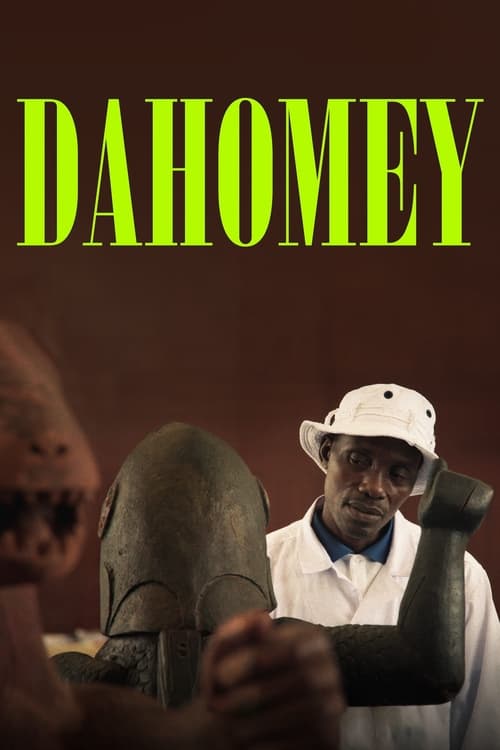
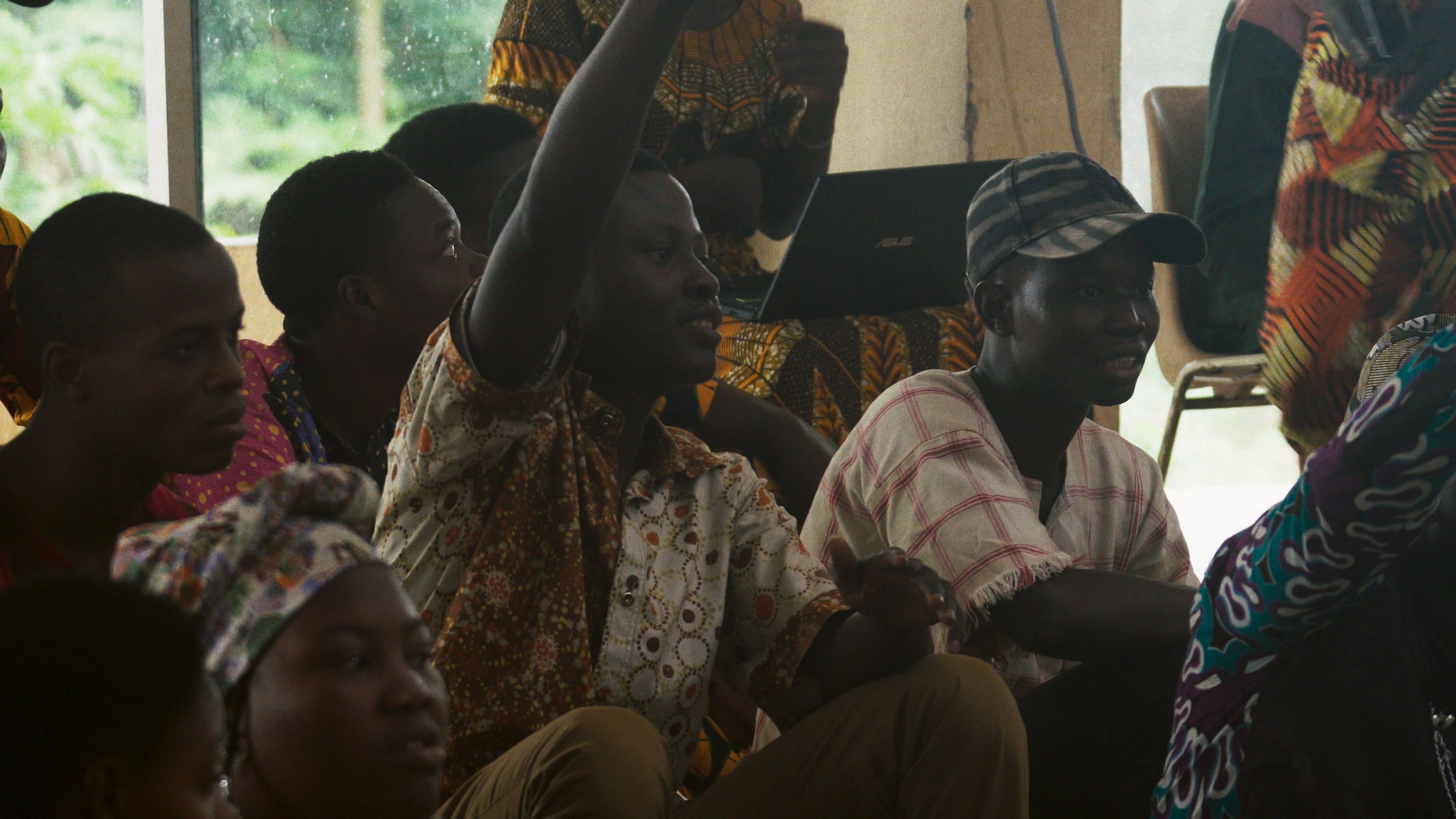
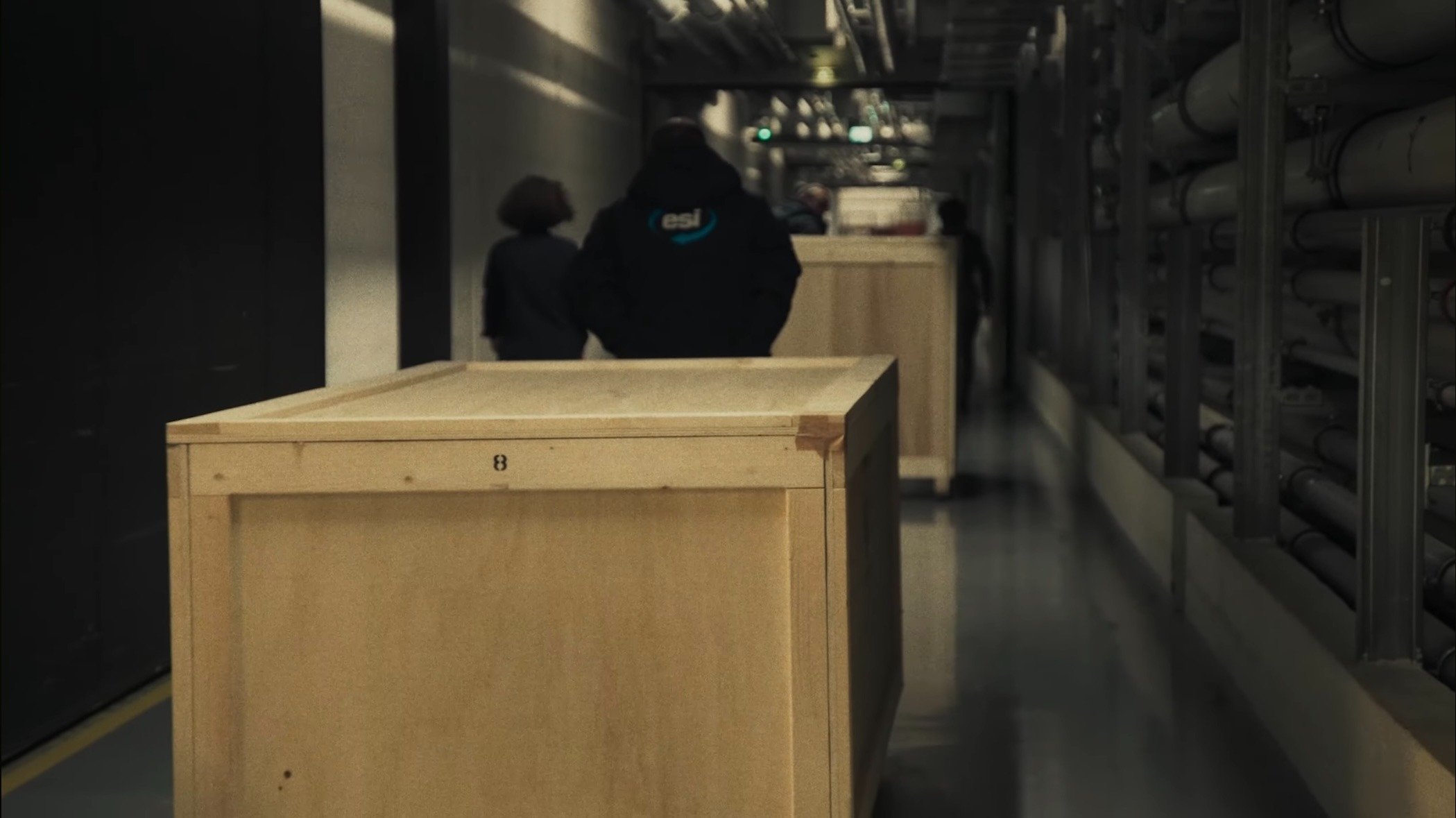
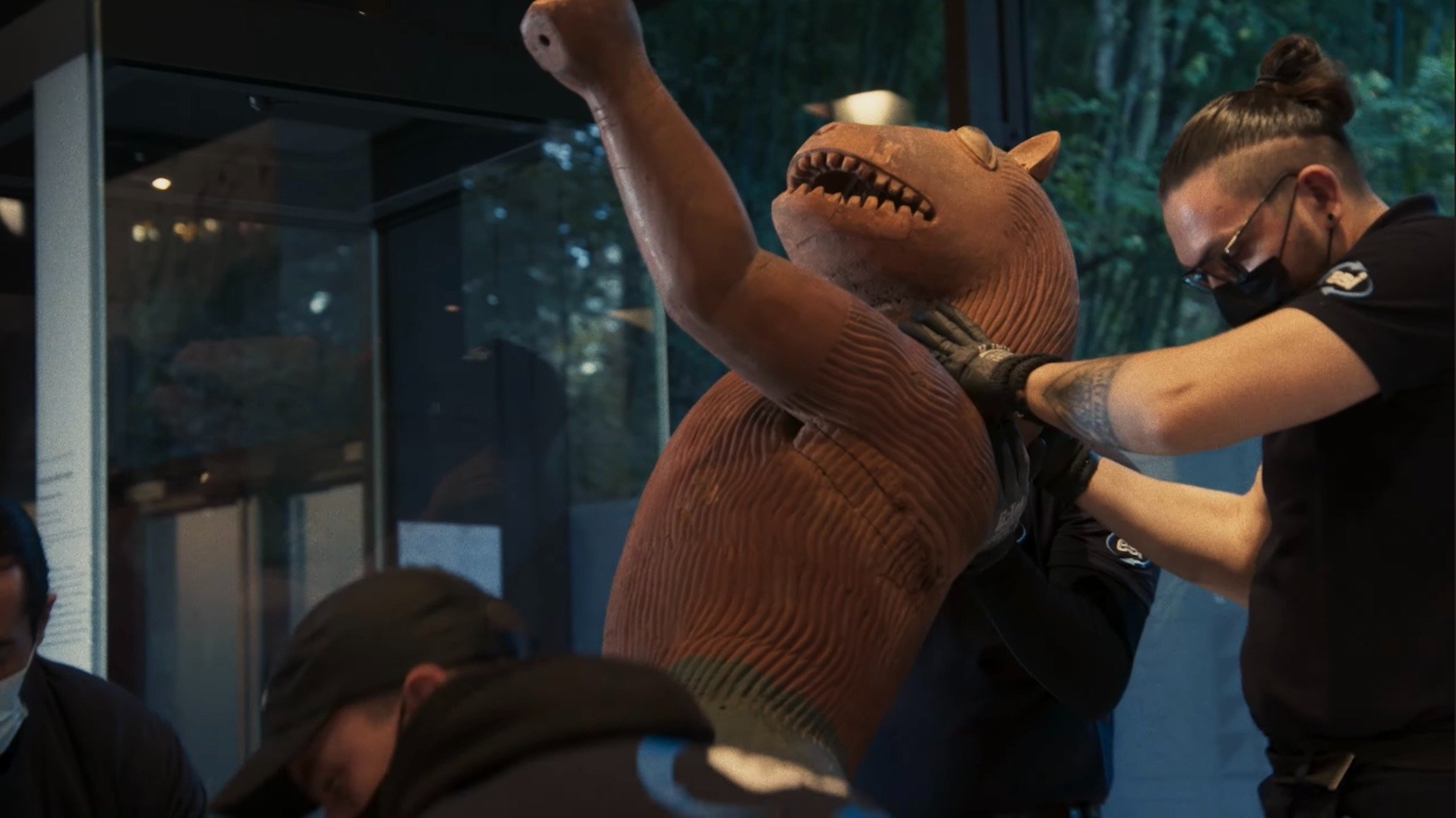
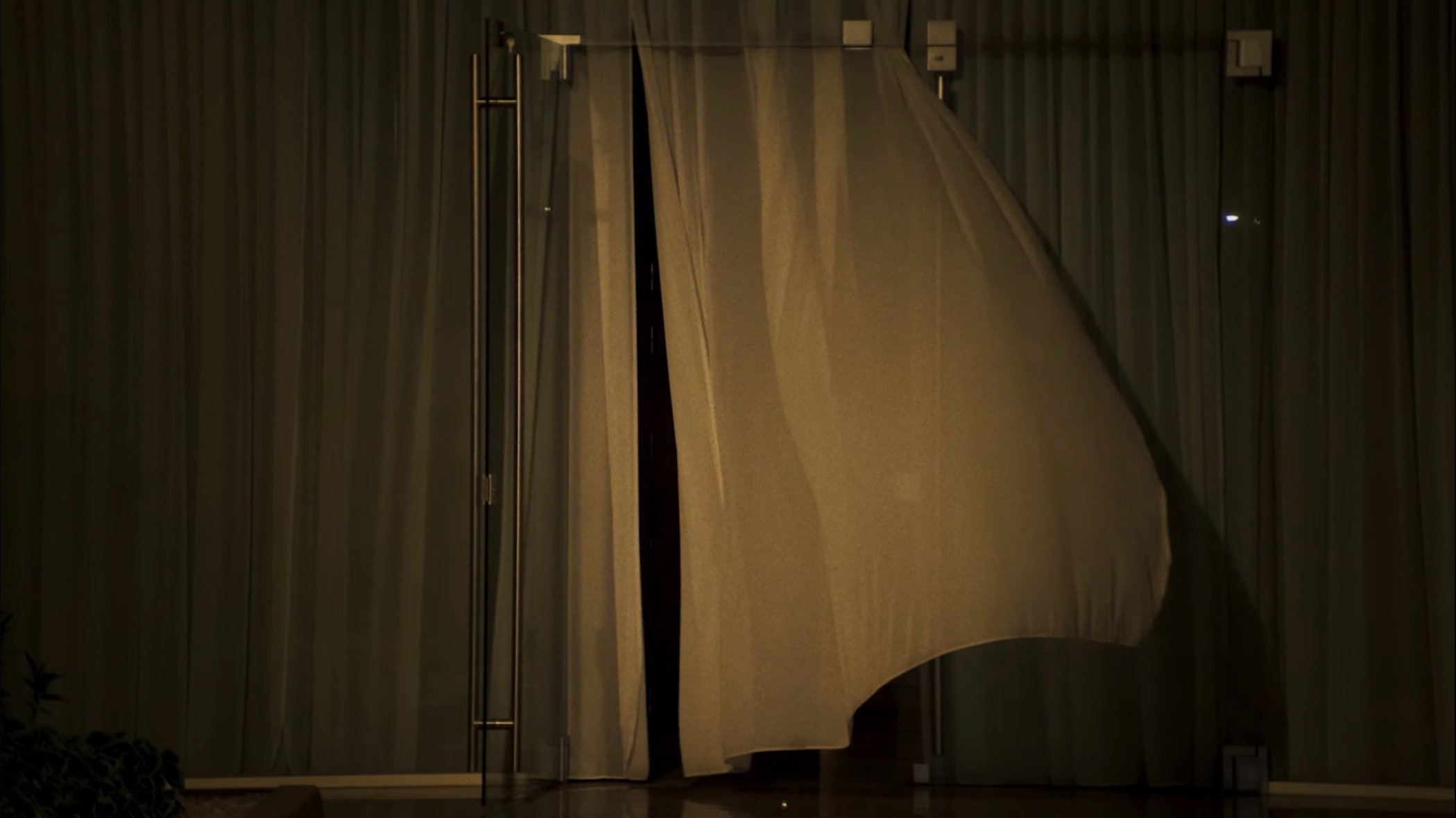
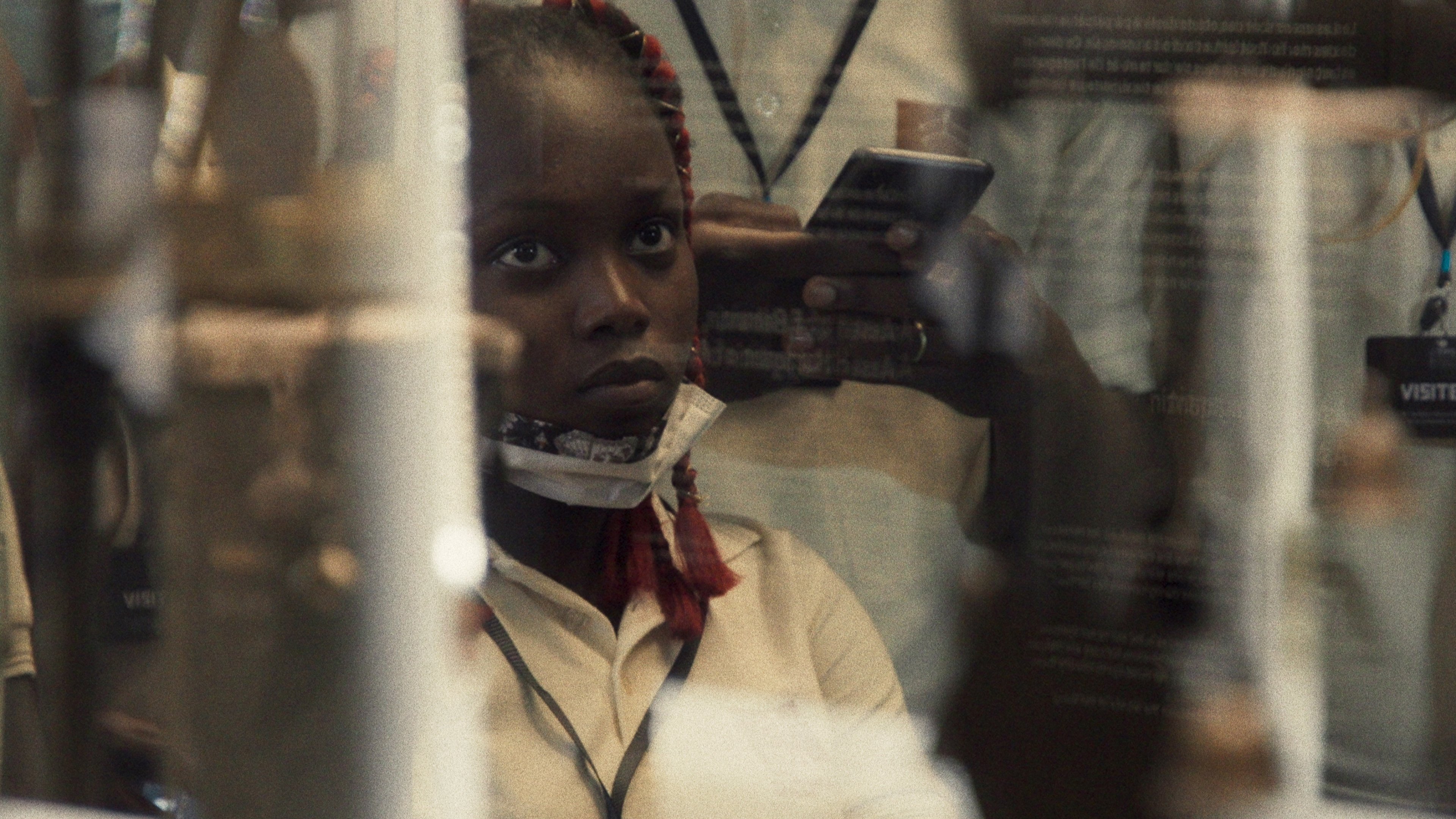
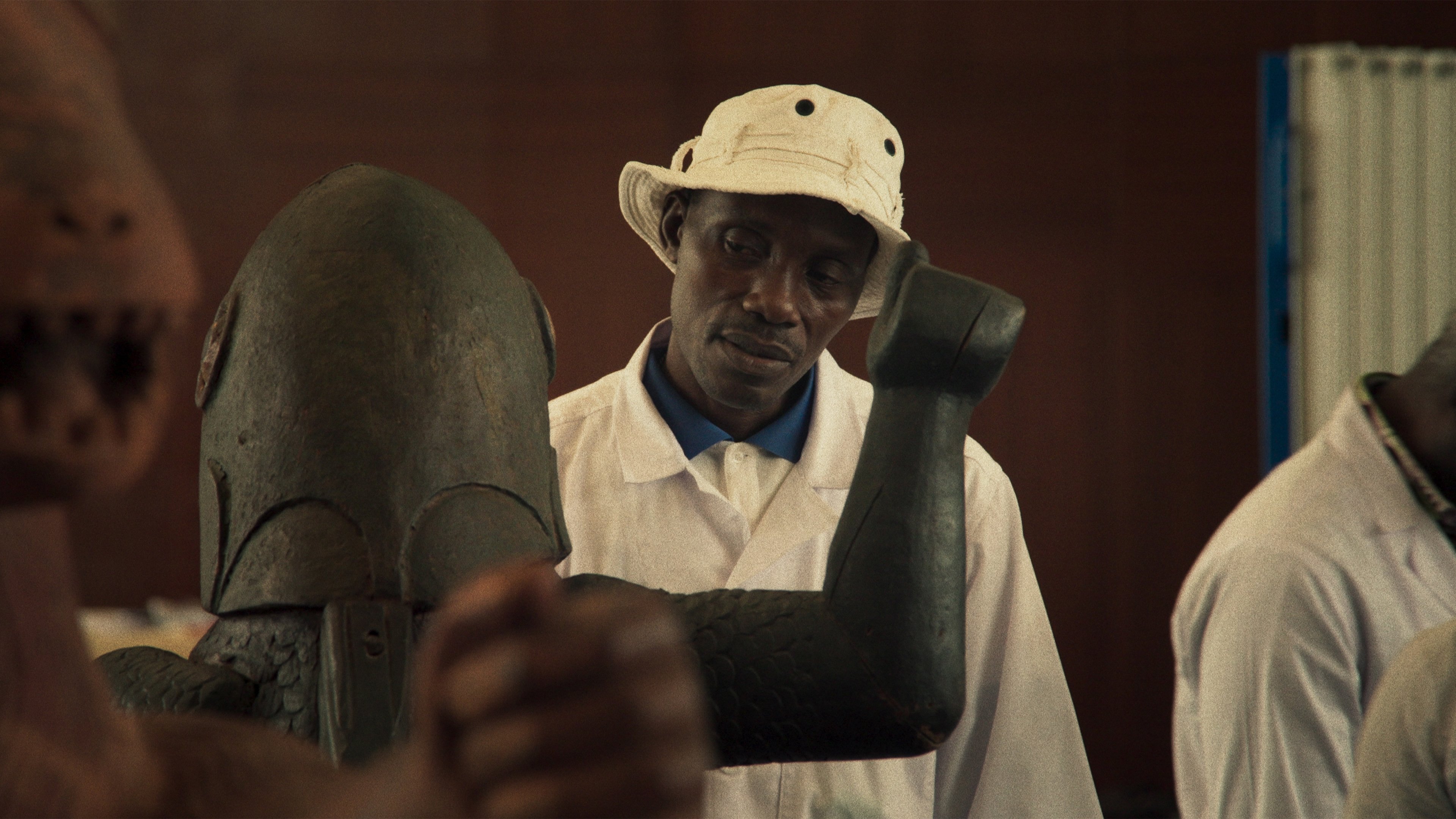
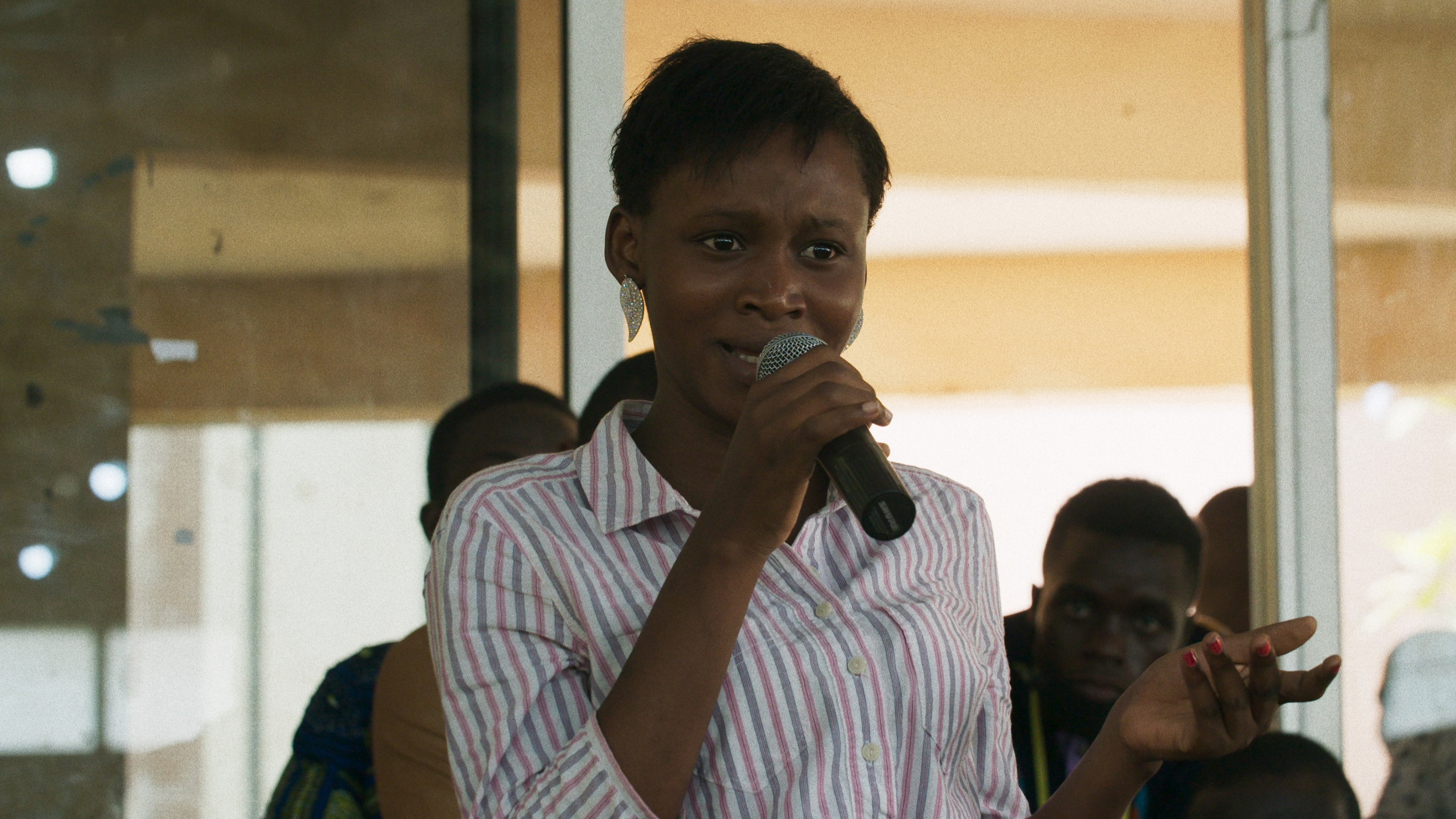
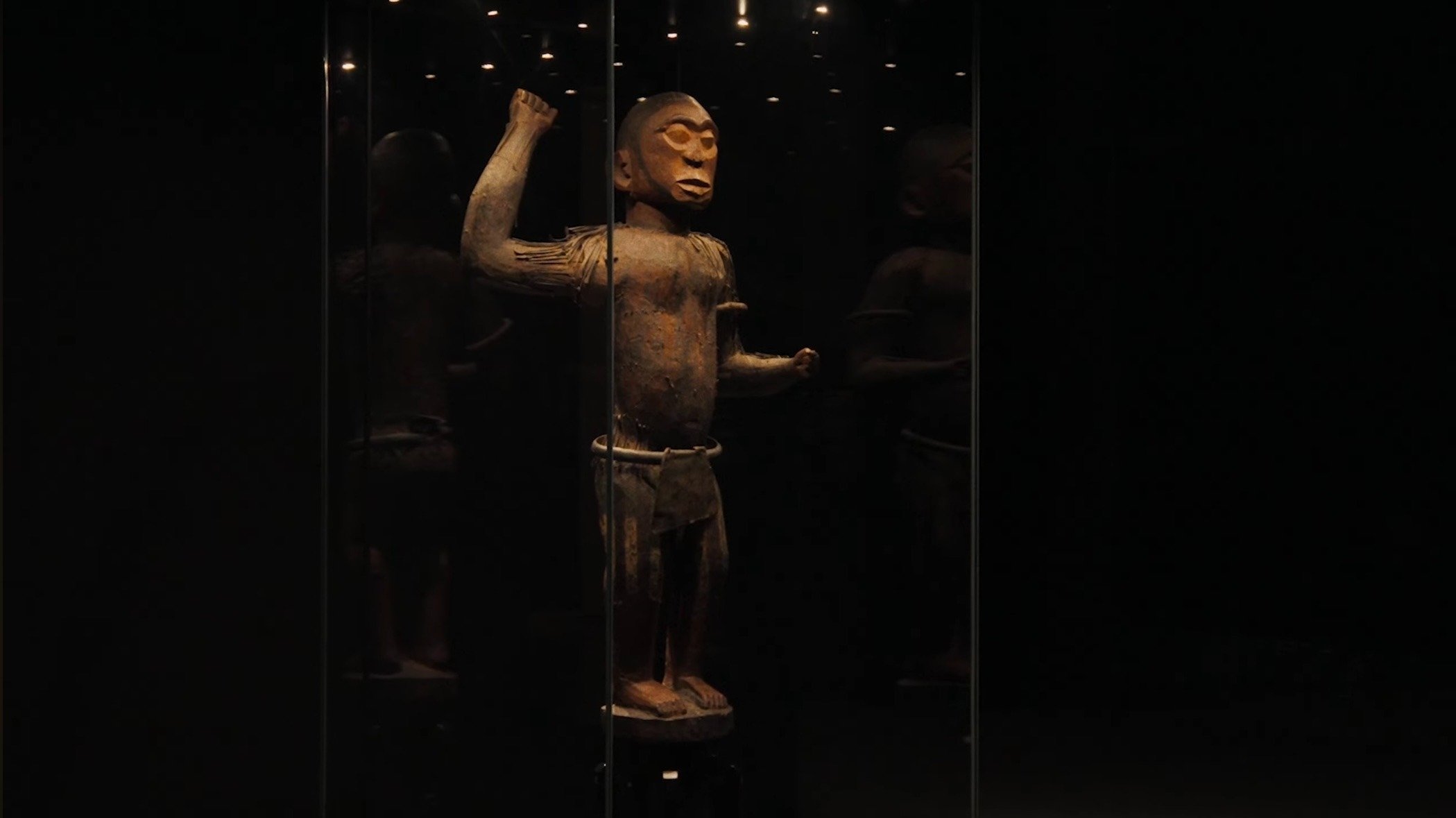
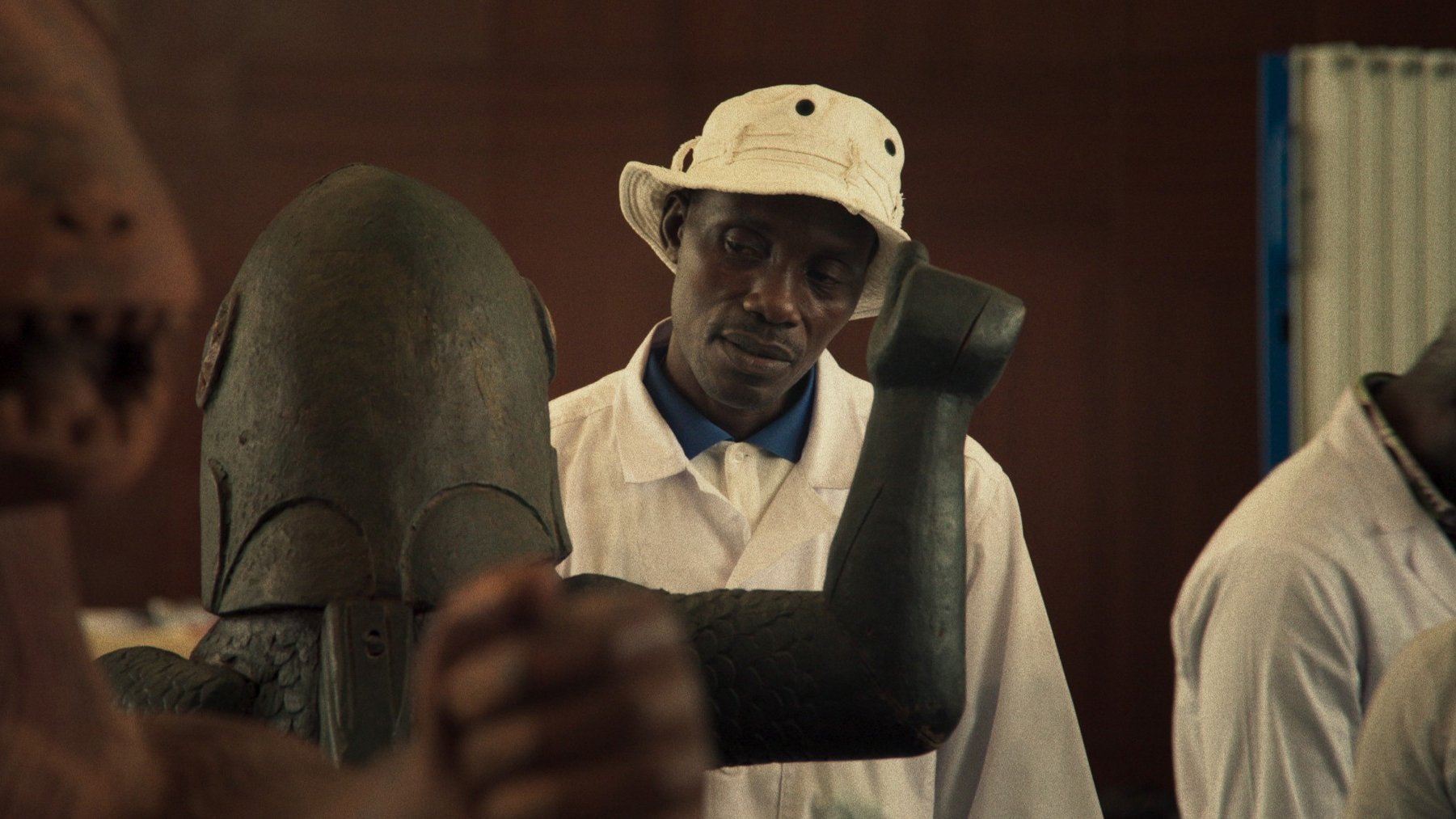
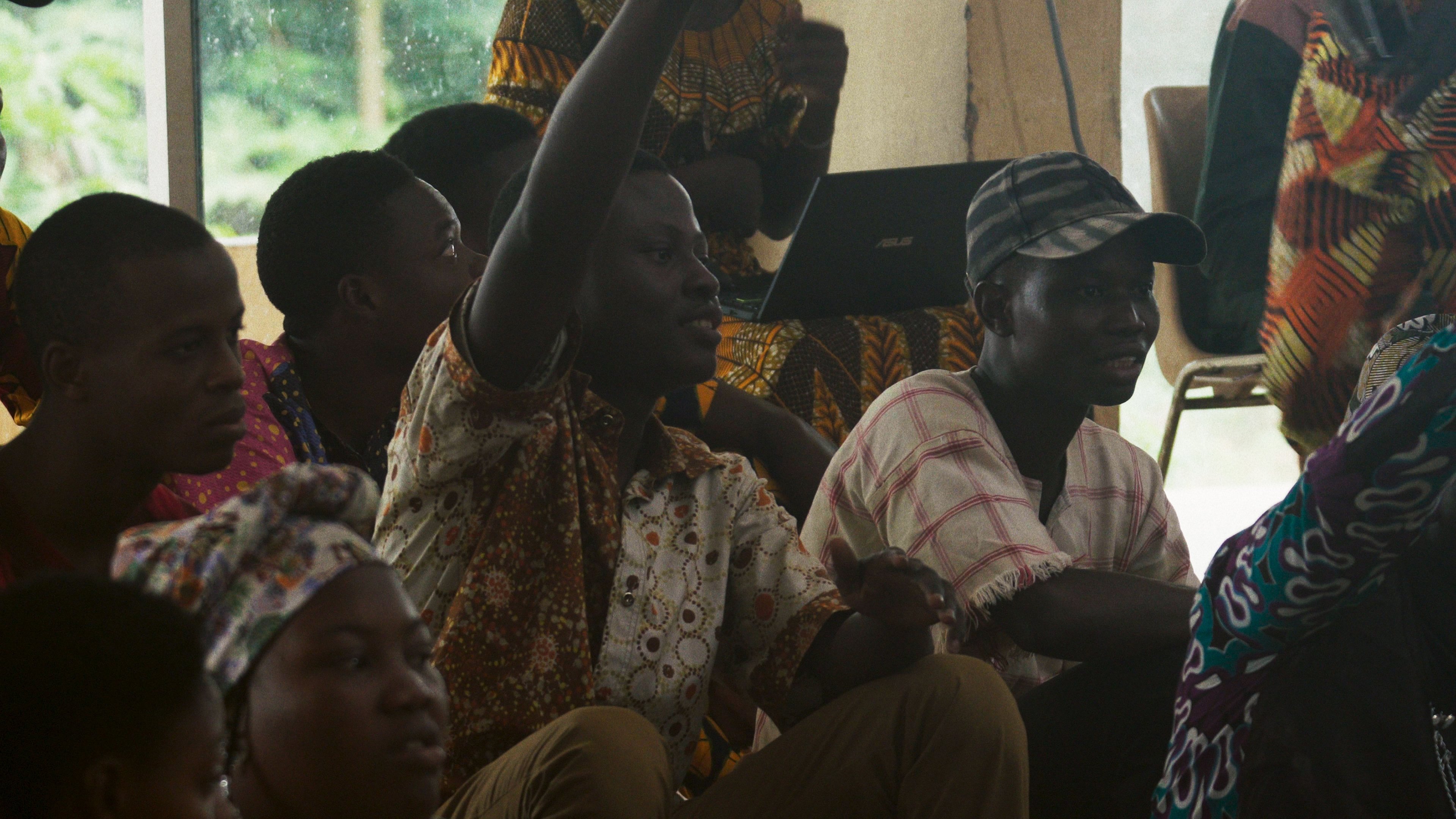
Diop follows up Atlantics with an experimental documentary (the exact type of film my professor for the class I saw this for won't shut up about) about the return of artifacts that French colonizers stole from Benin, mixing fly-on-the-wall footage with a more artistic presentation. We switch between slow cinema-like footage of the preparation of the artifacts, and voiceover from the point of view of the artifact itself--an artistic choice that threw me off at first, and I can imagine it alienating many viewers, but it serves to examine how there is an entire history and culture behind an inanimate object, and does so in a hauntingly beautiful way. Many of the voiceover moments are accompanied by a black screen and some gorgeous electronic music, adding an intoxicating atmosphere that makes the artifact's journey feel very intimate yet massive. For me the highlight of the doc has to be the last 20 minutes, in which activists and scholars debate each other over whether these artifacts should be brought to the sites of worship they were meant for or if they belong in a museum, and whether it is sufficient for the French government to just return these 26 artifacts to Benin--that is out of 7,000, which just goes to show the horrible lengths that French colonizers went to steal Dahomey culture, and that this return is an inch forward at best. The film does not take an instant judgment on either side of these debates, letting us listen to all these voices before coming to our own conclusion--yet it shows an empathy and understanding for the more fervent anti-colonial voices we hear that prevents this from succumbing to toothless both-sides-ism. The final image of the King Ghezo statue in the museum, rather than being a celebratory image of visitors gazing at it with curiosity and amazement, is an ambiguous one that shows the statue alone in the gallery as it closes, wondering if it will ever find its place. I can see why this won at Berlin last year, since it's an important, and often quite remarkable doc whose message will unfortunately stay relevant until all colonized people finally get their culture back, if ever. Just do not go in expecting a more conventional talking-heads-and-narration doc, since this is just as much an art piece as a nonfiction film.