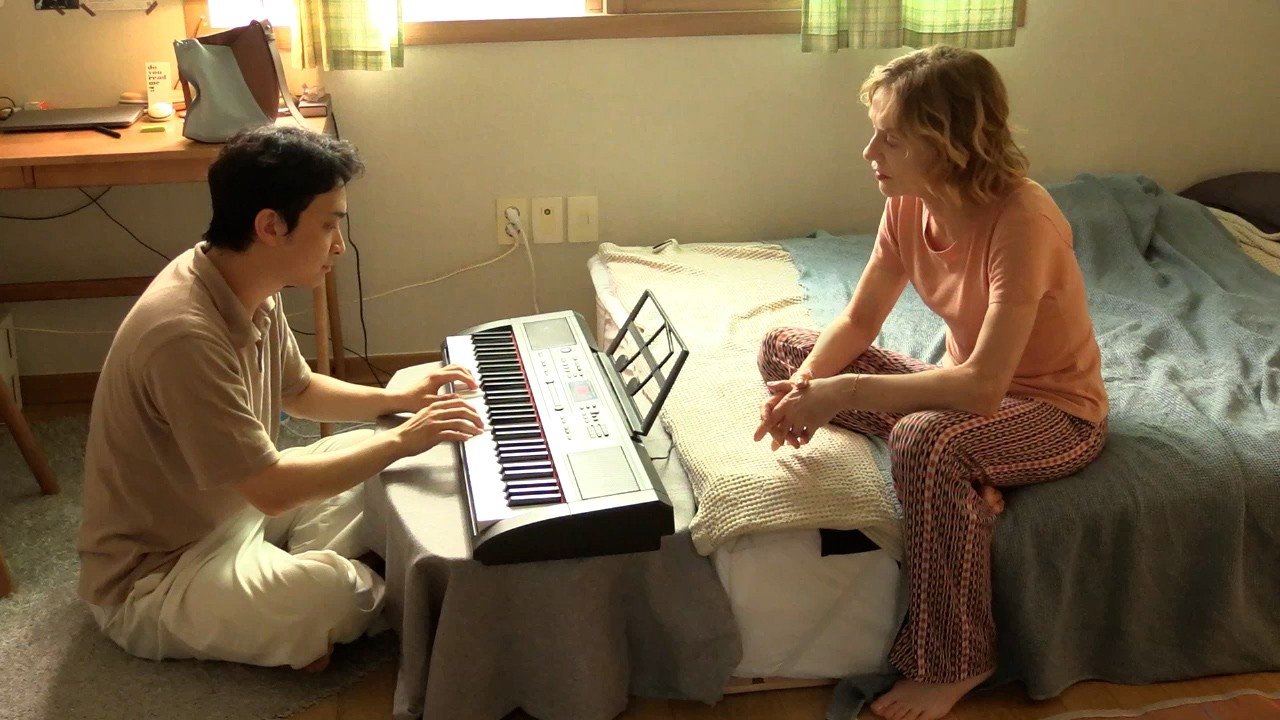
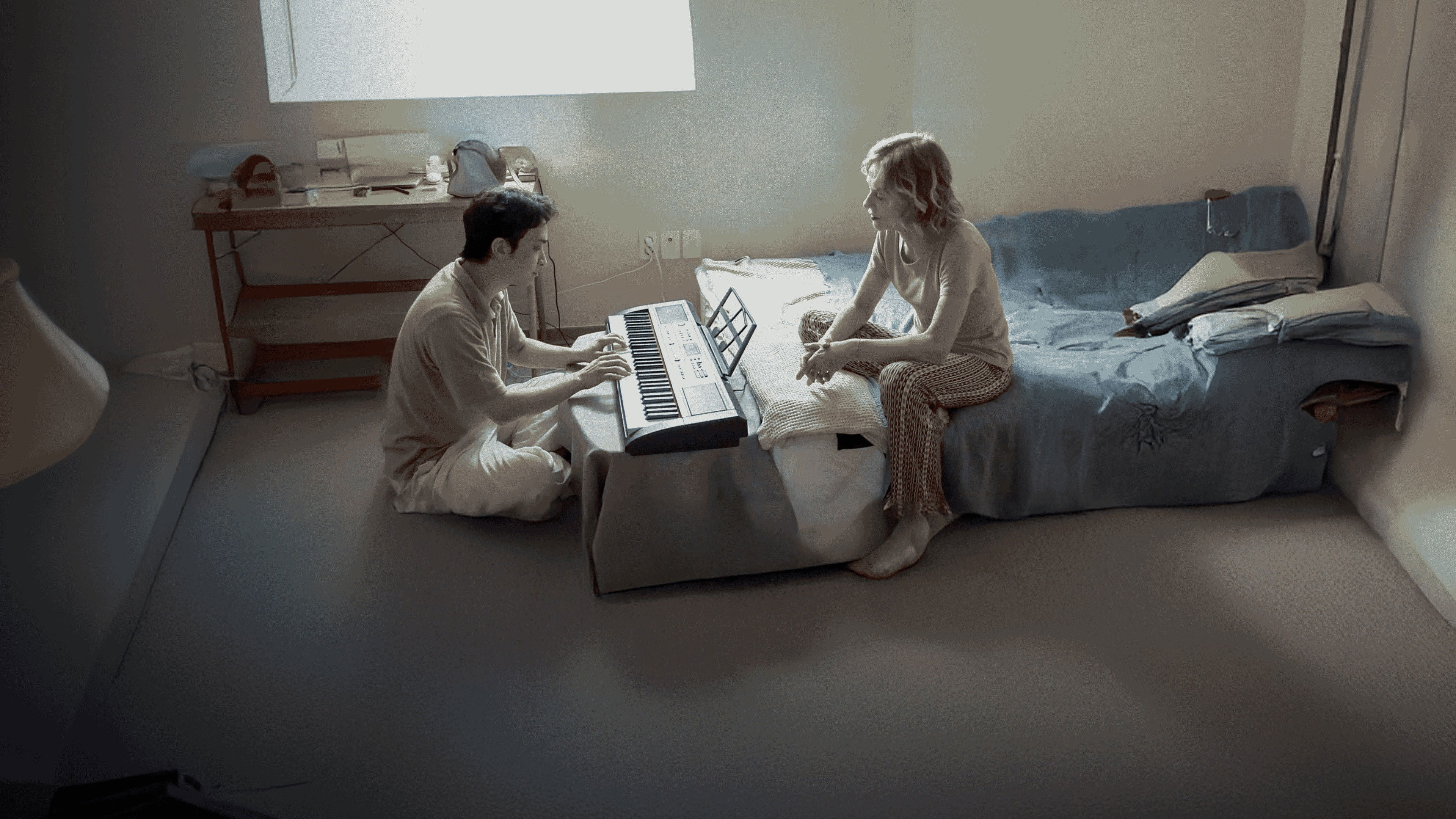
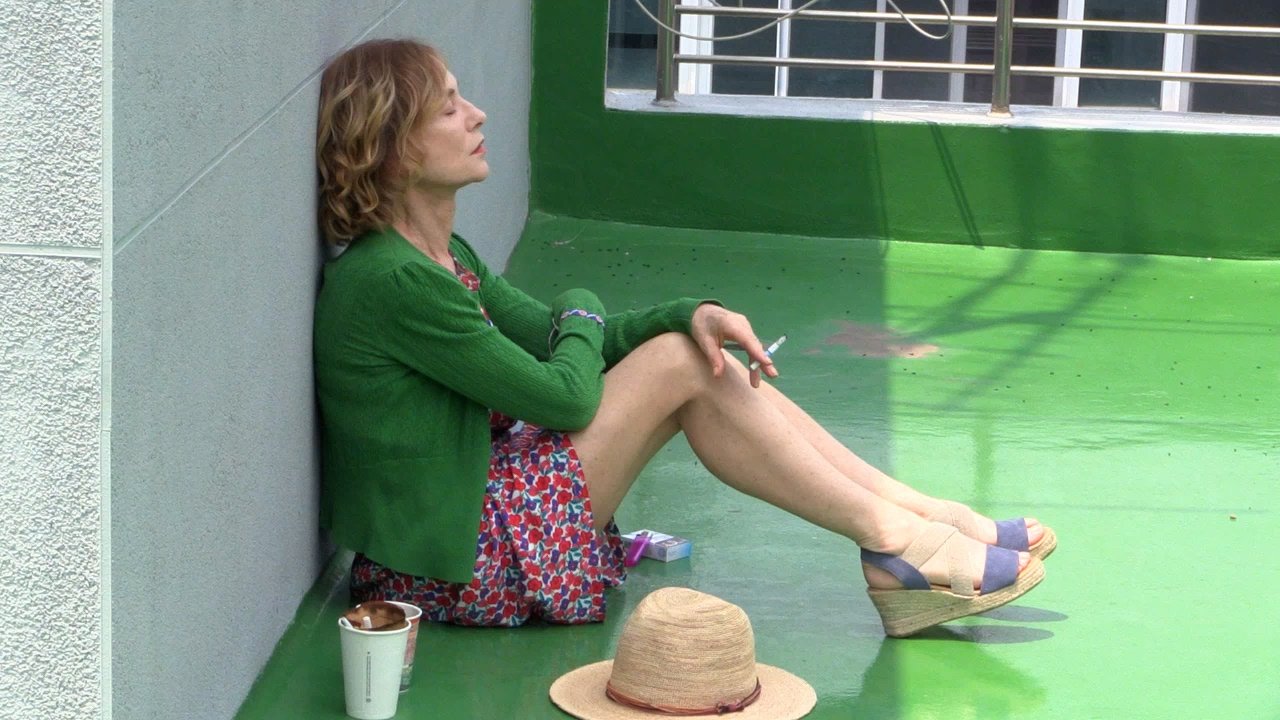
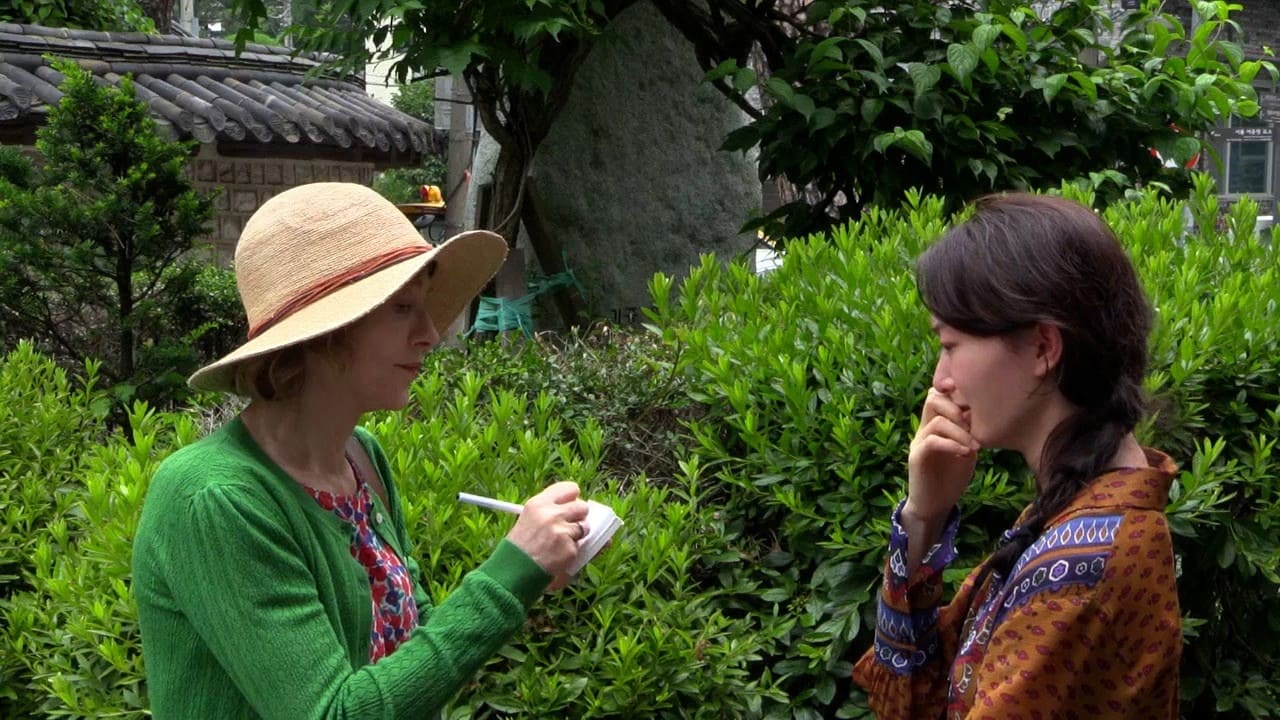
I think Hong taps into some culturally specific pain points, using Huppert as the cinematic mirror. The two women who are asked what playing their respective instruments make them feel give the exact same rehearsed answer. Asking to be emotional in a sober context, a juxtaposition to Hong’s usual emotional conduits, reflects the uncomfortability involved in talking about one’s feelings. The mother-son conflicts and alluded-to father-daughter relationships further drill into the culturally unresolved.
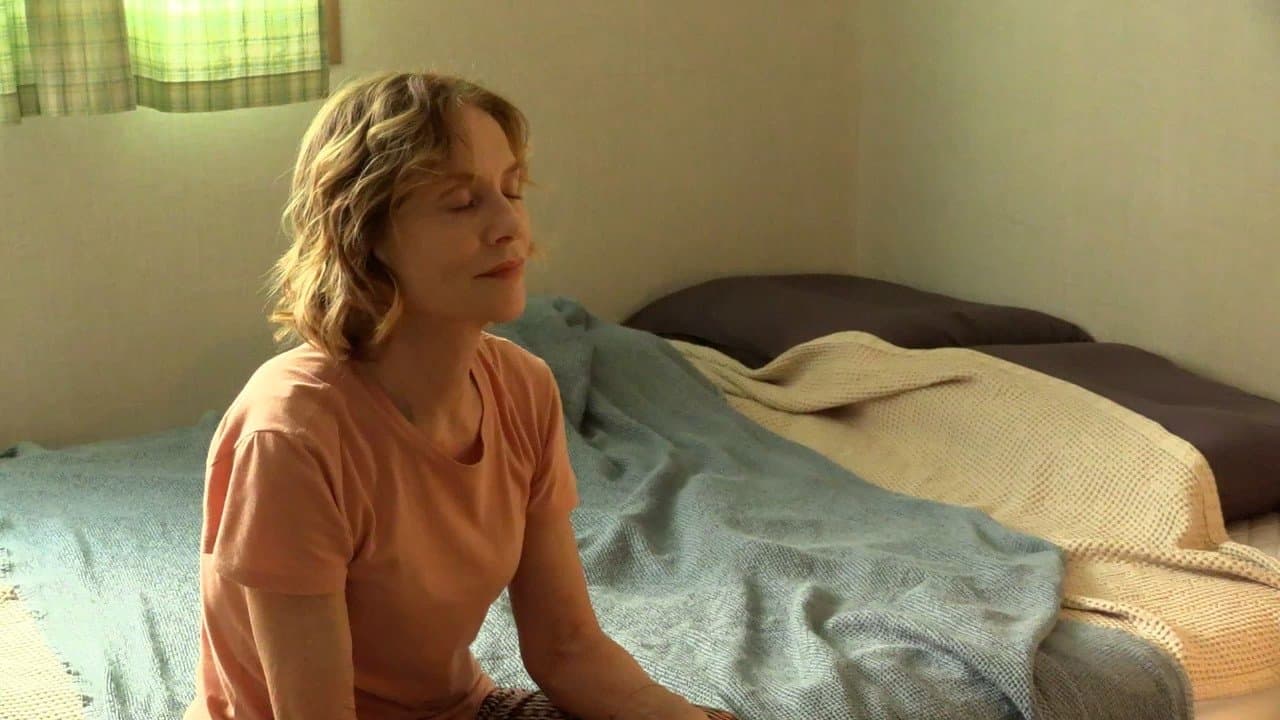
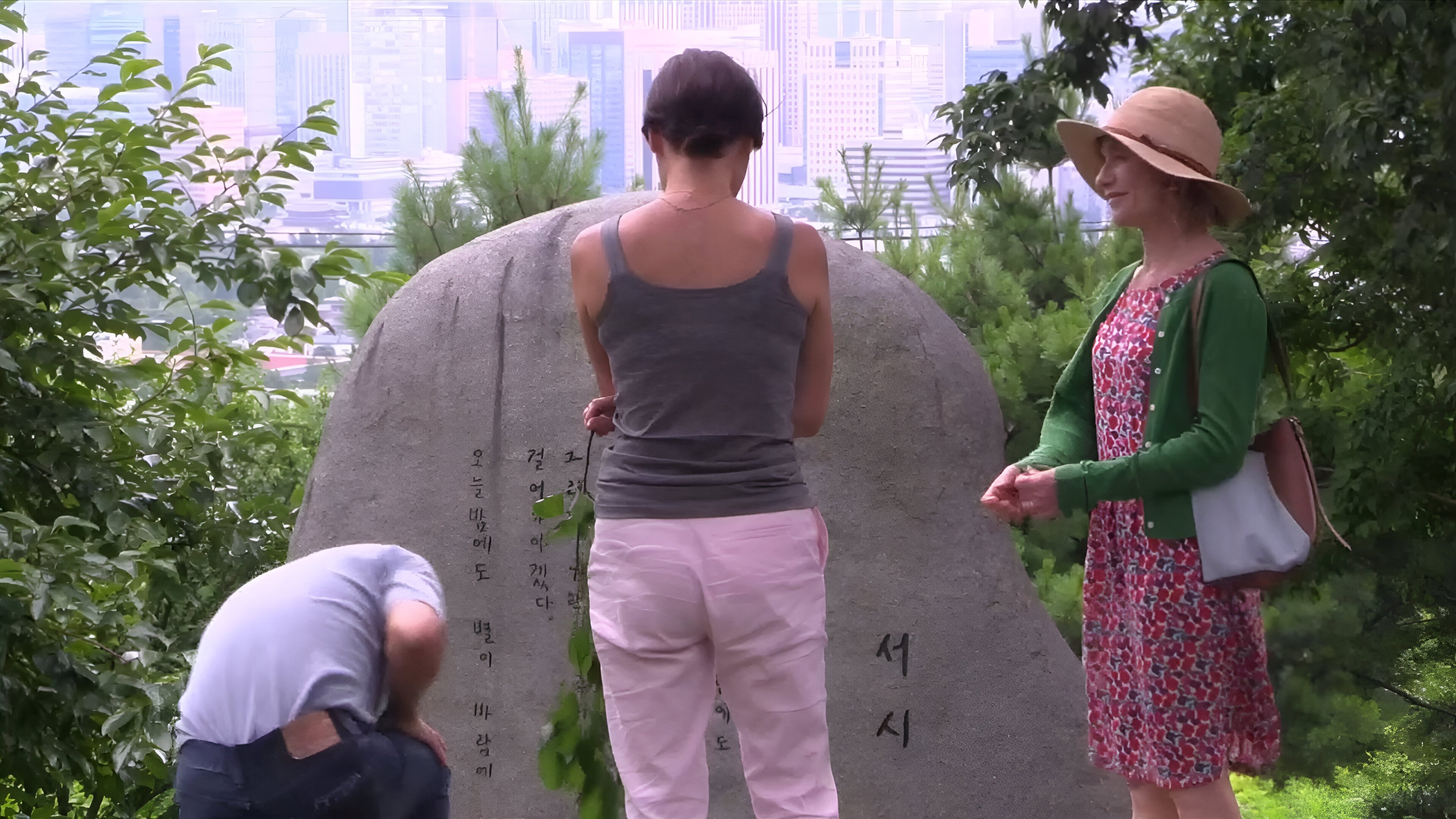
Huppert is not without her own Western vanity though. She has a striking line about the dead poet, finding some kind of reprieve in the deceased’s beauty. There’s further implication in her own vices when she directs the feeling questions toward senses of pride. It’s slight because her novel approach to teaching French is infused with her own sense of pride. Her command and tutelage of the language represents her own proverbial instrument.
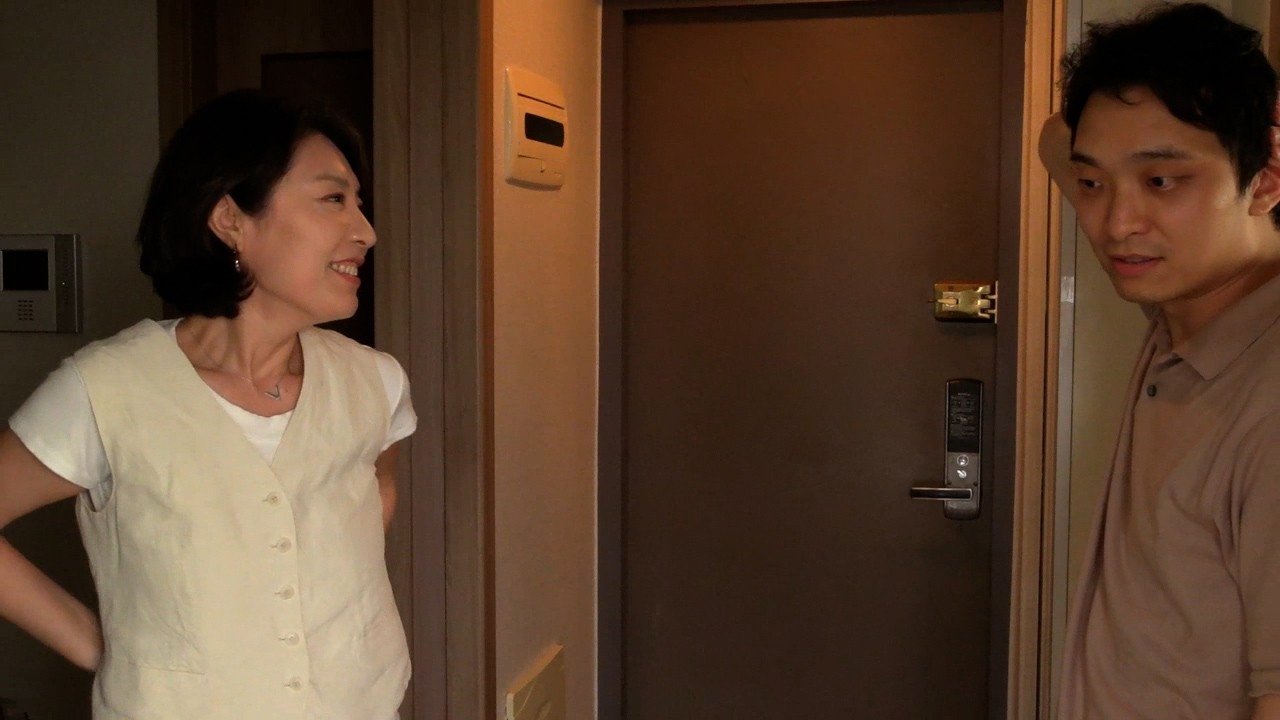
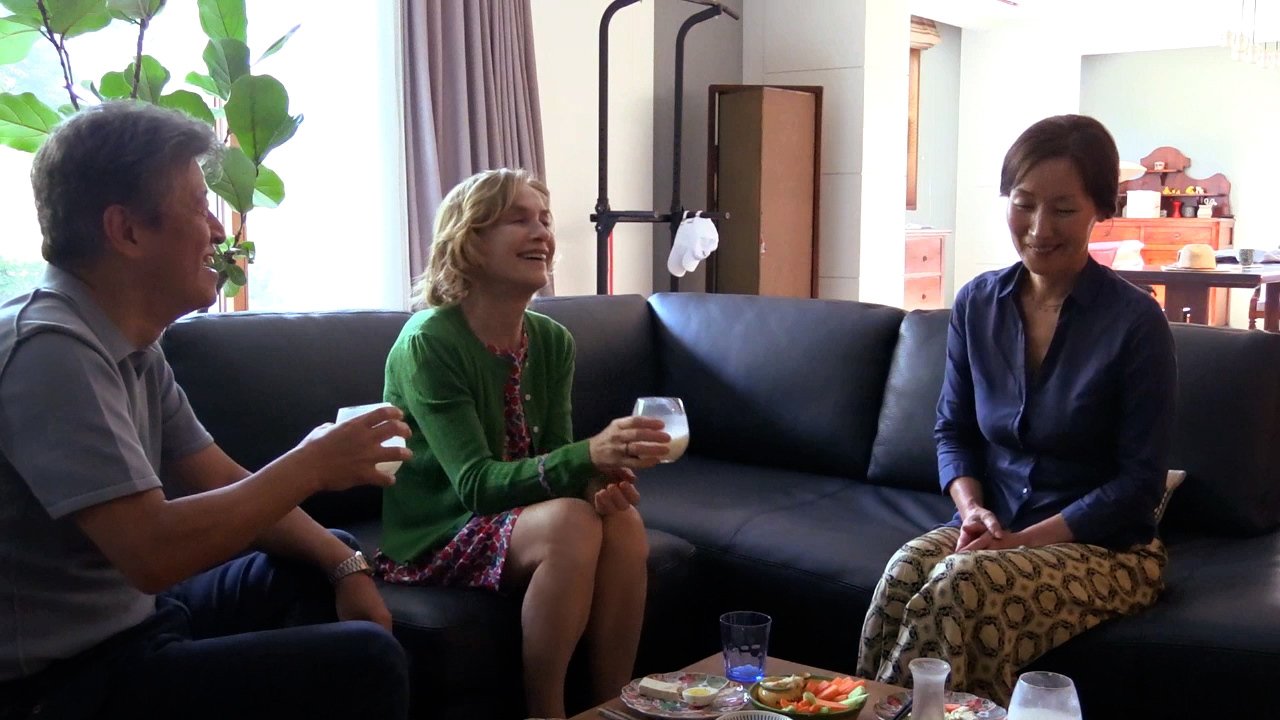
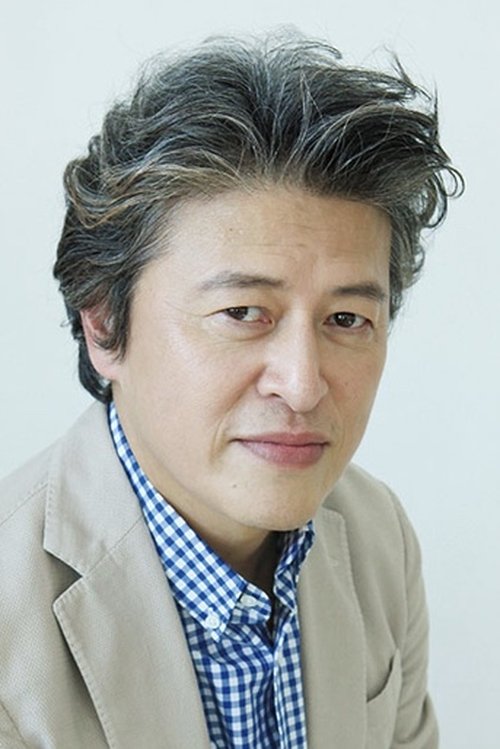
The Western-Korean romantic dynamic is definitely a theme. Huppert dubiously flirts with Hong vetern, Kwon Hae-hyo. Like what was up with that wink?? But the later reveal of her actual romantic relationship with Inguk is the catalyst to the familial cataclysm between Inguk and his mom. I don’t think it’s a far fetched reach to see the Korean female’s suspicion of the white woman. Like Kwon’s wife asks him why he drank so much.
I found this a surprisingly uplifting and upbeat Hong. Huppert infuses a more whimsical and straightforward investigation into the soul. “What do you feel?” And ironically the biggest outburst from Inguk’s mom is a sober one. Very unlike Hong’s standard fare. But don’t worry, everyone else is drinking Makgeolli the whole film.
I’ll never get tired of saying this, “no one does nothingness like Hong.”
I think Hong taps into some culturally specific pain points, using Huppert as the cinematic mirror. The two women who are asked what playing their respective instruments make them feel give the exact same rehearsed answer. Asking to be emotional in a sober context, a juxtaposition to Hong’s usual emotional conduits, reflects the uncomfortability involved in talking about one’s feelings. The mother-son conflicts and alluded-to father-daughter relationships further drill into the culturally unresolved.
Huppert is not without her own Western vanity though. She has a striking line about the dead poet, finding some kind of reprieve in the deceased’s beauty. There’s further implication in her own vices when she directs the feeling questions toward senses of pride. It’s slight because her novel approach to teaching French is infused with her own sense of pride. Her command and tutelage of the language represents her own proverbial instrument.
The Western-Korean romantic dynamic is definitely a theme. Huppert dubiously flirts with Hong vetern, Kwon Hae-hyo. Like what was up with that wink?? But the later reveal of her actual romantic relationship with Inguk is the catalyst to the familial cataclysm between Inguk and his mom. I don’t think it’s a far fetched reach to see the Korean female’s suspicion of the white woman. Like Kwon’s wife asks him why he drank so much.
I found this a surprisingly uplifting and upbeat Hong. Huppert infuses a more whimsical and straightforward investigation into the soul. “What do you feel?” And ironically the biggest outburst from Inguk’s mom is a sober one. Very unlike Hong’s standard fare. But don’t worry, everyone else is drinking Makgeolli the whole film.
I’ll never get tired of saying this, “no one does nothingness like Hong.”