

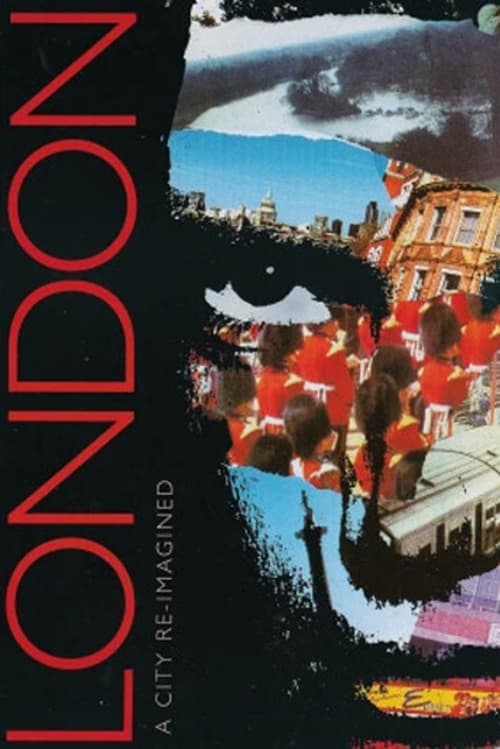
London
1994·Documentary·1h 25m
7.1
★
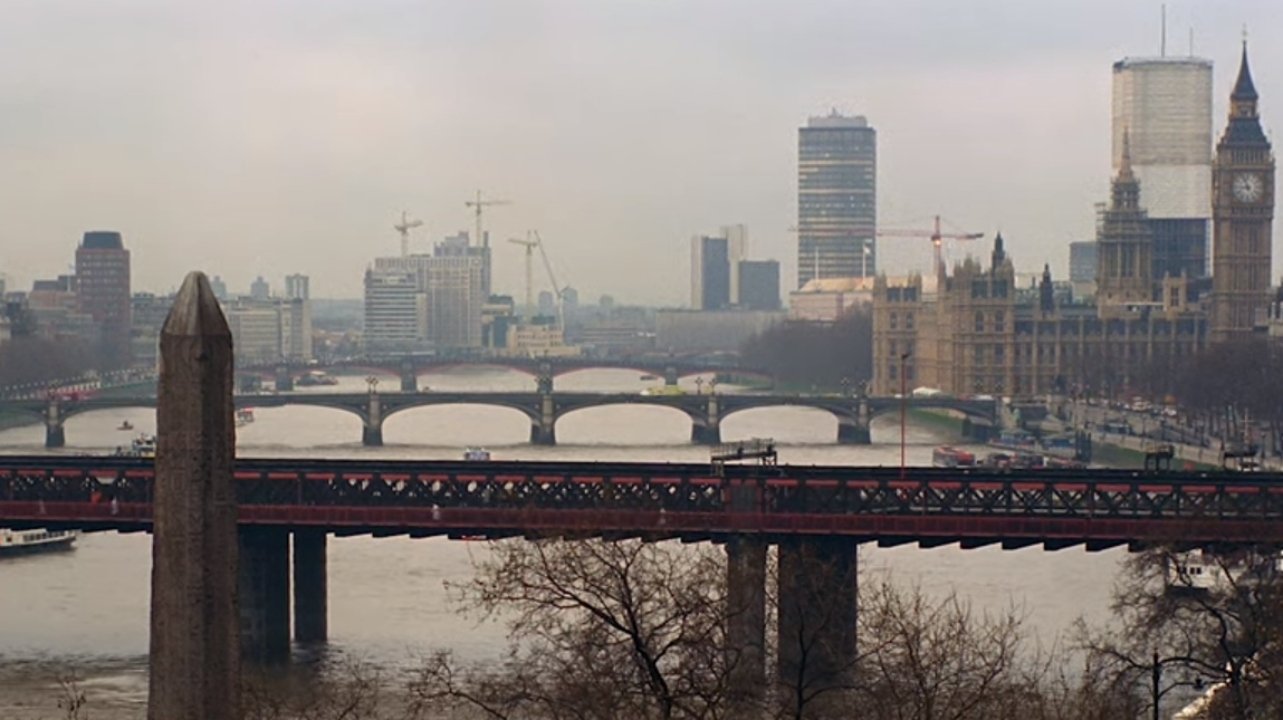
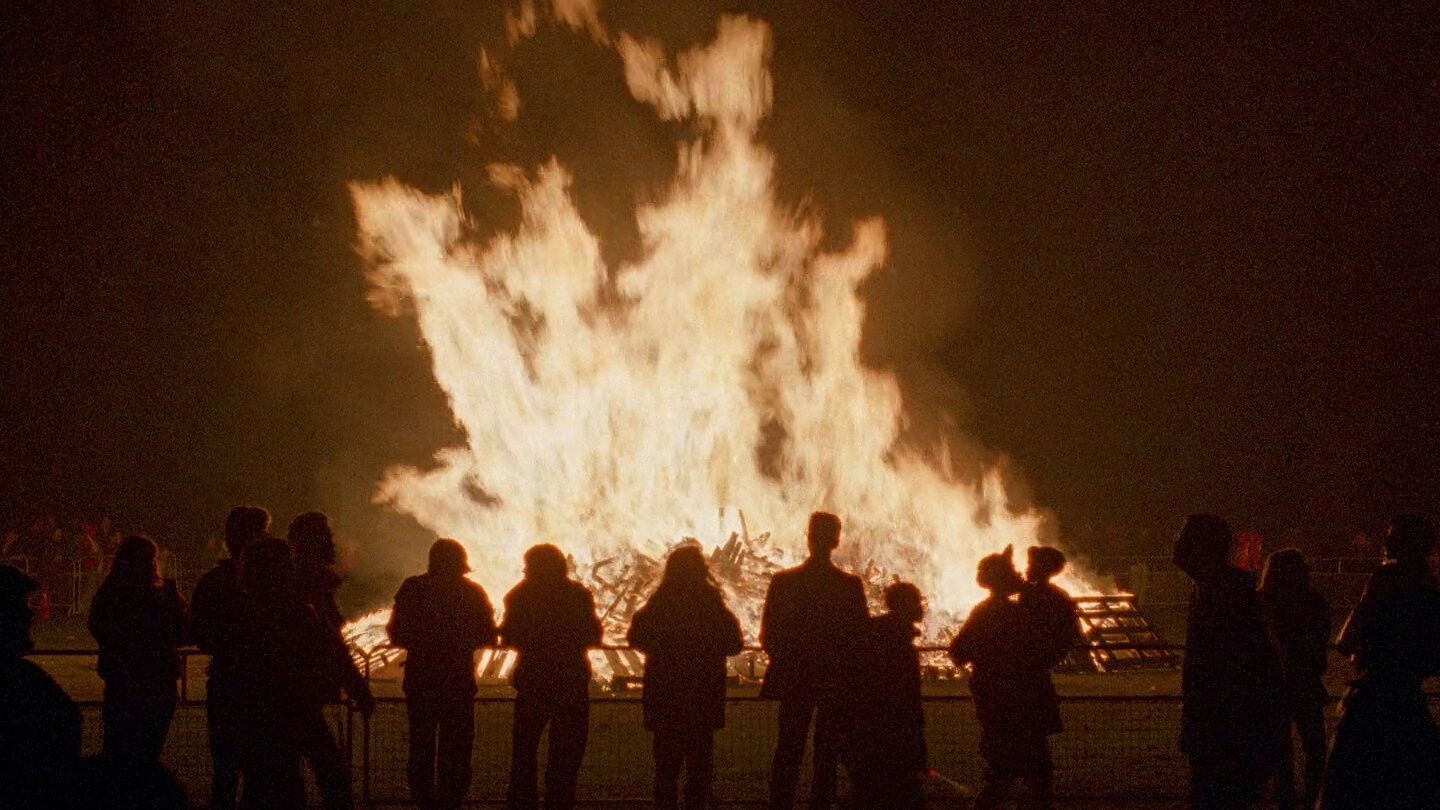


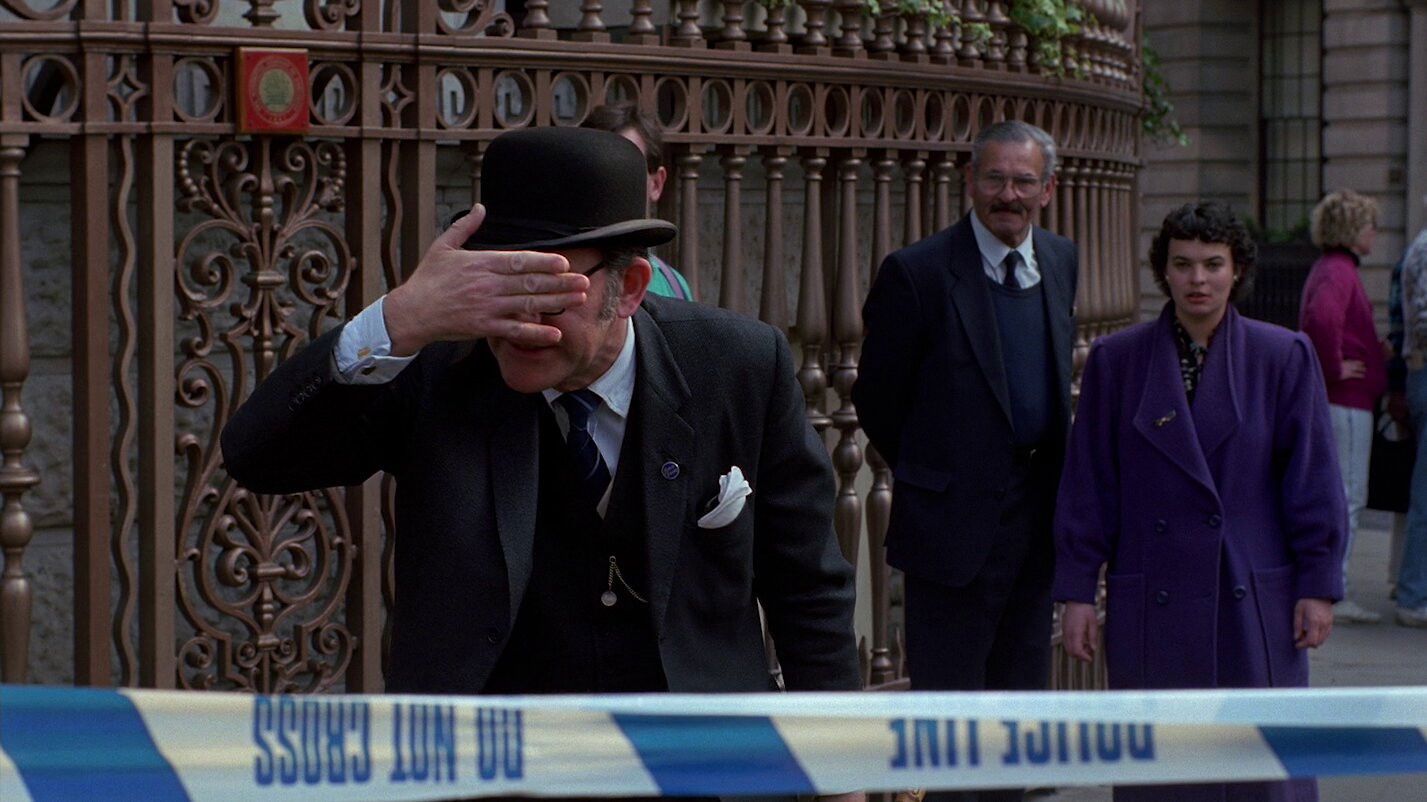
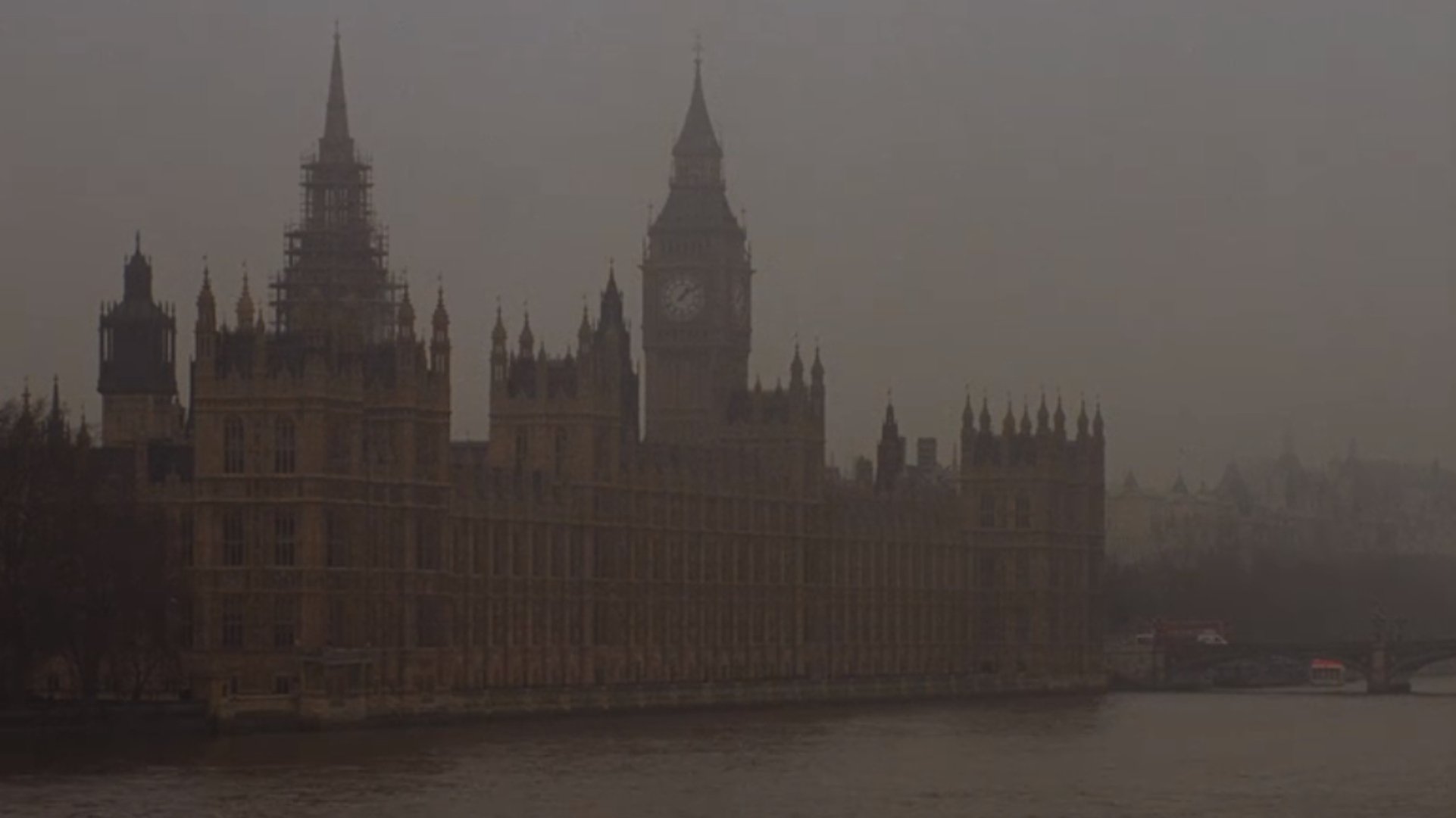
A psycho-geographic journey through London and its history, as undertaken by an unseen narrator and his companion, Robinson, at the time of the 1992 general election.
Directed by Patrick Keiller
london, england
melancholy
architecture
british history
docufiction
psychogeography

IMDB
N/A
Cast

Paul Scofield
Narrator (voice)
Crew

Keith Griffiths
Producer
Popular Reviews
10 reviews
Kieran
10.0★ · 11/18/24
It strange how something so remarkably pointed can be so impressionistic. You insert yourself into this film and the film inserts its self into you. It’s impressionable and spongy, yet it leaves a lasting mark on you. Every time I need to reorient myself I watch this. I have a feeling everyone who watches it will probably come away with something different- a line that hits in weirdly hard way, a shot that evokes both melancholy and jubilation, its obliqueness and transparency. I love it.
It strange how something so remarkably pointed can be so impressionistic. You insert yourself into this film and the film inserts its self into you. It’s impressionable and spongy, yet it leaves a lasting mark on you. Every time I need to reorient myself I watch this. I have a feeling everyone who watches it will probably come away with something different- a line that hits in weirdly hard way, a shot that evokes both melancholy and jubilation, its obliqueness and transparency. I love it.


Kieran
10.0★ · 07/09/24
Seemed appropriate to formally celebrate the end to the last 14 years by watching this masterpiece.
Seemed appropriate to formally celebrate the end to the last 14 years by watching this masterpiece.
Kieran
10.0★ · 04/06/24
Ambient filmmaking. Specifically targeted Docu-fiction held up as a mirror to wider society. Scofield’s labyrinthine narration going against the grain for Landscape Films while being witty and genuinely insightful. A very special film.
I’d forgotten just how much I love this film. I loved it when I watched it when I was younger even though I didn’t understand it but now I truly and utterly adore it.
It’s also amusing that, if you’re flippant enough, you can boil down Robinson’s major problem with London to the fact that it’s not Paris.
“It always seems to me that I should be happy anywhere but where I am”
I’d forgotten just how much I love this film. I loved it when I watched it when I was younger even though I didn’t understand it but now I truly and utterly adore it.
It’s also amusing that, if you’re flippant enough, you can boil down Robinson’s major problem with London to the fact that it’s not Paris.
“It always seems to me that I should be happy anywhere but where I am”
Ambient filmmaking. Specifically targeted Docu-fiction held up as a mirror to wider society. Scofield’s labyrinthine narration going against the grain for Landscape Films while being witty and genuinely insightful. A very special film.
I’d forgotten just how much I love this film. I loved it when I watched it when I was younger even though I didn’t understand it but now I truly and utterly adore it.
It’s also amusing that, if you’re flippant enough, you can boil down Robinson’s major problem with London to the fact that it’s not Paris.
“It always seems to me that I should be happy anywhere but where I am”
I’d forgotten just how much I love this film. I loved it when I watched it when I was younger even though I didn’t understand it but now I truly and utterly adore it.
It’s also amusing that, if you’re flippant enough, you can boil down Robinson’s major problem with London to the fact that it’s not Paris.
“It always seems to me that I should be happy anywhere but where I am”
duchessofburgundy
"It seemed there was no longer anything a Conservative government could do to cause itself to be voted out of office" jesus christ.
This is as much a piece of British Social Historiography as any academic article I've ever come across on this similar period of massive interest to me, and also one of the most genuinely effective anti-Tory films I've ever seen. It's an examination of a collective psyche which runs through Britain: in which we continually crave true newness and better lives but never feel we have the means to achieve them because we can't imagine them under the constant hand of our grim political structure. I am so fascinated by Keiller's use of buildings as the primary mode of visual storytelling here, as they tell as many stories as the narrator himself does: they tell the stories of small businesses created with love for a community (i.e. the dilapidated Halal butcher's, trying desperately to survive) but destined to fail under the hand of Tory austerity: and they tell the opposite story, buildings built without love and yet destined to grow indefinitely, such as the bank which not even an active attack during the Troubles could scathe the physical infrastructure of.
The character of Robinson, though we never see him and only hear of him in relation to the narrator, embraces many of the facets of British culture worth protecting and preserving - he loves our artists and our poets, both native and adopted, he loves the variation of cultures and people who exist in a fallen metropolis like London. He loves everything which a Conservative government inherently seeks to desecrate: and this culminates in the fact that his position as an arts university lecturer is threatened by austerity and the government's huge desire to gentrify everything and everybody into the boxes most convenient for late stage capitalism. Public transport and social housing have histories to Robinson: these are both personal and political histories, and histories which we disregard when we view these systems as simply means to an end and not places where people meet, learn, live, and provide opportunities for growth. Robinson is a representation of what socialism could be in Britain: an economy centred around knowledge and understanding and a genuine love of people and their ideas and beliefs, unscathed by processions and advertisements which serve no meaningful purpose but to uphold the ruins of an empire which keeps us trapped in the past.
I don't have much personal connection to the city of London myself, nor do I ever plan to adopt it as a city, I only really go there if needs must (this is a fancy way of saying "on the tour circuit," why lie) and yet the specific atmosphere of a crumbling metropolis under the hands of eternal Tory cruelty to arts and culture, but also to the genuine outsiders and eccentrics of humanity, feels like it could apply anywhere in England. This taps into the same emotion as Dog Man Star by Suede did when I heard it for the first time: no I won't elaborate. This is just exactly how I see the world and my thoughts are getting a little messy now so tl;dr really really loved this, not one to be rated on a conventional scale necessarily but a beautiful watch.
As another side note, it's both funny and terrifying how quickly certain aspects of this film would be rendered irrelevant for over a decade by New Labour's promises of Newness, but also how quickly they would be reinstated as relevant after that.
This is as much a piece of British Social Historiography as any academic article I've ever come across on this similar period of massive interest to me, and also one of the most genuinely effective anti-Tory films I've ever seen. It's an examination of a collective psyche which runs through Britain: in which we continually crave true newness and better lives but never feel we have the means to achieve them because we can't imagine them under the constant hand of our grim political structure. I am so fascinated by Keiller's use of buildings as the primary mode of visual storytelling here, as they tell as many stories as the narrator himself does: they tell the stories of small businesses created with love for a community (i.e. the dilapidated Halal butcher's, trying desperately to survive) but destined to fail under the hand of Tory austerity: and they tell the opposite story, buildings built without love and yet destined to grow indefinitely, such as the bank which not even an active attack during the Troubles could scathe the physical infrastructure of.
The character of Robinson, though we never see him and only hear of him in relation to the narrator, embraces many of the facets of British culture worth protecting and preserving - he loves our artists and our poets, both native and adopted, he loves the variation of cultures and people who exist in a fallen metropolis like London. He loves everything which a Conservative government inherently seeks to desecrate: and this culminates in the fact that his position as an arts university lecturer is threatened by austerity and the government's huge desire to gentrify everything and everybody into the boxes most convenient for late stage capitalism. Public transport and social housing have histories to Robinson: these are both personal and political histories, and histories which we disregard when we view these systems as simply means to an end and not places where people meet, learn, live, and provide opportunities for growth. Robinson is a representation of what socialism could be in Britain: an economy centred around knowledge and understanding and a genuine love of people and their ideas and beliefs, unscathed by processions and advertisements which serve no meaningful purpose but to uphold the ruins of an empire which keeps us trapped in the past.
I don't have much personal connection to the city of London myself, nor do I ever plan to adopt it as a city, I only really go there if needs must (this is a fancy way of saying "on the tour circuit," why lie) and yet the specific atmosphere of a crumbling metropolis under the hands of eternal Tory cruelty to arts and culture, but also to the genuine outsiders and eccentrics of humanity, feels like it could apply anywhere in England. This taps into the same emotion as Dog Man Star by Suede did when I heard it for the first time: no I won't elaborate. This is just exactly how I see the world and my thoughts are getting a little messy now so tl;dr really really loved this, not one to be rated on a conventional scale necessarily but a beautiful watch.
As another side note, it's both funny and terrifying how quickly certain aspects of this film would be rendered irrelevant for over a decade by New Labour's promises of Newness, but also how quickly they would be reinstated as relevant after that.
"It seemed there was no longer anything a Conservative government could do to cause itself to be voted out of office" jesus christ.
This is as much a piece of British Social Historiography as any academic article I've ever come across on this similar period of massive interest to me, and also one of the most genuinely effective anti-Tory films I've ever seen. It's an examination of a collective psyche which runs through Britain: in which we continually crave true newness and better lives but never feel we have the means to achieve them because we can't imagine them under the constant hand of our grim political structure. I am so fascinated by Keiller's use of buildings as the primary mode of visual storytelling here, as they tell as many stories as the narrator himself does: they tell the stories of small businesses created with love for a community (i.e. the dilapidated Halal butcher's, trying desperately to survive) but destined to fail under the hand of Tory austerity: and they tell the opposite story, buildings built without love and yet destined to grow indefinitely, such as the bank which not even an active attack during the Troubles could scathe the physical infrastructure of.
The character of Robinson, though we never see him and only hear of him in relation to the narrator, embraces many of the facets of British culture worth protecting and preserving - he loves our artists and our poets, both native and adopted, he loves the variation of cultures and people who exist in a fallen metropolis like London. He loves everything which a Conservative government inherently seeks to desecrate: and this culminates in the fact that his position as an arts university lecturer is threatened by austerity and the government's huge desire to gentrify everything and everybody into the boxes most convenient for late stage capitalism. Public transport and social housing have histories to Robinson: these are both personal and political histories, and histories which we disregard when we view these systems as simply means to an end and not places where people meet, learn, live, and provide opportunities for growth. Robinson is a representation of what socialism could be in Britain: an economy centred around knowledge and understanding and a genuine love of people and their ideas and beliefs, unscathed by processions and advertisements which serve no meaningful purpose but to uphold the ruins of an empire which keeps us trapped in the past.
I don't have much personal connection to the city of London myself, nor do I ever plan to adopt it as a city, I only really go there if needs must (this is a fancy way of saying "on the tour circuit," why lie) and yet the specific atmosphere of a crumbling metropolis under the hands of eternal Tory cruelty to arts and culture, but also to the genuine outsiders and eccentrics of humanity, feels like it could apply anywhere in England. This taps into the same emotion as Dog Man Star by Suede did when I heard it for the first time: no I won't elaborate. This is just exactly how I see the world and my thoughts are getting a little messy now so tl;dr really really loved this, not one to be rated on a conventional scale necessarily but a beautiful watch.
As another side note, it's both funny and terrifying how quickly certain aspects of this film would be rendered irrelevant for over a decade by New Labour's promises of Newness, but also how quickly they would be reinstated as relevant after that.
This is as much a piece of British Social Historiography as any academic article I've ever come across on this similar period of massive interest to me, and also one of the most genuinely effective anti-Tory films I've ever seen. It's an examination of a collective psyche which runs through Britain: in which we continually crave true newness and better lives but never feel we have the means to achieve them because we can't imagine them under the constant hand of our grim political structure. I am so fascinated by Keiller's use of buildings as the primary mode of visual storytelling here, as they tell as many stories as the narrator himself does: they tell the stories of small businesses created with love for a community (i.e. the dilapidated Halal butcher's, trying desperately to survive) but destined to fail under the hand of Tory austerity: and they tell the opposite story, buildings built without love and yet destined to grow indefinitely, such as the bank which not even an active attack during the Troubles could scathe the physical infrastructure of.
The character of Robinson, though we never see him and only hear of him in relation to the narrator, embraces many of the facets of British culture worth protecting and preserving - he loves our artists and our poets, both native and adopted, he loves the variation of cultures and people who exist in a fallen metropolis like London. He loves everything which a Conservative government inherently seeks to desecrate: and this culminates in the fact that his position as an arts university lecturer is threatened by austerity and the government's huge desire to gentrify everything and everybody into the boxes most convenient for late stage capitalism. Public transport and social housing have histories to Robinson: these are both personal and political histories, and histories which we disregard when we view these systems as simply means to an end and not places where people meet, learn, live, and provide opportunities for growth. Robinson is a representation of what socialism could be in Britain: an economy centred around knowledge and understanding and a genuine love of people and their ideas and beliefs, unscathed by processions and advertisements which serve no meaningful purpose but to uphold the ruins of an empire which keeps us trapped in the past.
I don't have much personal connection to the city of London myself, nor do I ever plan to adopt it as a city, I only really go there if needs must (this is a fancy way of saying "on the tour circuit," why lie) and yet the specific atmosphere of a crumbling metropolis under the hands of eternal Tory cruelty to arts and culture, but also to the genuine outsiders and eccentrics of humanity, feels like it could apply anywhere in England. This taps into the same emotion as Dog Man Star by Suede did when I heard it for the first time: no I won't elaborate. This is just exactly how I see the world and my thoughts are getting a little messy now so tl;dr really really loved this, not one to be rated on a conventional scale necessarily but a beautiful watch.
As another side note, it's both funny and terrifying how quickly certain aspects of this film would be rendered irrelevant for over a decade by New Labour's promises of Newness, but also how quickly they would be reinstated as relevant after that.
Emma
7.0★ · 10/03/25