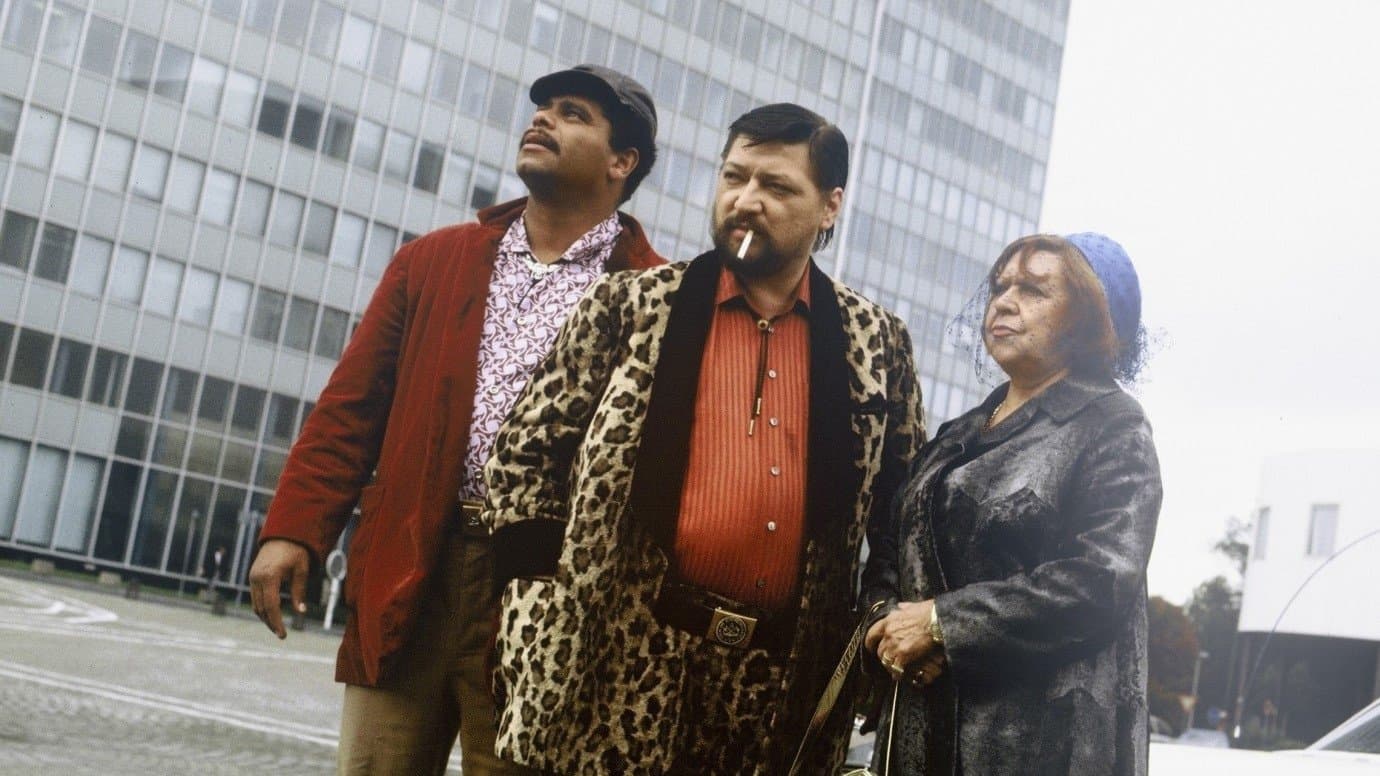
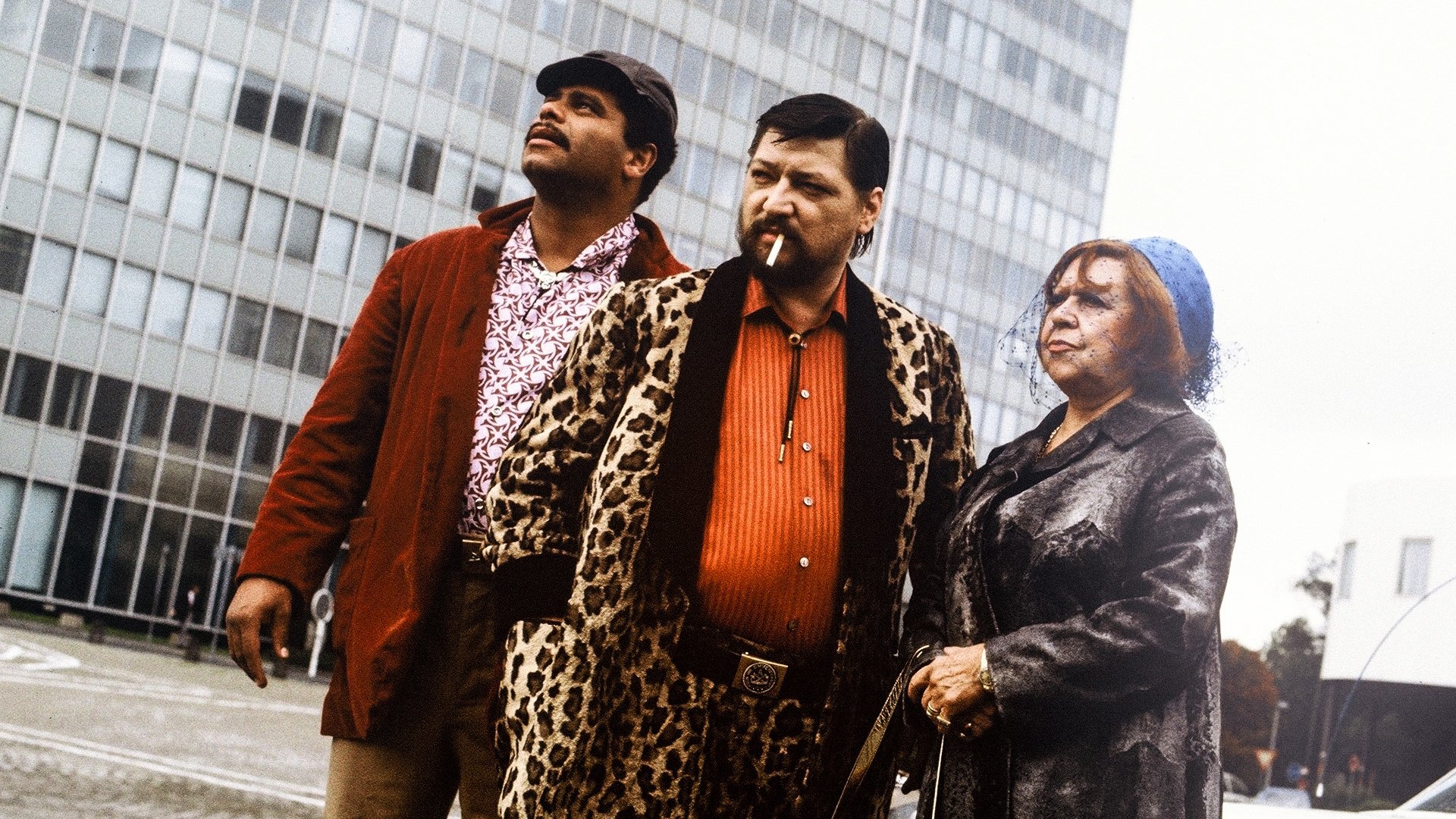
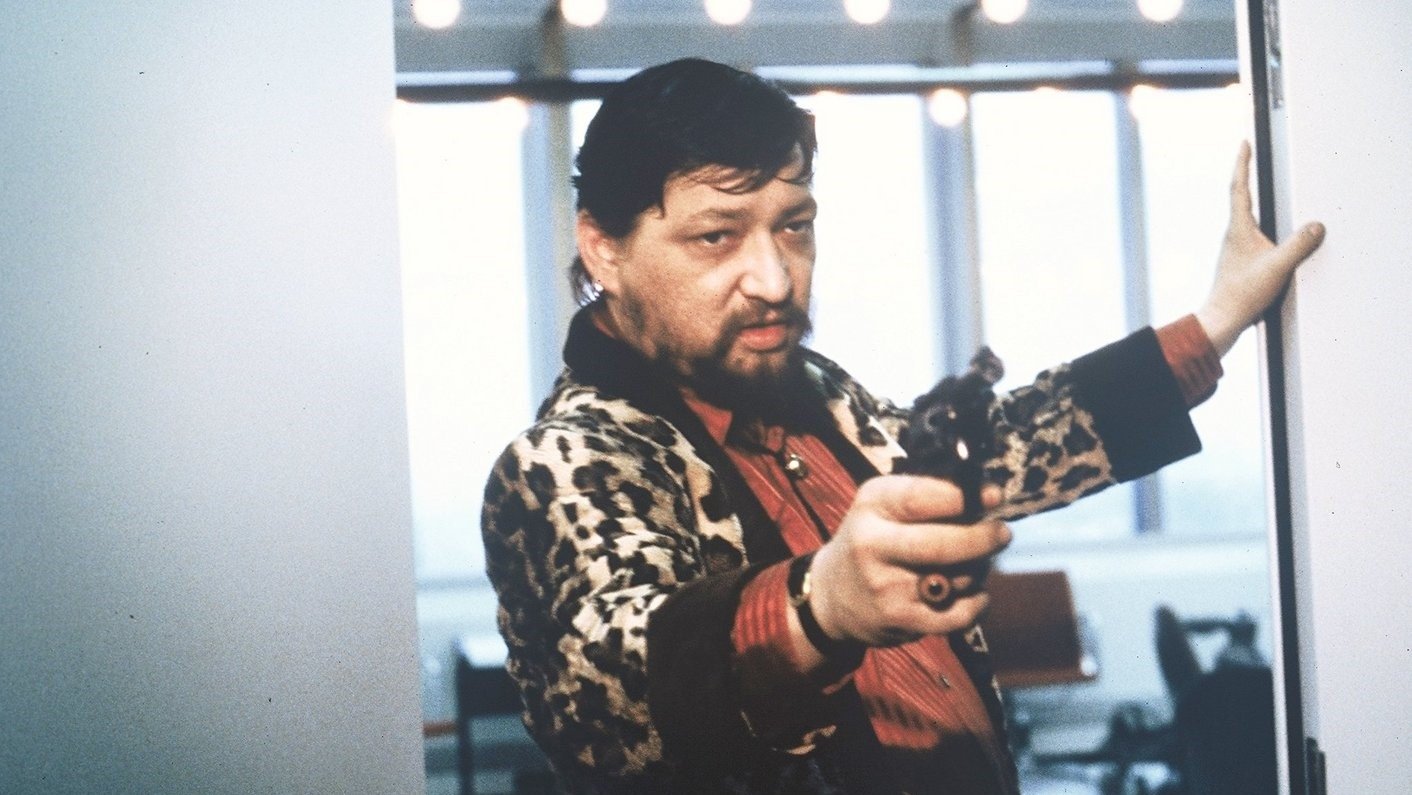
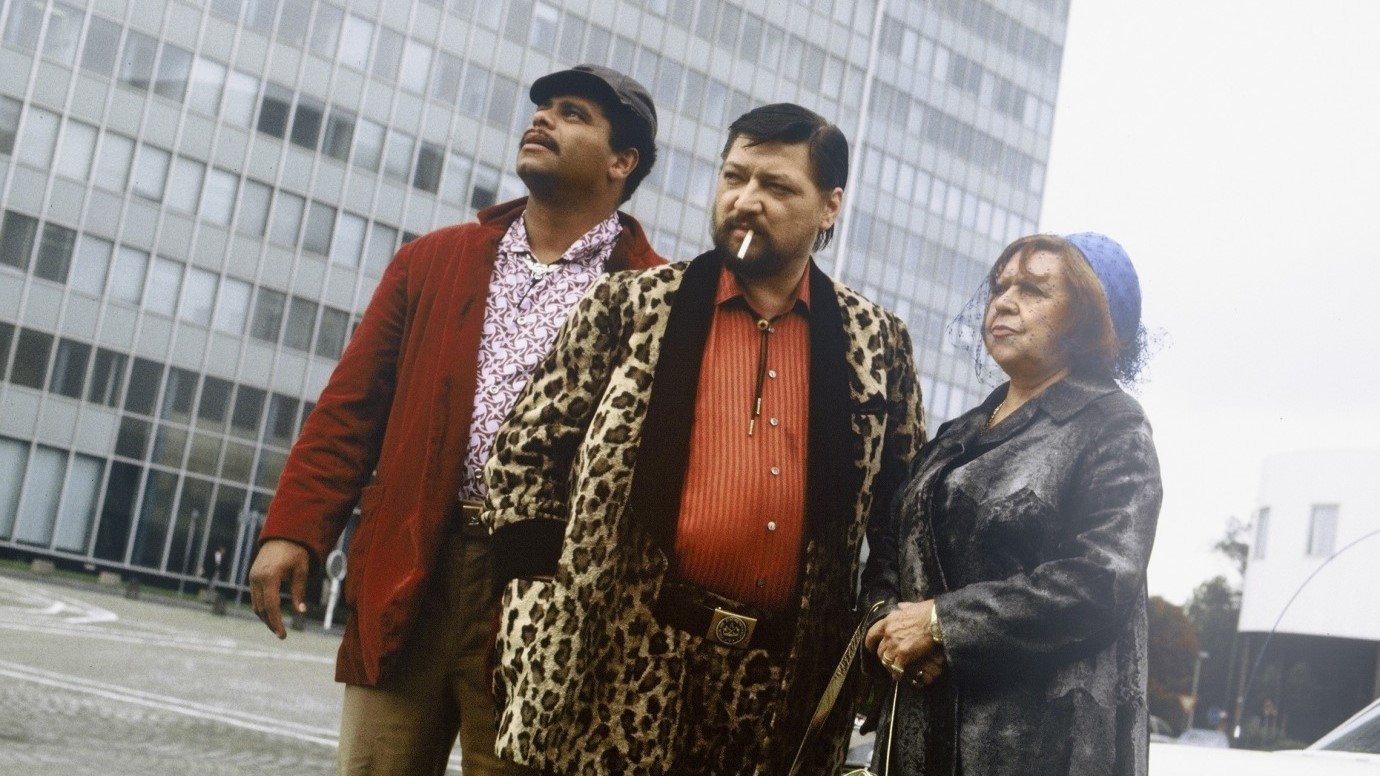
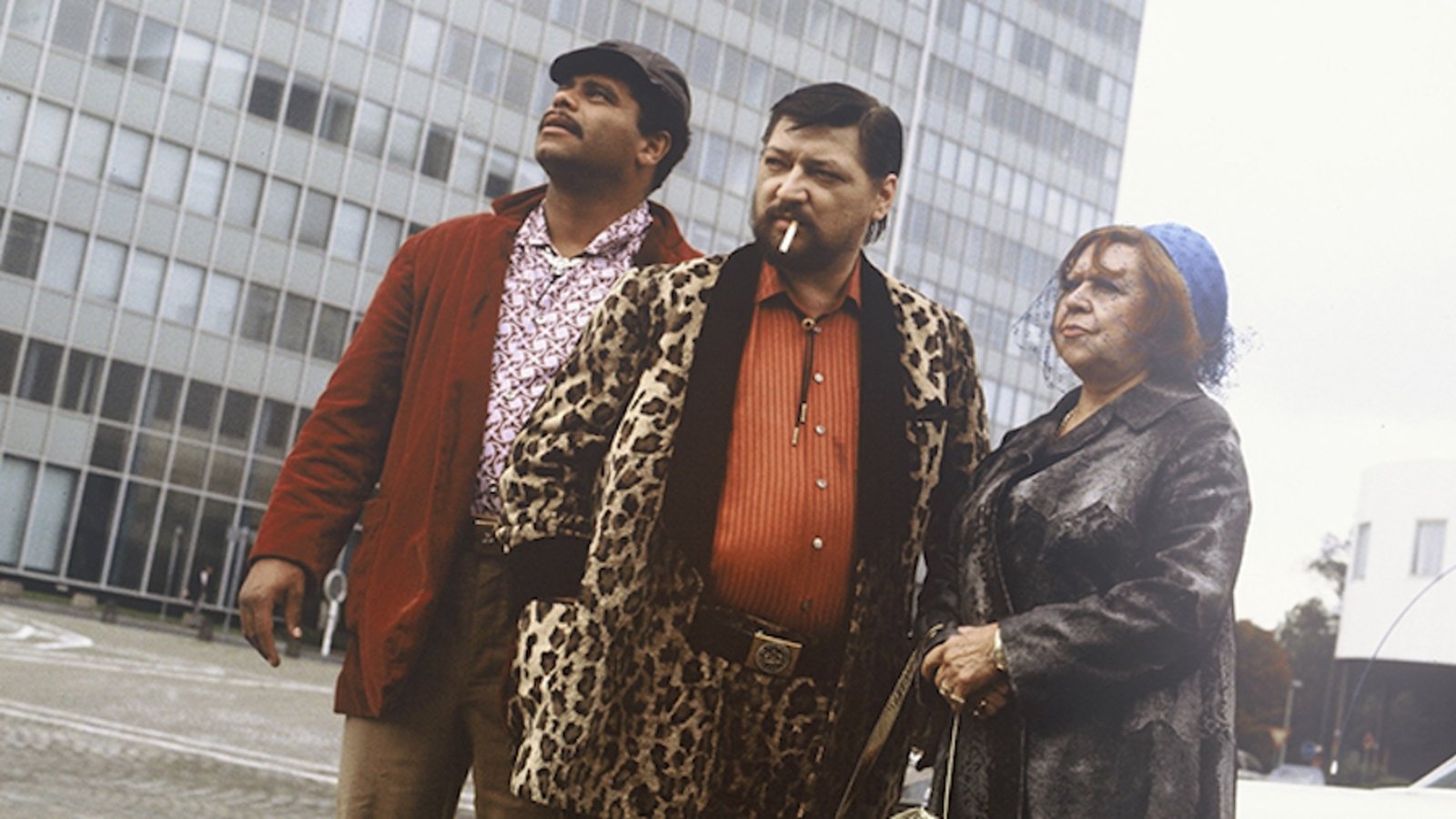
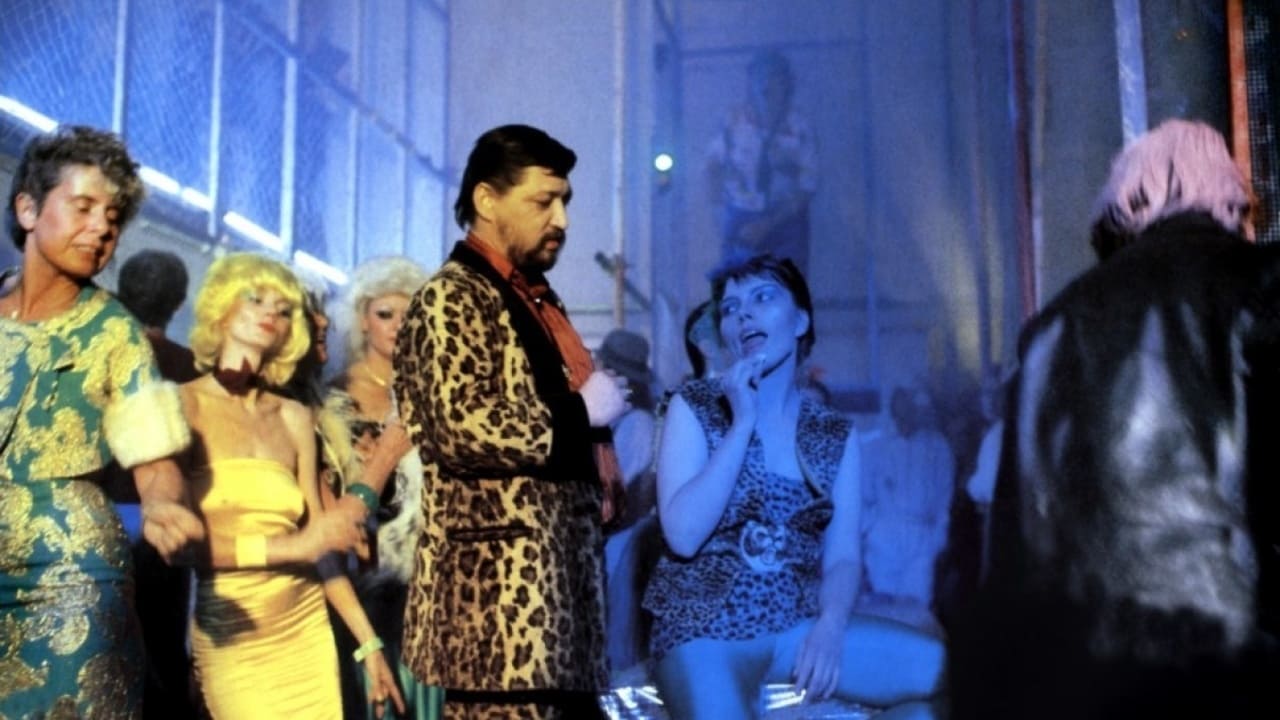
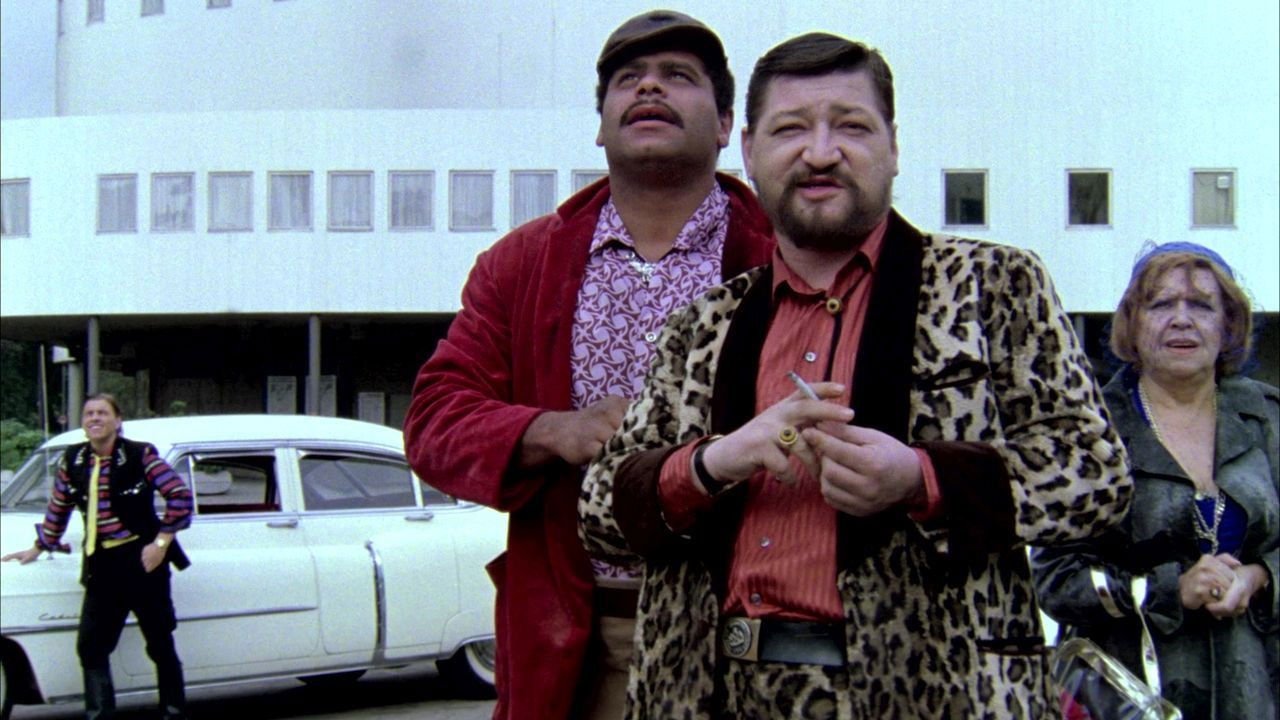
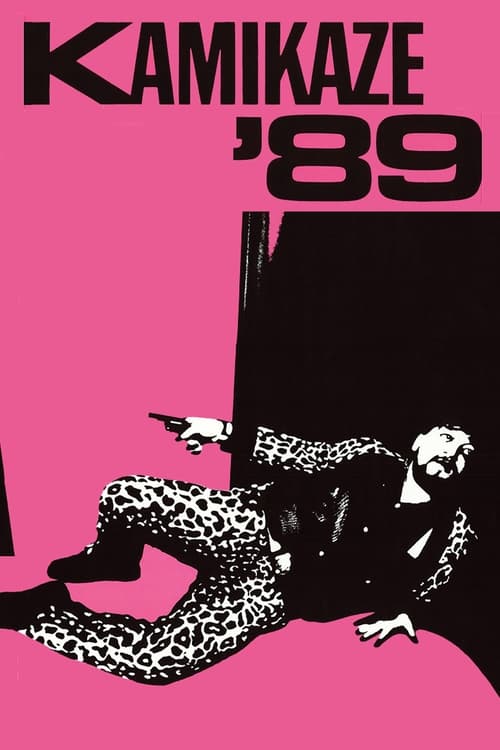
Wearing a leopard-print suit and a perpetually exhausted expression, Rainer Werner Fassbinder prowls through Kamikaze 1989 as a world-weary detective, investigating a future Germany where corporations have consolidated power. Even on the surface, the film stands out as a neon-laced oddity—juggling noir tropes, a postmodern satire of media manipulation, and the steady gloom of 1980s West German angst. The film centers on a bit of a confusing mystery: an anonymous bomb threat against the powerful “The Combine,” a media conglomerate that wields near-total control over public perception. Fassbinder’s detective must sift through corporate propaganda, which makes the film function as a kooky sci-fi police procedural—complete with dayglo color palettes and an eccentric supporting cast. But beneath the flamboyant design, Wolf Gremm critiques a society numbed by spectacle, hinting that apathy is the real threat when big media speaks louder than individuals.
While its neon aesthetic and bizarre comedic elements don’t always blend seamlessly with the noir scaffolding, Kamikaze 1989 maintains a singular style that sets it apart from typical genre entries of the time. Despite occasional tonal unevenness, it is nice to see Fassbinder and pals work together one last time. Its pacing can meander, and Fassbinder’s enervated performance can feel at odds with the story’s satirical pulse, but it remains a curious commentary on media dominance and societal inertia. For those drawn to Fassbinder’s restless artistic energy, seeing him inhabit a role that challenges both detective fiction and futuristic allegory offers a subdued yet strangely compelling farewell.
Wearing a leopard-print suit and a perpetually exhausted expression, Rainer Werner Fassbinder prowls through Kamikaze 1989 as a world-weary detective, investigating a future Germany where corporations have consolidated power. Even on the surface, the film stands out as a neon-laced oddity—juggling noir tropes, a postmodern satire of media manipulation, and the steady gloom of 1980s West German angst. The film centers on a bit of a confusing mystery: an anonymous bomb threat against the powerful “The Combine,” a media conglomerate that wields near-total control over public perception. Fassbinder’s detective must sift through corporate propaganda, which makes the film function as a kooky sci-fi police procedural—complete with dayglo color palettes and an eccentric supporting cast. But beneath the flamboyant design, Wolf Gremm critiques a society numbed by spectacle, hinting that apathy is the real threat when big media speaks louder than individuals.
While its neon aesthetic and bizarre comedic elements don’t always blend seamlessly with the noir scaffolding, Kamikaze 1989 maintains a singular style that sets it apart from typical genre entries of the time. Despite occasional tonal unevenness, it is nice to see Fassbinder and pals work together one last time. Its pacing can meander, and Fassbinder’s enervated performance can feel at odds with the story’s satirical pulse, but it remains a curious commentary on media dominance and societal inertia. For those drawn to Fassbinder’s restless artistic energy, seeing him inhabit a role that challenges both detective fiction and futuristic allegory offers a subdued yet strangely compelling farewell.