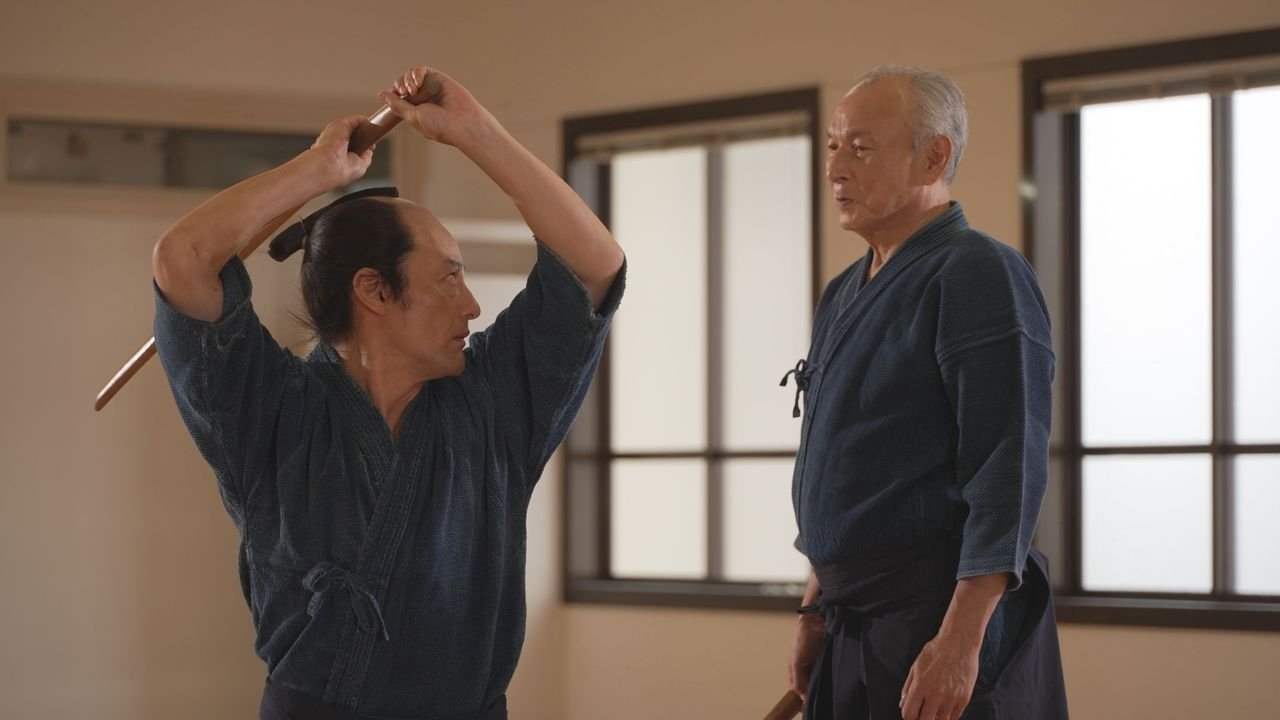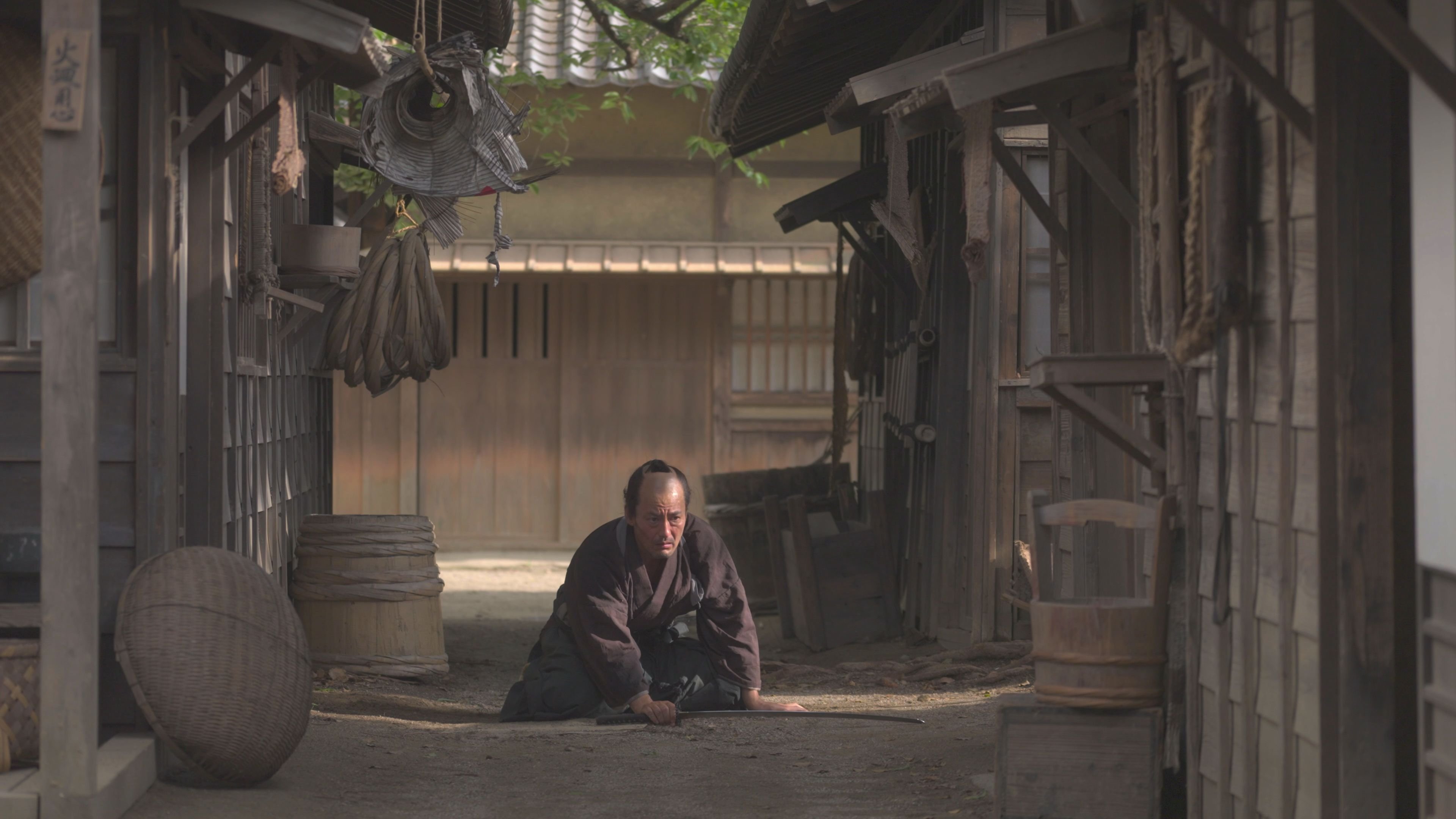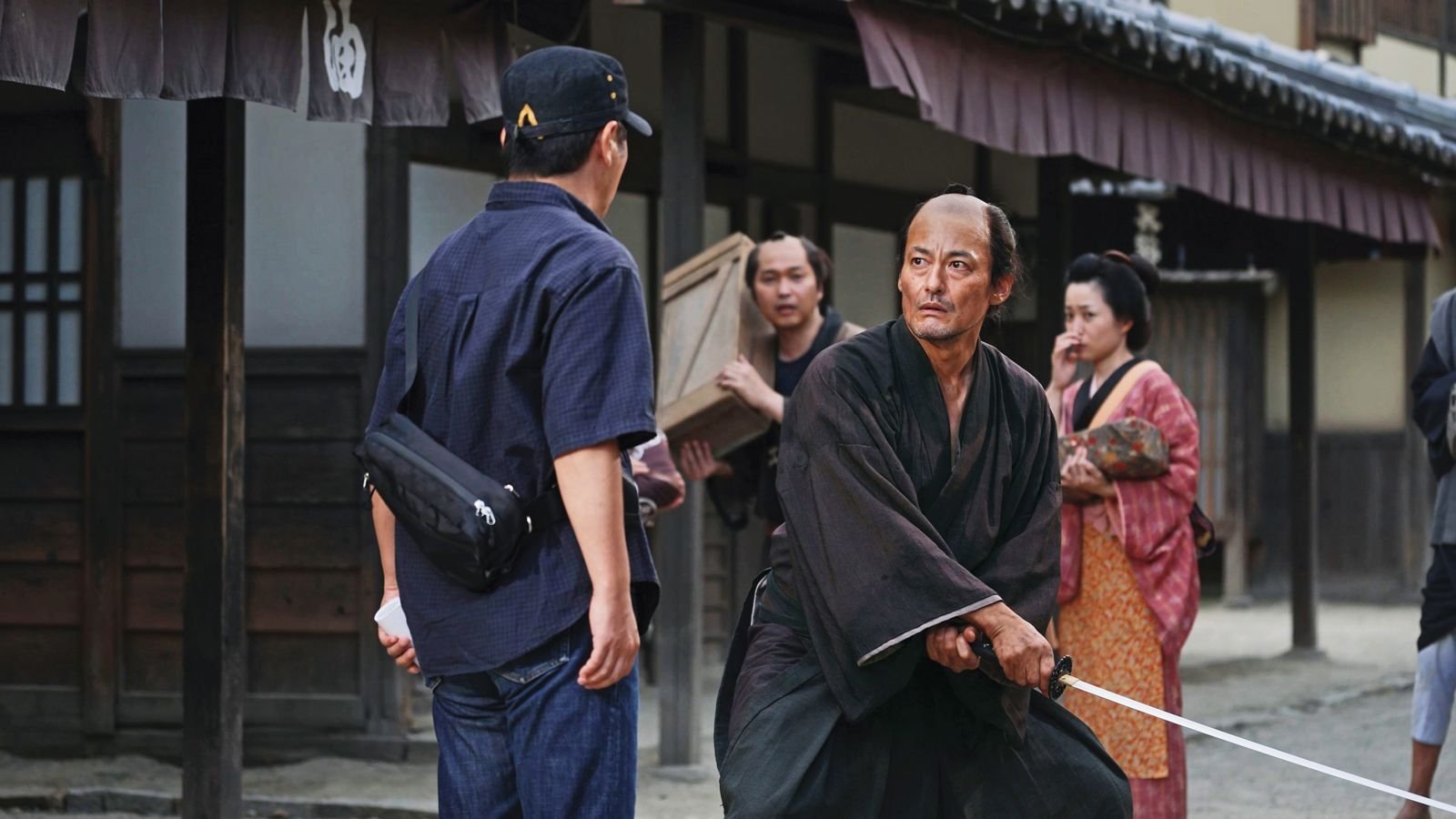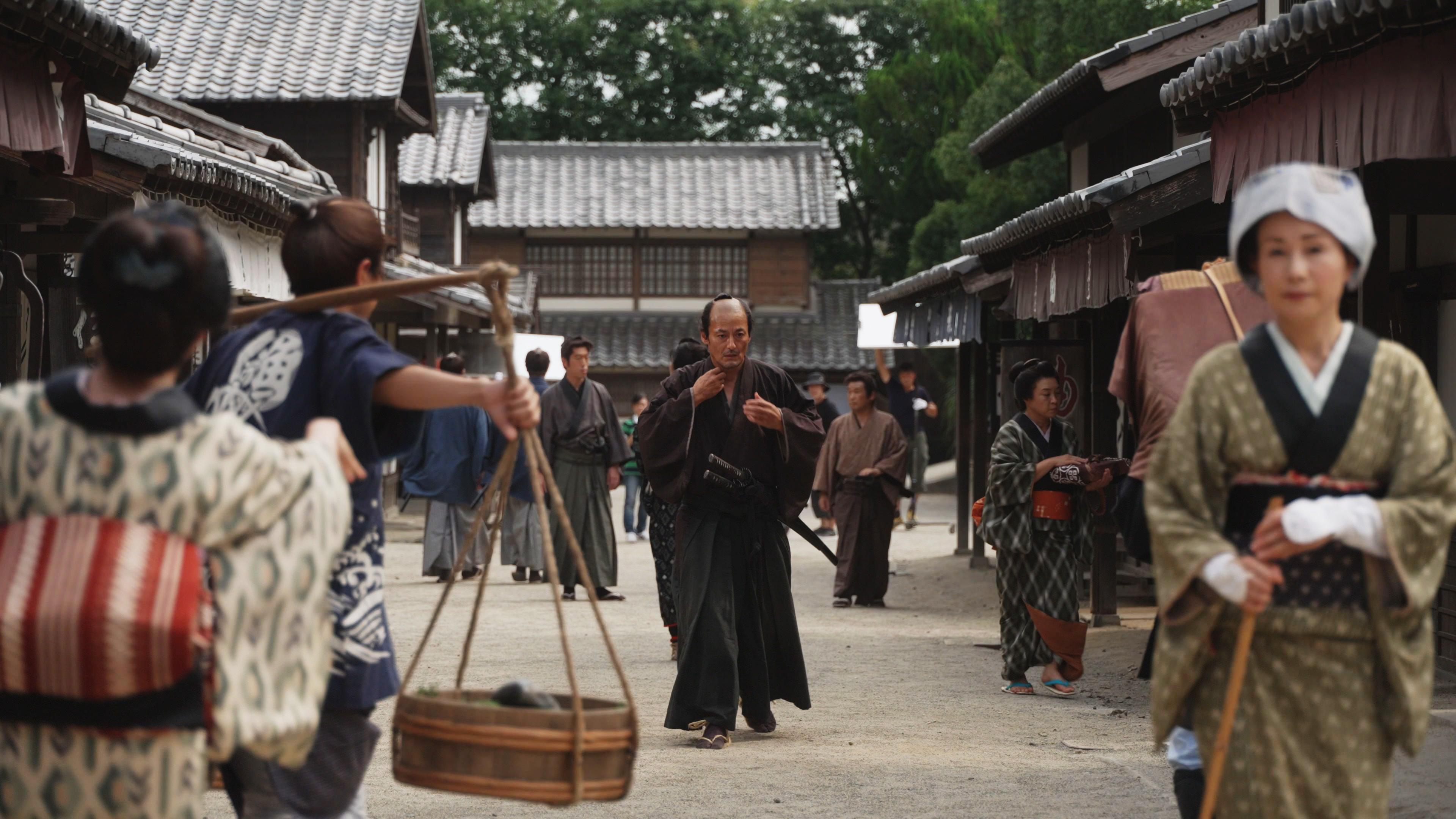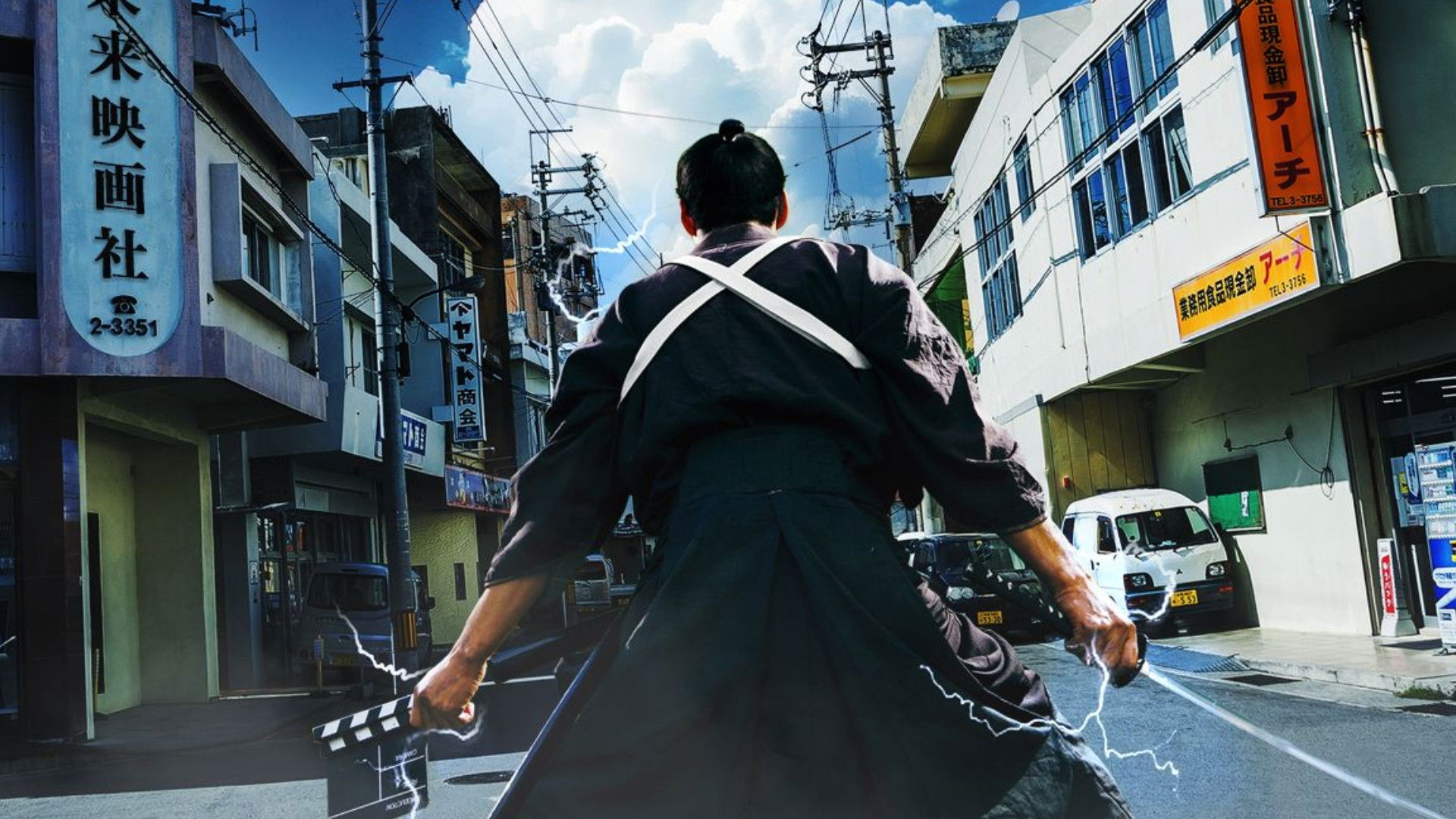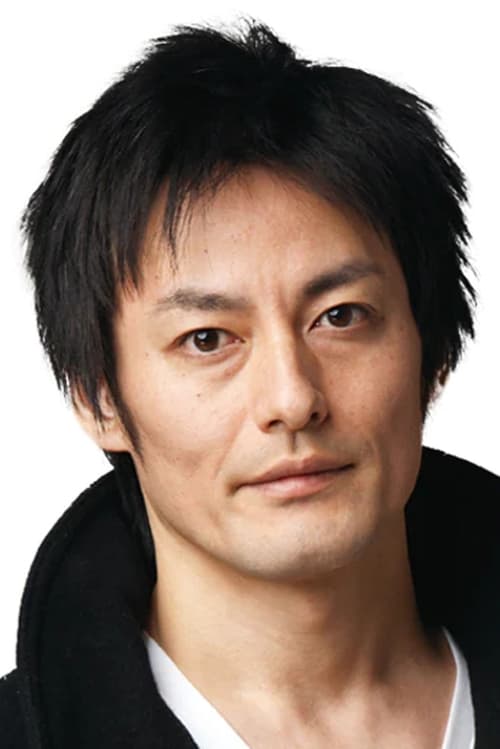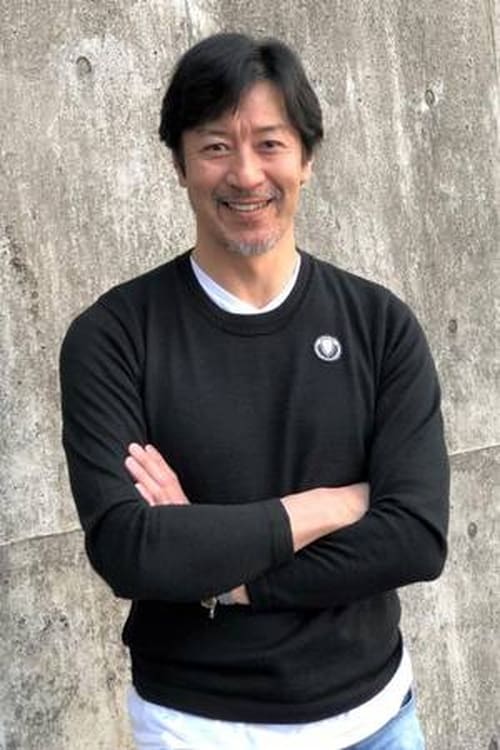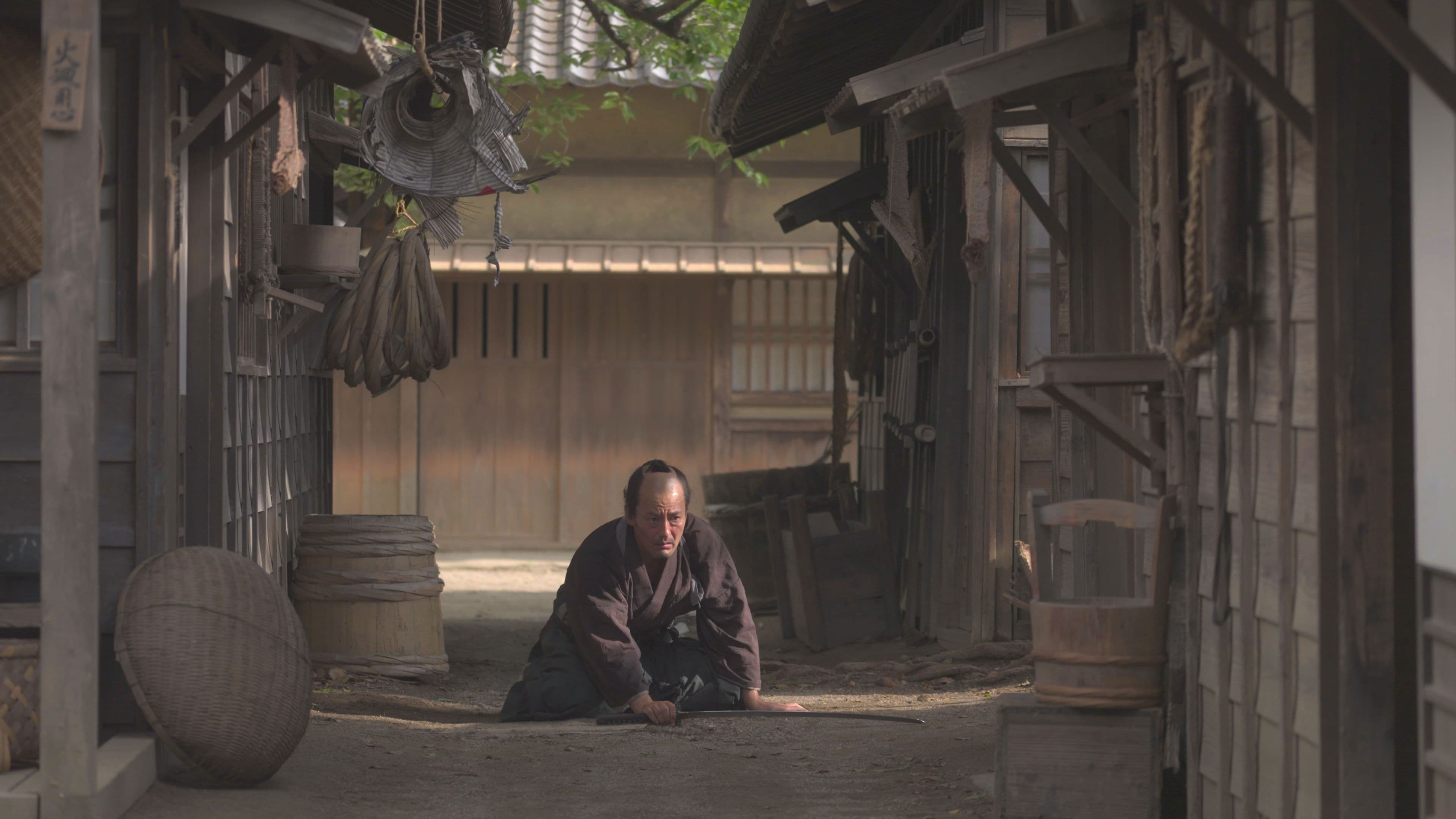
Director- Yasuda Junichi.I watched this film because it won Best Film and Best Film Editing at the 48th Japan Academy Film Prize. This made me quite curious about the film as I put their cinema on a pedestal and find their awards to be more or less meritorious than, let's say, the Academy Awards.I found this film to be acting as a plea for the survival of the Jidaegeki Eiga (Japanese period films). The films of that genre are usually set before the Meiji Restoration period of 1868. This genre is one of the finest I have seen, but it has been facing a decline in recent times due to a decline in studio investment, competition from other genres, and changes in the audience.The jidaigeki in post-World War Two Japan served a great purpose of thinly veiling criticism for the then-current Japanese society, but in today's era, such obliqueness is no longer required.The film begins in a quite serious setting being set at the end of the Edo period during the Boshin War. The protagonist, Kosaka Shinzaemon of the Aizu Domain, is played by Yamaguchi Makiya, and the antagonist, Hikokuro Yamagata of the Choshu Domain, is played by Norimasa Fuke. Shonozaki Ken played the younger self of Hikokuro.The film shows us that the Aizu Domain was in support of the Shogunate, and the Choshu Domain was in support of the Imperial rule; thus, they had conflicts.The film, for the majority of its runtime, is set in the present era, beginning with Kosaka being transported to present-day Japan due to a thunderstorm while he was in a fight to the death against Hikokuro. He is transported to the set of a Jidaigeki drama, which is facing a fall from grace and imminent closure due to a decline in popularity due to the above-mentioned reasons of a decline in popularity.The film is a breath of fresh air in this Isekai-style of films, as it doesn't spend a lot of time on the protagonist being surprised by everything and everyone. He is instead shown to be quite a calm and collected person who has no reservations about learning anything new and listening to the advice of others for self-improvement.The protagonist takes the job of a Kirareyaku (sliced-up actor) whose raison d’être is to die by the samurai sword on screen. It may be elegant, swift or even gut-wrenching according to the demands of the role. The film highlights the passion that those actors bring and treats them rightfully as unsung heroes. These actors know in their hearts that they are not and may never become the main character, yet they still bring an energy, elevating the lead character's role through their resilience, making their roles elevate beyond mere extras, too.In an interview, Yasuda shared that the film is inspired by Fukamoto Seizo, known for having fifty thousand deaths onscreen before winning his first lead role in a film titled Uzumasa Limelight. When Fukamoto died in 2021, Yasuda made a heartfelt post about it on Facebook.Yasuda shows us the behind-the-scenes of a Jidaigeki being shot excellently enough to intrigue the audience, but doesn't delve into the stylistic aspects of it enough; instead, he shows the shooting to be of a B-grade style with a skeleton crew of ten. The film doesn't shy away from showing us that he doesn't fit in from the start, and struggles with his identity in a changed landscape where he has become obsolete. One can draw parallels with him dealing with his identity in the same way that people of Japan are dealing with their national identity, holding onto traditional values while seeking a place in the modern present.The protagonist is pure of heart and thus is quite different to the usual bloodthirsty and arrogant samurai one can see in works like Sword of Doom, Rurouni Kenshin, etc.The film also excellently nails the character of Yuko Yamamoto, an aspiring Jidaigeki film director and producer, played by Yuno Sakura. Her gender isn't used to belittle or undermine her, and instead, she is shown to face the conflicts with senior directors and the cast.The film has an awesome twist with us finding out that the antagonist was also transported by the thunderstorm, but he was transported thirty years before the protagonist. The film uses it excellently to show us that the antagonist has now left the conflict behind and has moved forward with his life, while the protagonist still hasn't come to terms with it. This is used to show the duo in a grey light instead of a black and white one.The film further pushes this point by showing us that the antagonist is still plagued by the death of a person he killed in his youth. The antagonist gives the protagonist a chance to star against him in an upcoming film as he believes that only the protagonist can embody the true spirit of Bushido, having been a samurai in the Edo period until recently.The protagonist's learning about how his clan was ended at the hands of the Choshu Domain in the Boshin War is gut-wrenching. We can see his spirit breaking in real time as he learns that all he did was futile, but he could have still tried more for their survival.I loved the duo of Kosaka and Hikokuro deciding to use real swords in the climax rather than wooden or aluminium ones. This added a sense of dread while also offering closure for their battle in the past. The film has one of the most suspenseful and engaging fight scenes I have seen. Both were evenly matched, and the techniques they exhibited glued me to my seat. The fight could have gone either way till the last second. The desperation to win that both displayed was fantastic and glued me to my seat the whole time. It compelled me to focus only on that, leaving whatever else I was doing.The conflict we see within the protagonist in delivering the final blow is perfect. The close-up in that scene allows us to really feel the burden of the protagonist. His finally dealing the final blow saddened us, with the audience's reaction elevating it. The film takes a less serious tone when we see that this didn't happen for real, and instead was shot using effects. This shows us that the protagonist has finally let go of his grudge and is ready to move forward with his life.The ending with us watching another samurai show up was quite humorous and shows us that such events will keep on occurring in the film's world. This also shows us that when we think that the Jidaigeki genre has come near its end, it sprouts up again with the sensibilities of its heyday of the fifties and sixties. Whichever new film is released in this genre is still compared to those of those decades as a benchmark for how good the recent release is, such is the power of those films. I loved Harakiri, Sword of Doom, Yojimbo, etc., of those eras. Overall, this is one excellent film, and I can understand why this film won wholeheartedly. This film makes me want to watch more Jidaigeki works, and if it has made more viewers feel the same, then this work has succeeded in this regard of keeping the genre still alive. I will either watch The Twilight Samurai or The Return next.