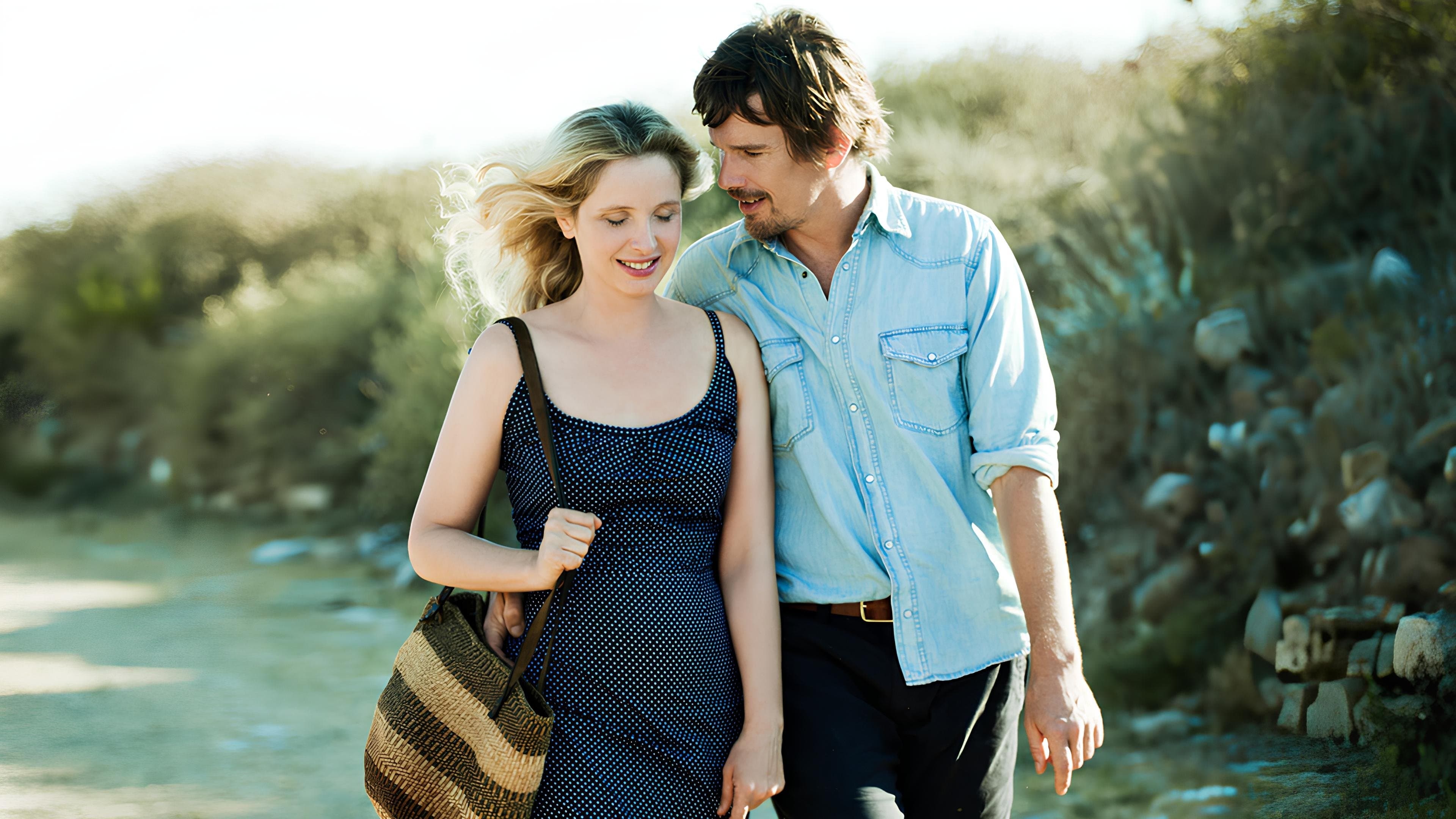
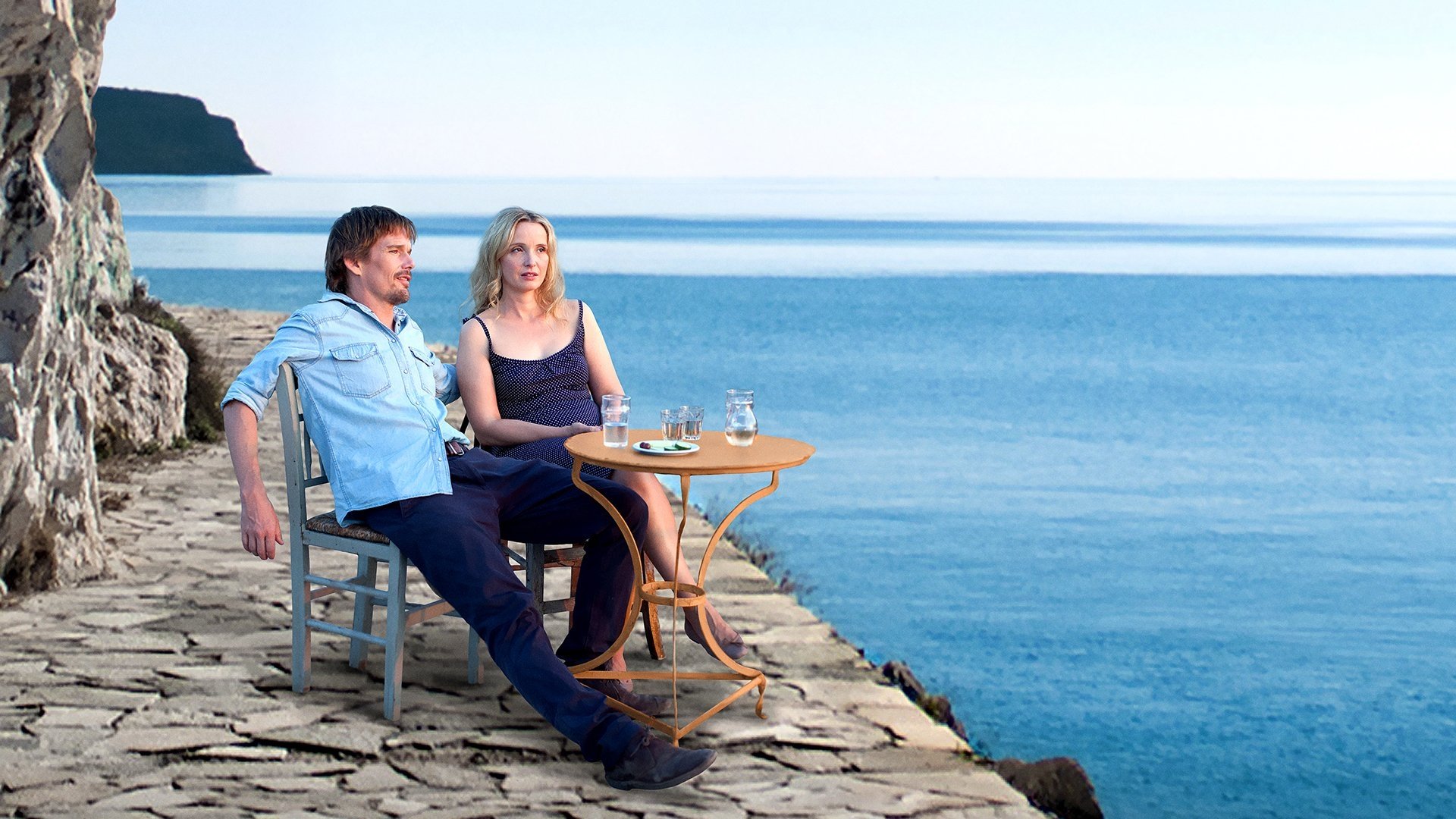
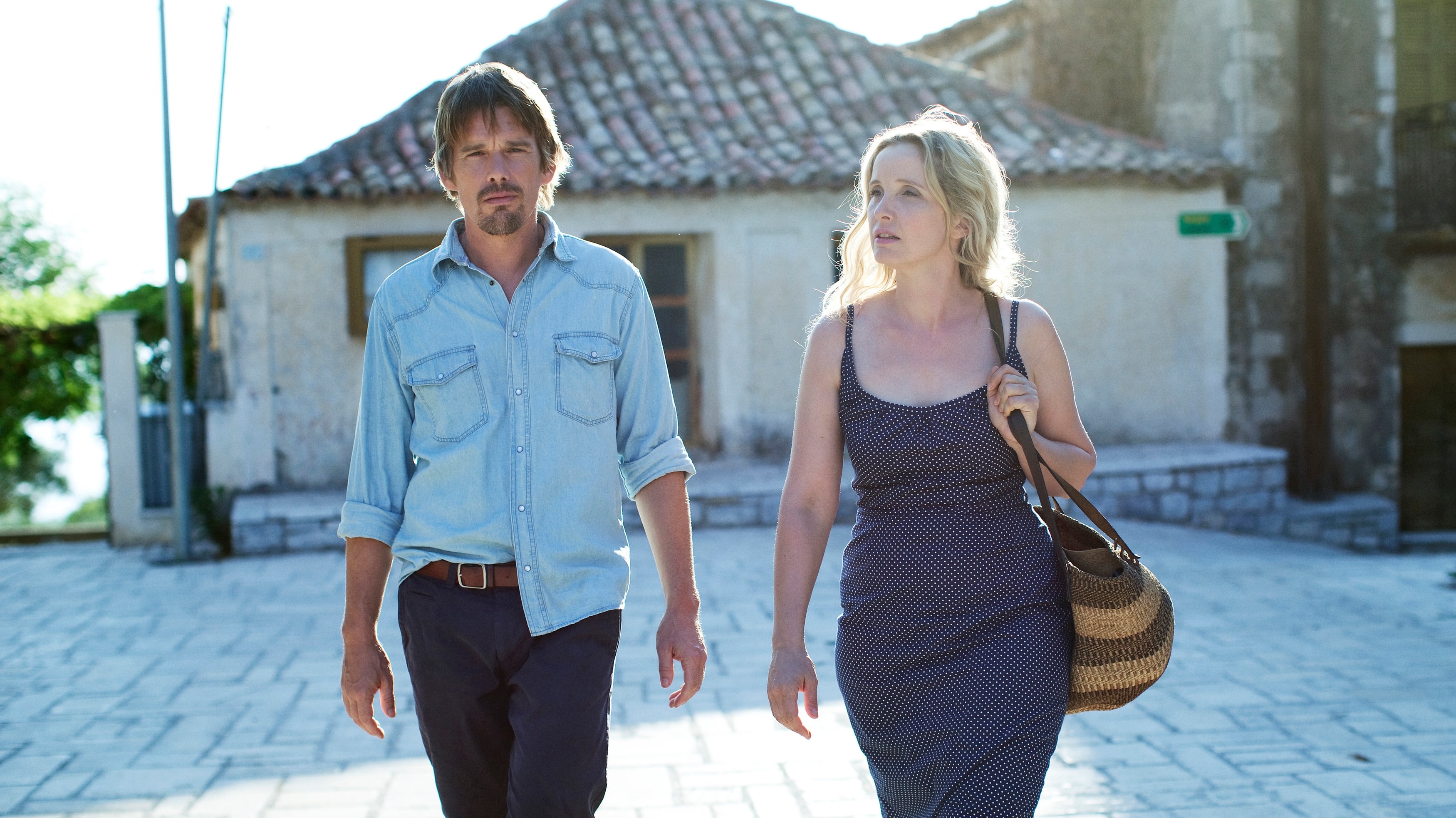
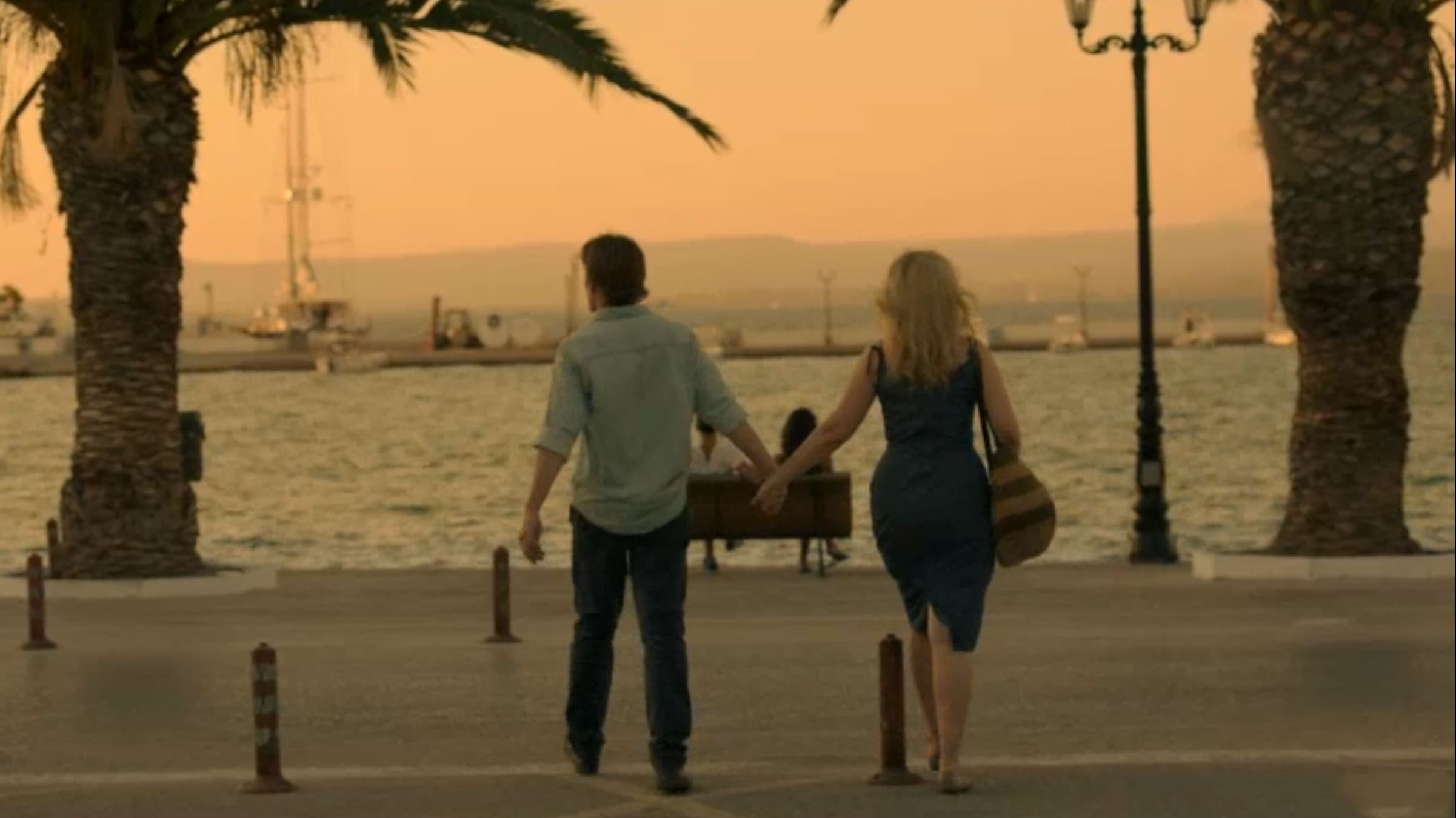
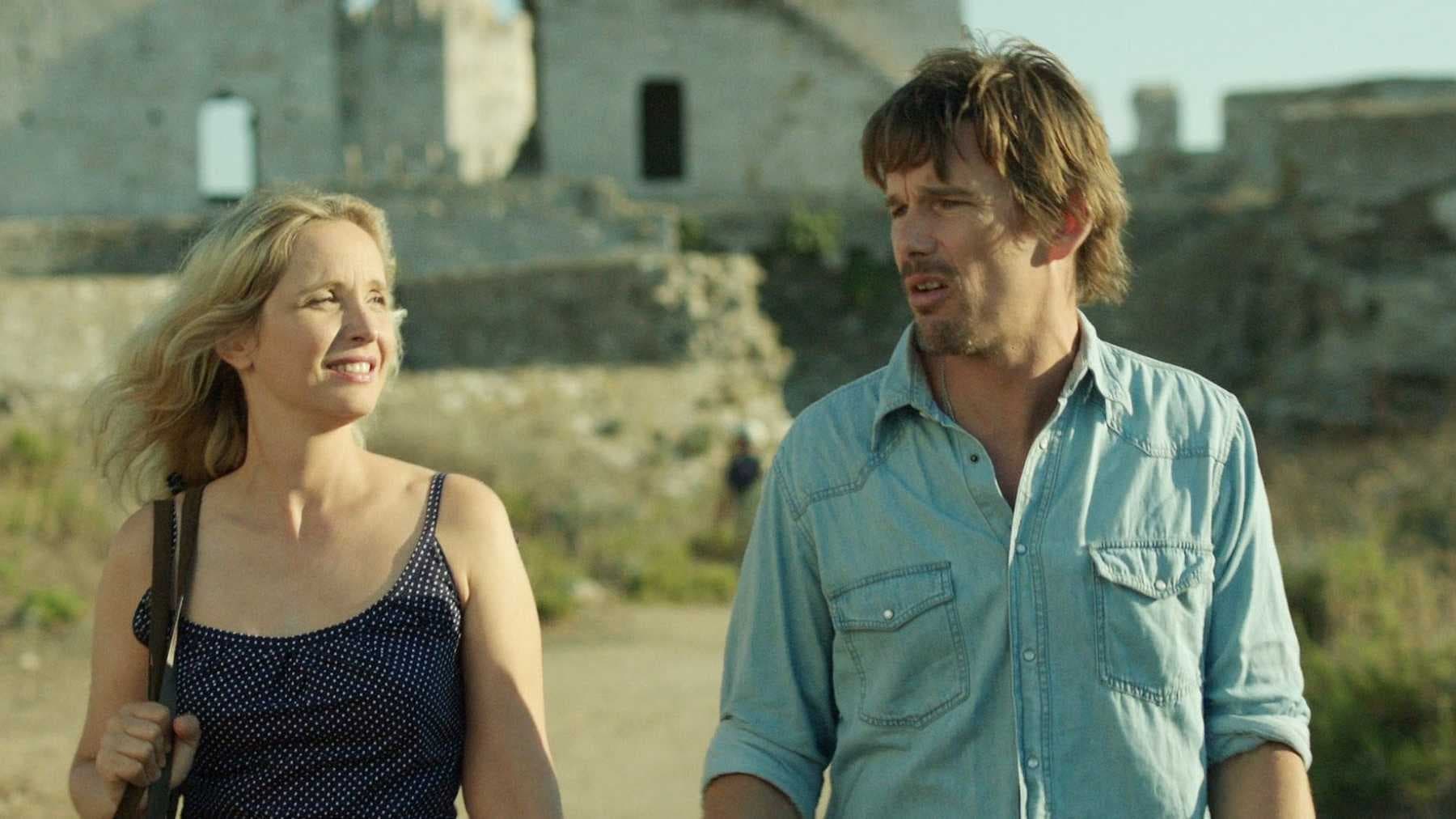
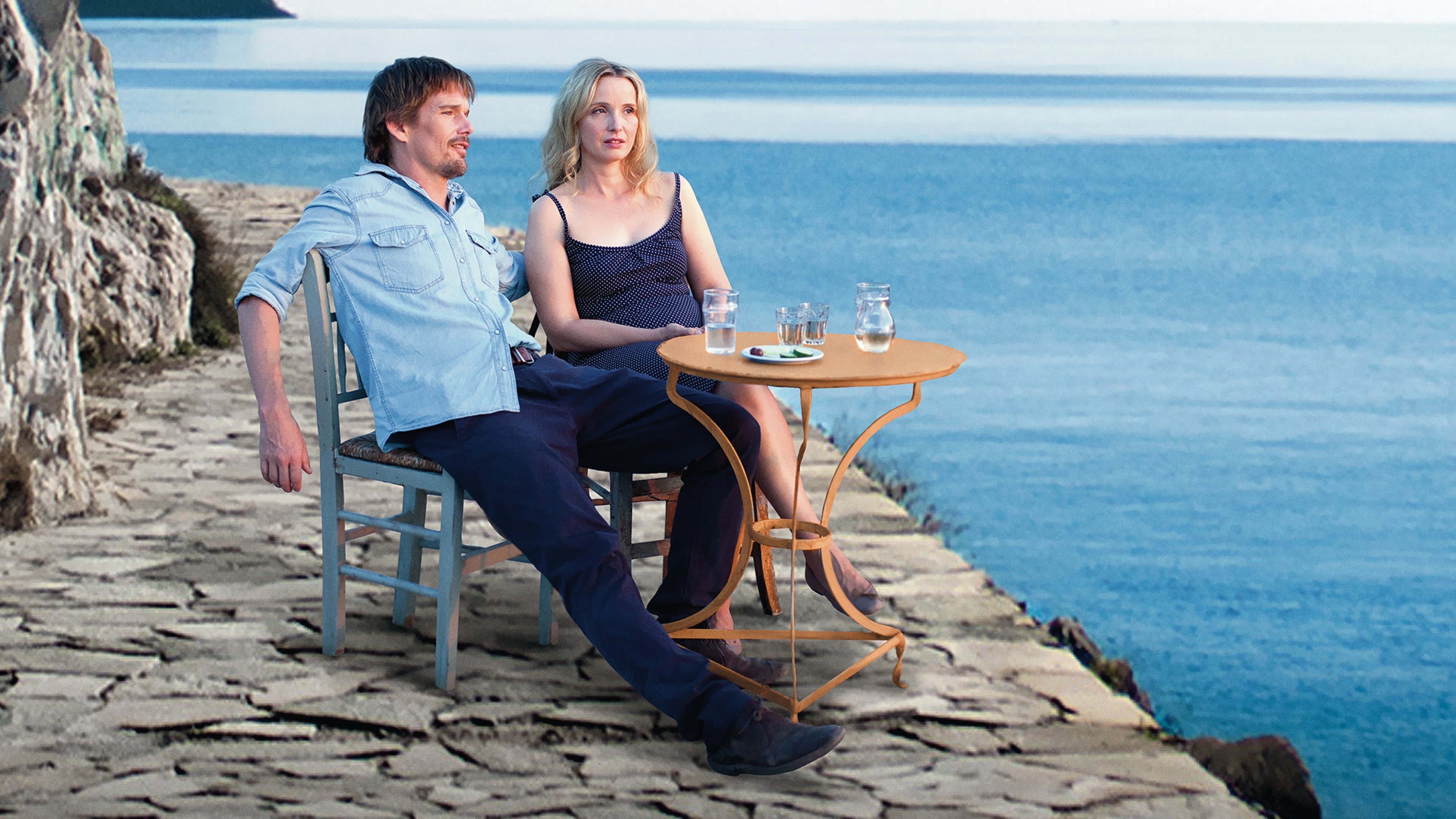
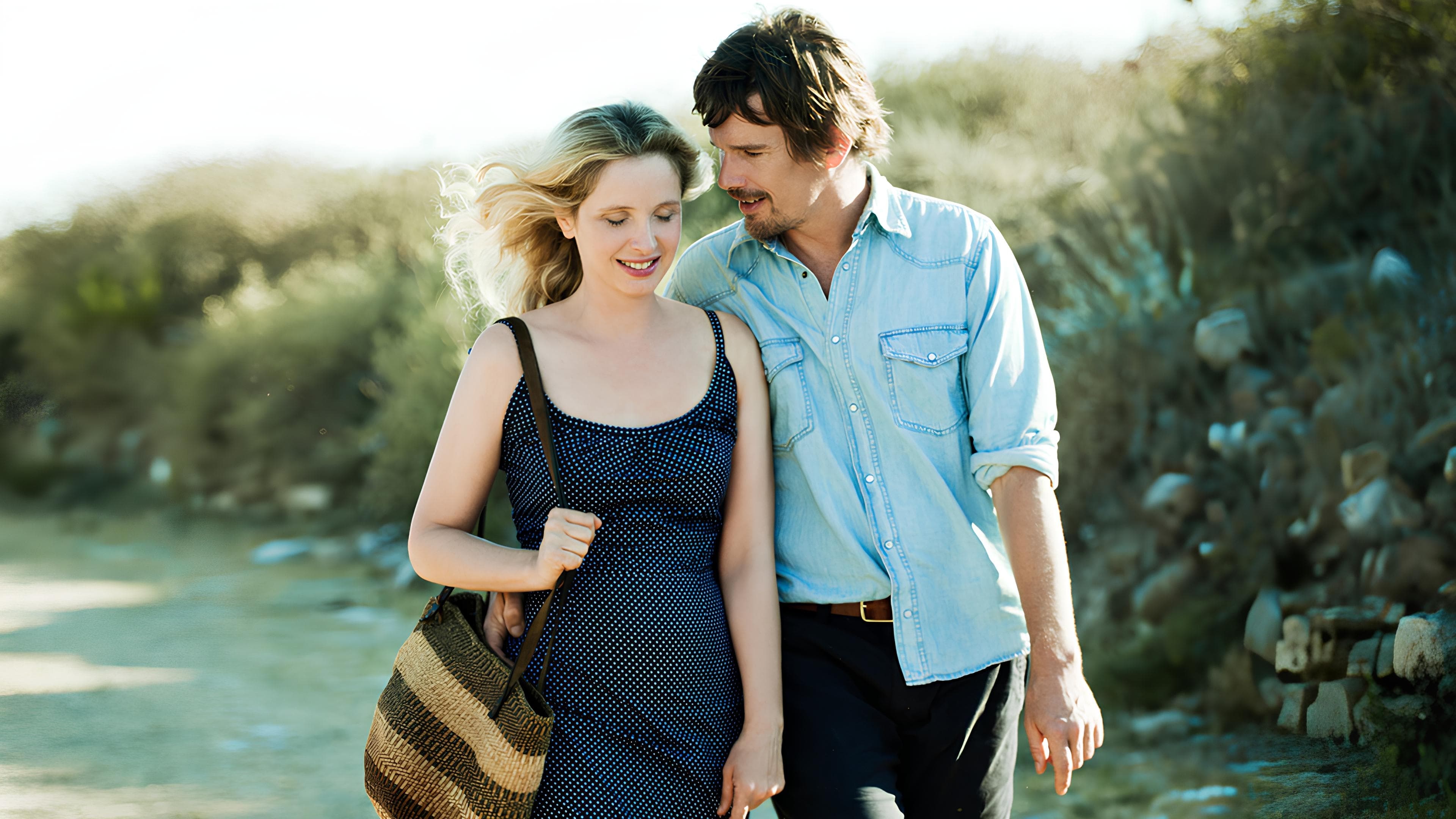
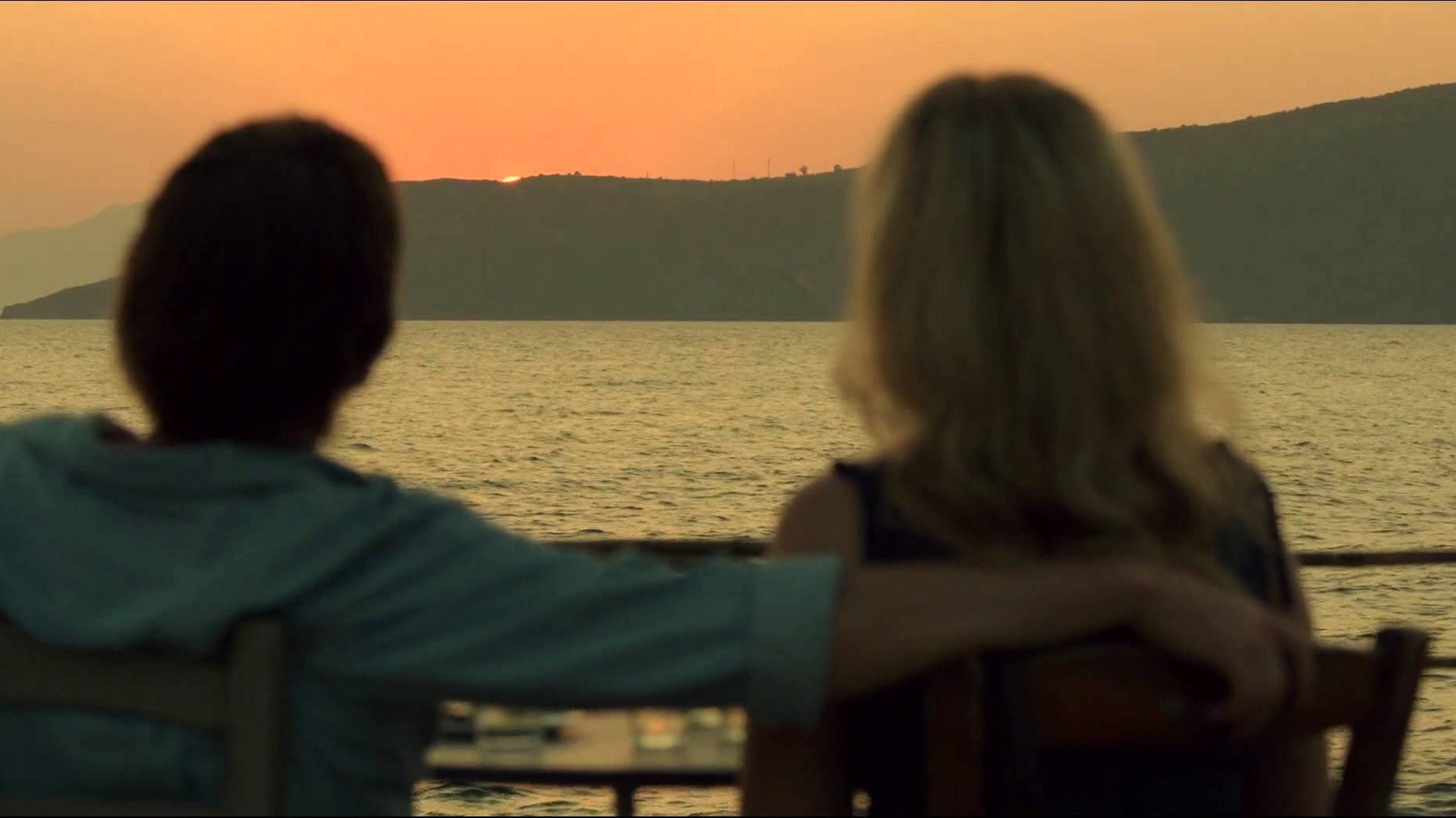
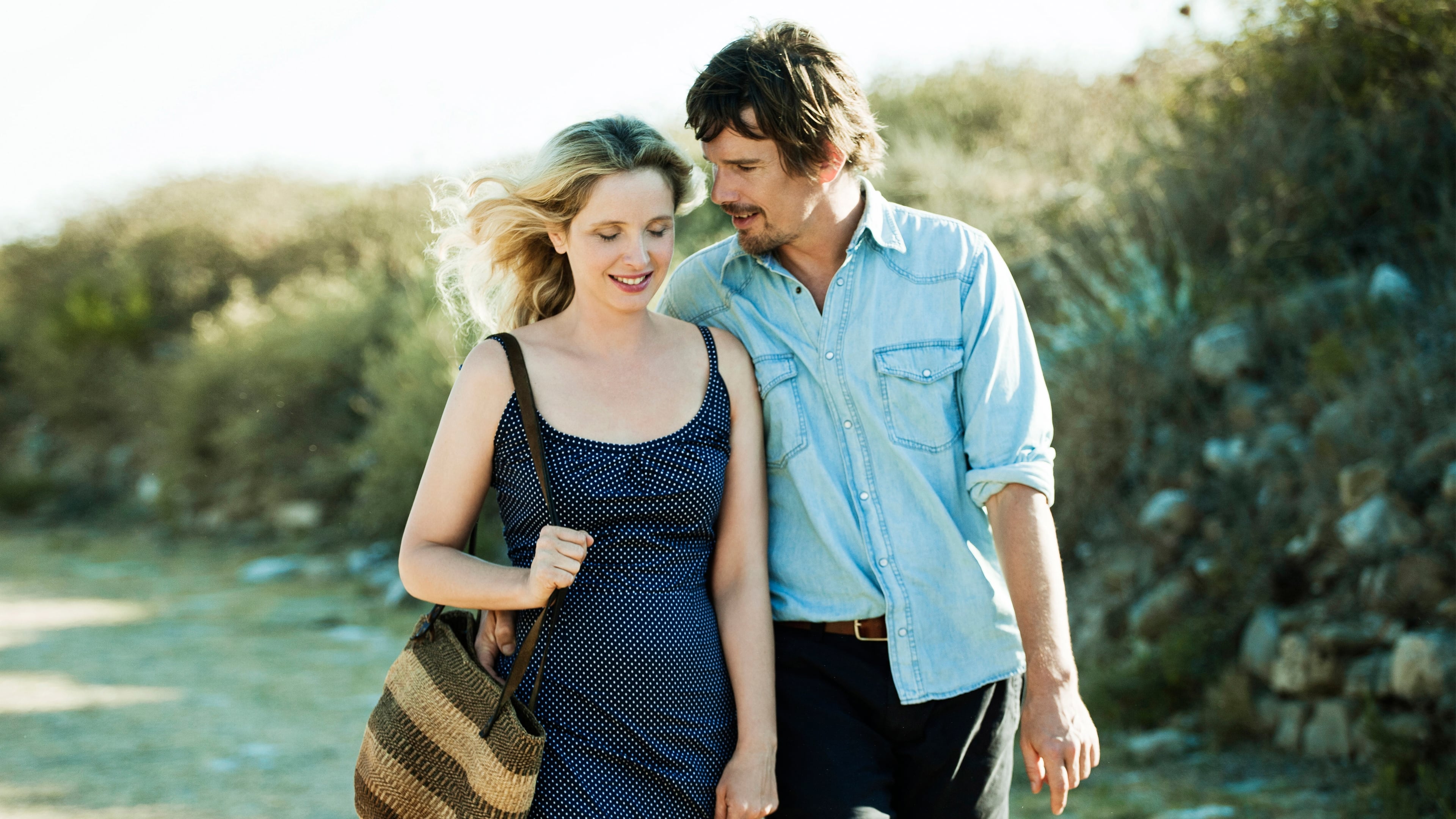
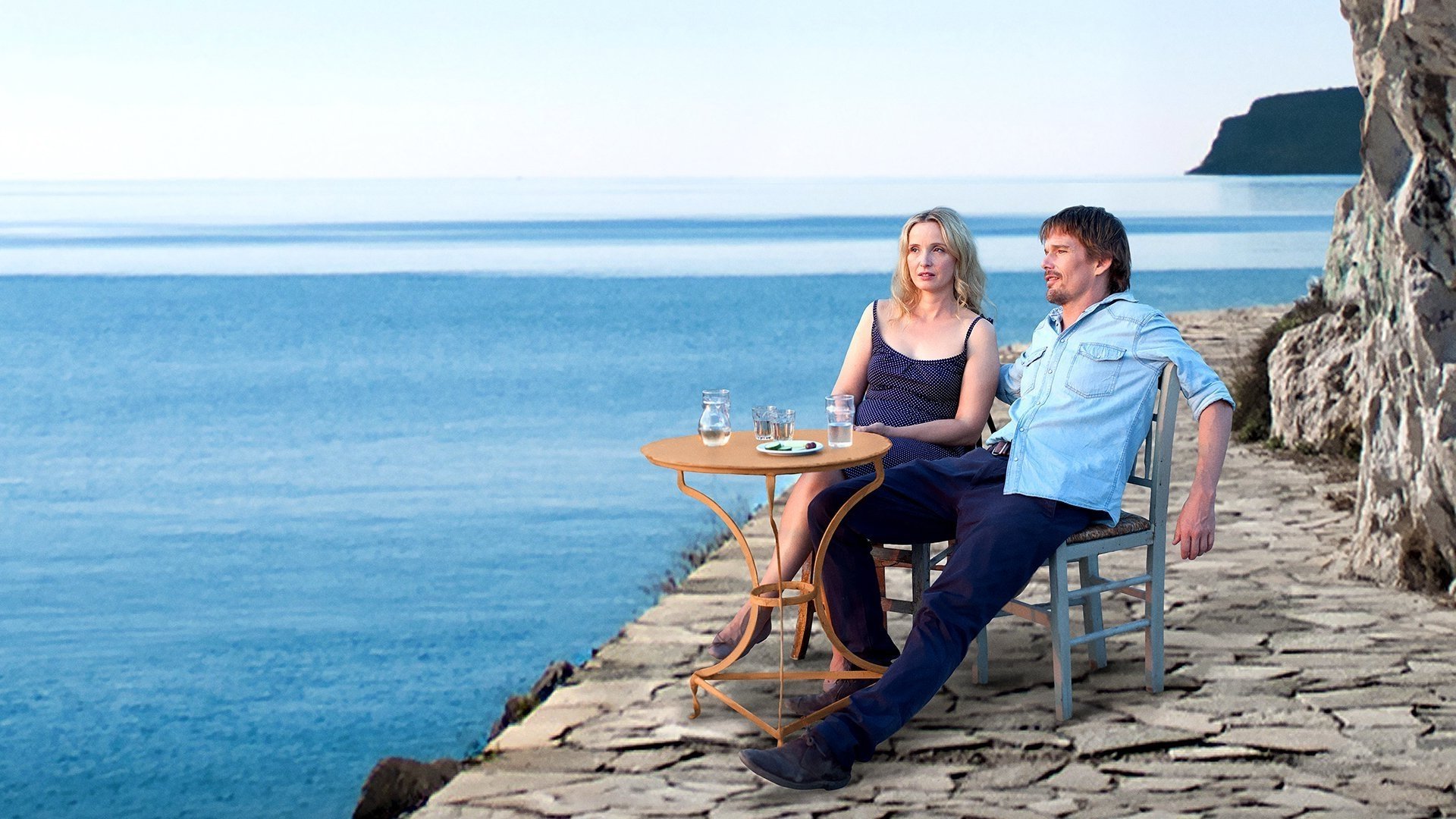
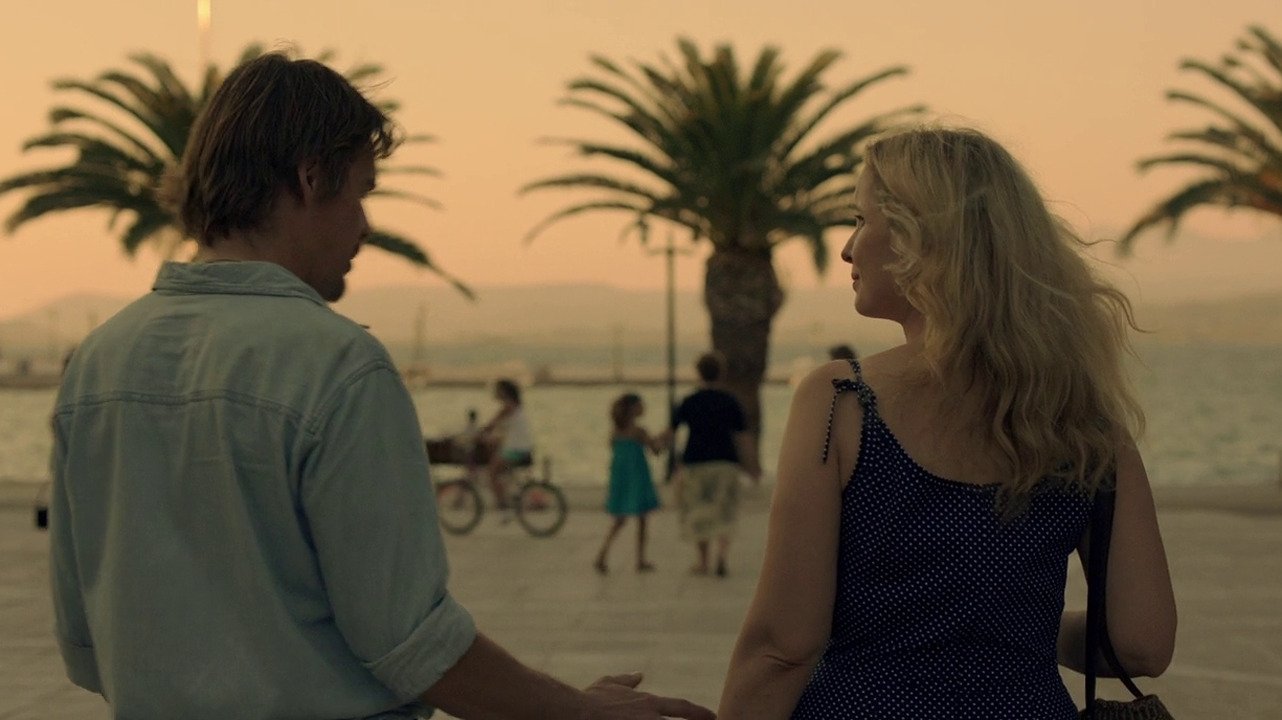
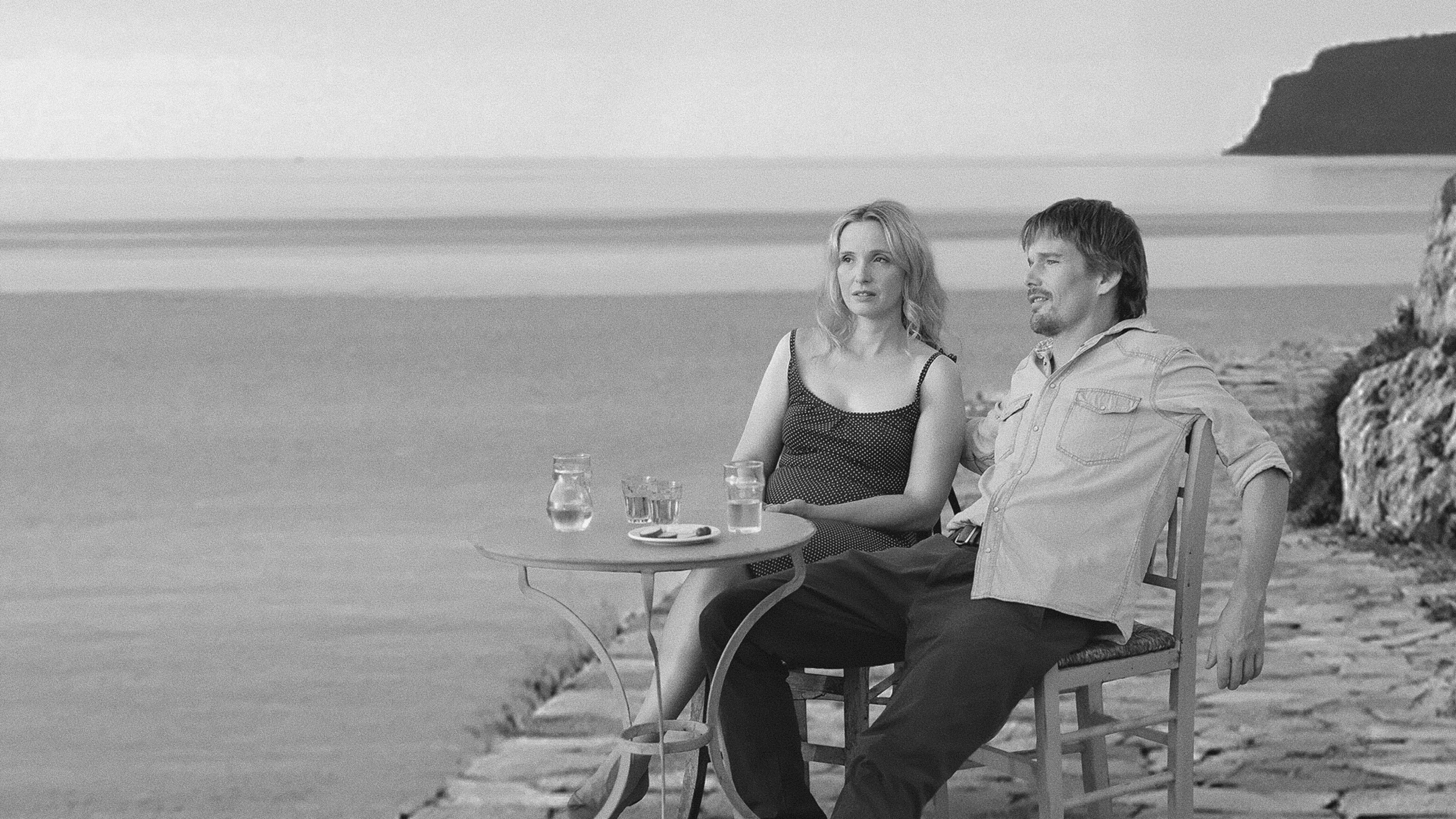
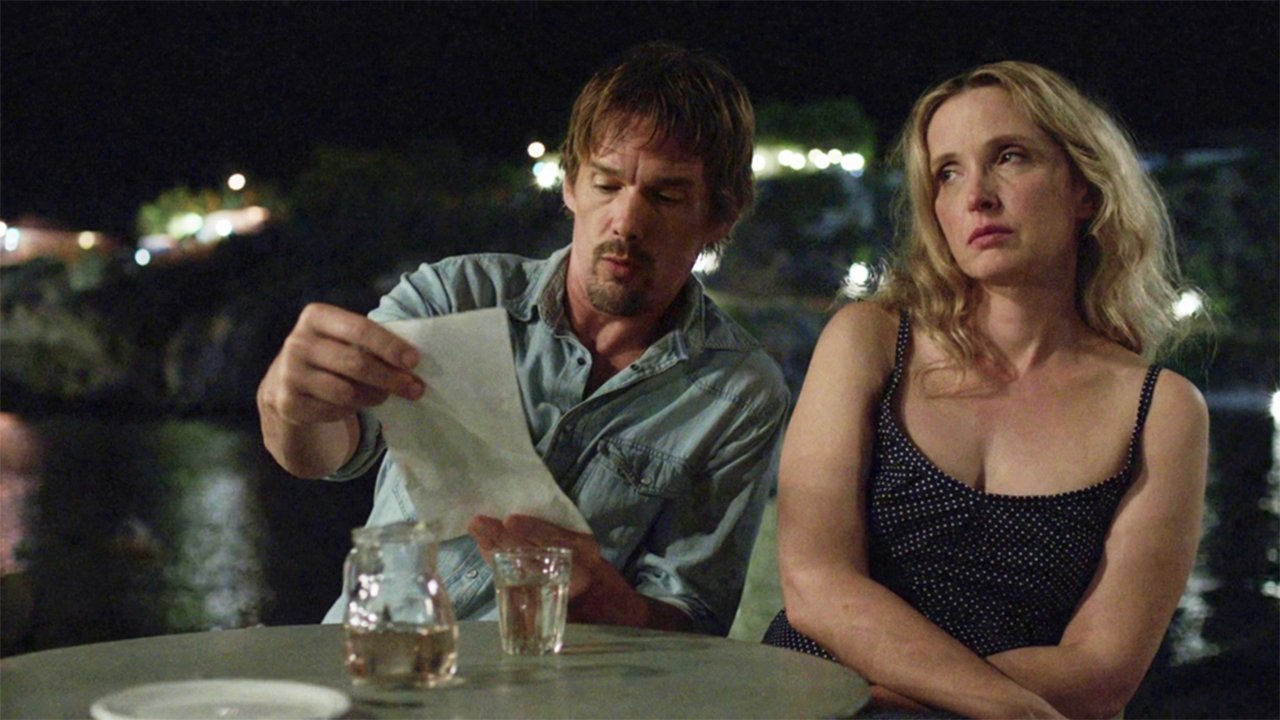
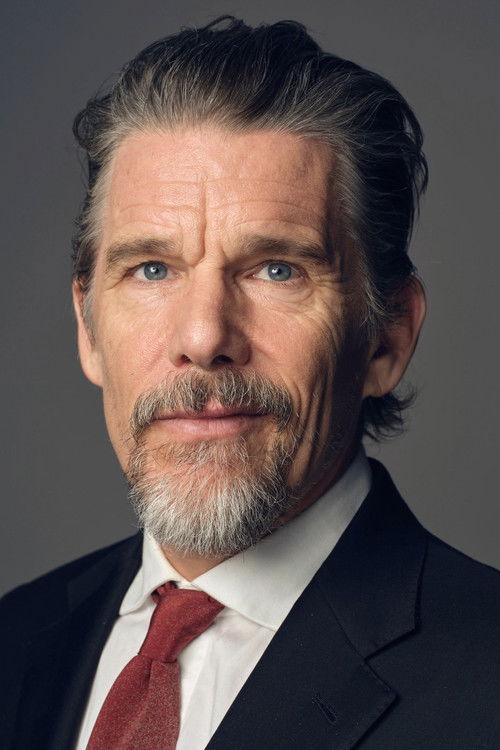
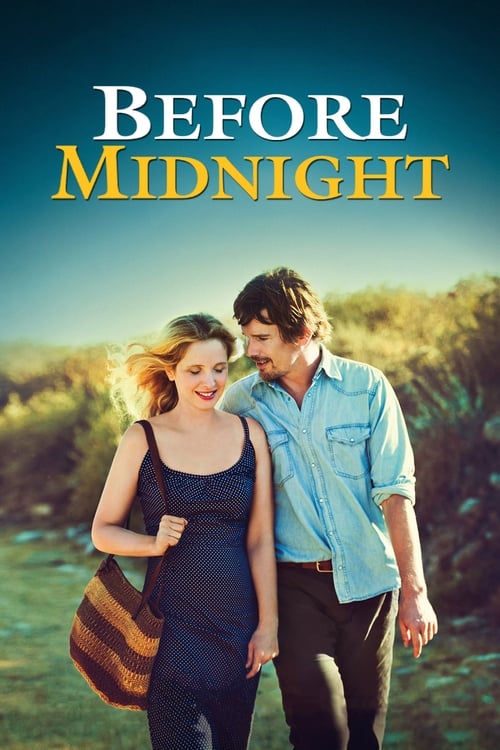
The chemistry and depth in conversation are what draw me so much to this trilogy, and the third and final chapter is no exception. The first two were an ideal romanticization of spontaneous love without ever falling into cliché - very few cuts, long unbroken takes of whole conversations that flow so naturally it becomes a spectacle in itself. Ethan Hawke and Julie Delpy deliver all-time performances, and it is obvious they poured so much of themselves into these characters, making the most improbable moments feel believable.
What makes Before Midnight stand out from the other two is the weight of real life lived between the lines. Jesse and Celine aren't strangers on a train anymore, trading beautiful "what ifs" at sunrise. They've raised kids. They've dealt with divorce. In Sunrise, Jesse convinces Celine to get off the train with a fantasy. Imagine you're in the future with your husband, wondering about the one that got away, so come with me now and find out if he never did. It's charming because there are zero stakes. It's theoretical. She gets off the train because of a beautiful idea. By Before Midnight, they are living the future he described.
Fast forward to their lives 18 years later, the magic is still there, but it keeps getting interrupted. By responsibility, by passive-aggressive jabs, by a real uncertainty of their near future, and whether their relationship can hold. Jesse's romanticism is what drew Celine to him, but Celine told us who she was from the beginning: a woman who never wanted her life to revolve around a man. And now, at the crossroads of uprooting her life in Paris to move to the United States for Jesse and his son, or staying to pursue an opportunity in her career, the very things that made them magnetic are the things pulling them apart. His need to write the story for both of them, her refusal to disappear into it. There is a moment where Celine hesitates to sign a copy of Jesse's book for a fan because she doesn't want her name on a story she didn't write, but he assures the fan she'll be happy to. That's the entire conflict in a single moment.
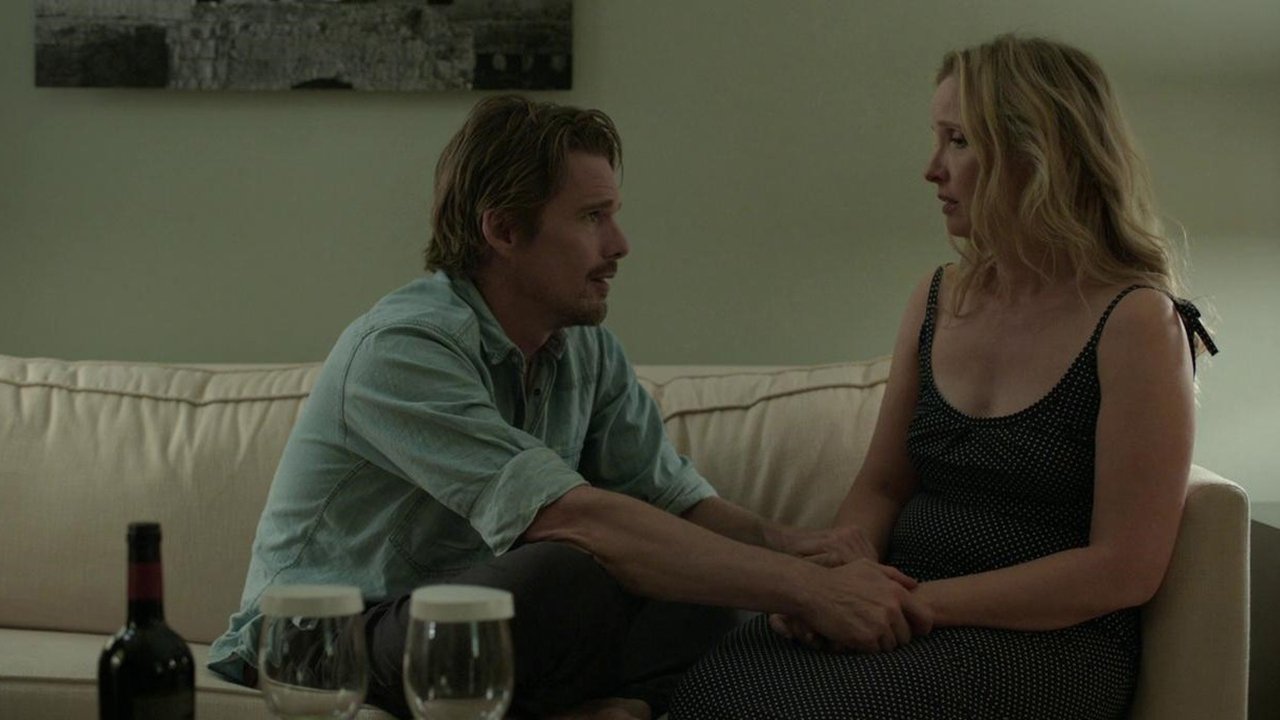
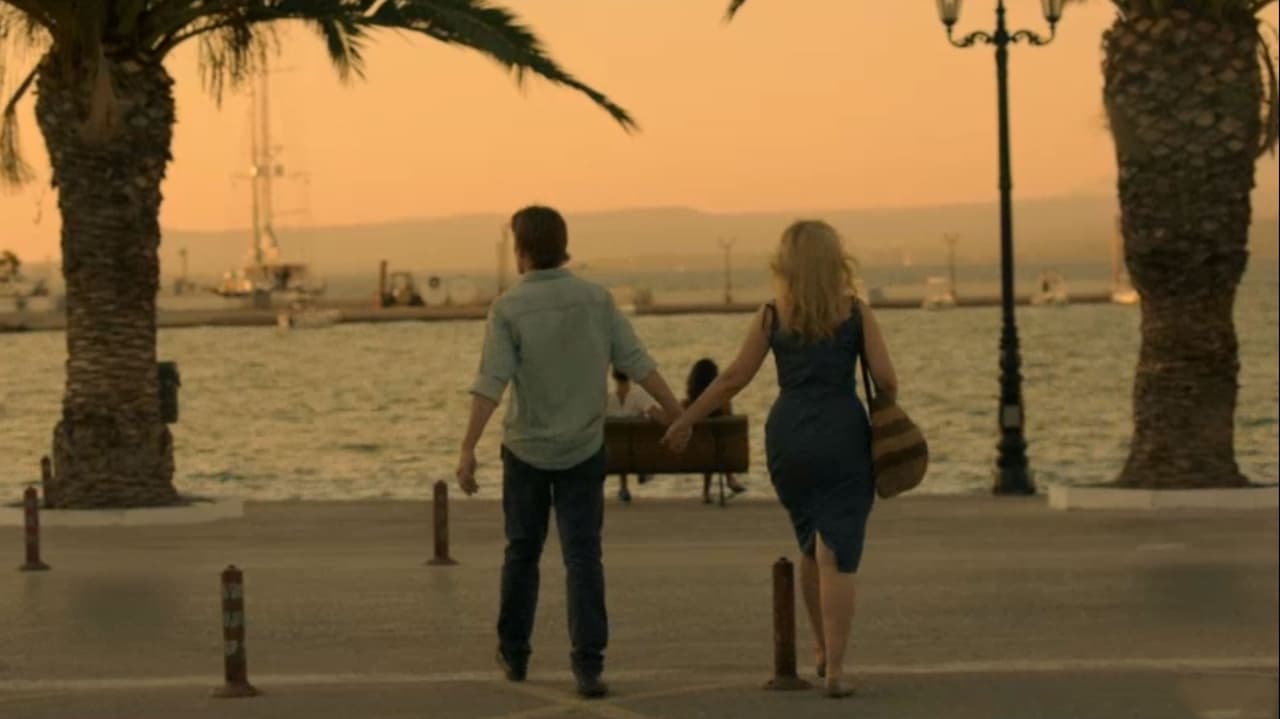
And then there's the ending. They have an extremely ugly fight that rips through everything they've built; The kind where things are said that can't be unsaid. In an attempt to salvage the situation Jesse tries to run the same play he ran on the train 18 years prior. The time traveler, the grand gesture, the beautiful idea. But this time Celine doesn't fall for it. She calls him out, because she's lived inside the fantasy and knows what it actually costs. He says he gives up, and for the first time in three films, Jesse drops the narrative. He stops trying to write the story. They both sit in silence for a moment, share a few glances at each other before looking away, in an almost completely opposite tone as their shared glances in the listening booth in Sunrise. Instead, this time they aren't wondering whether to kiss, they're wondering whether its over. "...So what about this time machine?" She plays along anyway. Not because she's been charmed, because she is making a decision. He tells her it may not be perfect, but it's real. The first film is what could be. The second film is what should have been. The third is what it is. And choosing to stay in what it is might be the most honest thing a love story has ever done.
The chemistry and depth in conversation are what draw me so much to this trilogy, and the third and final chapter is no exception. The first two were an ideal romanticization of spontaneous love without ever falling into cliché - very few cuts, long unbroken takes of whole conversations that flow so naturally it becomes a spectacle in itself. Ethan Hawke and Julie Delpy deliver all-time performances, and it is obvious they poured so much of themselves into these characters, making the most improbable moments feel believable.
What makes Before Midnight stand out from the other two is the weight of real life lived between the lines. Jesse and Celine aren't strangers on a train anymore, trading beautiful "what ifs" at sunrise. They've raised kids. They've dealt with divorce. In Sunrise, Jesse convinces Celine to get off the train with a fantasy. Imagine you're in the future with your husband, wondering about the one that got away, so come with me now and find out if he never did. It's charming because there are zero stakes. It's theoretical. She gets off the train because of a beautiful idea. By Before Midnight, they are living the future he described.
Fast forward to their lives 18 years later, the magic is still there, but it keeps getting interrupted. By responsibility, by passive-aggressive jabs, by a real uncertainty of their near future, and whether their relationship can hold. Jesse's romanticism is what drew Celine to him, but Celine told us who she was from the beginning: a woman who never wanted her life to revolve around a man. And now, at the crossroads of uprooting her life in Paris to move to the United States for Jesse and his son, or staying to pursue an opportunity in her career, the very things that made them magnetic are the things pulling them apart. His need to write the story for both of them, her refusal to disappear into it. There is a moment where Celine hesitates to sign a copy of Jesse's book for a fan because she doesn't want her name on a story she didn't write, but he assures the fan she'll be happy to. That's the entire conflict in a single moment.
And then there's the ending. They have an extremely ugly fight that rips through everything they've built; The kind where things are said that can't be unsaid. In an attempt to salvage the situation Jesse tries to run the same play he ran on the train 18 years prior. The time traveler, the grand gesture, the beautiful idea. But this time Celine doesn't fall for it. She calls him out, because she's lived inside the fantasy and knows what it actually costs. He says he gives up, and for the first time in three films, Jesse drops the narrative. He stops trying to write the story. They both sit in silence for a moment, share a few glances at each other before looking away, in an almost completely opposite tone as their shared glances in the listening booth in Sunrise. Instead, this time they aren't wondering whether to kiss, they're wondering whether its over. "...So what about this time machine?" She plays along anyway. Not because she's been charmed, because she is making a decision. He tells her it may not be perfect, but it's real. The first film is what could be. The second film is what should have been. The third is what it is. And choosing to stay in what it is might be the most honest thing a love story has ever done.